Willing to relocate: yes for onboarding period, offsites, etc., but ultimately I'm staying remote.
Technologies: Ruby on Rails, GraphQL, React.js, Postgres, Heroku, Shopify app ecosystem, Sidekiq, with ~10 years of fullstack experience. Last 2 years in a principal role (still very much coding daily)
I'm a YC-company alumni. Primarily looking for a remote-first senior/lead role in Rails ecosystem, startup or well established. Worked on dozens of apps fully remote even before Covid. Last 2 years experience with running a standalone business unit - major Shopify app - at scale.
> So, how is this different compared to a slap by one famous person that got reposted thousand times?
Intent and strategy:
> By constructing a timeline of the IRA messages, they found left-leaning IRA trolls posted large volumes of entertainment content in their artificial liberal community and shifted away from political content late in the campaign. Simultaneously, conservative trolls were targeting their community with increases in political content. The effort would have encouraged the right to vote and the left to ignore politics.
I understand it as analysis going other way. They dont try to trace everyone who tweets about the music guessing their motivations. Instead, they look at known Russia troll accounts and look at what they tweet. Then they look at differences between accounts targeted at left and those on the right.
So, your question is orthogonal - it is impossible to answer.
I think one man publicly assaulting another at an incredibly high-profile event in front of a live global audience was bound to be insanely popular regardless of whether or not a Russian bot army signal boosted it.
While true, it is important to know that they DID signal boost it, and that at least for those couple days, news about Ukraine was more buried than it otherwise would have been.
Don't think in binary terms. Russian influence campaigns excel by exaggerating valid newsworthy events.
> The question was: why is this any different from what happened at the Oscars?
Honestly, the problem with that question is that it's asking about the wrong object.
It's like asking what's the difference between shooting a person and shooting a target, when the bullets are identical. A bullet can be used to perform a lot of different goals, just like a piece of attention-grabbing content can. The thing to pay attention to isn't the content itself, but how it was aimed and who did the aiming.
To give a similar example: The text of the First Amendment says "Congress shall make no law...abridging the freedom of speech, or of the press...," yet slander and libel are still illegal. No amount of banging on that pithy text will change that actual situation.
> Honestly, the problem with that question is that it's asking about the wrong object.
If you want to rephrase the question so it is asking about the right object then be my guest - I see you added an answer too though.
I think we've just answered the question two different ways that ultimately boil down to the same thing. One event happened organically, the other was a deliberate action (with an intent, if you will) even if they both had a similar effect. In fact I suspect The Slap was bigger, but Ukraine wasn't pushed out of the headlines before, during or since the Oscars.
It is internet, so there's plenty of actors, some of them paid, some of them foreign.
I quite remember how the USA openly declared that they are going to influence the whole world via the internet domination, and took responsibility for things such as Arab Spring.
The fit that the USA tries to throw at the face of some music spam-posted by "paid foreign" bots is amusing in that context. And the whole world understands that context. Very. Clearly.
On top of it, the US military and law enforcement agencies use sockpuppet accounts.
Don't get me wrong, I don't agree with any state actors manipulating public perception out of their own interests. Just agreeing that yeah the US pulls quite some bs too
I feel bad just reading this, we failed as civilisation so badly. Apart from short term help, I think these people need education - how could both growing up hungry, living in famine and having children at 13 seem like a good idea is beyond me.
Afaik it makes perfect sense in a third-world country: There is no social security net so your only security is your children taking care of you when you get old / become unable to work. Probably there is a high chance some of these children will either not grow up to take care of them, or not grow up at all. Solution: hedge your bet by having as many children as possible.
If people stopped having kids every time there was a famine, there'd be nobody here. History is littered with war, disease, and famine, and yet people have been born throughout it. Maybe it wouldn't have seemed a good idea to have kids during the cold war (impending nuclear apocalypse), the spanish flu, WW2, the dustbowl, the great leap forward, the civil war, various genocides of the past century, etc.
And yet, in most cases, the survivors and descendants are better off, not worse off, than the people of the time.
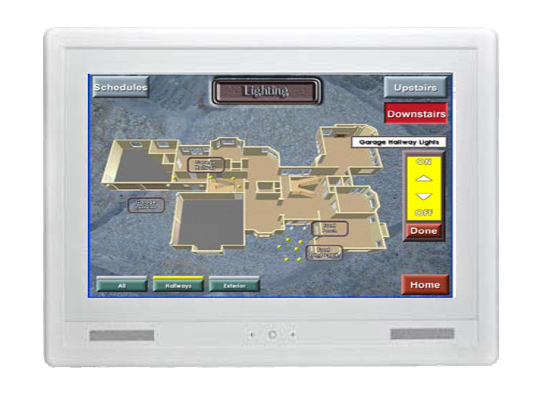
This is why I would never invest too much into Smart Home. While my phone may be expected to last for a few years only, I don't want my house deprecated because of a takeover/bankruptcy of a company.
I definitely would invest into Smart Home, but only if I can control it 100% from the server in my basement without the appliance having any internet access at all.
All my IoT devices are in a wifi without any internet access.
It's true that they're mostly proprietary, and Apple runs its own services, and I hate iTunes these days.
But—and I realize not everyone feels the same way—but at this time they are literally the only b2c company that has any credibility around privacy.
They feel to me—and again, not everyone agrees—they feel to me like the only hardware company that thinks of their users as their customers, and not as cattle to be sold to crapware vendors and search engine behemoths.
>but at this time they are literally the only b2c company that has any credibility around privacy
I can think of a few: Purism, System76, OSMC, Mycroft... they're smaller and less well-known than the big players of course, and they're not all perfect, but they treat their users as customers unlike many companies these days.
If I wouldnt be using Android Phones with custom Roms and no Google at all, I would proably also be using iPhones. I just try to stay all open source. I pay for my email, I have my own servers with services I use etc.
Devices that don't connect to a 3rd party servers in the first place aren't dependant on the good will of the manufacturer to remain privacy conscious.
Right now Apple makes buckets of cash from their hardware, but if they ever need to tighten their belt you can bet that the extra revenue from selling your data will be extremely tempting.
I don't touch 90% of WiFi smart devices unless they are Tuya controlled and even then I'm iffy. I vastly prefer z-wave/zigbee because if SmartThings goes belly up I can switch to Wink or any other compatible hub fairly easily. And while my Alexa devices are probably where I am "weakest" I have a lot of stuff running through HomeBridge and if I needed to I could move to HomeAssistant if I needed/wanted to.
Honestly? That would be awesome. I already have security cameras set up like that (although not wireless) - just home devices that do things for me and report back to a central server in my home. That server can connect to the internet (when I want it to), grab new firmware for the cameras, then disconnect and send out the firmware.
That's pretty much all I want from home automation as well. I see the value in being able to say "Alexa, turn down the lights" and having AWS do the voice recognition - but given that I can't trust services to stay more than a few years, I'm not going to invest in it.
Well, IoT never was a customer term, it was an industry term. And just because something keeps working without the internet doesn't mean it cannot benefit from connectivity.
Most things in your home don't need to know that much about things outside your home, or could have a well-defined standard API for getting that information from any source. If you could write wrapper scripts for obtaining weather information or traffic information, for instance, then you could have a self-contained system that required no monthly fees unless you opted to pay for high quality information, etc. but still gained all of the benefits of outside information, is high security, and would probably end up working even better. You could have default information endpoints for ease of setup, but why not make it all customizable? A good company with customer needs in view would be fully capable of making such a system.
In office buildings, devices already talk to each other using a network, so you don't have miles of cables from each switch to light or window-blind. In cars too, with CAN Bus.
Apple sells Apple Home Hub, I wonder if that's their "central control system" so that the Apple Home devices can be a bit dumber, but also it means there's a central firewall and system that can look for updates.
Also if you can install the "cloud-end" on your own device, when the company goes Nest, it means you can at least run an old version to keep your "IoT" gadget running, and it'll be running on the (hopefully) firewalled local hub.
Apple doesn't sell a "home hub" product. But their smart speaker (HomePod), TV set top box (Apple TV) and tablets (iPad) can all function as a gateway for HomeKit devices to be securely controlled from outside the LAN without the devices themselves having to be very smart or secure.
IIRC, there was AirPort, which was / is a wireless router that had options for things like storing device backups or similar.
Totally feasible to make a killer wireless AP that's Apple branded and connects better to the ecosystem, but that doesn't seem to be the direction Apple is going.
Yep, they had a range of WiFi routers, including one with a built-in harddisk for backups. They stopped updating them before they launched HomeKit though, so it never supported that.
It's a shame they stopped investing in them and missing the whole mesh Wi-Fi development. Also in this age where they're touting "privacy first" and iTunes is on the endangered list, not supporting iOS device backups over a LAN is a huge deficiency.
There are a few other products I use (for blinds, windows, heat), but you can often simply search the above two lists and read through the documentation whether they need internet (or "cloud") access or whether theyre totally local.
Worth noting - if you want cloud access, it's a paid subscription (reasonably priced) add on for Home Assistant, and it's free for OpenHAB.
I personally prefer OpenHAB over HomeAssistant, but the thing that annoys me about OpenHAB2 is that it doesn't have even rudimentary built in user management with authentication. The docs basically tell you to use something like Nginx to do that for you.
> Worth noting - if you want cloud access, it's a paid subscription (reasonably priced) add on for Home Assistant
if you want a super simple setup, they have manual guides for setting it up. And if you just want remote access and don't need Alexa/Google integration, it almost as simple manually.
Following a nearby lightning strike that destroyed our broadband router, I was pleasantly surprised to find that our Hive controllers still worked and scheduled water and heating correctly. Did also make me find the physical buttons for turning stuff on/off as well - though that didn't turn out to be necessary.
I'm mainly going for Z-Wave plus, using Home Assistant as controller for now (though still evaluating that).
My A/C is on Wifi though, and the cloudy controller web page is using a REST API (undocumented but simple enough to sniff and fake), so that's the only outlier so far.
I really want to love HA, but I find doing things in Node-Red so much quicker and easy to comprehend due to its visual nature. After a gap of about a year, I installed HA again a few weeks back and tried to setup geofencing using first bluetooth and then third party location services, but gave up due to the inconsistent determination of whether I was home or not. Using Node-red and a couple of tutorials I had things working very quickly. YMMV.
I'm doing this as well. Z-Wave+ and a Raspberry Pi for the hub for my first automation device, an RGBW LED strip for my home office lighting.
Even if I wanted to pay a subscription fee to some external service for my hub, the risk of service disruption, hacking of my network, and/or misappropriation of my personal data are just too high.
I've occasionally pondered screwing around with various wifi-embedded things like the Arduino, but then I think about how long the light switches have been in my house already, and I find myself wondering, will even Wifi last long enough? Will today's Wifi still be going in 40 years?
Dunno. Maybe. But for me to be interested in something it still has to be something that is going to pay back my fiddling in probably ten years, where I can expect to have to replace it, and I'm still not impressed by any of the the demos I've seen. I'm just not that inconvenienced by having to turn on lights.
According to Wikipedia Cat5e became the common ethernet cable around 2001, it's still in common use and capable of carrying gigabit, or over short distances even 10Gbit ethernet. Today at least in my bubble I see Cat6 and Cat7 deployed instead for 10Gbit and beyond.
I think everyone is getting at least 20 years out of their Ethernet connections, likely more. That's not as durable as electical cables but good enough for most cases (plenty of things need updates after 20 years in a building).
You can tie a new generation of wire to your existing wire in the wall already and pull the new wire through end to end that way to upgrade your connections behind the walls.
All the dot-com bubble era business ideas are new again.
- digital currencies
- smartwatches
- smart homes (Bill gates had his house 'smart homed' to the wazoo with tens of NT servers taking care of everything, like switching lights on and off)
Let's not panic too much here. A smart thermostat or garage door opener is modular, plug-in replaceable. The equivalent of a fancy toaster. You aren't locked in to anything.
1. It's noisy
2. The coupling and uncoupling effort is significant
3. The anticlimax of having to go down to the basement and empty out the canister after having completed vacuuming
1) Go with a cloud service using products exclusively made by a single major company, like Google or Amazon. This is simpler to setup and maintain but more expensive.
2) Go with an open source solution, like Home Assistant. Cheaper option with more control but requires a lot of time to learn, setup and maintain.
Both options should be considered safe at this point.
Edit: added emphasis on "made by" since many were missing that nuance. Buying a single brand of HA from a single company should be considered safe.
I'm not talking about buying compatible devices made by other manufacturers, this API issue shows is that isn't safe.
There's no safety going with products from a major company. They pivot all the time, not least Google. The only benefit is that one might get a refund when they do something egregious.
And in this case, Google just gave all their customers using the Nest API the finger. How is it safe to trust them going forward?
Irrelevant because you will always get screwed unless the company has a huge track record in backwards compatibility and very conservative slow changing management.
Get open source hardware and software that you can maintain yourself or suck it up and cough up the dough.
What are you talking about. This whole situation is a one great counterexample to your 1).
Making any company a single point of failure is a bad idea. You are basically giving up your freedom of choice for maybe some convenience, but don't confuse it with guarantee of sustained service.
Again, unless that company has a great track record, you'll probably get screwed rather quickly. Google is not such company, for example. Also, any startup is out of the question too; half-life of VC-backed SaaSes is on the order of a year or two.
IMO buying any hardware tied to a SaaS is a dumb idea.
3) Find a local home automation company and look at their offerings. There's a chance you'll find people willing to sell you actual products that are optionally Internet-connected, but not Internet-first, and are not tied to a garbage SaaS. They'll install and service them for you too. Key words here are "home automation"; I find looking for this phrase instead of "IoT" to weed out a lot of garbage.
Why is best not a good example? If you buy exclusively Google made products you're still fine.
Reread my original comment. I say you'd be safe if you buy products made BY a single company. This API effects those who bought things that are made by other manufacturers.
That's correct. If you would be pissed if it stopped working, don't buy it. Same for other "smart" products like smart watches. They have to have plastic bodies because they have radios. Because they have plastic bodies, expensive materials in the bezel or band make no sense. Their electronics and displays will be out of date within 3-5 years even if the OS continues to be supported. If you can't treat it as disposable, it's not for you.
My "smart home" is just installing IR blasters to control all my existing IR-controlled ceiling lamps and air conditioner units. In the worst case, I can always revert to using the IR remote controls (or wall switches).
They're firewalled to my LAN and integrated into iOS using Homebridge running on my Synology NAS.
Rotary is actually a good example for "revolutions" that turned out to be inferior compared to existing solutions. We will see how the new engine will perform in the real world.
Wankel engines work fairly well, but the geometry is so constraining that they can't be improved much. Can't change the shape of the cylinder head. Can't change the valve timing dynamically. That's all fixed by the geometry. They got as good as they were going to get decades ago.
Wankels are cool but they really don't have an advantage over regular engines other than vibrating less as far I know. And they have a few distinct disadvantages.
Better power curves & higher RPM capability, so you can use a smaller, more underpowered engine for the same application.
But that never overcame their mediocre gas mileage (lack of compression/poor combustion chamber shape), oil burning (oil-lubricated apex seals), and need for frequent rebuilds.
The rotaries leaked oil and got terrible mileage, and good luck finding someone to work on them. Other than that, they were zippy. "Usable" they might have been if you keep a low bar, but "practical" they were not.
I've had Mazda's last model of rotary-engined car, the RX-8, as a daily driver for the past five years (sixty thousand miles). It has served me well and my local garage have performed regular servicing and mechanical repairs with no problems.
So I think your opinions are a little bit overcooked.
But I don't want to overdo mine in turn. The fuel consumption is excessive by modern standards (but comparable to other vehicles of similar performance). The engine consumes oil by design and needs to be topped up every few weeks. The whole car is in a high state of tuning, and has given me a few large service/repair bills - but never stranded me at the roadside. My garage once admitted incomprehension and sent me to the main dealer for diagnostics before they could begin repairs.
All in all I think Mazda pitched the RX-8 well as a sporty car for enthusiasts, whose reliability might have come in under par in the market for, say, small family cars. I just want to fight the impression that having a rotary-engined car is a drastically different, worse, experience than one with a piston engine. Generally you just get in and drive.
Wankel engines are just one of (surprisingly many) technologies that were more-or-less viable but just not able to become dominant. Like, we would all still manage to drive around if the only technologies developed happened to be opposed-piston engines, or two-stroke diesels, or axial-cylinder engines with a swashplate. We might even see a few of them come back if the market moves towards series-hybrid vehicle setups. A light little rotary always running at its peak-efficiency speed might be a reasonable choice for a range-extender/series hybrid.
Rotary engines do not "leak oil", they burn oil a modest amount of oil by design. If you think about it, there really wasn't another way to lubricate them.
Practicality was pretty low, though, as you rightly point out.
Rotary engines do not "leak oil", they burn oil a modest amount of oil by design.
I was thinking of the seals, which by about 50K seemed to be a common failure point. But, yes, they did burn a bit by design; no argument there. OTOH, a lot of Wankel defenders in this thread mention RX-8s. I'm remembering RX-7s, and the economy cars that used the Wankels. Those economy cars of the 70s are where the Wankel reputation for poor fuel mileage comes from. Cute TV commercials ("piston engine goes 'boing, boing, boing', Mazda engine goes 'hmmmmm'"), not really the best engine choice to go up against Honda and Toyota at the time.
Little known fact is also that conventional piston gasoline engines are also expected to burn an amount of oil by design, particularly if given a hard usage.
It's always nice to be home in Prague from Munich in 2.5 instead of 4.5 hours in exchange for just 1.5l/100km more consumption (and going 250 (155 miles per hour) instead of 130 km/h).
Isn't there an 130 kmh speed limit on Czech highways? I wouldn't trade two hours of my life for being killed and potentially killing others in a car accident. I also quite understand that Germany has highways without a speed limit, considering that 40% of their GDP comes out of the automotive sector.
We have the big and beautiful 280 between Mountain View and San Francisco, and I thank goodness every time I make my way to the city for it. I'd never go the speeds on my bike I do on 280 anywhere else, but it's just such a gosh darn huge road I get to make a 45-60 minute trip in like 30 minutes.
It very much depends on where in the U. S. one is at. East of the Mississippi River (eastern U. S.): I'm a good boy who doesn't do more than 10mph over the limit. The exception is Ohio: if I can't avoid the state completely, I do THE SPEED LIMIT.
Western U. S.: whatever I think I can get away with. IOW, if I can see for multiple miles with few cross roads and driveways, then it's whatever I feel comfortable with. Though with western speed limits of 70mph and up, one can comfortably get away with 85mph, which is fast enough for me. Much beyond that, on the bike or in the car, and it gets tiring and the difference in fuel efficiency is huge (28mpg or less at "spirited" speeds on a bike that normally gets 42-45mpg). And the last thing one needs in a vehicle with a 5 gallon tank, and an area with few gas stations, is poor fuel efficiency. With increased fuel stops, I'm not convinced that one saves a minute of time after a point.
In this instance, think of the U. S. more like the EU. We have Montana and Nevada, they have Germany. We have Ohio, they have (for lack of a better example) the U. K. with speed cameras everywhere (yeah, yeah, Brexit; bear with me for this example).
Lol, I bought my RX-7 from an Ohio state trooper, in Ohio, and we raced the entire 2.5hr trip out of the state, in the rain. I think he called his buddies to leave us alone.
The European country you're looking for for your Ohio-equivalent example is Switzerland (sorry dudes but I've never seen police so strict to the point of silliness anywhere else in Europe).
That's actually a big question I have as a new Californian. In Houston, you got caught, every time, if you sped on the freeways. The cops were everywhere.
Here not only do I rarely see cops, I've read in the local papers that cops can't pull people over for speeding if EVERYONE is speeding. You have to be speeding far above average. So everyone is actually incentivized to speed together.
When I first got here I saw comically low speed limit signs - as low as 55mph on freeways! And averages of 65! That's INSANELY slow for how big these freeways are! But apparently it doesn't matter in California, here everyone just speeds and is protected as a group.
I don't doubt that I'll pay my dues eventually. You don't get away with 95mph on a sportbike forever. We make targets of ourselves. That's fine, in Houston I got ticketed ~200USD every three years or so, that's a fair price to get to go above the speed limit for me.
I usually go at 75-80 on a "55" highway for my daily commute, never had issues even while passing cop cars. In general, as long as you're not driving like an idiot (switching 3 lanes without signalling) or running old tags, or basically have a red flag hanging, they won't bother you. Although if they do stop your for one of these reasons, they'll probably also ticket you for speeding. Speed limits are enforced far more strictly in residential areas though.
Huh? My rotary doesn't leak oil. Mileage is an issue but not significantly worse than other sports cars of that era or even today.
I also could probably connect you with a good rotary mechanic (or several) in all 50 states plus Puerto Rico (hell, especially Puerto Rico)
The biggest issue with the FCs isn't the engine, it's the reliability of the electric systems and heat (as a distant second). With the FDs it pretty much the twin turbos. And with early RX-8s (04-early09) it's a lack of proper engine lubrication due to a design flaw.
Did they get the rotary to be usable? I thought even at its best, it was finicky and temperamental. I have never owned or driven one, just doing some idle reading online, so asking this as a serious question.
Lots of torque, lots of pep, though from what I heard, the US version (mine) had substantial increases in pollution controls which hobbled the car. Always first off the line when I wanted to be.
Yes, it burned oil by design. I'd add a half-quart of non synthetic 5W-20 maybe every 1000 miles. The rear bumper required additional car washes, as it'd get a black film, no doubt from cold starts. That wasn't much of a problem.
The big issue it had was flooding the engine. To trigger the condition, turn on engine, let it run for less than 1 minute, and turn it off (like pulling it in or out of a garage). Unless you floored it in neutral before shutting it off, the car would end up near-bricked.
The fix was to have it towed to the dealer where they'd clean out the engine for a few hundred dollars. Later I learned you could tow-start it if you could get it up past 20mph. It'd put all kinds of foul smoke out the back when you did that but in terms of hassle, it was much better.
The car had a POS OEM fuel pump under the rear seat. On hot days you'd get a vapor lock. Not the rotary's fault. Took years to find that problem, and didn't get very long with the fixed version before the stork came and the rotary had to leave.
> The fix was to have it towed to the dealer where they'd clean out the engine for a few hundred dollars. Later I learned you could tow-start it if you could get it up past 20mph. It'd put all kinds of foul smoke out the back when you did that but in terms of hassle, it was much better.
You don't need to do all that. You can just pull the EGI INJ & EGI COMP fuse, crank it for a few seconds, replace and start it up. Many folks put a bypass switch inside the car so they don't have to get out and do it. Works great.
On the RX8 at least, if you hold the gas pedal to the floor while cranking, it disables the fuel injectors. No need to pull fuses.
* Foot to floor, crank for 10 sec,
* let it rest for 30 sec to cool off the starter,
* foot to floor and start to crank, pull your foot off the gas pedal.
Mazda sort of assumed their drivers would read the manual and drive the car properly. I think this workaround was figured out at some point in the 90s anyway.
First off, I agree that the backseat was exceptionally roomy for a 4-door coupe. For adults.
Once you have your first, you realize very quickly that babies come with a LOT of stuff. The first carrier for newborns sticks out a LOT from the back of the seat. The sorcerers at Mazda Engineering made it comfortable for tall people in the backseat by compensating for limited front-back space by using up-down space. This made it impossible for use for an infant unless the front seat was scooted all the way up.
But then there's the stroller. Good luck with that in the comically small trunk opening. Bags of stuff, boxes of stuff, yes, these things are non-optional, and they don't fit in that car, especially all at once.
The final nail was the fact that it's kinda hard to insert a child plus carrier into the backseat with your hands full. Having it back there would've been easy. Getting it back there wouldn't have been. Retrieving it, even more difficult.
After you make your peace with the above, and still manage to cram everything in, bear in mind you still need two adults, not just the driver, to fit in the car at the same time.
We could've done it, somehow, but it was smarter to sell it and buy a cheap used SUV, with plenty of room for everything. It also bears mention that I had used that car as a daily driver for 10 years.
You should have held out on the wait-and-see. The moderate-sized rear cabin with those little suicide doors (you are talking about the RX-8, aren't you?) is absolutely great for baby and child seats.
Also, yeah, I had my RX-8 tow started once. The recovery guy actually suggested I drive his truck while he sat in the car and tried to start it. So there I was with the new experience of driving an enormous full-size recovery vehicle, getting quite concerned as I looked in the mirror and saw clouds of white smoke pouring out of my car's exhaust! But, once properly wary of flooding, the car didn't give me any trouble before or since.
I have an 8 (and am involved in sports car things as a hobby) and I find the back seats to be superior to almost all sports cars and most mid-sized normal cars for seating adults.
More or less usable. They did have a tendency to blow apex seals after 80k miles, which was could end up as a full rebuild of the engine. As far as how finicky a rotary can be, the biggest thing to do is let them warm up before driving, and let them cool right down after you're done. They were never an engine to replace the standard fourbanger, but they weren't any more finicky than say a BMW or Audi at the time of the RX-8
weren't any more finicky than say a BMW or Audi at the time of the RX-8
YMMV, but my E46 BMW has been very reliable compared to an RX-8 bought at the same time. Audi was still in the process of applying the lessons of the RS4 to their everyday cars, but I still wouldn't call the RX-8 reliable compared to its peers. As you hinted, there are a couple of problems that lead to full rebuilds before 150k miles.
Mazda shot themselves in the foot reliability-wise with the first generation RX-8 because they:
* Underspec'd the ignition coils
* Didn't do enough on-road reliability testing
* Lowered the oil pressure and removed OMP ports
* Designed the oil filler breather in a way that allowed oil into the intake
In '04, the first wave of RX8s were coming in to the dealerships after 30k with severe misfire from the coils going bad. Mazda didn't have this failure mode in their factory service manual, so the cars got replacement engines (poorly reman'd in Mexico, not made on the Mazda Japan line). These didn't last because of poor manufacturing. Once the coil issue was figured out, the 8 became much more predictable and reliable.
As noted by Busterarm, they fully got their act together with the series 2 update.
Heh. I mean an engine rebuild at 80k seems kind of crazy. I am both continually amazed at the ICE and at the same time can't wait for it to die out. It's such an archaic technology. Hell, a turbine engine would be so much more fun to have in a car!
It was not, in the end, a production car, but there was a lot of data gathered as to performance and reliability in real-world settings.
Not too long ago, Jaguar had a concept CX-75, which was a hybrid mid-engined supercar where the piston engine was replaced with two Bladon Jets micro gas turbines. After 2008, they didn't want to commit to an expensive limited production vehicle, too bad.
Damn. That sounds like they almost made it work. I wonder how those cars would have done with corn ethanol. Electric boost for initial acceleration and better heat exchangers would have probably completely eliminated the remaining problems with them. Thanks for the link!
Turbos are definitely taking hold in the American auto industry as well, with stuff like the Chevy Sonic and Fiesta/Focus really making good use of them with tiny engines. The 2015 Focus had an option for a 1L, 3 cylinder engine with a turbo for commuters. Great stuff.
The rotary was never invented by Mazda, it was invented in germany and applied first by NSU.
Then it was licensed to many manufacturers, among which there was Mercedes-Benz, which was the manufacturer who got solved first the apex seal problem, and in the late 70s with the C111 prototype car, the first manufacturer to create a side port wankel engine (which mazda would only show on the RX8 decades later) and a 4-rotor engine (which mazda would only show on the 787 racing car in 1991.
Then MB ditched the wankel engine because of low fuel efficience, something that ultimately led to mazda doing the same... in the 2000s.
Compression ignition is more an evolution than a revolution -- it's an iterative improvement on an existing technology.
Skyactiv exists in the first place because Mazda does not have the money or engineering resources to build a hybrid or electric car by themselves. I suspect that in a decade or two, Mazda's decision not to start building hybrids and electric cars when the other major brands were doing so will be regarded as a serious mistake.
investing in high efficiency gasoline engines is a much better bet. the world will be running on gasoline for decades at least. even if europe (doubtful) or US (very doubtful) pull out of gasoline there will still be billions of potential customers around the world.
I talked to my friend about my tooth pain couple of days ago and I saw an ad for dentist yesterday. Can't have it appear again for the screenshot. Keep in mind I newer saw dentist ads before..


Remote: Yes
Willing to relocate: yes for onboarding period, offsites, etc., but ultimately I'm staying remote.
Technologies: Ruby on Rails, GraphQL, React.js, Postgres, Heroku, Shopify app ecosystem, Sidekiq, with ~10 years of fullstack experience. Last 2 years in a principal role (still very much coding daily)
Résumé/CV: available on request, but Linkedin has all basics covered https://www.linkedin.com/in/sebastjanstojnsek
Email: sebastjan[dot]stojnsek[at]gmail[dot]com
I'm a YC-company alumni. Primarily looking for a remote-first senior/lead role in Rails ecosystem, startup or well established. Worked on dozens of apps fully remote even before Covid. Last 2 years experience with running a standalone business unit - major Shopify app - at scale.