Both of Baudelaire’s criticisms were reasonable, and the same thing happened again when AI image generation showed up. You think the opponents look ridiculous because you’re viewing the history from the winner’s side.
As for “the public,” people had a real demand for photography as a way to record things, which is also why it won. There is no comparable public demand for proving Fermat’s Last Theorem.
> There is no comparable public demand for proving Fermat’s Last Theorem.
It's a capability demo, not the main point. There is plenty of demand for intelligence on tap. These flashy results are necessary though, otherwise people keep claiming AI is just hype, it can't do anything etc. So they need something to point at. And it seems to be working because the anti-AI narrative has changed from the previous stance that it's just the new NFT that will simply go away to how it will replace human intellectual work and will be bad for artists and desk workers.
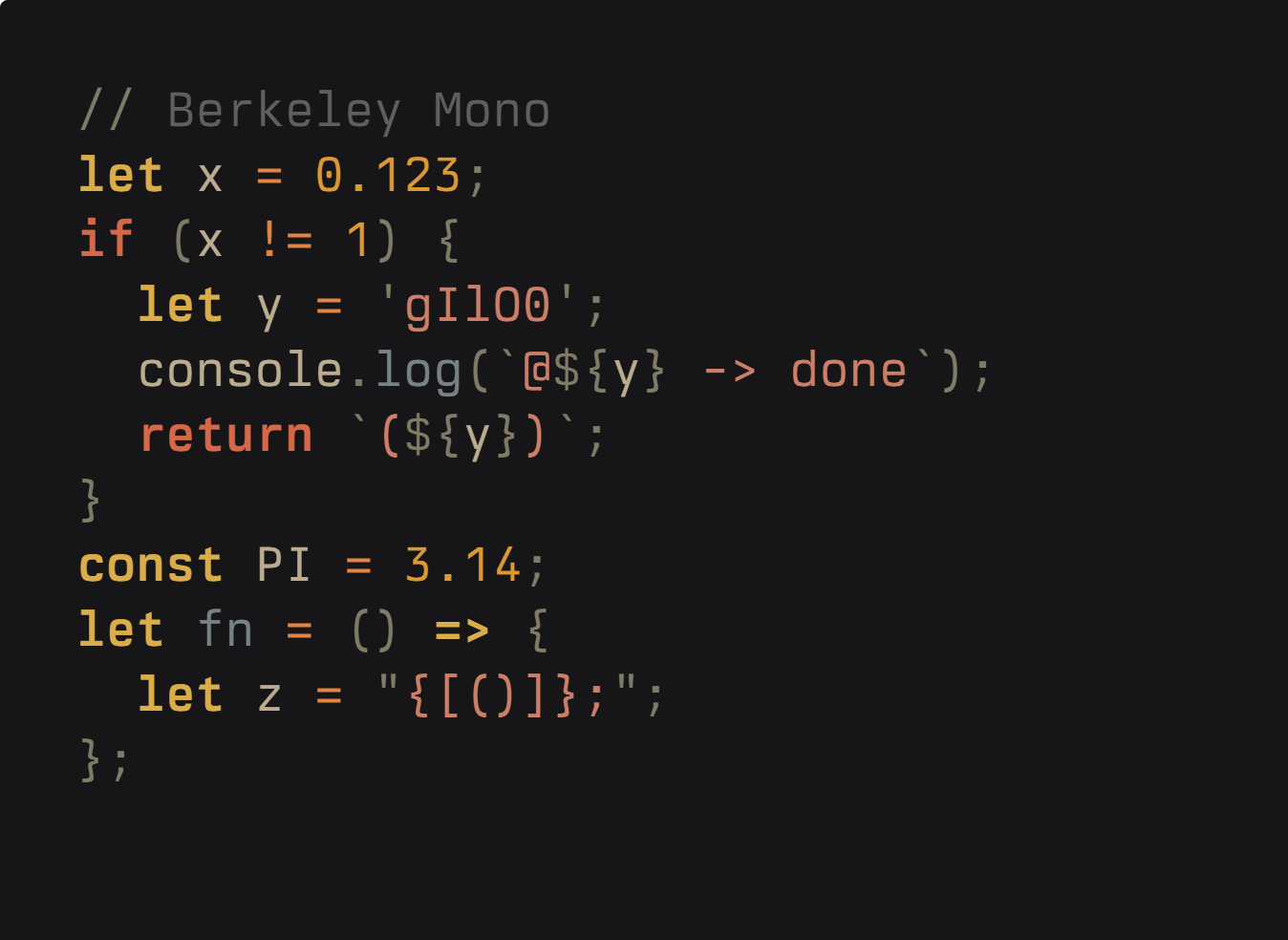
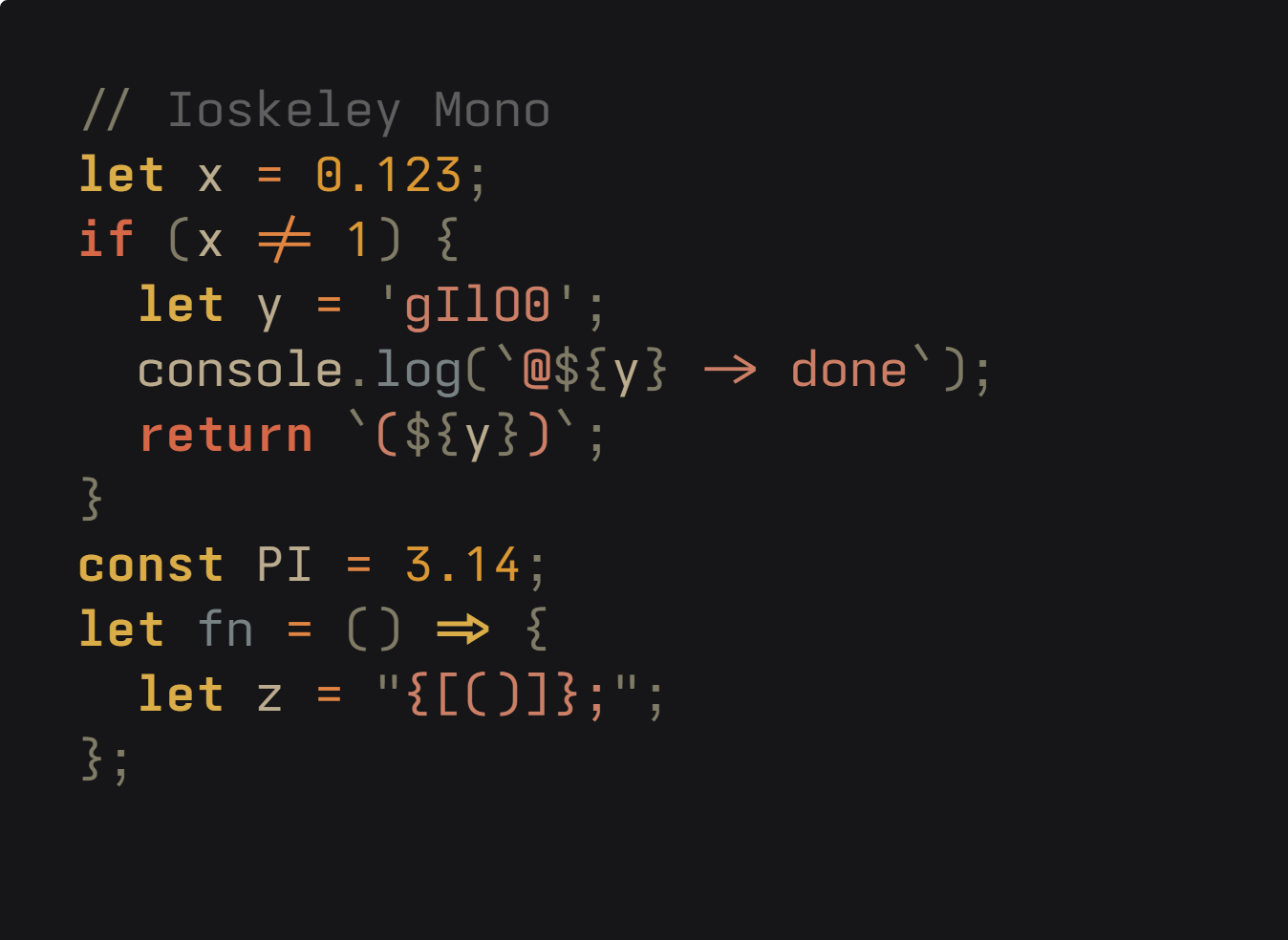
Creating such a close match impresses me. Many times, I'll like parts of a font, but can't abide by the line spacing, heights, widths, weights, or whatever.
The ability to more precisely "tune" a typeface would be neat.
While developing poincake, I actually thought about building a language learning app using a similar approach. The idea was to map word embeddings onto a Poincaré disk so users could explore word relationships and clusters.
I'm thinking LOD might help mitigate the overlap issue, perhaps by having an LLM progressively shorten the text until it's a single Unicode character.
Also, as other comments suggested, shading or similar techniques could help.
That said, I doubt this can be fully resolved unless the text is rendered in hyperbolic space, as another commenter mentioned. I'll need to experiment and see if that's doable.
(I'm the dev) I tried it out on an iPad and it seems to work fine. Let me know if you run into any issues. Supporting direct stylus/Pencil input will definitely be a challenge, but I think it’s worth a shot.
It worked on my Android tablet but I can't scribble a note and draw a picture/diagram with the stylus. I don't know anything about iPads but on Android you have the USI pen and for any app that understands the USI pen, it interprets fingers and stylus individually, the stylus is active so the tablet knows when it is input from the stylus or input from a finger. The google Cursive app which is the standard Android note app shows this well, stylus only writes and fingers only pan/scroll/zoom unless you switch it into finger mode so you can write with a finger.
If you managed to give all the features of Googles Cursive app within your Poincaré disk paradigm, I would happily drop $100 on it, assuming it worked as an offline app.
Edit: should mention that I don't think this is worth $100, other than to the handful of people like me who it would be perfect for assuming it was well executed. You would probably make more charging far less. The paradigm could translate amazingly well to the tablet/stylus experience if the details are worked out well.
DHH probably just reached for "ressentiment" because it sounds cool. I can't get over how ironic it is to put Nietzsche and democratize in the same post.
To be clear I don't think the author's point on updates is such a good idea and that's an example of why, but I understand they require a level of trust on the developer that many, many companies haven't earned.
Inform the user in a minimal way. Probably this means some kind of flag that can be clicked on in order to see a list of what was done and what problems that might address. If the fixes relate to unused features then they can be pended and there is no need to interrupt workflow.
Exactly ! Instead of writing good modular programs, pack "features" and security fixes in a nice bundle so users can choose to have their app enshittified or being vulnerable and I sure know which one of the two users don't care.
It's a so popular strategy Microsoft uses, Windows even forces it only allowing you to delay it for some weeks.
1. The techniques, inspiration and creativity of skilled human artists.
2. The personality of art by unskilled artists.
3. The use of generative AI to replace generic clip art. A little whimsy to dress up plain text.
Is anyone really crusading to protect generic clip art? No?
There should be something like rule 34 for social and cultural movements. For every movement, the ideological version will get performatively or knee jerk expressed, with shame throwing, in benign situations.
> Actually, the dodgy GenAI calculator image at the top primed me for even more failure, making the excellent content that followed even more surprising.
This was poor spirited, personal itch scratching. We can just compliment a writer on their writing, if they are a writer, presenting themselves as a writer, not a visual artist.
At least the recent popularity of the 996 originated in China, and I believe most Chinese people would agree with that. Besides, even if it started in Hong Kong, saying it originated in China is still technically correct.


reply