This is awesome! If you look under the coming soon, Vice travel, Vice comedy, capture+ and Vice gaming are all things that I have never heard of(soon to be released) and hit a lot o points of interest of mine.
World Startup Report team here. There have been many repeated questions in this thread, so we compiled all them into a single long answer for everyone.
At World Startup Report, our goal was to show the world how big of an internet company you can build in each country. We have partnered with Startup Genome, as well as worked closely with Startup Digest and Hackers/Founders network to collect all this data.
As we proceeded, we lowered our goal of covering 100 countries to covering 50 since we aimed to find the most reliable (as well as interesting) data. Our methodology included looking at publicly available data (stock market), online publications from sources like Financial Times, TechCrunch, The Next Web, etc. or sometimes even personal conversations with those companies. The definition of internet companies was: no ISPs, no software development houses (unless they have online products they are selling), no hardware companies. If a company is diversified (as was usually the case) we looked at the revenue breakdown and searched for the highest internet-related revenue streams.
However, we do accept the fact that this information is constantly changing (we had to replace a few companies due to various reasons (even bankruptcy) over the course of our month-long research). At the same time, we are aware that there could have been a few omissions and this is the price we are willing to pay to show the public the best available data there is on the web right now.
One last thing, we've put up our raw data on Silk, so you could play around with it as it is easier to visualize it.
The country location for a company in this research was determined by where the bulk of the employees are currently. The intent of this definition is to show which countries are most capable of building big internet companies, not where the founders are coming from.
Yahoo!Japan is actually an independent company from Yahoo. It is roughly 30% owned by Softbank and 30% owned by Yahoo. It is listed as it is the top 3 internet company in Japan.
Yahoo is not listed, because it is not the top 3 company in the US.
As mentioned in another thread, The World Startup Report team aimed for 100 countries for this research, but realistically we were able to only get good data for 50 countries for this research.
If your country is not on the list, and you would like to join us for the next World Startup Report research as a representative for your country, please email us: hello@worldstartupreport.com
We'd love for your help to participate in this community research!
World Startup Report team here. It's awesome to see our data on HN!
One interesting point to note is that out of the top 7 countries, none of them are from Europe. To put into context, the biggest internet company in Europe is merely 1/40th of the size of Google.
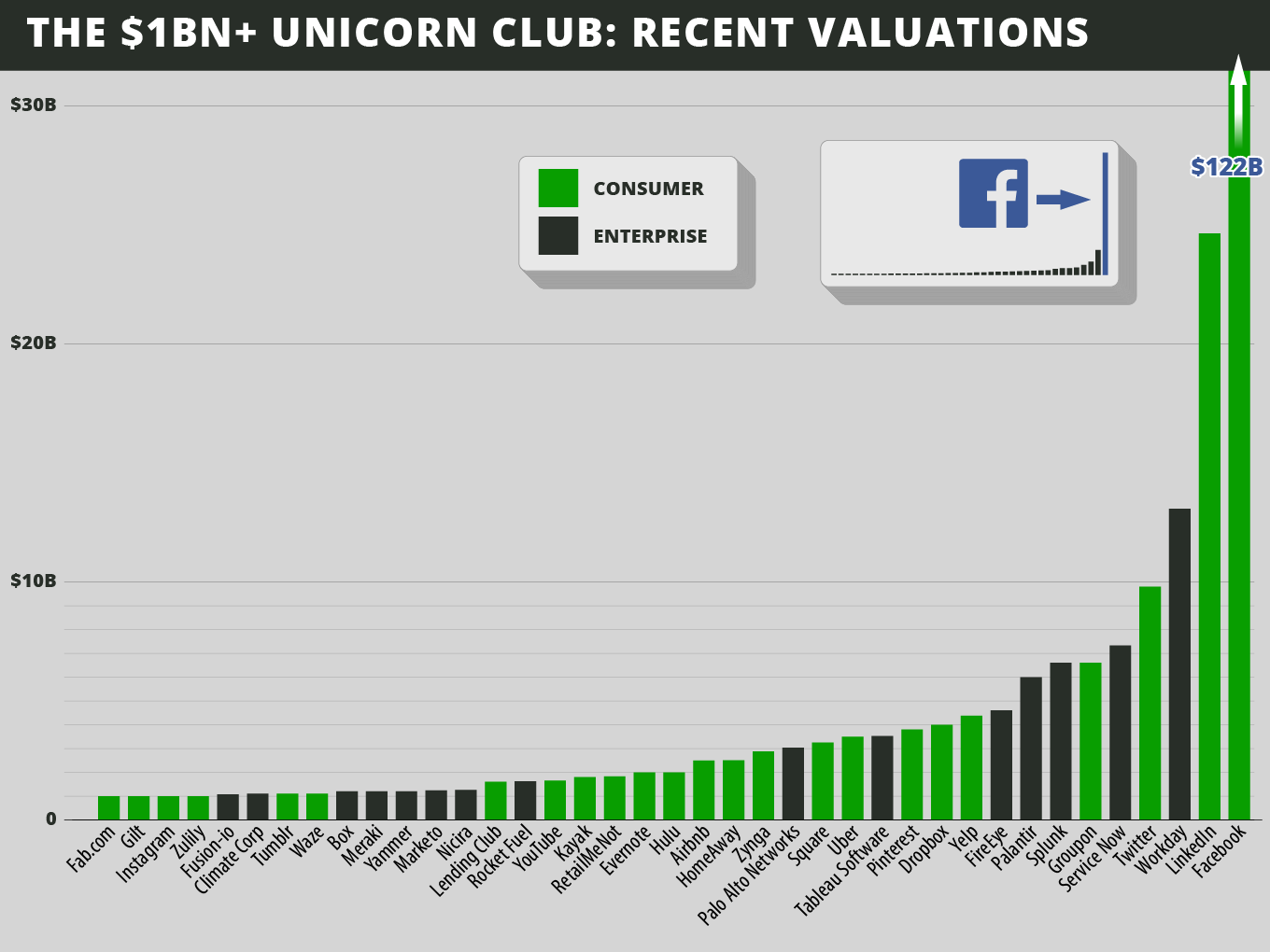
HOWEVER, Europe dominates the unicorn club (companies over $1b in valuation). Nearly half of 30 countries on the unicorn club list are European.
This prompts the question, is European market big enough but fragmented in such way that you can easily build mini-billion dollar companies, but never anything truly massive?
We'd love to hear everyone's thoughts on this.
Also, AndriusWSR (lead researcher behind this research) will be joining us shortly to answer a few questions. Please feel free to ask away.
-The whole common internal market thing is taking it's time.
-While it's much easier than elsewhere to live and work in another country it's still a hassle and there's lingual and cultural issues in the way as well.
-Crucially, the jungle telegraph usually ends at borders. News of great startups or whatever don't really spread well because of language issues and the fact that people tend not to have cross-border social relationships. There are programs like Erasmus that try to alleviate the issue, but not everyone goes on exchange, especially asocial types and the Brits.
It seems important in a report such as this to distinguish between place of control vs. operation.
As a South African who wants to leave for better opportunities overseas, it was a bit odd to see South Africa as 3rd on the list given my personal experience. I've been presented with opportunities at both the 1st and 3rd largest South African companies on that list and rejected them for what appeared to be better opportunities elsewhere. Seeing them here had me second-guessing myself.
Looking closely, it's clear Naspers is the reason for South Africa's position. Yet only 54% of their revenue comes from Internet-based business -- nearly all of which represents foreign-based acquisitions [1].
What is the objective of the report? As you point out, Europe dominates the 'unicorn club', and being closer to whatever magic makes that possible seems more appealing to me as a person seeking business opportunities, but this conclusion is not obvious from the presentation of the data.
Is it desirable to be an environment that focuses on being absolutely massive rather than just huge? Lots of smaller companies might imply better competition (or companies being bought up before they get even bigger...)
Very surprising you couldn't take the time to ensure that markers are not directly obscuring other markers. Right now in my browser the US has exactly two items shown as do many others due to this obvious flaw.
So in summary it seems many are saying the data is flawed and the presentation is clearly flawed.
Perhaps it was a little premature to expose this to the world?
Please note, we stopped updating this list since January 2014 because the list got too long. If anyone wants to lead this community effort moving forward, we'd love to speak to you!
The World Startup Report team aimed for 100 countries for this research, but we settled for 50 as we didn't have enough local support from the smaller countries.
If your country is not on the list, and you would like to join us for the next World Startup Report research as a representative for your country, please email us: hello@worldstartupreport.com
We'd love for your help to participate in this community research!
1) We found 39 companies belong to what we call the “Unicorn Club”
(by our definition, U.S.-based software companies started since
2003 and valued at over $1 billion by public or private market
investors). That’s about .07 percent of venture-backed consumer
and enterprise software startups.
2) On average, four unicorns were born per year in the past
decade, with Facebook being the breakout “super-unicorn”
(worth >$100 billion). In each recent decade, 1-3 super
unicorns have been born.
telecuda, everything you said is right on point. The tax is Brazil is beyond crazy. If I recall correctly, even Amazon had problems bringing servers into the country because of the taxes and import duty. That's just the tip of the iceberg in terms of taxes and regulations in this country, it is not at all a startup friendly country.
In the end of the day, none of this really matter, because people will still go to Brazil to do business. It is the center of Latam economy, if you can win Brazil, you are destined to win Latam. The Brazil opportunity > obstacles, hence why people are flooding Brazil despite the challenges involved.
2 years ago I was looking into the VC culture here in Brazil but all I kept hearing was that investors were looking for "Local Innovation" which is a pretty way of saying "Just clone sucessful US startups" and that the only risk they would take would be that making sure something like Groupon worked in our local market.
Did that change at all? If I'm looking to create the next crazy idea my only option is to either rellocate or bootstrap.
I'm a developer with lots of ideas living in São Paulo. How can I take advantage of this hub? I have zero experience in business and not that many contacts...


As far as I know, their biggest distribution has been on Youtube. Maybe I'm wrong here, but assuming this is the case...
Some rough math: - On Youtube, they have ~5m fans. - 1287 videos
Assuming 100k per video. We're talking about ~100M - 200M aggregate views. That's minimal.
So what's so valuable about this media?