I don't know about sleep and depression. My Mom was bipolar and the topic never came up, other than her being up to all hours when she was manic.
But I recently read an interesting article about vitamin D and that lead me to supplement magnesium and vitamins D, A and K. I only do it once every three days to be conservative.
http://www.precisionnutrition.com/stop-vitamin-d
And I've found I'm much more decisive and likely to take action. In fact, last December I became a morning person using early morning light and exercise. Instead of getting to the office after 10, I now get in by 8 most days. I keep to it on weekends too and go to a coffee shop.
I also recently changed my evening routine during the week, cutting out TV and stopped eating chips after dinner.
For the morning and the evening changes, I devised a routine of things I do that make doing the hard parts easier. In the morning, I turn the light on, use the restroom, drink some water, set a timer for ten minutes, relax until it goes off, exercise, shower, dress and get out the door. I try to stick to this every day.
I also did some reading about vitamins last year and ended up taking vitamin d for a while, then magnesium for a while. My method wasn't any more scientific than that, but the vitamin D had no noticeable effect, while the effect of magnesium was dramatic. I was suffering from mood swings, poor concentration and low energy serious enough that I was considering seeing a psychologist about depression. Magnesium seems to eliminate the problem completely.
I just wish there was a better way to figure out your deficiency than just popping some pills and wait to see what happens. A weekly blood test for vitamin levels combined with mood and health journaling would probably give me the kind of data I'm looking for, but that only seems to be available in science fiction so far.
If you have a disease such as depression, make a list of conditions that can cause it. For depression, vitamin deficiencies would be on the list (but also things like hormone imbalances, and many other conditions). Bring this list to your doc and let them add probabilities to each condition. Now work your way down the list, and get the blood work done.
In any case, make sure your doc presents upfront an analytical approach to curing your illness. Don't let them just do what they think is right because you're likely to end up in a maze.
as someone who has suffered from acute and chronic* depression, i do want ask, is disease the correct noun?
by "acute and chronic" relating to my experience, I intend this to mean long term and severe, but also "narrow basis" and severe and recurring. I know I am overloading a operator somewhere here... [ inline footnote for reading meter]
If cancer is many kinds, it is a a disease in the sense that it is systemic, and can be cured, in theory, by medicine.*
In the similar way, depression is a very wide and complex range of similar things, but the systemic nature is less definable, we only have systemic symptoms, do we not? I mean is my supposition accurate medically?
By systemic I mean depression is a malfunction of systems, interacting, that we can define as alien,unwanted, interactions of our body and brain chemistry (for surely depression can affect the entire being, and so we find things like magnesium, or sunlight or better diet help, if not resolve)
But the conditions which can cause my depression, are emotional or circumstantial even, very much more than environmental or physical health.
(I learned this after too many years had passed, I was made to be unaware, unpleasantly made to be unaware, of a infant trauma i endured amazingly well, but which sank triggers deep into my psyche)
Luckily - if by luckily you understand at enormous human cost* - I got through most of my younger years without resort to clinical medical intervention, such as by medication regimes, and I curl up in a fetal ball every time I hear even reference to another lamentable saga of medication experimentation (by the doctors, not patients) endured along the way to a viable life, so common among programmers.
My question whether "disease" is first of all the appropriate word to describe depression, must come with a sister question: if disease is not a universally sound description of depression, is it so in some cases, even edge cases, and if we have stretched the definition, is there a underlying argument for why we stretched the definition, other than those afflicted so often feel accursed and afflicted as if by terminal disease?
It seems to me, that because depression is a vital and axial point of interaction between brain, mind systems (reflexive brain body interfaces, e.g. exercise benefits almost always functioning) and body, is therefore a better taxonomy not necessary?
The best description I ever heard, of the DSM, is that with only the effort of observation and tedious reference, you could probably diagnose any child with all the pediatric diagnoses therein contained. Whether strictly true or not, and I wish I could recall to whom that quip is attributable, but a Psychiatric doctor 5 , that certainly ought to strike home with anyone old enough ever to have had the pangs of wanting a family.
I suggest that the computing community, is uniquely positioned, to develop a better and more innately intelligent, taxonomy, of psychiatric "disease" (if it must be so called) and that it might be right to "reclaim" a important but seriously, gravely, and frequently abused "discipline" from a profession almost a industry of commercial practitioners.
* years and years after i learned what "survival rate" for cancer really means, I am still aghast that such a blatant semantic spin could be applied to something s incredibly important. The very idea that a huge, industrial scale, hard science in modern medicine, would willingly supplicate to acceptance of language so distorting, and liable to distort perception, remains beyond me, a assault on the senses I first gained benefit my first and earliest exposure to science as a discipline.
*
Beyond me, the personal devastation to loved ones, to anyone who cared for me, ever, was appalling. For only myself, I elected to end up in prison, rather than risk being committed, which would have created a probably fatal misdiagnosis that freezes me, i feel nauseous just saying this.. these people play with lives... in prison, i only found about two thirds were dumped there who probably should have been in hospital for mental health problems, and did some amateur lawyering, of which I am intensely proud, and one day want to figure out a way to encourage like efforts, because it sure ain't hard, law, only getting any legal system or judge to understand the black and white ink on paper thing, is actually hard.
* I think many of us seek the rationale and intellectual uterine safety of computing, the warm appreciation of rationality and consistency that in particular low level programming can provide. My earliest observation of a sales floor, was that mental health must be inversely proportional to the immediately available intellectual structures, and that the semantic playfulness, to be polite, of my company's sales outfit, was the obvious explanation for whiskey under desks, and regular delivery of marching powders. Sometimes this drives the more creative to create enormous works, of varying success, in creating reflexive, consistent, homogeneous systems. At least I thought that efforts such as CLOS, C++ templates, were efforts at including the world, by type inheritance, and therefore insuring a hermetic and therefore emotionally safe, environment in the editor. (But then I purchased Design Patterns, when it came out, hardback, and loved it... but i knew i may have projected this thought onto it, as much as it may be a projection now, and by no means should I expect to be able to apply my own self meta cognition into the world, not before some very careful type definition, anyhow...
*5 two school friends attained giddying heights, one Royal Colldge Psychiatry and General Medical Council (one of the boards anyway), the other a worldwide veep for a major pharma, having a psycho-pharma career taking him to that position. Neither will;speak of their experiences, both quit from such great heights, i sense about the moment their family was financially secure. One works with startups now, and I wish I could give my bottom of lunch box adoring endorsement, but both are privacy intense, for indisputably valid, obvious, reasons..
Hey, I'm not sure if this is the right thread for this question (statement?), but maybe you should think it through some more, edit, and make it a blog post? Some interesting ideas.
There's a certain level of orthodoxy in psychiatry now.. I have yet to see anyone try to get any information other than "let's try putting you on this extremely mood altering pill with side effects for a month". No attempt is made to find any real evidence other than anecdotal patient information. Maybe the science isn't there?
The science isn't there yet :( Quite likely there are various neurologial/genetic reasons for things like adhd and depression.
It's quite likely that there are many subtypes of that, depending on which pathways are broken, but we aren't good enough yet to figure out the details.
If you have a car with a locked hood, there is not much you can do but hit it in various places and hope it works.
Some people are trying to unlock the hood, and one day they surely will succeed. But for now, all we're left with is listening carefully and trying from the safest to the craziest options.
That's exactly it. A given drug may be one person's savior and another person's nightmare. It's extremely complex. To get just a hint of what may be going on, check out Scott's article on ANTIDEPRESSANT PHARMACOGENOMICS [0].
And it's failing patients left and right, who have to somehow go to work while already stressed anxious or depressed while now having to deal with rapid mood changes, insomnia, or one of any other side effects. If you roll the dice and get the wrong medication you will be worse off where you started. People shouldn't be used as test tubes - in no other field is it okay to "experiment" on people like in psychiatry.
The culture of hacker news-type thinking can be very toxic and lead to such thoughts as "I just wish there was a better way to figure out your deficiency than just popping some pills and wait to see what happens. A weekly blood test for vitamin levels combined with mood and health journaling would probably give me the kind of data I'm looking for, but that only seems to be available in science fiction so far."
Notice how you are trying to find a solution based around technology. Why does the solution have to involve technology? I think hanging around on forums like this, or with engineers to often can blind us to solutions which don't require engineering.
If all we have is hammer then nails nails everywhere!!
We're all guilty of it. Let's just be aware of it when it happens and move on.
Ready for the solution? It's very simple but tough to follow through with : Radically Change your diet.
Eat plants mostly, eat within a time window (don't allow yourself to oversnack, etc.), don't eat shit, not even a little bit, cut it out 100%. Be extreme, this is the experimentation phase. Later you can be less extreme, but let's see how much a radical change to the diet will affect the body.
This isn't a guarantee to fix vitamin deficiencies, but I will gladly bet that it will sure help a hell of a lot.
Finally, I would like to add that another trap that we all fall into is trying to optimize a system by changing one thing at a time. Firstly, this doesn't actually work. Secondly, this is extremely slooooowww.
If we want to experience change fast we have to be radical about changing our habits. If I am experimenting with anything in my life it's a good idea to try all sorts of different stuff. Diversify my experiments. Explore. If you are having vitamin deficiency issues and are not setting yourself up to be in the position to explore and experiment with diet, then you will have to wait for luck to come along before your issue can find itself a solution.
Again, hopefully I don't sound like an ass, I am just trying to help, given that I make the same mistake a lot in my own life, and have screwed myself over too much to not try and speak up a bit on the subject.
> Why does the solution have to involve technology?
Because technology has the potential to be more powerful than other solutions.
Your suggestion, and the direction of your post in general, sounds like moralism. Moralistic suggestions have more to do with virtue and privilege signaling than actual results. I am generally extremely suspicious of any advice that comes from a moralistic angle because it's noisy and mostly driven by logic in the nature of "bad things don't happen to people who live correctly".
Unsurprisingly, the suggestion misses the fact that eating plants is not going to address something like a Vitamin D deficiency. Vitamin D deficiencies, as far as we currently know, are caused by lack of sunlight and the use of sunscreen.
The reason people are looking to science for this problem is because science has historically been at the forefront of every medical breakthrough. You're suggesting to give it up in favor of what? Some 'radically change your diet' bullshit that you haven't backed up with a single piece of objective evidence? You're really advocating snake oil over engineering? That's not to say that radical diet changes don't work, but your approach to this is completely backwards.
I'd like to think that society as a whole has moved on from your mindset about a century ago. We're past meaningless non-statements like 'this isn't guaranteed to solve the issue but I bet it will help a lot'.
Ah come off it, this is a disappointing response. You may be right but nobody reading this would have any reason to believe so. At the most basic level, if you believe that diet change beats supplementation or fixes the problems claimed, you have surely done research into this beyond personal experimentation. If you share your work then you are likely to persuade more people, and hence encourage better health behaviours among your your peers -- assuming your findings to be true and reproducible.
Conversely, if you say you've got all the answers and everyone else just needs to reproduce your hard work, but you won't share your process or results, you can expect to antagonise people.
This applies throughout life and not just in "science".
No, you don't sound like an ass, but I feel like I've been where you are and have a bit more perspective to add.
Circadian rhythms are a thing, and eating within a time window may have a great effect for some people. I'm already very rigid with my eating patterns and I don't see that it adds any value except for giving me a headache if I happen to miss my window.
Eating mostly plants is probably a good idea, I know there's mountains of evidence backing it up. But every time I try it, I find it difficult to physically put enough food in my body to satisfy my energy needs. I have to spend so much time shopping, prepping, cooking, and planning - activities that I do not enjoy - that I end up less happy because I'm spending my time on something I don't want to do.
In addition to that, eating a lot of plant material gives you hella constipation. Believe me, I know. Maybe your body gets used to it after a while, but a month of asshole-tearing shits is enough to tell me that I need more meat and dairy in my diet. I lift - at least, when I'm able to eat enough calories to sustain the energy level I need to lift, I lift. That hasn't happened for a while because I'm trying to save up for something and be frugal, so I've been eating less meat and dairy to save money. As a result, I don't have enough energy to lift. There just aren't enough hours in the day to consume that many calories in beans.
There are counterarguments for all the points I've made, I know them all. But arguing the points is another example of the hackernews type toxic thinking. You don't need the counterarguments. You know that the changes you recommend work, because they worked for you.
Fair enough. But magnesium worked for me, and I didn't even have to give up meat. Chances are switching to a mostly-plants non-shit diet would have given me the same effect, but my way is soooo much easier. If all someone needs to not be depressed anymore is a vitamin, then damn, they need to know what that vitamin is. Because when you're depressed, healthy eating is really unlikely to happen. You NEED the shortcut.
I just went to Whole Foods and bought the generics, except for the magnesium, where I bought a type that has good absorption. Many magnesium supplements do not.
I tried to avoid mega-dosing, so to ensure that I only supplement every third day. I was more concerned about any deficiencies.
And I went to Whole Foods because of that supplement scandal a couple of years ago. Whole Foods may charge a lot but is more trusted than GNC or Walmart, at least by me.
I agree in that I go to Whole Foods or a similar store over mass market choices like Walmart, but even at Whole Foods you're not necessarily getting the best form of supplement in those generics. Differences between bio-availability or effectiveness can be very notable between citrates, acetates, chelates, glycinates, picolinates, etc. I've personally found some good functional medicine sources of information (I've found Chris Kresser and Chris Masterjohn informative, balanced, and non-doctrinaire) that pass the smell test, but find somewhere you trust that breaks that information down a bit more so that you're getting the best form of supplements. The best forms in my experience are typically not is the generics or multivitamins.
>>last December I became a morning person using early morning light and exercise //
>Where do you live that gets light on December mornings?
It could just be that stretchwithme just turns on all the lights, etc. Living in the Pacific Northwest, I know all about waking up and leaving in the dark and coming home to the dark in the winter time.
I do a similar thing in the mornings, though I didn't ever consciously decide to be a morning person. I go to bed at pretty normal times between 9 and 10PM most nights. If I wake up any time before 1:30 or 2AM and keep all the nights off and fumble through the dark I'll be able to get back to sleep no problem. If I have to flip on a light it will take me much longer to get back to sleep.
If it's after about 2:30 or 3:00AM, there's no way I'm going back to bed- and I'm going to be supplementing with copious amounts of coffee to keep my face from dragging on the floor all day.
After about 4:00, I'm fine. Without an alarm I usually start waking up a little after 4:00 and my routine usually has me out of the house about 30 minutes from deciding to get out of bed.
The first thing I do is review my To Do list for the day on my phone. 2 reasons: 1) I start crunching on it in my head as I'm going about the morning routine, and 2) the blast of light (even w/ night mode still on) is like a jolt to get me moving when it's otherwise pitch black.
That's exactly it. I turn on the light when the alarm goes off. And make sure my eyes are open.
You can even go back to sleep after ten minutes and your circadian rhythm will start making you feel like going to bed earlier. And you need to go to bed when you feel that effect.
Yes, I realise that - just interested in their locality to greater degree of exactitude than which hemisphere. As it happens it looks like they're using artificial light.
I recently bought a Philips HF3520. I've read great things about it but unfortunately I'm too heavy of a sleeper that it doesn't work for me. Give it a shot, it's definitely worth it in the long run if it works for you.
I have trouble getting up and I'm considering one of these. Does it make any noise while plugged in? I have sensitive hearing and find for example a lot of modern LED lamps have annoying buzzing associated with them due to poor quality transformers. If I'm sleeping with this thing next to me it has to be absolutely silent.
My bedroom gets light at 6 am when I wake up and turn on the light net to my bed. :-)
So I have an alarm that goes off then. You just need to keep your eyes open for several minutes for the cells in your eyes to recognize that there is enough light to start shifting your circadian rhythm.
It really works. Just be sure to stick with it.
And to go right back to it if you forget. Habits are everything and some habits have a lot more power than others.
I just turned the light on and kept my eyes open for at least 10 minutes.
Just turning on the light for a moment or looking at the time on your phone is not enough to stimulate the retinal ganglion cells. You have to keep your eyes open for several minutes.
If you consistently do this at a time before you would normally wake up, your clock shifts earlier. You'll wake up earlier even if you don't use an alarm. And you'll get sleepy earlier in the evening too.


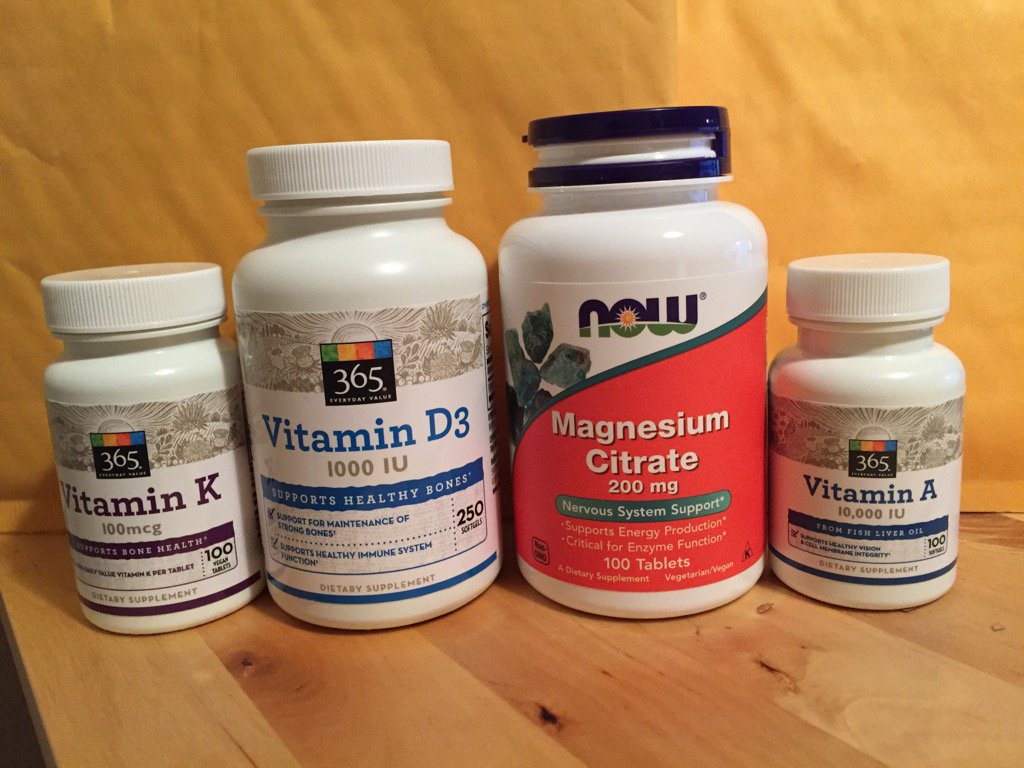
But I recently read an interesting article about vitamin D and that lead me to supplement magnesium and vitamins D, A and K. I only do it once every three days to be conservative.
And I've found I'm much more decisive and likely to take action. In fact, last December I became a morning person using early morning light and exercise. Instead of getting to the office after 10, I now get in by 8 most days. I keep to it on weekends too and go to a coffee shop.I also recently changed my evening routine during the week, cutting out TV and stopped eating chips after dinner.
For the morning and the evening changes, I devised a routine of things I do that make doing the hard parts easier. In the morning, I turn the light on, use the restroom, drink some water, set a timer for ten minutes, relax until it goes off, exercise, shower, dress and get out the door. I try to stick to this every day.