They are. Like living sculptures. There's just something extremely dignified about them. Like finally growing up after the childishness of strip-mining. The adults are here.
I couldn't disagree more. They popped up as I was growing up - littering the coastline and countryside. They can be seen from great distances and serve to make the place seem an awful lot smaller.
I for one can't wait until we develop a way to live without them - the only condolence is that they move us away from the coal and gas industries. I do hope that solar leaves them in its wake and we can be done with the monstrosities.
They popped up as I was growing up - littering the coastline and countryside.
I guess you've never seen them blow the top off a West Virginia mountain to get the coal out. Windmills can be replaced by solar, but that mountain isn't coming back. (Caveat: don't know if that's still done or not, but it was done plenty in the past.) If feel ya on the aesthetics (though I personally like them), but if you're complaining about windmills "littering the coastline", then maybe blowing the tops off mountains doesn't happen in your backyard. Instead you got windmills. Consider it your aesthetic tax for having reliable, inexpensive electricity.
Mountaintop removal is still done pretty often because it's the economically cheapest way to do it, damn the economic, social, and environmental consequences of that action.
If you laid Tolkien's world on ours, Orcs would mine coal with dynamite, Men would use nat-gas and oil, and Elves would use wind and solar. Nuclear? Dwarves all the way. "Clean, safe, and low cost" until you delve too deep and awaken nameless evil!
Lower cost? Utterly laughable. Nuclear costs are notoriously high, always crazy multiples over budget, and then the operating and decommissioning costs are hidden with budget and accounting tricks. But you won't notice because it's a 50 to 80 year process.
No, according to the US Energy Information Administration the levelized cost of nuclear has been comparable or less than coal (without the massive negative externalities of coal)
"not typically included in levelised cost of electricity assessments is the cost of decommissioning a reactor and disposing nuclear waste, says Roula Inglesi-Lotz an energy economist and associate professor at the University of Pretoria. This would further increase the price of nuclear energy. Even when these costs are not included in calculations, the cost of nuclear investment remains high."
If you want baseload power, you can choose between coal, nuclear and natural gas. Natural gas has estimates that range between 72 and 113, so depending on which you choose it might well be cheaper or more expensive than nuclear power. Natural gas has a number of advantages over coal, but unfortunately it is now thought to be almost as bad as coal in terms of effects on climate change - this is a very bad negative externality that isn't priced into the cost. Your original point was that "Nuclear costs are notoriously high" - instead they are projected to be roughly comparable to other forms of baseload power.
>..."not typically included in levelised cost of electricity assessments is the cost of decommissioning a reactor and disposing nuclear waste
Maybe in other countries, but not the US. Every nuclear power plant in the United States is required, by the Nuclear Regulatory Commission as part of its licensing to set aside sufficient funds to decommission the plant when it reaches the end of its useful life.
>...(The USA is an exception, because the cost of decommissioning is included in the price of electricity, per the Nuclear Waste Policy Act),
Also there is a tax on electricity produced by nuclear power in the US to cover eventual long term waste disposal so it is priced into the cost - though ideally this high level waste will eventually be burned in a 4th gen reactor so the volume of waste will be a small fraction of what it would otherwise be.
scroll to the bottom image. Nuclear is the lowest cost along with hydro. If you want to argue against nuclear, you have to find another argument (which shouldn't be too hard).
Note that nuclear isn't getting any better, while other sources are improving every year. Would you rather plonk down a massive capital payment for a very average nuclear plant for the next 50-80 years, or gradually add more and more efficient sources of energy over that same time period?
Also:
"not typically included in levelised cost of electricity assessments is the cost of decommissioning a reactor and disposing nuclear waste, says Roula Inglesi-Lotz an energy economist and associate professor at the University of Pretoria. This would further increase the price of nuclear energy. Even when these costs are not included in calculations, the cost of nuclear investment remains high."
Nuclear waste is cleaner than what coal emits in the atmosphere. Store it in an underground facility, figure out what to do with it later. It's not perfect, but it's better than what we have currently for high volume electricity generation.
As for reactor meltdowns, well, to give one example, France has beeen one of the world's biggest users of nuclear power, and we haven't had any meltdown ever. So, uh, don't build your reactors near dangerous zones, and don't go with the cheapest contractor for a critical piece of infrastructure? Meltdowns don't happen unless you do something really, really stupid.
Nuclear power is still the better cost/production method we have for now. It's safe (yes, the stats include deaths while building which puts wind/ocean at a disadvantage, but overall it is just as safe as renewable energy), it's efficient.
Just don't pull a Chernobyl and actually follow security measures.
I'd normally agree with you, but the top Uranium producers are Canada, Kazakhstan, and Australia. Uranium mining is a first (and second) world problem.
It's such a shame the Aussies don't build nuke plants. They have the uranium and they have a good place to store the waste. But they're so stuck on being Commonwealth Texas that they'll stick to fossil fuels forever.
As an actual Australian I'm really happy that we don't build 'nuke plants' here. (I am assuming you mean nuclear fission power plants.)
We have uranium, yes, but if happenstance is our only criteria we should also be building nuclear weapons and burning lots of coal. Sadly we're doing the latter with great alacrity.
We also don't have a good place to store the waste. I don't think there's (m)any places on the planet that could be good places to store waste of this nature. It's probably telling that people often refer to nuclear waste needing to be stored or managed, rather than recycled, rendered safe, disposed of, etc.
> We also don't have a good place to store the waste.
We've got tons of space to store the waste. The country is right in the middle of a tectonic plate, so little worry about earthquakes, and large swathes of the country are uninhabited by anyone, even mythical 'lost tribes'. Even if nowhere else, we could store waste in the giant area cordoned off for nuclear testing in the '50s.
In my opinion, it's hard to find somewhere better suited for storing nuclear waste than 'somewhere in Australia'. Stable, first-world government, a fair few places where we can put it where even leaks wouldn't be a problem, skilled populace, etc etc.
AU has had a stable government since it started at Federation, and it's had a first-world government since the definition of 'first-world' started in the '40s. There are few countries as stable as AU has been.
> This makes sense only if your starting position is that creating nuclear waste makes sense.
The waste is being created, regardless of whether or not you think it makes sense. You can pretend that there's some fantasy world where there's no nuclear waste, but in the meantime here in the real world, there is such stuff and it needs to be managed.
> How long does nuclear (fission) waste need to be managed?
> How long do you believe that AU has had a stable, first-world government?
Federation was (to a rounding error) a century ago. Some would argue that it's been stable since then -- I'd argue it hasn't, but the boom/bust left/right vacillation so common in western ersatz democracies evidently is what counts as stable these days.
It's kind of besides the point, though, since it's a comparative exercise.
How long does nuclear fission waste need to be managed, and how does that compare to 'around a hundred years'?
You also make a less than compelling case that we have no choice but to have waste from nuclear fission -- we have plenty of options that don't involve nuclear fission.
Consider, for example, the fact that Australia has no nuclear fission plants generating electricity.
But it is burning coal, which is far worse at this point. That's what I'm getting at - Australia is uniquely well equipped for nuclear power and has not substantial begun moving away from fossil fuels. If solar is cheaper than nuclear, then by all means build that. But if not? Why not move to nuclear energy?
Yes, I pointed out that AU has a regrettable fixation with digging up and burning coal.
But just because we have access to relatively cheap Uranium doesn't mean we should be digging it up and processing it.
One of the reasons I rail against the suggestion that AU has a 'stable long term government' (ie. that could be said to be sufficiently grown up to handle fissile waste) is that right now that same government is very publicly committed to fossil fuels, despite the leader of same being on record only a few years ago asserting - loud and wide - that green energy should be our priority, and we should be moving away from fossil fuels. Append usual concerns about the various people involved in getting us to, and then maintaining, this unfortunate situation.
To be fair, you need _significantly_ less[0] uranium compared with the amount of coal you mine. For every million mountains destroyed by coal mining, you'd only have to destroy a couple of mountains. Not to mention I don't think uranium is usually mined from mountains but rather pit-mined, makes it far better than the alternatives.
Personally however, still support solar. Especially solar house tiles, they look good, pay for themselves after a few years and can be placed on every house.
Not every house has solar resource. If your house is in the middle of the woods it's not going to work unless you clear-cut the surrounding woods and then you're not in the middle of the woods anymore. Same if you are in the shadow of a couple of mid-rises. etc. etc. Even if there is solar resource it may not replace more than a fraction of usage. Roof-top solar is great where the resource exists, but it's a partial solution at best. There's still a need for the utility grid and something needs to fuel that. It could be utility-scale solar, but it's not onsite rooftop solar.
You realize that most houses are not in the middle of the woods? If I look around here in Berlin, almost all houses would qualify for rooftop solar. There is of course still the storage problem.
Don't forget uranium can be extracted from seawater! Granted I don't think it's near the efficiency yet of simply digging and extracting from a pit but still it's something to watch out for in the near future.
Uranium has a much higher energy density, so you need fewer mines. The raw materials for renewable energy tech don't materialize from the ether either.
I think a better comparison would be smog and acid rain. Coal isn't giving us the plastic bottles, but it does negatively impact us in much subtler yet worse ways than a visual reminder.
If you think really coal pollution is invisible, try visiting China - which, perhaps not coincidentally, is currently rushing headlong towards a fully renewable economy.
The disagreement between you and the parent commenter illustrates something that I think is fascinating about NIMBYism with respect to windmills. NIMBYism depends on the idea that the aesthetic judgments of windmills are objective, shared across people. Windmills really do look bad, objectively.
Normally talking about aesthetic experiences as if they are universal is frowned upon, because the judgment of beauty is taken by many people to have an intrinsic quality of subjectivity to it. But that appears not to be a problem in the community of people that oppose wind turbines.
There is some subjectivity to beauty, but there is also some objectivity. For example, things that incorporate golden ratio tend too look good.
If you look at parent's comment:
"They are. Like living sculptures. There's just something extremely dignified about them. Like finally growing up after the childishness of strip-mining. The adults are here.
"
You can see that the judgement of beauty here is tainted by social implications, energy concerns, and possibly political environment.
This is only my reading of it though so maybe the parent meant something else.
I personally find them attractive but I haven't spent much time around them at all.
And yet if you were to make the same argument about a coal or even nuclear plant, you'd be considered a loon. Coal plants don't just look awful, they also stink up the surrounding areas. And while I've heard plenty of people say they like the look of windmills (I'm one myself), I've never heard anyone say they like the smell of coal plants.
And yet a number of old coal plants are being preserved and repurposed given that industrial chic is rather in vogue these days. See the Tate Modern for example: https://en.wikipedia.org/wiki/Tate_Modern
(These are admittedly not working plants but still.)
Most folks don't know what a coal plant looks like.
For example, I can put a few wind turbines or the classic towers from a nuclear plant into artwork and folks get the reference. I paint in a coal plant, and folks just think factory.
Nuclear plants, the Simpson-esque version I picture, are beautiful in their own right, btw, as are nearly all factories. It just depends on framing.
Meh about [2] - house cats and glass&steel skyscrapers kill an awful lot more birds than that. There is absolutely no outcry against either; that's how we know the outrage against windmills killing birds is planted and artificially kept alive.
And I was reading that most "capped" underwater oil wells are actually leaking oil - and there are many thousands. So oil is silently killing incredible amounts of sea life. So, while I regret the loss of animal life to wind turbines it is much better than the loss of life to oil. (And new wind turbines in the ocean are being placed at heights which almost eliminate bird impacts and also being designed with structures which won't attract birds as a place to perch, unlike prior generations of wind turbines.)
People who complain about a statistic without mentioning its severity in context are often only using it as rhetorical currency rather than actually caring about the issue itself. If they're accepting of the same outcome in other contexts you can safely ignore them.
Wind complements solar well in terms of peak generation. In some markets, wind + solar + hydro + existing demand pricing could already manage current consumption requirements. Hydro is perfect for base load and for peaking.
As a bridge fuel natural gas is also perfectly capable for base load and peaking, and due to pricing has already been rapidly supplanting coal and oil. Longer term, pumped hydro where available, or even technologies like syngas could be used to store peak wind/solar capacity to generate when the resource does not meet need. Along with a better long-distance grid, it takes no stretch of the imagination for renewables to meet virtually all current demand, without even accounting for huge advances in new technologies.
Peak population is coming, and with increasing energy efficiency/conservation, we can very well expect peak energy usage to precede peak population.
Apples and oranges, really. Wind/solar/gas are best suited for peak production. Nuclear is best suited for base load production. While technology can change down the road, they currently aren't directly in competition with each other.
Stop quoting this bullshit "fact." It is a meme made up by conservative think tanks to discredit wind farms. As other posters have already pointed out, other human-related factors such as domestic cats, buildings and towers, and most importantly pollution and loss of habitat are far more significant dangers to birds. If you actually care about birds, take your cats to the vet and put them down (this will also help save the oceans: a large part of fish in cat food comes from massive and illegal trawling in South-east Asia often done with slave labor), and donate any rural/suburban property you own to a land trust, to be given back to natural habitat.
'Conservative think tanks' like the Audobon Society?
It's not necessarily the raw numbers of birds killed, it's the type and the impact on their population. If your cat kills 1000 pigeons, the pigeon population won't notice. A handful of golden eagles every year or two though, and we get closer to losing another species.
And yet the Audubon society, after considering all the various risks to birds, is pro-wind turbines, as you can tell from the angry commenters attacking them for this stance in the article you linked.
It is a bullshit fact, just like "80% fat free" is a bullshit fact that plays on human bias. Just because one side is talking about bird deaths doesn't mean it has the moral high ground on that issue. It is in fact a standard political move to attack your opponent on your weak point. And the less motivated listener just says "well they're both bad", even if one is clearly better.
It's not a bullshit fact. Admittedly it can be used to bullshit by blowing it out of proportion, but it is something that happens. Calling actual issues "bullshit" and demanding they are not talked about is not a very good way of getting people on your side.
At least over here in Germany the organisations working to get more renewables deployed and studying these things massively overlap (e.g. nature clubs lobbying/advertising for renewables, and at the same time providing the boots on the ground counting dead birds). It has been recognized as a problem and is now managed, just as other environmental influences of new construction projects are (e.g. evaluating a new location includes a comparison with known migratory patterns/populations and restrictions and monitoring requirements can be set accordingly)
This can vary greatly on the type of windmill... I live near the Altamont wind farm, and the oldest windmills are undeniably ugly, and so small that they required tons of them.
The next generation windmills were less ugly, but still too small. I always found them rather unobjectionable, but I could see one quibbling with that.
The current giants being put up though? They look great! They have these 90 foot blades that look like they were designed by an advanced alien race, their size makes them operate with a slow graceful sweep, and the relatively low density of them leaves the hillsides more visible as well.
Altamont is a disgrace for the whole industry. They had incentives to install and retain mills at the site, but almost no difference to the bottom line on how much power they produced. That's why these ancient mills are still there, even if they're missing turbine vanes.
Solar has a much larger physical footprint than wind and there's no getting around that even at 100% efficiency (which will never be obtained). Footprint that unlike wind, cannot be used for agriculture or accessed by much wildlife; it's fenced in and covered with panels.
Here in upstate New York there are planned wind and solar farms in the region and every one of both brings out a certain crowd of torches and pitchforks.
There's no pleasing some people. The energy has to come from somewhere, and right now coal, gas, and nuclear together make up most of the fuel mix.
Are the torches burning sustainable wood? What are they doing about the wood particle pollution? Were the pitchforks forged in coal powered furnaces? Did they drive to protest?
We need nuclear, solar and wind, or 90% of people to die and the rest live in caves.
I guess it's a matter of perspective. I suppose the true end-game is for tech is to be completely invisible. The great thing about wind and solar is that when you're done with them, you can pretty much just pack them up and haul them off. Strip-mining? Not so much.
Maybe it depends on where they are? I think the ones in Iowa and Kansas look great, but that might be because there's not much else to look at. And if the old-and-rural endless plains meet towering-tech-wonder-behemoth aesthetic isn't your thing, there's so much nothing there that you can just drive a while and not see them (or anything else) and have that, too.
I consider them and most of our industrial buildings a kind of litter on our landscape. Some (and I stress 'some') of the old Victorian bridges are exceptions, and there is the occasional building (mainly churches, pubs, and manors) which integrate in an aesthetically pleasing way, but then again we have already turned all the land to farmland so maybe there is little left to protect inland.
I grew up as the last oil wells in the South Bay part of LA were being brought down. I've been by the Tehachapi wind farm, the Mojave wind farm, driven past the Solar One/Two demonstration plant [1]. They all have an environmental and observation impact, all the technology does is change where that impact is felt.
I totally agree with your point about how they make the country seem smaller, it's my main gripe about them.
I also feel like mountains were were about the last place we hadn't domesticated apart from the odd telecoms mast but now we've found a use for them. There is nowhere wild left.
I've always marveled at watching something so huge move at great speeds in near silence. I have a large wind farm nearby and I've gone out a few times on windy evenings to watch the turbines for a bit.
I dunno, I always find them unsettling. I mean, I love them from an environmental perspective, and I think they look quite charming when static... But when spinning they just look so impossible. Like something that big shouldn't move like that.
I've gotten more than one job over the years by doing exactly that. Most people are happy to talk about what they're doing, and meeting someone who appreciates and is interested in it, so much the better!
Find the construction trailer ask for an application. Make sure you can pass a drug test and actually show up for work then I'd say your chances are 50% , 80 % if you find a job site that is just starting construction.
If you want to know where they are building go through Abilene, TX and ask.
I'm curious about this kind of work, could you share more of your experience? What exactly did you do, how hard was it to find job, was it with one company, how often did you move from farm to farm?
Any chance you're interested in rock climbing? Some of the repair work can only be handled by rope workers. There aren't a lot of them, and they're certainly in demand.
I'd love if you could share a couple of lines on the economics of that, like what your setup and ongoing expenses are like, and what's the biggest headache it involves. If you prefer, my gmail address is the same as my username. Thanks.
In addition to his superior craftsmanship, we also treat our bus like an engineering and teaching platform; we leave a lot of things taken apart (or in a raw, visible form) to use as teaching tools.
It's a balance; though - we have an almost-2-year-old, so we have to have a certain order and steadiness to things so he can't (or doesn't want to) take them apart all the time.
Unrelated to wind turbines, but related to living on the road - do you have no permanent address? What were the most difficult adaptions to make from living in a static location to living a vehicle like that?
This is something I've often wondered myself - and it seems to be getting more difficult. The two most obvious (to me) would be a driver's license and voting, but I'm guessing vehicle insurance and banks want such a thing as well.
This sounds an awful lot like the people from the 1950s who thought that dams looked awesome. The dam in the Yosemite Valley was put there because many thought it would look beautiful and bring more people out into nature. It is almost universally considered a huge mistake.
I do think that dams look awesome. But of course you shouldn't build them to make the landscape look nicer. Especially today, more dams should be built, both to ensure water supply and as the ideal support for wind and solar. Dams are the cheapest form of mass energy storage - many of them can even run "reverse" and store surplus energy by pumping water up into the dam.
A lot of people, including me, think the exact opposite: we should be tearing down as many existing dams as possible. Dams are extremely damaging to river ecosystems and are a huge contributor to coastline erosion and exacerbate droughts.
One has of course to learn from the mistakes of the past when deciding where and how to plan and manage dams. But California seems to suffer alternating from floods after the snow melt and droughts in between. The current dam infrastructure is to buffer the floods and release the water at a more constant rate through the season. I cannot see how this could create droughts.
Here in Germany we traditionally have more water than we need, but recently the weather is more extreme. We get stronger rains in shorter times, leading to flooding and times with less than usual water. More dam capacity is the obvious solution to that.
Preferably, dams should not be built in the middle of a living river system, but higher up in the mountains, capturing the seasonal water. Also, where needed, small bypass rivers should be kept, allowing fish to migrate freely.
Can you explain why? Over the year they would release the same water as the river without the dam would do - just not in a peak flood but reduced to a constant flood rate.
Dammed rivers release less water because of increased evaporation. Another problem is riverbed deepening which lowers the groundwater table. Where the water pools up is also important - having a bunch behind a dam when former wetlands and floodplains are dry is obviously not conducive to the ecosystems in those wetlands and floodplains.
Doesn't that all very heavily depend on the exact nature of the system the dam is part of? We all know of the environmental problems of the Assuan dam in Egypt. But that does not mean that properly planned dam cannot be very beneficial. One shouldn't just build a dam where it is convenient but with careful analysis first. There are plenty of places where a dam just means less cities flooded occasionally but otherwise has little eco system impact.
You're talking about Hetch Hetchy and the O'Shaughnessy Dam? Environmental impact is one thing, but it wasn't built to "look beautiful and bring more people out to nature," which is ridiculous. (Advocates may have claimed this, but it was not the motivation of the project.) The dam generates electricity and the reservoir provides 2 million people with water, including San Francisco, the latter of which is was the main driver of the project.
If you read the old literature on how controversial it was at the time, those supporting the dam said it would increase the leisure use of the site, giving it a great lake to camp and fish at. They literally believed it would improve the natural surroundings.
Even modern say SF offices still use that line: "They were eager to show us how, they say, the reservoir actually enhanced the beauty of the valley,"
I am 100% in support of renewables. However, I also know several home owners near wind-rich areas. And, the noise pollution from the turbines is awful. Unfortunately, my friends are poor (as typical) and have little say in the matter.
Out of curiosity, what make/model are they? I rent some land in the middle of a wind farm, one of which one is standing on that particular ground, and I don't know what there really is to hear.
I expect it is a particular manufacturer or unit, and quite possibly one built a long time ago, that is causing the trouble that some experience. But I haven't been able to track down which one. Sadly, it seems most just see 'tall white things with blades' and think they are all identical, which makes getting reliable information fairly difficult.
But a noise when it's windy is 1000 times better than polluted air and water, coal produces more radiation than nuclear, the mercury in fish comes from coal.
Just in Holland and Germany alone there are over 1000 separate citizen groups trying to get compensation for those suffering from the noise. You could start to suspect that the problems seem to be more serious than just something inside the shadow distance.
Just out of curiosity here's the noise profile (spectrogram) of a turbine at 1,37 km (0.85 miles), measured inside a home, where we can see the base frequency and several harmonic multiples:
As we can see this low frequency noise can travel very long distances, and when you have wind farms with multiple turbines they can even create interference patterns, that could amplify the problems further.
The charts extend only up to ~5Hz and the intensity already decreased a lot. Human hearing range commonly doesn't start until 20Hz. Do you have charts including higher frequencies?
I already asked the grandparent, but received no response[1]. What make/model generated that profile? And how does it compare to the same measuring setup used on other units? While they may all look the same at a distance, you can find vast design differences between them when you start to look closely. It seems unlikely that they would all generate the exact same noise.
To put it another way, a car on the NASCAR circuit looks a lot like a road suitable car anyone can buy at the dealer's lot, but the sound is completely different. It pays to be specific.
No offense, but besides the advanced materials and mechanical design required to keep these things from tearing themselves apart, there is a lot more in the control and optimization software for these that goes into adjusting for changing weather conditions and power demand.
I think your suffering from the classic engineer's disease of thinking something is a whole lot more simple than it is when looking at it from the outside.
I grew up in Denmark the frontrunner on windmills. Vesta is the largest windmill manufactorer in the world. It's literally cultural heritage.
If there is anything which have been debated in Denmark it's the pros and cons of windmills, what the technology is, where the money are, what markets are interesting.
My point wasn't that you can't optimize just that it's not a field where that's a competitive advantage.
So it's the opposite in my case. I know the industry from the inside and know what matters in it and it's not technological advances.
But hey each to their own. I certainly wasn't implying he shouldn't get into the field just that there is a lot less going on than what it looks like on the surface.
And a lot of engineering is involved to optimize that design, to build the towers as strong as is necessary to survive high wind loads while using as little material as possible so as to minimize cost. You're trivializing something that has a lot of thought put into it just because you don't really understand it well. I can guarantee you that more thought, simulation, and calculation goes into the design of windmill towers than goes into the average software project.
I don't think anyone is trivializing anything, but those things you mention are mostly solved problems. There isn't that much innovation going on in the field as you might believe.
From a reductive material standpoint, everything is just a collection of ingredients. Processors are "just" silicon. That doesn't make them trivial to engineer. What is your point?
While steel seems to be the most common material to built the towers, taller ones seem to use a hybrid construction where the lower part is built of reinforced concrete and the upper one out of steel. The problem seems to be to transport large steel segments as German streets mostly don't fit anything with more than 4m diameter. Towers made out of only concrete seem to be pretty rare.
Sure, the towers may not be that advanced, though I bet they're optimized extensively for cost. It is the blades that I'm thinking of. They have to be light and strong, which aren't particularly new requirements, but I bet the scale adds challenges of its own relative to aircraft wings. Also, I hear wear on the gearboxes for these things are a major pain, so I bet they are pretty advanced as well.
I'm an industrial engineer who deals with manufacturing. There's a ton that goes into the blades. Going higher up yields more energy, but the width of the blades are at the limit for transportation under highway bridges. With every rotation, the blade flexes know force at the bottom, high at the top. The materials are really advancing and the efficiency is improving.
Cost is the killer of so many renewable energy sources. There is tons of optimization going on for cost.
We did some work a while ago which involved using high spatial and temporal resolution wind datasets to build optimization tools which figured out the best place to build wind farms given constraints like geographic restrictions, number of turbines, nameplate capacity, etc.
Nah, it's where all of the cutting edge tech research is, from wind lidars steering turbines, before the wind has reached it, to new materials for 10MW+ turbines and new grid and storage tech to support it.


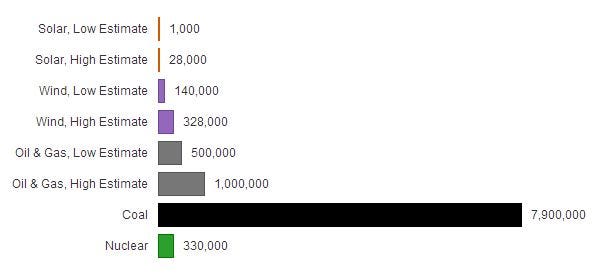


Does anybody here know how to break into this industry, working on a mobile, on-site basis? Maybe with embedded tech?