A number of Chinese businesses are setting up 100%-Chinese factory compounds overseas. These compounds are located in a foreign country, but they are fully financed by Chinese, built by Chinese, employ only Chinese, have accommodation for the Chinese employees, have a completely sustaining internal economy where employees can buy food and entertainment and send mail, posts, banking, remittance, insurance, through Chinese companies etc. so that the Chinese never leave the compound and no-one else ever enters.
The reason for these factory-compounds is because China has challenging export quotas to places like the US and EU. But concentration of manufacturing know-how remains in China. The only way for these businesses to keep selling to high-value markets is to move manufacturing to another country where there is available quota. Although the goods are 100% made by Chinese, they are 0% made in China.
The Chinese government encourages business in this area because it is good employment for the Chinese. In turn, these businesses need better infrastructure in the countries they operate in. The infrastructural investment in these other countries is a wonderful side-effect that the government is happily playing up as part of its diplomatic strategy. When the textiles and the shoes and the fabrication factories are no longer making money, hopefully the ports, the trains, the roads, the power grid will continue generating interest income for the Chinese banks. And the recipient countries of these gifts, as it were, may extract benefit from this arrangement, eventually.
I have seen more of these than I can count in West Africa, and I am told the same is true in the East (I am going there next).
The scale of construction here is staggering - I wrote a little about it [1]. It is not only roads - it's dams, deep water ports, high-rise buildings, etc. Basically anything that requires a high degree of competency in engineering.
Western governments are now held to account when they make deals with African countries - the country must have fair votes, human rights, free speech etc. As you might guess, many African countries are not so hot on this.
China? They couldn't care less, and have no such requirements, so African governments are much happier to deal with them.
I think that's highly debatable; it's obvious human rights aren't a massive priority to China, and neither is transfer of wealth to those countries.
Even if Chinese money does end up in a rush of trade and business, without strong political systems, its debatable whether wealth will make it into the hands of people who will subsequently push for human rights.
Remember also that China is simultaneously creating a blueprint with its own country showing developing nations how to create economic transformations and a level of freedom and opportunity in society without political reform. It's quite likely that even if the push creates wealth and prosperity in a host nation that doesn't have strong democratic institutions, they might start adopting Chinese political norms and techniques.
* as a side note, the western aid model has huge drawbacks too and carries similar if/but criticisms. I think it's just too simplistic for the Chinese side to say "well, everything will be fine once we create wealth!"
Who said anything about citizens getting more welfare?
China is stripping these countries bare, and the money goes straight into the pockets of the corrupt ruling class. It is staggering to see the countries with the multi-hundreds-of-billions in resources have the poorest citizens.
I think a distinction must be made between a completely extractive economy and one that is based on manufacturing. So if its simply raw materials being mined and shipped abroad, then yes I agree with the stripping the countries part. If they are actually manufacturing stuff....
Oh actually, if they're employing only Chinese citizens for manufacturing, then I agree with your assessment.
One of the major "problems" with African economies is they manufacture essentially nothing, and everything they export is completely unprocessed raw materials.
It's a very long game, though. The end results of the British Empire seem to be a net positive, although in most cases it took several hundred years and numerous wars.
On the other hand, the Spanish empire doesn't seem to have been so beneficial.
India is one of the successes. (After, of course, the United States, Canada, and Australia). It's the largest democracy in the world, and set up to be one of the wealthiest and most powerful after the current crop of powers.
Really? I wouldnt call India a democratic success. I worked in India for a few months doing recruiting and have seen more poverty than I’m comfortable with, and I’ve been to some really poor countries. Old women selling vegetables for pennies on the side of a slum can have all the vote she wants, but it won’t change a thing
I had a long discussion with a few Indian coworkers. And the main problem they mention is politicians will promise irresponsible amount of free stuff to the poorest untouchable that end up being terrible policies
Nothing against the country, but take a look at the GDP of India vs China. They started out both at the bottom of world development, and 2 decades later...
The difference between Chinese and Western imperialism is the Chinese bring their whole population with them while the west tries to use a complex proxy system to control things remotely without having to live there.
This strategy is just as transparent as it sounds. Eventually US/EU regulators will find out and shut it down. A similar thing recently played out when a Chinese company owned by the son of a major Chinese aluminum smelting magnate tried to cross ship about a ridiculous quantity of aluminum through Mexico. In this case, certain rules may need to be amended, but that is not outside the realm of possibility.
> But concentration of manufacturing know-how remains in China.
The US and EU had a monopoly on manufacturing know how for all sort of things until some executives voluntarily transferred that to the (then) third world in order to maximize short term profits. Their successors have spent the last decade shifting semiconductor production from China to lower cost countries like Vietnam, Malaysia, and Thailand.
> executives voluntarily transferred that to the (then) third world in order to maximize short term profits
They gave China their secret sauce (well, actually, China demanded it as a prerequisite) in return for access to one billion new customers.
China then cloned the tech and under-priced the foreign competition. See: High-speed rail, wind-turbines etc.
Can't say if it was the 'right' thing to do for Western companies. But it was brilliant for China, who are now, in turn, buying up Western manufacturing companies.
Those billion consumers had no money to buy anything. They gave away their secret sauce for cheap workers and bad ('good') labor laws, and lost all internal expertise, had their products cloned.
The Chinese market started becoming a thing a decade or two after Made in China became a thing.
> Eventually US/EU regulators will find out and shut it down.
As I said in another comment in this thread, in the EU (e.g. Prato in Italy) there are examples of this strategy that date back to the 80's, so I wouldn't be so sure about the willingness of the EU regulators to shut them down.
Remember that the prime objective of a politician is to retain power. These quotas are responses to demands from electorate to do something to win their votes... not necessarily because they want or don't want them. In fact it's probably in their best interests to play it both ways as what the GP comment implies.
I think this is an urban legend, or at least a major hyperbole. The Chinese businesses (at least the ones I know in Kenya) all employ lots of locals. What is Chinese is management and most of the highly skilled workers.
It's more about keeping the value-add than creating jobs for Chinese. We can argue that it's bad for locals, but unlike western colonialism, this happens under the rules the local governments have set them self. As the article points out - this might change if the Chinese government feels it needs to protect it's interests abroad - which could happen if a populist anti-chinese movement appears.
Western colonialism happened pretty much among the same lines. Start as law-abiding traders, get pissed off by some local lord, build a fort, train a local army. Local army is better supplied and trained than local lords army, so now you engage in military games (either protection or outright conquest).
Certainly I don't see this happening in any of the African countries. What China can do is what most Western countries do today to get debtor countries in line: refuse access to credit, or increase the interest rates on future loans.
I'm interested to see if China plays regime-changing games that the US and (then) Soviet Union did when its interests were under threat. So far, it doesn't seem to be employing that strategy, but I wonder if they will...
China does a similar thing with agriculture. Huge plots of land in Australia and New Zealand are controlled by Chinese farming companies and staffed by Chinese. All the food they produce goes back to China.
It is not true that they mainly (or even significantly) employ chinese on Australian Farms - these farms are generally managed by the previous owners or managers and staffed by Australians, with australian Agronomists. In actual fact, very little changes on a day to day basis, except there is more funds available for infrastructure and capital goods purchase (and property values are driven up).
Which, when you think about it, makes the best managerial sense - What the hell is a chinese person going to do coming to australia and farming - they don't know the conditions, they don't know the land - that's a quick way to destroy all the value they hope to create. Local know-how is essential in agriculture. + they wouldn't be able to get enough on 457's to come in and run it even if they wanted to import all their workers.
Source: Australian, from a farm, neighbouring farms have been purchased by chinese buyers
to the dead post:
Australia has always relied on capital inflows for infrastructure and capital improvement. in the 30s-50s it was from the UK, the 60s and 70s from the US (especially with the growth and introduction of Cotton in Australia), the 80-90s from Japan, and now China. All those waves of investment have come with fears of 'takeovers' and all of them have passed. maybe the current one will go for longer, who knows. Fear of foreign ownership are a little overhyped; they can't take the land with them and they must be good stewards of it in order to earn good returns. And they must employ locals in order to do that too - which has brought revitalisation to some regional areas that have gone through downturns.
> What the hell is a chinese person going to do coming to australia and farming
Met 2 Chinese guys from China in a hostel in Melbourne who could speak little, they said there going to work on a farm somewhere in rural Aus and lot of other other people from their village where working there.
Well Shepparton and Mooroopna has quite a substantial number if Chinese farm workers. In Safeway, nearly whole Saturday is busy with Chinese farm workers shopping. I haven't really enquired on which specific farm they work, because they generally shun interaction and also due to language barrier.
Also, Shepparton has a substantial Punjabi farming population and I can tell you from experience that the farmers do take inputs from Tatura Agricultural institute but the management to production to packing is all Punjabis. Your comment is significantly false information. Shepparton is filled with people who don't have local know-how, but have developed it.
(The article references most workers as being Sikhs. Sikhs are adherents of the religion of Sikhism, but I believe nearly all of them are ethnically Punjabis)
Somewhere between 5-10% of NZ farmland and forestry is owned by foreign interests. That's not just China, but all other countries, of which Australia is a large investor in NZ. A large amount of this land is owned by super funds.
Fonterra has an 84% market share in the dairy sector, Fonterra is a collective, owned by the individual farms.
Now, the Chinese are building milk powder factories exclusively for export to China, and owned by Chinese companies. But they are employing local people, and constructed by locals, they aren't staffed by Chinese, because the hassle of trying to get a factory worth of workers immigrating to New Zealand isn't worth it, when you could just as easily pay locals. At the end of the day, you can't pay Chinese workers less, because there is a minimum wage.
The suppliers to these factories are independent dairy farmers, there's little vertical integration here.
In the end, these plants grow the economy and create jobs. Sure, in an ideal world, it would all be NZ owned, but nobody wants to cough up the cash here to build more plants.
New Zealand is a small country, it has always relied heavily on foreign investment and ownership, and always will. The population and economy is too small to do it any other way, NZ has to turn to globalism in order to have a healthy, functioning economy.
Well you could just pay them illegally under the table. I'm ignorant about NZs economy, and you have good points/questions but I felt that it needed to be said.
In the US we have huge migrant groups that are responsible for a large amount of the harvesting in this country, and most are paid well under minimum wage. Not saying it's right... just how it is.
Illegal migrants are easy to pay under minimum wage, because they're under the radar. However, illegal immigration to NZ is (comparatively) minuscule and you don't really hear about payments under the table, except in small businesses like restaurants, massage etc.
How would you get sizeable groups of illegal farm helps into NZ? How would they live/send money back home/travel back home etc? NZ is a remote island, this is not a Mexico/Arizona situation. NZ native farmers are very in control of their farms and NZ's agriculture industry in general.
I know there are at least two in Italy, and they're coming to the United States. One is under construction in the desert just north of Las Vegas. (Apex area, IIRC - near the now abandoned Faraday Future Chinese electric car factory. The groundbreaking was on local TV news.)
This gives companies ability to get the coveted "Made in USA" label on their products, but they're built by Chinese nationals in a Chinese-owned factory in a Chinese-only compound to Chinese quality standards.
This is not a recent phenomenon. The Italian city of Prato has had that type of businesses for at least 20 years now, this is common knowledge in Italy (I grew up there) and I could also find a NYT article about it: http://www.nytimes.com/2010/09/13/world/europe/13prato.html
Prato is a case on its own, there is no "large company" or "compound".
The Chinese have come on an individual basis, after the first few came (which dates much before, in the 80's) they brought families, friends, etc., and replaced - little by little - the native artisans (largely in the textile sector).
But even before they arrived, Prato's economy was different from any other Italian textile district, there have been traditionaly very few large factories (there were some, but not like - say -northern Italy), besides the workers in the factories everyone worked in small laboratories or at home, often involving all the family members in the production. (and it was not at all uncommon that factory workers had anyway a couple looms at home that they worked on the evenings or night, while their wives operated them during the day, while doing the normal household chores).
The Chinese simply replaced the natives, adopting the exact same "individual" approach.
The craziest part of the city to me was the amusement park. It was open, but only half complete. Ride operators would follow us around to turn on the rides we wanted to ride. One of the rides didn't have the female side of the seat belt buckle, so I just had to tie the straps together.
Very sad how much money was spent on this city, especially considering how poor the country is.
I'd first heard of that a couple years ago and shook my head at all the wasteful misallocation of capital. Ordos recently appeared in the news again, but instead of an empty ghost town - it's apparently a thriving metropolis, center of the worldwide Bitcoin mining industry.
Capitalism is remarkably effective at redirecting misallocated capital into productive uses. The original builders go bankrupt, and it sucks for them, but usually an enterprising firm picks up the assets at fire-sale prices and does something interesting with them.
> Capitalism is remarkably effective at redirecting misallocated capital into productive uses. The original builders go bankrupt, and it sucks for them, but usually an enterprising firm picks up the assets at fire-sale prices and does something interesting with them.
It works great in theory and even in practice to a degree, but there are endless chronically impoverished neighborhoods, cities, regions, and nations where it didn't work out that way. The wealthy locales tend to stay wealthy, and the poor ones poor.
This sounds a little like broken window fallacy - the fact remains that the original capital was apparently misallocated - despite what any future enterprise may do with the effective subsidy of vast amounts of free stuff, that money that was wasted will always remain lost, and thus the economy is worse off than if the capital had been employed efficiently from the start. Saying that capitalism is good at recycling free stuff is kind of a so what.
Like the article points out your head shaking is because of the original reporting?
I also wonder if your point about assets is not necessarily always true and that you're only thinking examples that became interesting. By definition the bar is pretty low for such assets regardless of who scraps up the remains.
EDIT: "By surface area, it was the largest airport in the world that had ever been envisioned, with a planned area of 39,660 hectares (396.6 km2; 98,000 acres)"
most buckles have a male and female part. It's a common term to describe parts of things that fit into each other. Used in plumbing, electrical and many other industries.
Found this quote from Ai Weiwei in yesterday's Guardian very interesting:
“Can China be a global power? I don’t think so. It can gain an advantage, that’s true. But it doesn’t have soul. It doesn’t have heart. It doesn’t trust its own people. So it has no self-identity in the sense that it has never accepted human rights as common values. No freedom of speech, no independent judicial system. If those don’t exist, how can you have creativity? How can you be a country? So forget about China. China is an illusion. It’s there, it’s large. But nobody can tell you what it is.”
Why having freedom of speech, independent judicial system and accepting human rights as common values has to be the prerequisites of being a global power? Technically if you are rich and powerful then you are a global power.
Edit: sensing lots of incoming downvotes. Point is that democracy may not be the only way to global power.
I think he's making a deeper point. China can be a global power in the sense that you mean: like just wielding influence in the crudest sense - "an advantage" as he puts it.
He's questioning what the meaning of that is without a real Chinese identity expressed via the people. It's more like the power a business exercises which ultimately may be broken up, bought or which is assimilated into the culture it seeks to alter. Chinese power in this concept would be a superstructure over the world, not a force within it.
By contrast, American influence over time (love it or loathe it) has been culturally formidable because it has a very powerful grassroots (for want of a better word) identity. It is something which has taken possession of the world from the ground up.
This is a relatively recent thing, for sure. For most of human history, powerful nations exercised their influence mostly via military power and trade, not through soft power such as promoting a better quality of living (middle class itself is pretty recent, a product of industrial revolutions).
I think its disingenuous to dismiss the very real progress that China has made in industry and military as inessential just because they haven't had the same cultural impact as the US. Prosperity, strong and healthy middle class and political stability are what is necessary for the development of a strong, lasting culture.
There is also the often overlooked fact that the US, being an English speaking country, got to ride the cultural train for free since the British Empire had already established English as the lingua franca of the world. I'm sure there is a lot of stuff going on in Chinese culture which we aren't aware of since its mostly in Chinese.
As a side note, my impression is that cultural exports from Hong Kong have declined a fair bit since China took over the island. (Japan and (especially) South Korea seem to dominate Asian cultural exports at the moment).
I think a big issue regarding China and culture is that, with their need for "great firewalls" and the like, they've effectively removed a huge channel for people to communicate their ideas and culture outside the nation. I'm sure there is a lot of stuff going on in Chinese culture that we don't know about; the problem is, with many Western social media channels blocked inside the country, it is probably much more difficult for Chinese to obtain a non-Chinese audience online even if they wanted to.
Political power is not something you can bank. It cannot be stored. It cannot be measured statically at a particular moment in time. It is rooted in networks of people and in ideas. Very rich people can exercise political power only by proxy in our culture: by effectively buying it from people who have the real thing. This is both expensive and limited. It can evaporate in a moment.
I think that's the most interesting weakness about power without democracy. China, obviously, has not collapsed and it is going stronger than ever but there are changes in progress.
Are the motivations that precipitated the Tienanmen Square protests still present in the minds of the people? I think so.
Consider the difference between hard and soft power. China can definitely wield a lot of the former with "rich and powerful", but the USA today wields both. Watch Chinese movies...even those...especially those with big budgets...and it becomes very clear that china has a problem.
In fact, the only global power meeting those prerequisites has arguably been the US (unless you count the EU, but if the EU is a global power then China is too).
The USSR didn't meet them, and before the 20th century no global power was a democracy.
Hm. Never thought much about that before. China's becoming exceedingly good at building and selling other people's IP. But I haven't looked to see if China is a source for any great novel IP. Are they?
As a counter quote. I can't remember who said though.
"China has 1.5 billion people, and all them want to be millionaires". So China may lack freedom but it has big ambitions.
China's investment in Pakistan, Srilanka, Myanmar is clearly aimed to impose strategic advantage over India.
Especially in Srilanka, apart from economic activities; they funded & trained Srilankan army to conduct one of the worst genocide on their ethnic tamil population in 4th elam war. Sadly neither the international community nor the Indian government did nothing to prevent it from happening on the contrary they even helped the then Srilankan government with their war along with China in a rare display of cooperation for worst crimes against humanity.
The slippery slope towards empire for the east India company didn't start by protecting dams and dredging or performing economic activities. It began by superior ammunition and military services that they provided to the various kings and nawabs who were warring with each other.taking sides, and extracting political power in return. Equity ownership means nothing if it's a business that has zero market value. Political power OTOH is what leverage is all about.
Arm's exporters have more leverage than ownership in useless ports or airports.
I wouldn't call it a slippery slope so much as events precipitating the situation. The revolt in 1857 led to the dissolution of the East India Company and a formal takeover of India by the British government [1]. The British Raj lasted almost a century and could have lasted longer had the British Army and economy not been so weakened by WWII.
It will be interesting to see what happens should a country attempt to seize Chinese assets en masse. The PRC is not known for its lack of ability in the Great Game. We are still decades away from the circumstances that allowed for decolonisation movements in the mid-20th century to be successful.
Things could be more similar to what happened with US investments in South America. See for example what happened in Chile when Allende nationalized US owned copper mines...
Chinese equity stake in the airport and port will likely result in significant Chinese operation of those ports.
And surely, that's got to have India thinking a little bit - it means that the PLAAF/PLAN now have a potential forward operating base literally in their backyard.
And if China can continue to assert leverage on Sri Lanka, then they might even be able to forward base onto Sri Lanka itself without official argument from Sri Lanka.
I mean, I doubt it, but it seems like a viable play.
How do you see China countering India's cultural hegemony in the region? Much of the culture in the Indian sub-continent is borrowed from Indian culture.
Shouldn't this be some insulation from Chinese influence?
Loans and sanctions. China helped SriLanka in UN when human rights issues came up. Also India's cultural influence is not an answer to everything. It has limited influence. Myanmar for example evicted Indians forcefully in 60's. Bangladesh and Nepal are trying to balance China and India influence.
All influence is economic. Weapons and ammunition and soldiers cost money. China`s influence in the underdeveloped world over strategic raw materials should be of great concern to developed world strategic planners. Rare earth metals are a commonly cited example.
Not at all.a few years ago, the Chinese monopoly over so called rare earths threatened to increase prices of all electronics. But it took barely 2 years for new mines to be opened outside China profitably and the monopoly was broken. Ammunition is very rarely a market demand. It's dealt by govt bureaucracy and shady arms brokers. I.e nothing to do with economic activity. War is always a political act.
One thing worth noting is that, with a theoretical max capacity on only 1 million, this airport would actually be pretty tiny by world standards. (The largest do >100m, and even Colombo Airport pulls in nearly 10m.)
By comparison, another famous white elephant airport, Ciudad Real in Spain, was built for 10m and currently serves precisely zero.
I was in Sri Lanka in summer this year. Outside of international tourist arrivals (all at Colombo, which itself is a tiny airport), there is practically zero internal air travel. The country is so tiny that you can go across the breadth of the country (Colombo to Trincomalee) in 4-5 hours by bus. Or you can take a helicopter/private plane (which are pretty cheap) and do the same distance in like 45 minutes.
I can't even imagine any situation where an airport serving a million people outside of Colombo would even be remotely feasible.
Easy: Direct international flights, particularly for tourism. For example, in Thailand, the airports of Phuket and Krabi are only ~2 hours apart by car, yet cater to 15m and 5m pax/year respectively.
Now I'm sure it made no sense to build the airport at Sri Lanka's current stage of development, but as the country gets richer, it's almost certainly going to become useful sooner or later.
Pushing countries deeper into debt, even inadvertently, may give China leverage in the short run, but it risks losing the good will essential to OBOR’s long-term success. For all the big projects China is engaged in around the world — high-speed rail in Laos, a military base in Djibouti, highways in Kenya — arguably its most perilous step so far may be taking control of the foundering Hambantota port.
This is a good point to make, but sadly one that isn't being made by the US atm.
It's pretty clear what's going to happen with this airport: To relieve its debt crisis, Sri Lanka has put its white elephants up for sale. In late July, the government agreed to give China control of the deepwater port — a 70 percent equity stake over 99 years — in exchange for writing off $1.1 billion of the island’s debt
Just imagine what China will give for an Indian-ocean airbase in Sri Lanka to go with the base they have in Djibouti[1]. Sri Lanka will keep trying to play China, India and the US off against each other[2], but it's pretty clear to everyone that the "string of pearls" strategy is working well for China at the moment.
Srilanka is stone throw away from India. I don't think Srilanka will ever allow a military base for China and antagonize India.
When Chinese submarines were allowed to dock twice in Srilankan port that was the last straw. Indian secret service RAW allegedly played an important role in toppling the oppressive, corrupt and Chinese leaning Rajapakse government[1]. I guess that is one serious warning to ignore.
Indeed, India is very concerned. I believe the current port leasing conditions say it isn't to be used as a military base.
But things change. China spends a lot of money and it isn't clear how this will play out.
Five years ago people thought it was impossible they would control the South China Sea. Now the it's close to the de-facto position, and the US only conducts an occasional freedom of navigation operation to pretend otherwise.
It's very striking, how China's endeavors mimic those from the US's past and ongoing geopolitical stratagems.
US's game so far has been to sell overpriced white elephants to countries in the Middle East, East Asia and South America. This has benefited in the process, a few "bent" middle men, resulted in a massive transfer of wealth from the US Fed to a few select infrastructure/defense firms in the US, all while indebting generations of impoverished people to the whims of the American retainers in WTO/IMF etc.
Inevitably, these countries become the hubs for slave labor under US based corporations, which reap massive profits while paying pennies on the dollar.
... and they say slavery is dead.
It's a pity that China appears determined to follow a similar policy. I find it amusing that the article almost seems to gloat "China is following the Great Britain model. These outdated chinks have no idea how to run an empire in the modern era!".
The world is a very depressing place. Welcome to the Borg.
It says nothing about China's influence. It just means China likes to throw good money after the bad. Just look at the loans it made to Cambodia, Nigeria, Iran, etc
Part of that is waste, but surely a lot is corruption, and people dumping money offshore any way they can? It's all the same to the Chinese economy, but the motives are distinct.
Sure it is. If you keep subsidizing a nation perpetually in a money-losing approach to buying favor like that, your favor loses value as they take your largesse for granted (guaranteed to happen across all of human nature), yet you keep bleeding large sums of capital forever for no further gain.
Buying favor that way for China will cost trillions of dollars over time and gain them little. China will realize that if they don't already and will switch to the US system of military partnerships and distribution (it's cheaper, it builds up your nation's global military capabilities, you turn around and sell military hardware to the nations you're dealing with, and your partners become over-dependent on you for their security which completes the lock-in). You can already see some early efforts in that direction from China. Going forward, most of their foreign capital adventurism will likely redirect back toward practical investments, eg in natural resources.
This is true, but it's worth noting the US also loans money for arms sales.
China has strong and influential alliances all over Africa and the Pacific, partly because of their aid and loans program. There's a reason they sell the Asian Development Bank as an alternative to the US dominated World Bank. It's also instructive how quickly close US allies (including the UK and Australia) expressed interest in working with China on it.
> China promotes itself as a new, gentler kind of power, but it’s worth remembering that dredging deepwater ports and laying down railroad ties to secure new trade routes — and then having to defend them from angry locals — was precisely how Britain started down the slippery slope to empire.
China should be deterred by the prospect of following the footsteps of the most powerful empire in history?
To add: an empire they also hated for what it did to China.
One of my oldest friends went to China to study medicine. He's now a doctor in Shanghai. I visited him a while back and spent a lot of time with his Chinese colleagues.
The overwhelming sense I got was that China believes it is their destiny to be the supreme power in the world, that western dominance is an aberration of history, and that it is China's right to that status.
I agree with what you seem to imply: The attitudes of nationalism - and the evils it leads to - are well known, but hardly talked about these days. How could we have forgotten?
"Over all, around 90 percent of the country’s revenues goes to servicing debt. Even a new president who took office in 2015 on a promise to curb Chinese influence succumbed to financial reality."
90% of Sri Lanka's revenues goes to servicing Chinese debt? I find this hard to believe. Any references?
This reminds me of an airport in Radom (Poland). It was built few years ago, because it was an opportunity to get some money from EU (and for local politicians to get some bribes :) ).
For the first two years airport was unused - the only airline that signet contract got bankrupt. Currently it has another airline operating and serves 10k passengers per year.
That's what happens when EU starts giving away money.
> That's what happens when EU starts giving away money.
I'm unconvinced how bad this actually is.
An organisation with a ~150 billion euro budget in going to inevitably have some abuse/waste of it's resources but equally I can think of dozens of projects that have positive outcomes. Sure, it's still not okay for the ones like the airport to exist but I think focusing on them undermines the good that can be done by having a source of cash that can be used to improve the world.
I guess you would similarly dismiss the corruption etc that has led to auditors refusing to sign off on EU accounts for years? And as if the EU has morality at its core.. I don't see much of that when it comes to EU policies that impoverish farmers in developing countries.
A very big difference is that EU convergence funds aren't debt you need to repay later - while those Chinese investments are. Those countries are getting into deep debt, sometimes to build things they don't need.
There's a catch with convergence funds: EU never pays 100% of the bill. Average is closer to 50%, I think, so it is enough to tempt politicians into unnecessary investments, and not enough to be completely harmless for local community budget (there are cities in Poland with debt to yearly income ratio of 80-90 %).
Theoretically, the not-100% rule is meant exactly so that the receiving state won't spend the money in completely wasteful projects. Unfortunately, this isn't a full assurance against the long term stupidity/short term greed of local politicians and voters alike - this happened in Southern Italy too, and surely in many other places.
Maybe i missed it in the article, but Sri Lanka shouldn't complain: it was China that enabled them to crush their separatist movement http://thediplomat.com/2016/11/china-and-sri-lanka-between-a... (right or wrong, Sri Lanka's best interest was to end the war and stay one country) . It was China that helped them militarily and politically at the UN. That does have a cost...
Was it China that encouraged and financed Greece's excessive debt? This article is interesting, but comes up short on completeness (i.e., lack of bias).
Imagine a fully centralized country like china ruled by someone impulsive. Centralization always relies on a well meaning, benefactorial power center- if that goes sour- and it always does, there is no plan for deprecation or recovery.
PS: How can land investment in africa make sense? They are often not enforceable and do not outlast populist government turnover?
I'm surprised nobody's brought up the US real estate market parallels. Arguably China is already in a position to exert significant influence over multiple markets in the US with nothing more than threats - real or implied - of enacting currency controls. Entire markets - if not the entire RE market in the US - would collapse overnight if China decided to prohibit the free flow of money into US properties.
> if not the entire RE market in the US - would collapse overnight if China decided to prohibit the free flow of money into US properties.
That's a comical extreme exaggeration. China has a minuscule share of and influence on the US real-estate market overall, including all of its metros. They have a several hundred billion dollar position in a hundred trillion dollar total market. They've only begun to have big influence in one city - Seattle (Amazon by itself has several times the real-estate influence that China does on Seattle). Much like Vancouver's real-estate market didn't collapse once the Chinese money stopped flowing in so easily, nor would Seattle's market. Further, most of China's real-estate influence is on a small segment of the higher end part of the market, from the capital flight of wealthier Chinese.
All of that Chinese capital flight has already slowed dramatically due to capital controls. And yet, US real-estate isn't having a problem at all (quite the opposite).
Japan had a dramatically greater position in US real-estate in the late 1980s. Guess what didn't happen when Japan started pulling its capital out of US real-estate? You guessed it, US real-estate didn't collapse at all. In fact, it did just fine from 1992 to 2000. The huge problems Japan's economy had, resulted in a small twitch in the US real-estate market, which is exactly what would happen with China.
Arguably the main focus Chinese economic policy over the past year or so has been to close loopholes in the existing (strict) controls to prevent capital from leaving the country. The RE markets aren't collapsing.
As the United States beats a haphazard retreat from the world — nixing trade agreements, eschewing diplomacy, antagonizing allies — China marches on with its unabashedly ambitious global-expansion program known as One Belt, One Road.
This constant MSM need to connect everything on earth back to Trump is getting so fucking tedious. Construction of the airport this article concerns was finished (edit: begun) in 2009. It's almost as if China has been executing a long-term plan to build a web of neocolonial economic interests around the world for a pittance of the money the USA spent wrecking the Middle East & Afghanistan and killing hundreds of thousands of random people over the last 16 years; except framing the story that way wouldn't reaffirm NYT readers existing biases.
The description of America's retreat from the world has been happening for the last few administration's so I don't know if they are referencing Trump directly.
The US liked to throw it's weight around and act like an asshole at times and China is now trying to provide another option to get nation's on their side
Construction of the airport this article concerns was finished in 2009
2009 was when the civil war finished. The airport was completed in 2013[1] (although I don't think that is material to your point).
The issue isn't specifically the construction of the airport, it was more the leasing of the Hambantota port to China. That occurred in July this year and didn't seem to have any comment form the US State Department (as far as I can see) despite the US "Pivot to Asia" and the aggressive Chinese building in the South China Sea.
Bush II is still easily the worst president of the last 100 years, at least. Trump has yet to come close to the Iraq disaster, though he has at least 3 more years so who knows. Obama wasn't bad but his problem was that he governed as if the country were not in decline. He was a prosperous times president when we needed a turnaround artist.
PIT was the hub for US Air (originally Allegheny Airlines) back when that airport was built. It's pretty vacant now that USAir changed its name, moved the hub to PHI and merged with American, but PIT used to be quite busy.
Reading the article, I think what I realize is that us readers how no real sway over either side. If Sri Lanka didnt want an airport, they didnt have to get it and China didnt need to provide an airport.
Before there was real customers coming in, this was likely just a very good deal or a new product launch with no demand, I think the writer is oversimplifying the situation a bit. There are more reasons than maybe economic neocolonialism.


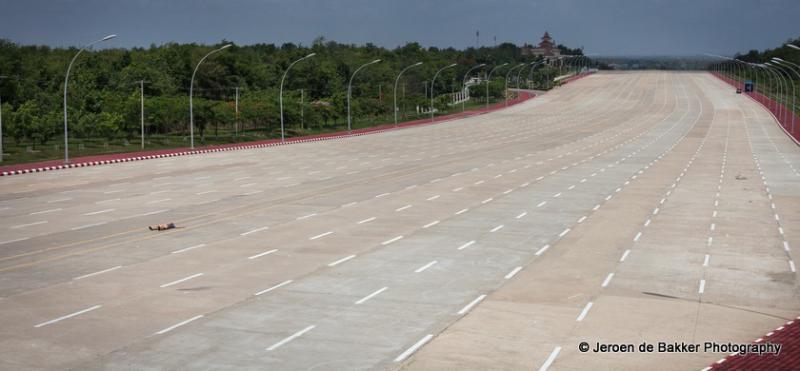
The reason for these factory-compounds is because China has challenging export quotas to places like the US and EU. But concentration of manufacturing know-how remains in China. The only way for these businesses to keep selling to high-value markets is to move manufacturing to another country where there is available quota. Although the goods are 100% made by Chinese, they are 0% made in China.
The Chinese government encourages business in this area because it is good employment for the Chinese. In turn, these businesses need better infrastructure in the countries they operate in. The infrastructural investment in these other countries is a wonderful side-effect that the government is happily playing up as part of its diplomatic strategy. When the textiles and the shoes and the fabrication factories are no longer making money, hopefully the ports, the trains, the roads, the power grid will continue generating interest income for the Chinese banks. And the recipient countries of these gifts, as it were, may extract benefit from this arrangement, eventually.