Our whole family was really sick around March and couldn’t leave the house. We had stocked up what seemed like a lot of food, but after 3 weeks it started to feel really tight. Online grocery delivery wasn’t handling the load, so we just had to wait. In retrospect, our neighbors would have helped — but this was the early days of Covid and we felt like pushing through was the way to go.
Eventually the online grocery systems adapted - just in time for us. But it made me rethink our pantry. As a fan of Marie Kondo, we don’t have a lot of clutter in our home — and we had applied that level of minimalism to our food as well. But given we live in earthquake country, having an extended supply of food on hand isn’t hoarding — it’s a responsible thing to do.
It made me think about resiliency — how a resilient society stems from the household. A family that can get through a few weeks of a disaster on their own helps spare resources for more dire cases.
It also made me think about my grandparents’ basement. It was full of mason jars like the ones described in the article. They had tons of food down there — olives, pasta, beans, etc — much of which was grown in their garden. Like so many WWII era families, they had a victory garden — one they kept over the years.
At the end of the day, I feel a deeper connection with my grandparents’ generation than my own parents’. They lived through a depression, conflict — they had a stronger sense of how precarious society can be. My parents maybe experienced some of that — but they also lived through a boom time where American optimism knew no bounds.
Anyway, makes sense people are buying mason jars. Some things are timeless. The demand will fade, but some of us will hold onto this year for the rest of our lives.
Hurricane country here. Yes, having a couple of weeks worth of food and water in the house during the season is the responsible thing to do. Whether it's modern freeze-dried meals, canned food, or just cycling through your common grocery purchases.
A few years ago I bought a supply of mylar bags and a heat-sealer. I can put various dry items in them, dropping an oxygen absorber or two in there (more for products that have low packing density), and they're good for a few years. Don't forget to write the contents + date on the outside with a Sharpie before filling!
Mom went through rationing in the UK during the war (they heated their house in part by the coal that she picked up along the railroad lines), and she always had a well-stocked pantry. Home canning was too much work for her though, so she just had a lot of store-bought shelf-stable food.
It's way easier to be minimalist when you are rich because you can buy things at whatever the price is when you happen to need them. (Also, being poor cost a lot.)
As a fellow fan of Kondo, I've come to realize there's a spectrum with absolute minimalism on one end (one each of a few things) and hyper-resilience (hoarding) on the other end. I now think it's reasonable to find a comfortable spot on the spectrum with more resilience, and then use Marie's principles to stay in that spot vs. getting rid of almost everything. Of course, one's comfortable spot changes over time and in the face of other factors like local climate risks.
> having an extended supply of food on hand isn’t hoarding — it’s a responsible thing to do.
Yup. I definitely feel like it's something that we've lost in the JIT based supply chains of today. As you correctly pointed out there's plenty of places in the US where earthquakes, hurricanes or other large scale events can introduce quite a shock to local systems.
Reading about your experience this March (hope you folks are okay now!) and your grandparents reminded me that we each have a personal responsibility to be prepared and resilient. There are political and practical dimensions to this.
Not every family can prepare itself; many are severely resource constrained. I volunteer at the Utah Food Bank, which functions as the central distributor of donated food in Utah, supplying many, many smaller food banks in the state. One of the warehouse workers recently mentioned that the facility was turning over more food each week than was normally distributed in months. There is great need for shelf stable foods here, even with relatively low unemployment.
For those of us that can afford to prepare, though, it’s imperative that we do so. We cannot and should not expect the government to have the capacity to come to our rescue in every crisis. And the benefit of being prepared means constrained resources can be directed to the neediest when those crises inevitably come.
Bonus of having lots of canned goods on reserve: you can donate anything unused to your local food bank if there’s sufficient shelf life!
I'm not convinced. 100 years ago, home preservation was a way to save money, so it made sense that people might shift toward it as a way to economize. Today, though, the food supply chain is such that it's both cheaper and less work to buy canned goods from the supermarket than it is to buy fresh food and preserve it yourself.
There's a much more parsimonious explanation: People are are bored at home and looking for new hobbies. I'm guessing the people who are buying up jars and rings and flats now are mostly the same folks who were buying up flour and yeast back in the spring. I wouldn't be at all surprised if yarn and knitting needles become a scarce commodity this February.
As someone who buys almost all my produce from local farmers to eat, preserve, & ferment I totally agree with this. It’s not a good way to save money, really. Maybe a little but only if you are careful to avoid wasted produce, and that kinda ruins the fun. Industrial food supply chain is truly very efficient, probably thanks to scale.
You should still do it though, if you can (eg have access to real farmers and enough time). It’s very spiritually rewarding and helps to build communities. Farmers make more per pound at the farm stand and you pay less. It generates less landfill waste and, not sure how to explain it, but it’s very rewarding labor.
I’m headed to the farm stand right now to get some broccoli and brussels sprouts, fresh from the field, to freeze and eat in the spring.
What you're going to miss out by buying your preserved goods is assurance of quality and variety.
There are a lot of deceptive labeling practices in the food industry. Things like an ingredient list that says your food contains "natural flavors" without saying what they are, or not having an ingredient list at all. When ingredients are listed it's common not to have quantities listed, and virtually never do you see any account of the sources of those ingredients. Of course there's no way to tell whether they're telling the truth either, and no way to know how the food was prepared or how sanitary the preparation or ingredients were, what mistakes or accidents happened during the manufacture, etc.
As to variety, there is usually not very much variety at all in preserved goods at the grocery store. Pickled or fermented goods are packaged at the time of the manufacturer's choosing, so you really have almost no choice as to what stage of ripeness or what flavor the product is to have.
Compare this with preserving your own food, where you have complete control over and knowledge of the ingredients, source of the ingredients, method of preparation, flavor, degree of ripeness, and virtually everything else.
You can completely customize everything to your needs and desires, and don't have to settle for whatever the manufacturer chooses to give you.
It really opens up a whole world of possibilities that store bought food just doesn't offer.
Sure, but I don't see how any of that challenges the point I was making about TFA's explanation for people's sudden interest in canning jars being implausible.
Sure, there's a lot to be said for making things yourself. But people who are hunkering down for economic hard times are not going to suddenly become interested in spending more money on higher quality food. Doing just the opposite of that is more likely.
The people who are doing it to hunker down for hard times are the people that would go to every grocery store for miles during the first few months of COVID and find that each store had been entirely bought out of canned goods. That was reality for many rural areas for a while when all this started.
One thing that Factorio drilled into me was compression. It's easier (=cheaper) to transport compact processed goods than bulky raw materials. In the real world, shelf stability is also important, it allows cheap-but-slow modes of transportation.
Keep in mind that shelf stability refers to the food safety of the product, not its quality. One of my friends used to work at a candy factory, and the difference between freshly made gummy bears and the ones picked at retail (that have been sitting in a warehouse and on shelves for a few months) is very large. One of them is filled to the brim with flavor, while the other one is much less flavorful and drier.
They're both edible and safe to eat, mind you, but it was much better to get fresh ones. Or not eat candy at all.
I think it's like being a native american that has never have been exposed to christianity. Why spoil something you don't truly want to know that could alter your worldview haha!
Dude, canning is a lot like cooking. You get to make exactly what you want instead of being at the whim of someone else's choices thousands of miles away. There are still people who like doing for themselves. I know it's hard to imagine, but even in this day and age, people still like being able to wipe their own ass.
It's probably not cheaper to process your own fruit and veg.
The quality can be hugely higher, though - my wife's applesauce is the best I've ever had, and consistently so.
If you live in an area with local agriculture, it can probably make you more resilient against supply chain failures, too (as long as you keep a good stock of lids on hand).
>>The quality can be hugely higher, though - my wife's applesauce is the best I've ever had, and consistently so.
I wonder if it's simply because she can put more sugar in that any store bought brand. Over here the law limits both the amount of sugar and salt that products can have, so sure, I can make tastier things at home by just using the "proper" sugar and salt amounts. In fact most store bought things are hugely improved by just adding a bit of salt, since they are not allowed to salt them more by law. Most likely not the healthiest thing to do but that's where the taste difference comes from for me.
That's sort of funny because in the US, I'd have said the more common issue would be an excess of sugar and salt over the what's really required for preservation and taste.
That was my feeling too. The applesauce I buy is from Trader Joe's, and it has exactly one ingredient: organic apples.
It's easy to add more sweetness if I want, for example if I mix it with unsweetened plain nonfat yogurt then I will add a bit of maple syrup too - yum!
Same for other similar products. Most fruit jams are way too sweet for my taste. The excessive sugar is probably required by law in order to be called "jam" - yuck! There are some "fruit sweetened" spreads that are sweetened with grape juice, but then the grape dominates the flavor.
We used to be able to get Kozlowski Farms fruit spreads that were sweetened with apple juice - a much better pairing for berries. I haven't seen them in a while locally though.
I sweeten all my jellies with apple juice. Most people can’t figure out the je ne sais pas quality of it..be it roses or lemon verbena or lavender..it’s fun trying to make them guess the flavors.
That certainly is possible. She uses plenty of sugar, along with a few spices.
I think it's also, though, that we pick apples ourselves in local orchards, looking for good ripe ones and processing them within a week or three of picking.
That means we can pick varieties almost exclusively based on their flavor profile. We don't have to worry about how well they survive in transit or sitting in grocery stores.
The big processing operators do have to worry about variables like that, as well as what types they can keep in supply year round for consistency of flavor.
I imagine that cuts down on the varieties they can realistically use.
The other reason to home can was to time-shift your produce. Fruits & veggies ripen at certain times of the year (pumpkin in the fall, for example) and if you want to enjoy some later you'll need to have some stored away, because fast global produce transport didn't exist yet.
Something I was surprised to see is in short supply is playing cards.
I thought the article was pretty careful to attribute the rise of canning more to psychological factors than to household budgets:
In times of economic insecurity like the last recession in 2009, when McClellan started her Food in Jars blog, people turned to canning to soothe their fears, and mason jar sales took off.
...
“When there are these big downfalls of trust in systems of government or economy or institutions, there’s this desire to retain control wherever we can find it,” she says.
I was looking for flour and yeast back in the spring because there was no bread on the shelf in my supermarket, not because I wanted to take up a new hobby. Luckily the bread hoarding or shortage or whatever it was didn't last too long.
Around where I live (NE US), the flour shortage seemed to last quite a bit longer than any bread shortage--at least for the type of semi-artisanal bread I tend to eat (i.e. made in house by supermarket and similar mid-volume producers). In fact, I'm not sure I ever had much trouble buying bread. But flour, especially of my preferred brand, took a good couple months to get back in stock.
The reason I, and I suppose so many other people took up bread making was because it was an interest that was limited by available time in the house. I used to rarely make the bread I wanted because I'm not home enough on a weekday and on a weekend I am too active to make sure I can tend the dough. Now taking a break at 3 to start some dough for dinner is an easy reality.
This is it exactly. Some bourgeoisie yuppie needed to find a new hobby so they started doing this and play pretend that it's somehow a new trendy way to save money. My mother cans food all the time. Not because it's cheaper though. She does it because it's homemade stuff and she can give them away as gifts.
These bored people forget the cost of electricity to heat water that seals cans, the jars upfront costs, the pressure cooker for the canning, and proper storage. I won't be shocked if these people try turning it into another lululemon type of deal and make another pyramid scheme to not lean into.
A tidbit from the article: Ball Corporation is based in Indiana. Which doesn't immediately seem a compelling location for glassmaking until you realise that a key input was found there. Natural gas.
From the Indiana gas boom. Of the 1880s, as the article mentions. But not the hubris and decline which characteried it:
In 1886, Indiana's first commercial gas well when George W. Carter, William W. Worthington, and Robert C. Bell, hired Almeron H. Crannell drill another well in Eaton. Crannell reached gas at a depth of 922 feet (281 m). When the escaping gas was ignited, the flame reached 10 feet into the air. Other gas wells were drilled, and in instances, the escaping gas was ignited to advertise the discovery, with the assumption the gas inexhaustible. The resultant flame was called a flambeaux.
The gas attracted energy-intensive manufacturing, notably glas manufacture, including the Ball Corporation (in Muncie), and the Hemmingray Bottle and Insulating Glass Company.
Of course the supply was not infinite, as much as 90% was burned in flambeaux, and by the early 20th century other energy sources were substituted as the last dregs were exhausted.
But the echo of a squandered nonrenewable resource remains in Ball canning jars.
My grandparents in what is now Belarus grew everything that is possible to grow and canned most of it. Pickles, tomatoes, carrots, strawberries, cherries, apple juice - those were all in the cellar. Ever since we were little, my brother and I were expected to help, squeezing apples, destemming strawberries, pitting cherries, and helping with cooking. The soviets didn't have Mason jars. My grandmother used 3 liter jars with flat top, you needed to get special lids with rubber gaskets, and a special tool that had a big disk that went around the top of the lid, and a rotary handle that moved a hand around the circumference of the lid, physically bending it around the gasket and the lip of the glass jar. It would result in a good seal, but to take it off, you bend the lid and couldn't put it back on. So the soviet economy had white plastic lids that you would put back on the top of the jar, kinda similar to those colorful Pyrex ones we have here.
I live in USA now and my grandparents are dead, but their legacy lives on. I've been actively canning for about 15 years, maybe more, and my children now help me and my wife with cherries, strawberries, tomatoes, pickles, peaches, apple sauce and various marmalades. It is a great family activity and a great way to have your own food in the winter. My sons even make money selling the leftover syrup for making lemonade. It is completely non-scalable in terms of costs, I once made some calculations that to make money off the jar of strawberry jam I'd need to charge something like $50 (jars, bands, fruit, sugar, lemons, heat + time). So we talk about this with my children as example of why the high-volume automated food production makes the food so cheap.
At any given time, I have maybe ~220 jars in my home +/- a dozen in whatever direction. Most hold preserves, the ones that do not hold things like nuts, dried fruit, rice, beans, spices. We give out jars - pickles, strawberries - as presents, and although some come back to us, many do not, so I have to replenish my supplies. I definitely noticed this year's shortage, but it wasn't too dramatic in my area, it was similar to what I see every year around harvest time.
One of my favorite places to get jars is my thrift store. They have the most random collection of jars. Few years ago I scored 3 unopened cartons of Bell jars in a REALLY dusty state. Once I opened it, the QA card inside had a production date of 1953. The lids and the bands were heavily corroded, but the jars were fine and once washed, undistinguishable from the modern ones, save for the minor details in design. When opening one of the jars, I smelled the 1953 air inside and for a moment, it felt quite different. Then it escaped and entered 21st century.
Glad you liked my review. This is a big part of my own and my family's identity.
I've calculated this before and should be able to reproduce.
This year, we've bought 14 flats of organic strawberries at $16/ flat = $224.
Once destemmed and washed, it is about 9-10 kilos of fruit, so rounding up, we need 10 kilos of sugar. Sugar is cheap but I get organic (although there really isn't much difference) and I get it from Costco so it's about a buck/pound, so two bucks/kilo, so about $20
All canning needs an acid like lemon juice otherwise it's just too sweet. I buy nice lemons and squeeze them (more expensive). Assume about 20 lemons at a ~1 each, so $20. You could get away with just lemon juice (cheaper).
The jars are $15 for 12. New ones come with lids, but if I reuse it, I have to buy lids.
That made 16 jars of strawberry (I pack it pretty tight) and another 20 jars of syrup (I consider that a waste product, but it does make good lemonade)
If you just count the costs, you are looking at $224 (fruit) + $20 (sugar) + $20 (lemons) + $15 jars = $279, ahh let's just round it to $290. That's ~$18/jar in raw materials.
It takes a full day to do this. Few hours for stemming, couple of hour for cooking, sterilizing jars, an hour for cleaning. You have to do it in batches. My children labor for destemming is free (I'll pay for it come college education time), and so is my wife. There is some cost of gas stove running and electricity and water for cleanup. Considering how highly compensated my time is ordinarily, the cost per jar climbs up.
As I said, it is not a way to reduce your costs. If one wants cheap, you go to Costco and get bunch of Smuckers ;-)
One thing I've never understood: why don't, say, jam manufacturers use standard-size mason jars so that they can be easily re-used when empty? They can just as easily attach branded labels to standard jars, right?
Or even just standard mason-jar size threads and diameters so at least the lids and bands are interchangeable. Washing and re-using jars is so much easier when the lid doesn't have to be paired with the exact jar it came with. (I know that proper mason jars use tempered glass, but I'm just talking about containers to hold leftovers in the fridge or dry goods on the shelf.)
My best guess is that they're worried about liability and so intentionally make the threads incompatible so people can't use them for canning, but I have no evidence this is actually true.
Bonne Maman confiture jars from France but now available everywhere ..have wide mouths and are shorter. The labels come off easily and it has multiple uses. They are great for making layered pudding or parfaits ..and it’s sized for single serving. unlike most jam jars in America, they lend themselves easily to other reuses without pretension/artifice. Maille mustard/moutard is also French and very reusable jars. Afterall, canning was discovered in France(1785..as the article states)
As usual in America, they are used as water glasses and that’s just bizarre to most French people..but that’s what we do here...mason jars with handles is the most bizarre thing ever. It’s peak hipster.
My family (and everyone I know who remotely does any sort of home canning in France) always re-used store bought jam jars. I don't ever recall buying a jar for the sake of a jar.
The only things we ever purchased are canning kits (some wrap, rubber bands, some kind of wax).
If the jar was for curry sauce or something like that, it can be difficult (not worthwhile) cleaning the lid/seal sufficiently to get rid of the smell.
I wonder if you incentivize this type of behavior by allowing use of standard sized jars (such as mason jars) for free. But then require a small (per-jar) fee to manufacturers that want to use a custom jar. Standardization is good because it promotes re-use, for example I can buy many different types of lids for my mason jars, but not so for some random jam jar, so if the jam jar lid breaks it is effectively unusable.
Nothing says you can't reuse their stuff. If you only buy the jars from a single company, you're essentially buying their can as well. What factories do and what you can do with that same jar makes no difference. The sealing process may be a tad different but at the end of the day, you're still sucking out all the air creating a vacuum.
There's always a shortage of canning jars around harvest time; this year was an incredibly good garden season and therefore its reasonable that the usual consumer demand is up from just that; aside from other factors.
There's something to be said about monopolies here too; it's not just "glass canning jars"; Ball corp has a grip on the testicles of much of the food packaging industry.
There are two different Balls. The Ball corporation that owns the food packaging industry used to make home canning supplies, but they spun it off into a different company back in the '90s.
Nobody has mentioned the cannabis industry, specifically extractors. We have all your jars. We buy out ULINE, we go to Fred Meyers / Meijors / Fleet Farm, Walmart, etc...
Amazon could charge 4 times (currently about 2.5 times) the price per 12 quart jars shipped, and it still makes sense to use them when your product is $10-$60 a gram.
It's not all our fault, but not all extractors in the commercial industry are using lab glass, and it shows on the shelves in legal states.
Typically, some ULINE commercial accounts will show items as "Sold out" when customers with upgraded accounts will see at least some quantity. You can also order Ball brand jars from the company themselves in most cases.
On the subject of lids, at least for fermentation, a search for "fido lids"[1] will lead you to all sorts of options. You don't even need a lid as such for some fermentation methods.
I'd also recommend Sandor Katz's work, like The Art of Fermentation[2] for getting a thorough understanding of the subject.
We bought a chest freezer and started canning stuff because, seeing the general disregard for masks and germ-courtesy among Americans, we've limited our grocery store trips even more and buy in bulk. This means we inevitably end up with some extra fruit, juice, stock, etc. that's too old to comfortably eat unprocessed but not old enough to be spoiled. Maybe it's not necessary for survival now, but I find it difficult to throw away good food anymore without thoughts of how much regret I'd feel in the future if the worst happened and we ran out.
The real shortage is the canning lids, since you can reuse the jars with sterilization but the lids must be replaced.
My mom constantly complains about this to me and she's been canning since I was a kid back in the 90's. What I also find ironic about these "1st world preppers" hoarding these is that they'll buy a glass jar of some sauce, salsa, cheese, or jam, but then throw that away. However they won't bat an eyelash over buying like a 12 pack of 16oz mason jars for like $30.
Another thing I remember when I was a kid, my grandmother would reuse plastic cool whip bowls. She grew up late depression era and not that where we lived was destitute honestly, but it was just something most people would scoff at. She'd also save plastic bags.
As I've gotten older, I've found that this way of living is perfectly acceptable and honestly the way to go. It's contrary to the status quo simply because it is a simple and effective means to save money. Just because the amazon industrial complex wants you to believe their products are so cheap you'd be stupid not to just buy a new one!
[..] But in 1949, demand for canning jars sank again, and the company had its first net operating loss. The ’50s brought home freezers and suburbia and a rise in supermarkets; no longer did people need to can. In an attempt to diversify, Ball created an aerospace and technology arm, the Ball Brothers Research Corp., which would eventually build satellites for NASA.[..]
And
[..] In 2016, Atlanta-based Newell Brands got into the mason jar business when it paid $13.2 billion to acquire Jarden — “jar” and “den,” get it? — formerly known as Alltrista, the company spun off by Ball in 1993. Alltrista owned the trademarks to Kerr, Ball, Bernardin, and Golden Harvest — four of the major brands still being produced, which it was marketing to a whole new generation of mason jar lovers.[..]
We can jams with summer berry picking (strawberry, wild grape, black caps) to enjoy throughout the year, and just our inability to find lids was stupendous. Those little discs that cannot be reused after they’ve been sealed used to be everywhere, until they were nowhere early in the pandemic.
I've been canning for many years. Learned it from my grandmother while I was growing up, but she did the super old-school wax seals. A game changer for me are Tattler reusable lids: http://tattlerproducts.com
I bought some big bags of both the "regular" and wide-mouth lids/gaskets several years ago and have never worried about the metal lids that come with the jars when they're new (got them saved in a separate box "just in case" and also use them occasionally when I'm gifting canned goods). There is a slight difference in the way to tighten the lids during processing, but the occasional "didn't seal" is usually my fault, and we just eat the contents of that jar sooner rather than putting it on the shelf.
If you do any volume, or don't want to get stuck without metal lids, I cannot recommend the Tattler lids enough! Be sure to get the originals; there are some knock-off brands which are not made with the BPA-free plastic, don't last as long, etc.
When you can using those lids: you melt the sealant due to the high temperature (boiling, or above-boiling using a pressure-canner). The sealant forms an airtight-seal for the can, protecting your jams for literally years even at room temperature.
---------
For "normies" who don't can, use the grey plastic "Ball Leakproof Lid", which has numerous superior properties for non-canners. In particular: plastic does NOT rust, they're more eminently reusable.
With that being said: cheap one-time-use bands + lids are good for dry goods and non-sealing purposes. If you simply put your cans in the refrigerator, they're sufficient to be reused (as long as they don't rust).
They don’t re-seal. You can use them for dry goods storage or freezer jam, but if you need a seal for room temperature storage or cellar storage, they’re no good anymore.
I usually freeze my jam into large blocks using tupperware and then transfer them into vacuum sealing bags. After sucking the air out, I let them defrost and then they stack nicely as flat packs of jam, ready to be cut open. No glass to break, no worry about not getting all of the air out, and easy to inspect from all sides to see if anything has started growing in there.
Also works well for other "liquidy" things people usually put into jars.
Just a gasket, but you need to be really confident it maintains its sealant properties for years, or else you get botulism and die when you eat your jam
Very true. Years ago I tried canning italian plums. I didn't think anyone else in my househoold will like them, so I decided to experiment.
I thought I'd try for a light syrup so I used 1/3 of the sugar - some recipes in the 1939 Kerr canning cookbook that I have called for that, with paraffin on top. Plus, I decided to reuse some of the previously used lids, being too cheap that specific year. They turned out beautiful to look at and went into my pantry
Well, about a month later, I was awoken in the middle of the night by explosion from downstairs. 2 jars exploded, most of those jars were fermenting, some had really nasty organic growth scum on it, and the cleanup was quite terrible. I think it was the lack of sugar, not the lids, but lid reuse didn't help.
Key takeaway - always use the right amount of sugar (1:1, even if it seems like you're pouring white death on), and never reuse lids.
Botulism actually dies when in contact with oxygen. So you can only die to Botulism if you properly seal a can. Actually... you don't die to Botulism, but to Botulism's toxins. As soon as you open a can, Botulism dies. The leftover toxins however will kill you.
-----------
You seal a can to protect it from all other infectious diseases: E. Coli, Black Mold, etc. etc. This stuff can kill you as well.
-------
"Normal" diseases die at boiling temperatures. So when you boil a can, its sufficient to kill off E. Coli, Black Mold, etc. etc. However, Botulism dies at higher temperatures... you need a pressure canner to raise the boiling point above 212F (!!!) to kill Botulism spores.
So the high-temperature is to kill Botulism. The sealing is to then keep all other diseases out after you've decontaminated the food.
And if you mess this up, food poisoning can blind and/or kill you. Food sitting around at room temperature for 6 months or 2 years is not really a process you want to be experimenting with...
I guess the cans have the "clicky click" to ensure safety. But this is actually life-or-death: you don't want to mess this up at any step of the process.
I have in a storage shipping container over a hundred mason jars full of tomato sauce, pickled peppers, olives, peaches/stone fruit in syrup, jams, honey, spicy pickles indian style, preserved lemons, dehydrated food and plenty of saved seeds.
Bring on the zombie apocalypse, I can take care of my compound. This is stuff I can’t sell because the permitting and regulations for commissary kitchen space, insurance etc is just not worth it. I don’t want to throw away perfectly good food just because it is cosmetically not beautiful and the only people who want it want it for free.
As a small farmer who has to work hard to grow and harvest food, it annoys the crap out of me because some consolidator wants my ‘imperfect’ food for less or for free. It still costs me the same amount to grow and I am not big enough to give away for free due to scale.
Mason jars are awesome because you can sterilize them and reuse them. They carry well and can be stored. The rubber seal makes sure the goods stay viable for at least four years. I have food safety certification and I can tell when it’s ‘off’. But I can’t sell it because customers may not be knowledgeable. It’s not worth the risk and liability.
Also..I am a trained chef and I know how to make a spicy chili and bitter melon pickle. Can’t get that at Whole Foods. I preserve food mostly because I am so appalled that people think my hard grown food is less than it’s worth because it ‘looks ugly’. Fuck that. It’s worth many times over when it’s prepared as a value added product. And I know how. Why not live like a glutton. I became a chef and farmer because I love food. Not because I want to undervalue good food.
I literally have hundreds of mason jars and the blue tinted ones are collectibles. When I was growing flowers at the farm, they are great as flower vases and it keeps the flowers fresh and it can be swapped when the customer returned it for the next bouquet.
They stack well and they can also be used for measuring while cooking. They have measurements on the jar For example..if I have to make a cake..I can use it to measure by volume. A salad dressing: 1 measure lemon juice, three parts oil and flavorings. Shut it and shake it. Emulsified salad dressing ready. Goes in the fridge and good for a week. And ghee. Ghee never goes rancid. I can get 20 lbs of butter and transform it into ghee for one year.
I worked for a while in restaurants: and when it’s mushroom foraging season, it pours. You got to preserve them quickly or it’s gone! Some are dried/dehydrated. Mason jars work well for storing them at a small scale. I also have several jars of vodka infused with cherries or plums for liqueur. My fav is prunes in Armagnac. Takes 4-6 months for them to have the perfect drunken glory. And it stays fine for decades.
I have a few olive trees. Not worth pressing them for oil, but makes great preserved olives. Because I brine them, I have to rinse them and re brine multiple times. Usually people use 5 gallon food safe buckets. But at small batches, it’s actually easier with mason jars.
Oh! And you can also freeze them!
I make yogurt at home. It goes straight into the slow cooker or instant pot these days and won’t crack. When I make medicinal salves and lotions, I can use it like I would use a double boiler/Bain Marie. What most people don’t know is that mason jars are tempered different than regular glass. That’s why it can be reused again and again. Easy to sterilize the glass when preserving.
i would hedge on ammo cans being the next item of need, they are fairly common and cheap for the durability and water proof rodent proof storage of food items, things you want to isolate from contamination such as facemasks air/water filters firstaid/ adv.firstaid kits, masonjars full of food etc.
5 gallon buckets with a screw-on lid are great for that, too. Probably not as rodent-proof as the ammo box, but I haven't seen any rodent damage on mine yet.
Did nobody think to maybe find alternatives? A rubber band, some plastic wrap, and a hair dryer can probably make an air-tight seal over an existing jar. And plastic "jars" that are safe for 212F can probably work too.


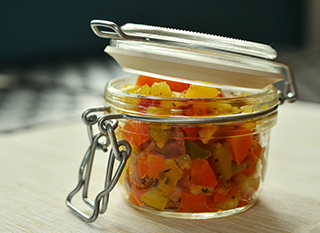
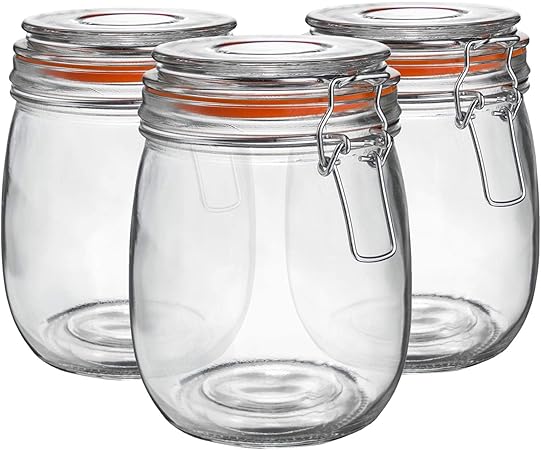
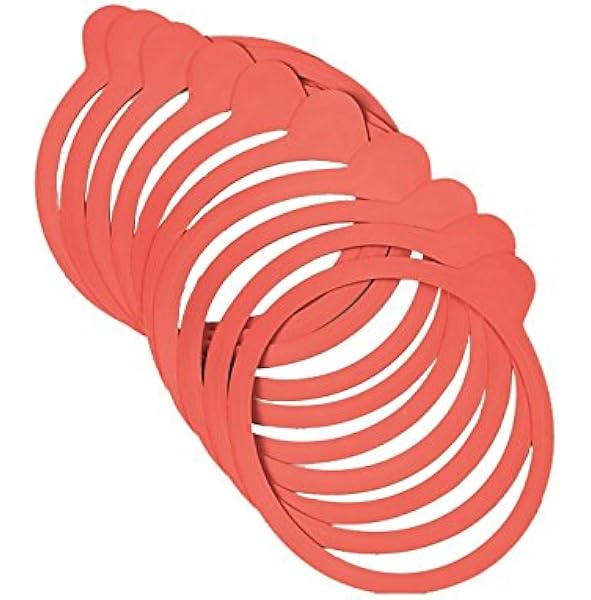
Eventually the online grocery systems adapted - just in time for us. But it made me rethink our pantry. As a fan of Marie Kondo, we don’t have a lot of clutter in our home — and we had applied that level of minimalism to our food as well. But given we live in earthquake country, having an extended supply of food on hand isn’t hoarding — it’s a responsible thing to do.
It made me think about resiliency — how a resilient society stems from the household. A family that can get through a few weeks of a disaster on their own helps spare resources for more dire cases.
It also made me think about my grandparents’ basement. It was full of mason jars like the ones described in the article. They had tons of food down there — olives, pasta, beans, etc — much of which was grown in their garden. Like so many WWII era families, they had a victory garden — one they kept over the years.
At the end of the day, I feel a deeper connection with my grandparents’ generation than my own parents’. They lived through a depression, conflict — they had a stronger sense of how precarious society can be. My parents maybe experienced some of that — but they also lived through a boom time where American optimism knew no bounds.
Anyway, makes sense people are buying mason jars. Some things are timeless. The demand will fade, but some of us will hold onto this year for the rest of our lives.