In this particular case, saying that the books were “cancelled” or banned is false. The publishing company was set up by his family and they are choosing to no longer publish or sell more copies. For them to be forced to publish those books again would actually be against free speech.
> BOSTON (AP) — Six Dr. Seuss books — including “And to Think That I Saw It on Mulberry Street” and “If I Ran the Zoo” — will stop being published because of racist and insensitive imagery, the business that preserves and protects the author’s legacy said Tuesday.
> “These books portray people in ways that are hurtful and wrong,” Dr. Seuss Enterprises told The Associated Press in a statement that coincided with the late author and illustrator’s birthday.
> “Ceasing sales of these books is only part of our commitment and our broader plan to ensure Dr. Seuss Enterprises’ catalog represents and supports all communities and families,” it said.
> The other books affected are “McElligot’s Pool,” “On Beyond Zebra!,” “Scrambled Eggs Super!,” and “The Cat’s Quizzer.”
> The decision to cease publication and sales of the books was made last year after months of discussion, the company, which was founded by Seuss’ family, told AP.
Its a little more than that. Amazon immediately pulled it and ebay stated they will start delisting auctions of the books. Sure, its not the government, but once big tech groups up to stomp something out it may as well be banned. I would be surprised if the hosting company pulls the plug on this site.
The estate requested that sales be ceased, in addition to their decision to stop publishing.
This was likely coordinated with requests to Amazon and other sellers/resellers to pull the books from their shelves/catalogs.
Having Amazon independently decide to stop selling a book is one thing, but it is not this - this the author's estate requesting that sales be stopped.
> The first sale doctrine, codified at 17 U.S.C. § 109, provides that an individual who knowingly purchases a copy of a copyrighted work from the copyright holder receives the right to sell, display or otherwise dispose of that particular copy, notwithstanding the interests of the copyright owner.
Yes, Amazon and Ebay are allowed to stop selling the book at the publisher's request, but they're not required to. This is voluntary action on their part.
I'd say: The First Sale principle says they can't ban you from selling it second-hand. It doesn't say that can't ask people to not do second-hand sales, nor that people can't choose to comply with that. And barring some other rule, "people" includes eBay here? (Are there examples of people successfully challenging eBay prohibitions? I would assume this has come up before in other contexts, which would give us hints)
Ebay is a company, they can choose to sell (or not) whatever they wish (within legal bounds).
That doesn't violate First Sale Principle, nobody is stopping you from selling the book, Ebay just doesn't want you to use its platform to do so - which is entirely in its rights. There's a large number of items which Ebay won't allow to be sold, including souls.[1]
And they reviewed the item and decided not to sell it any more. This sort of thing happens all the time. Dicks Sporting Goods decided not to sell guns. What if it?
Many things were auctioned on eBay that got pulled after review. Ie. someone tried to auction their kidney, driving bids up to 5 million dollars and still got pulled. Ebay should do whatever they see fit to improve their business.
Well there are two different arguments here. One is that eBay is free to take down whatever they want. That's true. The other is that a publisher can request that something be taken down in the used market, which I think isn't true, ...maybe?
Correct - the publisher does not have the power to stop used copies of their books being resold, as per first sale doctrine. You can definitely still sell or buy used copies, although one of your most convenient markets (eBay). But that's eBay's decision, they have the right to decide that.
The elephant in the room is the contradiction between laissez-faire, libertarian free market capitalism where everyone is free to enter into contracts or decline to do so, and de-facto monopolies where essential functions of society are taken over by monoliths.
"Consensual" collaborative actions by large market players have historically been heavily regulated. You're not typically allowed to telephone your biggest competitor and "politely request" that they double their prices, on the condition that you will do the same. That's because we recognize that there is simply a limited supply of competitors, and once a company gets big enough to throw its weight around it has a responsibility to be "fair".
>Having Amazon independently decide to stop selling a book is one thing, but it is not this - this the author's estate requesting that sales be stopped.
The latter point is irrelevant, thanks to the first sale doctrine. The publisher's opinion should hold no sway.
Little by little, they chip away at freedoms in pursuit of social justice, until we're left with neither freedom, nor social justice. How did a liberalism that was formerly staunchly pro-free-speech turn into such authoritarianism? It's not just any old authoritarianism, but the worst kind - mob-driven and accountable to no one.
This was the author's estate, not a publisher, and they made a request that was apparently granted. You're correct that due to First Sale Doctrine that by law the request didn't have to be granted, but Amazon and Ebay are free to make their own decisions.
As for your second statement, I don't understand it. What freedoms have been lost by this action? There was no change in law. And you can still go sell or buy the book on your own.
> BOSTON (AP) — Six Dr. Seuss books — including “And to Think That I Saw It on Mulberry Street” and “If I Ran the Zoo” — will stop being published because of racist and insensitive imagery, the business that preserves and protects the author’s legacy said Tuesday.
> “These books portray people in ways that are hurtful and wrong,” Dr. Seuss Enterprises told The Associated Press in a statement that coincided with the late author and illustrator’s birthday.
> “Ceasing sales of these books is only part of our commitment and our broader plan to ensure Dr. Seuss Enterprises’ catalog represents and supports all communities and families,” it said.
> The other books affected are “McElligot’s Pool,” “On Beyond Zebra!,” “Scrambled Eggs Super!,” and “The Cat’s Quizzer.”
> The decision to cease publication and sales of the books was made last year after months of discussion, the company, which was founded by Seuss’ family, told AP.
(Emphasis mine)
It’s also weird because “And to Think That I Saw It on Mulberry Street” wasn’t published for some time, and was resumed with the last 10-15 years.
It’s an early book that honestly doesn’t deserve the attention of the later masterful works. I would think the right wing politicians would be more upset about “Horton Hears a Who”, “Yertle the Turtle” and the “Butter Battle Book”.
It's a lovely little tale about where imagination can take you, and how difficult it is to express what you might have imagined...it's been one of my favorites since I was very small.
The amount of hip hop that explicitly trades in horrifically prejudicial content, that isn't getting yanked by eBay or Amazon, likely dwarfs these books thousands of times over in both reach and vileness.
Tired of white liberal handwringing translating into these clearly performative corporate maneuvers.
Also, the book is clearly a celebration of multiculturalism.
I’d like to see the people pulling these books draw a less stereotypical picture of someone from the 1930’s eating with chopsticks for a children’s book.
Don't be fooled into thinking Amazon and eBay are doing this because of any moral imperative. It ultimately boils down to the almighty dollar, and these large companies are so scared of being on the wrong "side" of this that they trample on the rights of individuals. What happens when other marketplaces prohibit these books? What happens when there is no legal outlet to sell them outside of face-to-face transactions?
Mark my words, one day the left will lose their position of "authority" on these topics, and the same tools will be abused against the very people who sought to implement them. It will be a sad and unfortunate day when that occurs.
I’m curious what everyone thinks is the difference between erasing books, as this website says, and removing tweets. Does anyone think one is right and not the other? Are we watching the same movie over and over again on different devices?
Yeah, is a listing comparable to a tweet. Is Twitter exercising its right of freedom of association to control the content on its platform comparable to Amazon or eBay choosing what listings are available on theirs?
They've doubled down on the branding with "Kindle Fire". Officially it's something about "kindling the fires of imagination". But for a product that aims to replace paper books, it's tone-deaf at best, and a sinister double-entendre at worst.
Bradbury was a visionary. It is probably to be feared that these kinds of books will also soon fall out of favor. Interestingly The Fire Man only appeared four years after Nineteen Eighty-Four.
Remember that time when the civil rights acts passed and racism was over? You're making a reductive argument that any step toward racial equality that doesn't solve it completely isn't worth doing.
I would say that Coca-Cola teaching its employees to be less white, or writing Black and white with different capitalization, is actually getting away from racial equality.
Contemporary America does not strike me as seeking racial equality at all. On the contrary, the goal seems to have an extremely racialized and regulated community where your skin color is an extremely important attribute in schooling, employment, artistic activity etc.
This is a good example of why copyright ought to be life of the author, full stop. Yes, it’s wrong to force the Seuss company to publish what they don’t want to publish, but it’s equally wrong for corporations to hold hostage cultural artifacts for profit well beyond the time in which the original author could possibly benefit from it.
Seuss had a lot of weird ideas. Any literary executor worth his salt would find a way to preserve the value of the literary estate by limiting distribution of the weird shit. Imagine that: a great guy had some bad books, which ought to probably be forgotten. Who’d have bethunk’d it.
The book has already been censored once by the author (1978) and the website shows the censored version. The backlash is presumably more about the original uncensored work.
The original line was "A Chinaman who eats with sticks" along with an image of a man with yellow skin.
I don’t know if I necessarily agree with deciding to stop publishing books, even those that have images that portray different races in a negative light.
On the one hand, you don’t want children to be easily influenced to adopt behavior that should not be adopted.
However, there are still books out there that do have racist overtones. This is something you just can’t remove from every day life.
I think a better solution would be to continue publishing these books, but prevent children from reading them until they are old enough to understand why the race portrayals in these books are wrong.
Or, at the very least, hold an open discussion about these books.
Banning / removing them entirely isn’t the answer in the long term.
I’m not sure why the Suess company couldn’t do what the makers of old cartoons did on Disney+. There’s a title card warning on old cartoons that say they are a product of their time, cultural depictions are not accurate, etc.
It would be fairly simple to do this for new editions of the books. Print up front the precise images which are sensitive, and talk about what they would look like today or why they wouldn’t be included at all.
Except that it is impossible to find early Disney war cartoons or more importantly “Song of the South”. The absence of SOTS is truly sad as the movie created the song “zippity do da”. “Song of the South” is beyond the pale for today’s sensibility but I do think its availability should be preserved since its titular song is a cultural touchstone much like the music from “The Good, the Bad, and the Ugly” or the line ‘Here’s looking at you kid’ from “Casablanca”
People who get offended at the sight of chop sticks and fur coats are likely closeted racists themselves, in the same way many homophobic, vehemently anti-gay evangelicals are actually deeply closeted.
I read Tintin at age 8. Old ones included. I knew they were racist, but I also knew they were products of their time. I think American kids are also able to draw the same conclusions. If they are allowed to, that is.
Realistically I don't think most eight year-olds or young kids can contextualize fiction like that. I'm not sure most of them even know what racism means at that point. I think an annotated version of the books might be a good idea.
As I said, they can, but you have to allow them to. We had a child series here in Europe portraying racism and fascism, and we were able to understand what happened in it. And we are regular people.
I went to the Seuss museum a couple years ago (Springfield MA). Quite delightful.
I think the company (trust?) just decided it wasn’t worth it. The books aren’t the big sellers.
They’re not shutting down Seuss world in Orlando. Other books still exist. Honestly probably a good publicity move for them to sell books to those who wouldn’t have bought anyway.
It's been in the newspaper for the last year or so that the woke crowd is reevaluating his legacy. He had a number of writings that today are considered anti-gay. In one very public letter to a gay teen (published in a newspaper, IIRC) he told the teen that he needed mental health counseling to correct himself.
It's a pretty famous letter. Should be an easy Google search.
So, "cancel" means "evaluate someone based on their entire person rather than just the things that person is most famous for"?
Because I can't seriously think that woke people are saying that MLK's work must be banned, censored, and otherwise removed from history courses, national discourse, etc., which is how anti-cancel-culture people usually seem to characterize the matter.
Who wants to ban, censor, or otherwise remove MLK from history courses, national discourse, etc., and is that viewpoint representative of "woke" people or some sort of extreme outlier?
If cancel simply means that no one should be above criticism and that heroes aren't perfect, then ... what's wrong with that?
> So, "cancel" means "evaluate someone based on their entire person rather than just the things that person is most famous for"?
Lots of people tried to cancel Brendan Eich because of something unrelated to the his professional career. There are still comments on HN that try to cancel him from time to time.
Does it mean that people shouldn't face criticism and negative consequences for what they do in the public sphere?
The argument was that LGBT people and their fellow travelers working for and supporting Mozilla would likely not want to continue if the head of the organization supported anti-LGBT laws. As such, that would diminish his leadership effectiveness.
How is leadership effectiveness unrelated to his professional career in a leadership role?
When I've looked into it, opposition to "cancel" seems more like the belief that rich, powerful, or famous people shouldn't suffer negative consequences for saying or doing something that liberals don't like.
> Does it mean that people shouldn't face criticism and negative consequences for what they do in the public sphere?
It's fine to criticize people. Do you believe that someone should never be able to hold a job again because they donated money to a politician that an employee finds unsavory?
> The argument was that LGBT people and their fellow travelers working for and supporting Mozilla would likely not want to continue if the head of the organization supported anti-LGBT laws. As such, that would diminish his leadership effectiveness.
There is no proof he acted against the interests of LGBT employees at Mozilla. I like the idea of due process and if you can't come up with something that actually hurts employees then I don't find it to be a substantial argument. There are millions of people that don't support LGBT laws. We can't force them all to be jobless homeless. That's totalitarian.
What I get from your post is that an employees personal feelings are more important than facts and reality. Employees can always go somewhere else instead of launching campaigns to have someone fired.
>Employees can always go somewhere else instead of launching campaigns to have someone fired.
So can Brendan Eich, which is what he did? Is the CEO not an employee of a company?
I think you're confused about what totalitarianism is. Totalitarianism is the government sending you to the gulag, not consumers or workers boycotting individuals or companies whose values they dislike. That's both the literal market and the marketplace of ideas doing their job.
What exactly is it actually you're suggesting here, that people aren't allowed to speak their mind, or lobby against CEOs? That Brendan Eich has some sort of job guarantee regardless of what people think of his beliefs? That's actually fairly totalitarian.
> Do you believe that someone should never be able to hold a job again because they donated money to a politician that an employee finds unsavory?
You have changed the goalposts, because 1) "someone" is a much broader category than CEO, and 2) "an employee" is much narrower than "many employees, a board member, and external supporters."
> I like the idea of due process
Due process has never applied to employment positions. Ever.
> There is no proof he acted against the interests of LGBT employees at Mozilla
You mean against their employment interest. He did help fund opposition to their personal interests.
> We can't force them all to be jobless homeless. That's totalitarian.
Funny thing is, Eich is neither jobless nor homeless, and people still hear about him. Wikipedia summarizes his few on masks, for example, and his work on Brave regularly appears on HN.
John Stuart Mill described it much better than I in "On Liberty":
"""We have a right, also, in various ways, to act upon our unfavourable opinion of any one, not to the oppression of his individuality, but in the exercise of ours. We are not bound, for example, to seek his society; we have a right to avoid it (though not to parade the avoidance), for we have a right to choose the society most acceptable to us. We have a right, and it may be our duty, to caution others against him, if we think his example or conversation likely to have a pernicious effect on those with whom he associates. We may give others a preference over him in optional good offices, except those which tend to his improvement. In these various modes a person may suffer very severe penalties at the hands of others, for faults which directly concern only himself; but he suffers these penalties only in so far as they are the natural, and, as it were, the spontaneous consequences of the faults themselves, not because they are purposely inflicted on him for the sake of punishment. """
> an employees personal feelings
Multiple employees, and volunteers. And at least one board member.
Certainly personal feelings are important. People are turned down all the time for a position because of "bad culture fit" or "rubs me wrong" or any number of personal reasons.
The fact and reality is that we are all emotional creatures. You cannot separate them.
But now that we're well off track - what does "cancel" mean?
Because I've looked and looked, and never found a definition which fits better than "rich, powerful, or famous people facing unwanted negative consequences of actions or expressions that liberals disagree with"?
> You have changed the goalposts, because 1) "someone" is a much broader category than CEO, and 2) "an employee" is much narrower than "many employees, a board member, and external supporters."
Goalposts? Are we in a formal debate now?
Anyway, Brendan Eich is a person. And it doesn't matter how many employees object to him if they are in the wrong.
> I like the idea of due process
I'm not speaking from a legal standpoint. Are you willing to be terminated in a capricious way?
> You mean against their employment interest. He did help fund opposition to their personal interests.
No, I'm talking about the question of whether he discriminated against LGBT folks at Mozilla. He clearly didn't so your point is moot.
> Funny thing is, Eich is neither jobless nor homeless, and people still hear about him. Wikipedia summarizes his few on masks, for example, and his work on Brave regularly appears on HN.
Yes, many commenters on HN are unhappy he has any kind of job. That is my point. That they haven't been successful at his current gig isn't a cause for celebration, or in your case, indifference. But I actually think you might prefer him to not have a job.
> Multiple employees, and volunteers. And at least one board member.
What are you trying to prove? I don't get it.
> Certainly personal feelings are important. People are turned down all the time for a position because of "bad culture fit" or "rubs me wrong" or any number of personal reasons.
Yeah and usually that comes down to ageism and sexism.
> The fact and reality is that we are all emotional creatures. You cannot separate them.
"Moving the goalposts", like "attacking a straw man" and "derailing", is a well-known informal fallacy. As you desire that we all use logic, surely you agree that these concepts and terms should not be restricted to formal debate.
What is your definition of "cancel"?
Capricious termination is not uncommon. I don't think you regard all capricious termination due to "cancel"? How do we apply your guideline to distinguishing if a capricious firing is or is not due to "cancel"?
> Because I've looked and looked, and never found a definition which fits better than "rich, powerful, or famous people facing unwanted negative consequences of actions or expressions that liberals disagree with"?
Consider how you might think differently if it were people facing unwanted negative consequences of actions or expressions that conservatives disagreed with.
That happens all the time. It's just not called being canceled.
When CPAC de-platformed Milo Yiannopoulos and Young Pharaoh, weren't they being canceled? Yet I have no problem with them doing that.
Whenever I try to come up with a non-partisan definition of "cancel" - one that doesn't explicitly point to "liberals" or "left" - I easily discover that of course conservatives also cancel.
Because facing negative consequences of actions or expressions is part of human nature.
Now, of course there are times when I think that the "canceling" was wrong. If someone loses their job because of their support for unionizing, or faces pressure to suppress reporting sexual harassment, then that's both canceling and illegal, and I am definitely against both cases.
My problem is that "cancel" seems to have a built-in anti-left bias, making it simply a proxy for "leftists should stop complaining."
It absolutely doesn't have a built in anti-left bias. Who do you think were canceling in the 80's? (The Right)
The point is, there is always someone trying to push things one way or another, and up until about 20 years ago, it seemed like things always found their way to an equilibrium...
That happens all the time. My Senator consistently voted in ways I don't like, so I'm voting for someone else next election and not contributing to his election campaign = stop giving support = cancel? Yet, entirely acceptable.
"withdrawing support for (canceling) public figures and companies after they have done or said something considered objectionable or offensive"
You'll note that "public figures and companies" has the built-in bias to the rich, powerful, and famous I mentioned - minimum-wage service employees cannot be canceled, according to this definition.
You'll also notice a long history of, say, the NRA withdrawing support from a politician after that politician support gun sale restrictions. And what happened to Kaepernick in the NFL is surely an example of cancelling, yes?
That is, both definitions are so broad that, when stripped of its specific anti-left bias, becomes no different than what John Stuart Mill says we should expect from liberty, and may even be our duty.
> The argument was that LGBT people and their fellow travelers working for and supporting Mozilla would likely not want to continue if the head of the organization supported anti-LGBT laws.
How many of them actually said so? Or was someone offended on their behalf, preemptively?
> On a rainy morning this week in San Francisco, newly appointed Mozilla CEO Brendan Eich sat down for coffee with one of the people calling for his resignation. Hampton Catlin, a prominent developer of apps for the nascent Firefox OS, announced he was abandoning the platform due to Eich’s handling of the disclosure that in 2008 he donated $1,000 to the fight against same-sex marriage. California’s Proposition 8, which passed with 52 percent of the vote in 2008, made same-sex marriage illegal in California until the law was overturned by the Supreme Court. Over the course of an hour, Catlin explained the suffering that Prop. 8 caused for him and his partner, a Brit who couldn’t immigrate until marriage became legal. Catlin asked Eich for an apology. He didn’t get one.
And it's not like this reaction was out of the blue:
> ... For starters, Mozilla already fought this battle once, in 2012. That’s when Eich’s donation first became public, leading to a firestorm on Twitter.
The Verge also links to https://twitter.com/iamjessklein/status/449233331352514560 "@amjessklein Have waited too long to say this. I'm an employee of @mozilla and I'm asking @brendaneich to step down as CEO.", so there's at least one.
https://en.wikipedia.org/wiki/Hampton_Catlin says "After a large public outcry and several Mozilla Foundation employees publicly calling for him to step down". So there's at least "several".
Is that enough for you? If not, how many are enough?
To get back to my main thesis - which is that "cancel" has a built-in bias against left-leaning views - we need only to look at https://en.wikipedia.org/wiki/Cooper_Firearms_of_Montana#Pol... , where the founder and CEO was ousted for supporting Obama. I don't see any mention of employees there, and while discussions about "cancel culture" often mention things like Eich's situation, they rarely include Cooper.
> Is that enough for you? If not, how many are enough?
I do not know, I am interested in the real size of the potential problem.
Every change of leadership in a big corporation carries a risk of someone leaving, if not immediately, then within a few months. People who are universally liked rarely get into CEO positions. (High agreeableness makes it really hard to execute painful decisions.)
Of course, if 1 person leaves, it is not dramatic. If half of the staff leaves, it is dramatic. But how many are enough? You probably cannot answer the question any more than I do, it is the same question like "how many sand particles you need to call it a heap".
Mozilla made their choice. They have a CEO that offends no one and a market share under 1 per cent. Perhaps they would have the same market share under Eich. Perhaps not. I think that Eich was more passionate about the product than current leadership and that it would have made some difference. Individual programmers are, to some degree, fungible; Mozilla ecosystem is one of a kind.
The way you added "Or was someone offended on their behalf, preemptively?" suggested a different intent. I read it as a distrust that anyone at Mozilla would actually care, and explicit doubt on my earlier description of 'LGBT people and their fellow travelers working for and supporting Mozilla'.
The overarching question I have: what does "cancel" mean? According to my definition ("negative consequences to rich, powerful, or famous people because of actions or statements that the left disagrees with"), Eich was indeed canceled. But of course, my definition is little different than "those lefties need to shut up and stop complaining!" - just couched in fancier terms. [1]
Then, if he was meaningfully "canceled", does that mean that what happened was necessarily a bad thing? Obviously, as a lefty, I don't, since that would mean my complaints would never be heard.
I'll construct a dramatic hypothetical. Suppose 90% of the staff threatened to leave if Eich stayed on, because of his support for homophobic legislation. This would have shown that Eich's leadership role would have been rather ineffectual, so decided to leave, in order that Mozilla survive as an organization.
Would that still have been "cancelling" Eich in that case? And therefore would it be an intrinsically immoral or unethical act?
[1] And I still don't know how "cancel" can be applied to this Suess case, where the copyright holder [2] has decided to stop the publication on what appears to be a voluntary decision with only scattered activism for the change.
[2] Really, isn't the problem that copyright is entirely too long? Why should we wait another 40 years before a book published in 1937 enters the public domain? When he wrote it, the maximum copyright period was 56 years - until 1993. As a public domain book, we wouldn't be having this tempest in a teapot!
Copyright is absolutely too long, and I am saying that as someone who has significant income from royalties.
I would be for 10 years of automatic copyright, with the possibility to purchase up to X years more for a registration fee that would start very low but would grow to significant levels, so that only the most lucrative works stay protected after, say, 30 years.
1. Hampton Catlin was confused about Federal immigration law and enforcement vs. California Prop 8 or any state law. DOMA, not Prop 8, prevented his spouse from immigrating, and its overturn by SCOTUS was the remedy:
Conor Friedersdorf in The Atlantic called out the self-deceptive, self-pitying ending of Catlin's followup blog post for claiming to be sad about my leaving Mozilla, and for rewriting an explicit demand to remove me from any job at Mozilla, spinning his stance as just an citizen-to-citizen attempt to "try and change someone's mind":
3. All the "I'm asking @brendaneich to step down as CEO" tweets were from six people who worked for the Mozilla Foundation, not for me at the Mozilla Corporation. The two organizations are arms-length due to non-profit tax law, with separate management and boards (Mitchell Baker is the only common member, and long-standing chair, of both boards). No one who worked for me in fact tweeted asking me to step down.
You yourself quote from Catlin's wikipedia page which states my point (2), but you missed the meaning of the "Mozilla Foundation" reference there, which undermines your argument here. None of those people worked for me. They had asked the Foundation executive director, Mark Surman, for permission to tweet as they did, and he gave them a "go" sign. Again, no connection to the Corporation I was running.
Obviously there's no guaranteed cancel button that people on the left or right can press, but the left is much better organized than the right in general, and it uses soft power more effectively (see Alinsky). Some on the right aim to play by the same rules and take as many scalps as they can. This won't end well, especially as HN commenters keep misstating facts of my case to support false equivalence or "no such thing" narratives about cancel culture, reopening an old wound and making themselves look like unreliable narrators of recent history.
Of course every culture, every society, defines deviance and punishes it. This never goes away, even under classical liberalism (I'm Catholic; English penal laws weren't repealed in full until the 19th Century). It would be great if people could just get the facts of my case, attested by web.archive.org primary sources, right for a change, and move on to more current events.
Define "cancel". I've given mine several times in this discussion: "rich, powerful, or famous people facing unwanted negative consequences of actions or expressions that liberals disagree with".
Obviously I don't agree there's no such thing. What I disagree with is that we should avoid "cancel", because the active definition is little different than "liberal complaints shouldn't affect anything."
Classical liberalism (quoting John Stuart Mill) says:
"""We have a right, also, in various ways, to act upon our unfavourable opinion of any one, not to the oppression of his individuality, but in the exercise of ours. We are not bound, for example, to seek his society; we have a right to avoid it (though not to parade the avoidance), for we have a right to choose the society most acceptable to us. We have a right, and it may be our duty, to caution others against him, if we think his example or conversation likely to have a pernicious effect on those with whom he associates. We may give others a preference over him in optional good offices, except those which tend to his improvement. In these various modes a person may suffer very severe penalties at the hands of others, for faults which directly concern only himself; but he suffers these penalties only in so far as they are the natural, and, as it were, the spontaneous consequences of the faults themselves, not because they are purposely inflicted on him for the sake of punishment. """
so of course there's no appeal to classical liberalism because "unfavourable opinion" and "deviance" are closely connected.
The "more current event" discussed here is that Seuss was neither "banned" nor "canceled".
I'm not defining cancel culture (a phrase I avoid; it's the opposite of culture), but people who use it have a working definition and it's not just "liberal complaints". Anyway, Liberalism is dead, Patrick Deneen wrote an (overlong) obit.
This just flew by on Apple News: "Cancel culture strikes again: Mumford & Son banjoist steps away from band after praising anti-Antifa book". Whatever you call it, this is not classical liberalism. Something new has emerged with social media combined with Critical Theory, etc. It's worth studying, not dismissing as little different from past boycotts or campaigns.
If the NRA stops giving campaign contributions to a Senator who voted for gun-control laws, then is the NRA cancelling the Senator? Some definitions are so broad that they include this otherwise totally acceptable behavior. Since most people say "cancel" is a universally bad thing, those definitions cannot be correct.
If a low-level service worker is fired for supporting the LGBTQ movement while not at work, then have they been canceled? Some definitions only apply to the rich or famous ("public figures and companies"), so exclude those people. Yet obvious if the roles are reversed, with a CEO fired for being against the LGBTQ movement, then people have no problems applying the "cancel" label.
Which is why I argue that "working definition" you refer to appears mostly like a rhetorical technique against left-leaning views.
So far no one had given me any definition, much less one which appears to be a better fit than the one I gave.
Even within the context "public figures and companies", you tell me: by your understanding of "cancel", was Kaepernick canceled? If so, then Trump was a one of the loudest people calling for his cancelling, yes? If not, why not?
Was Cooper (in the direct parent comment you replied to) canceled after he was fired from being CEO at the company he founded? If not, why not?
> "This just flew by on Apple News"
If my thesis is correct, that "cancel culture" is little different from "liberal complaints", then of course it would be a headline on Fox News.
> this is not classical liberalism
This is exactly classic liberalism. It's hard to get more classic than John Stuart Mill, and I just quoted the relevant text from "On Liberty".
You were wrong on three major points -- own them instead of doubling down. Now you waste too many words trying to make J.S. Mill an SJW. No, that is ahistorical nonsense. Getting people fired through social media smear campaigns is novel, everyone sees it, some call it "cancel culture". This is not hard to understand.
Amidst the usual attempts at turning editorial decisions into political fuel for right wing outrage dumpster fire, I’m simply glad the Seuss family’s decision will help parents avoid unintentionally exposing their children to images and contents that alienate them. Imagine your Asian-American 4yo read who’s just learning to use chopsticks read “A Chinese man who eats with sticks,” with a ethnic caricature to go with it. It’s outdated because it wasn’t the author’s intent for the book to make certain children feel like an exotic sidekick prop, but the world has changed and created that risk; IMO, this is a reasonable way to address that. If you have a better alternative, speak up and advocate. If you don’t care about the alienation that minority children might feel reading this, well, that’s your problem.
> Imagine your Asian-American 4yo read who’s just learning to use chopsticks read “A Chinese man who eats with sticks,” with a ethnic caricature to go with it.
I imagined it and I felt no reason to collapse on my fainting couch.
What is even bad about it? Is America so far gone that a stereotypical picture of a Chinese man with sticks is considered to be on par with a lynch mob singing "hang him high?"
Or what precisely should be so shocking and horrifying there for a 4 y.o. kid? Isn't it actually a book that has been read by millions of kids, undoubtedly some of them Asian, without unleashing a PTSD epidemics among them?
I think the bar for child-safe content these days goes a little further than censoring images of lynching mobs, yes.
Similarly, I believe our goal in writing children’s books should be a bit loftier than “not unleashing a PTSD epidemic.”
It’s not that you’re tough and rugged; no grownups are fainting into couches over this, but some are clearly annoyed over their children’s confusion at reading these books. Why would they do make this decision if nobody spoke up about it?
I find it incredibly hard to believe that a four year old will have the capacity to be offended by that image... If anything most four year olds will be excited to see a character also using chopsticks.
I can see the parents not wanting their child to identify with the "stereotype", but given the fantastic nature of the rest of the imagery I just don't see anyone being the butt of a joke here. The kid is lost in a reverie and those images of Qing dress with the braid are pretty iconic. I have ample experience with China and no Chinese person I showed it to was offended at all, they thought it was cute.
It’s no swastika with a mustache, I agree with that; if the Seuss family decided to do nothing about this, I’d probably make a mental note about reviewing kids books myself first and move on with life. But they did, and I understand the reason. So I’m supportive. Either way, I don’t think it dignifies anyone to be up in arms about it, and certainly not to turn it into a debate about constitutional law.
You are aware that Chinese people actually do eat with sticks? Do you think chopsticks are somehow inferior, or why would that be even slightly offensive?
I think most Chinese would be more offended by people that think chopsticks are something that needs to be censored and hidden.
I wouldn’t dare guess how a billion people might react to something. But I know what it feels like to be depicted and treated like a novelty, and that it is a slight subtle enough that you’ll be mocked for your feelings if you voiced your opinion. It’s not every day you see someone go out of their way to protect people from that, and I appreciate it.
> I wouldn’t dare guess how a billion people might react to something.
Yet that's exactly what people do when they are offended-by-proxy on behalf of people in one of the most powerful and long lasting empires in history. They don't need your protection.
I’m actually from East Asia, so no, I’m not offended by proxy. I wouldn’t want my kids seeing that, and clearly enough parents spoke up that the Seuss family listened. Given your shallow, fawning remarks about Chinese history, I’d hazard a guess you’re not from there. You don’t seem to understand that this is a decision for children, not the people of China, so it doesn’t sound like you spend your daily life worrying about what your children are exposed to without your knowledge. Seems to me that you’re the one who’s offended-by-proxy, out of some personal opinions about politics, rather than any practical issue that concerns you.
Will be interesting to see if the Seuss rightsholders decide to make the obvious DMCA claim here. I'm sure it depends somewhat on whether this gets any traction.
Ebay banning these items is a good thing. Removing them from the biggest second-hand markets in the world devalues them as collectables. Ebay has removed other collectable items in the past, like slave tags and aunt jemima bottles.
The sexism is not super clear in context imo. There are 5 generic names listed in that paragraph and none of them are referenced previously so it looks like just random names to support the "Anyone could think of that"
Yeah, I think it's open to interpretation: my reading of "Nat" is it could be short for Natalie, so by that logic, "Jane" wouldn't necessarily be stupid just because she's a woman (which I assume is what the potential complaint would be?)
I know there are a few Asian Restaurants owned and run and given patronage by Asians (and Asian Americans) with the name Sticks or Stix. China Stix, Chopstix, etc.
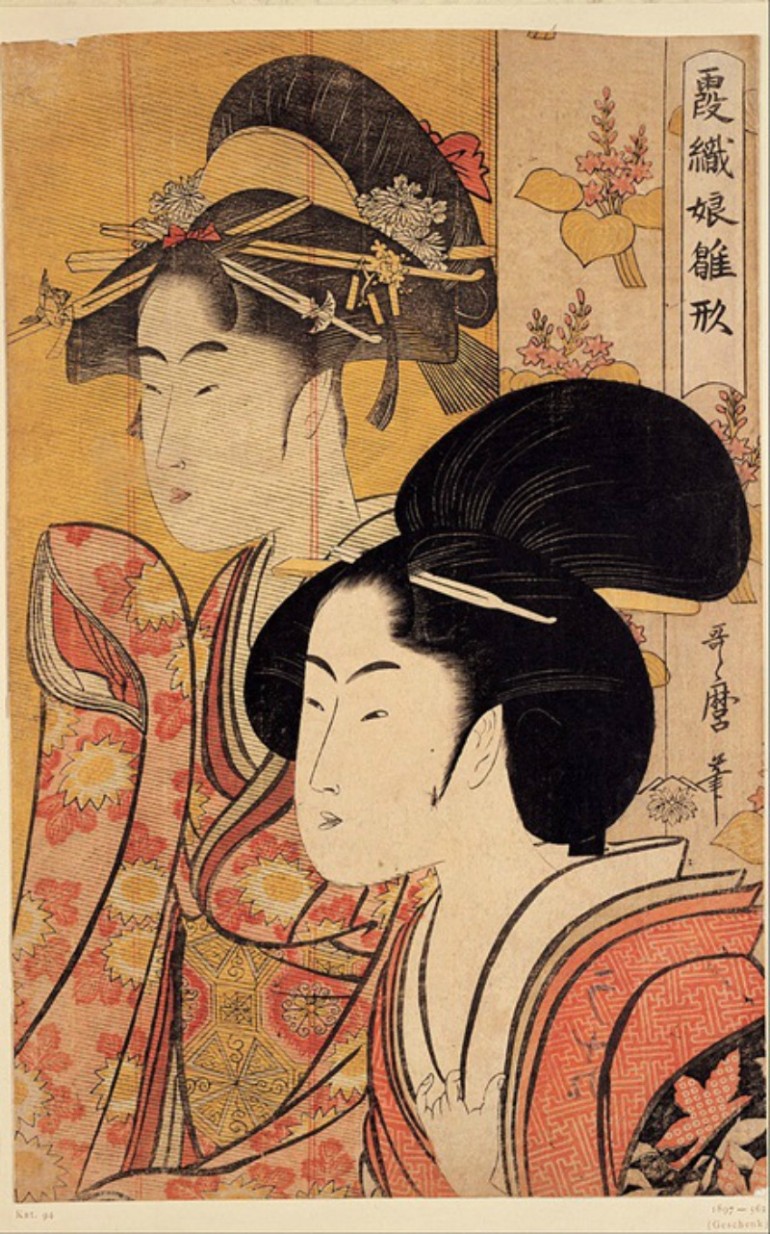
Someone mentioned the depiction of the eyes was problematic, but other characters also have similar eyes and moreover, Japanese woodcuts as well as other East Asian art use similar eye representation[1]. It's a bit looney.
Who knows, maybe it's a ploy to boost flagging sales by piquing the interest of 'conscientious' parents who otherwise might have considered Dr Seuss passé.
My exact thought. I would say that discriminating against asians in university access is racist, for example. But chopsticks? I must be becoming old.
The problem with these absurd witchhunts is that they dilute racism. At some point people give up and think "well, it must be that I'm racist" and when that happens they stop caring.
Is that when they stop caring? In my experience discovering your own racist behaviors is when you can actually make a positive difference by changing said behaviors.
Much better than drawing a line between racist and not racist people and assuming you’re on the right side without actually interrogating it.
All of that is a bit of a tangent though because I have no opinion on the Seuss issue specifically. Didn’t seem that offensive to me but I’m not the right person to judge.
Well, of course a lot of people stop caring way before. I'm not saying introspection is not necessary because we are all wired to automatically create groups by excluding other people from them be it race, religion, gender or whatever other reason. It's good to rationally think about your own biases.
My point is precisely that other people is continuously drawing lines and everything is binary.
The depiction is of a man with slanted slit eyes running with chopsticks in a bowl of rice, wearing a pointed hat and what appears to be Japanese geta.
(The original image also had him with a queue and with yellow skin, and referred to him as "Chinaman" instead of "Chinese man".)
This was part of the negative racist depictions common in that era.
You can see other places where Seuss used slanted slit eyes, like his WWII cartoons depicting Japanese-Americans as 5th columnists - https://apjjf.org/2017/16/Minear.html .
It's not the chopsticks. It's that, there's a parade. And who's in that parade? Well, there's a magician, performing magic tricks. That's neat, it makes sense for him to be a parade.
And then there's a guy, and he's Chinese. That's it. He's not performing wonders, for people to stand and marvel, he's just a dude. In the book, the idea of "being Chinese" is enough of an oddity for people to stand and stare.
I thought your summary was good and yet it points to something that troubles me.
I can understand how a society can change so that things that were formerly rare and remarkable become common and unremarkable.
I can also understand not wanting to make people feel "other".
Yet there will indeed always be things that differ interestingly from the usual practices of the day. It seems strange (heh) for everyone to suppress the (very universal, you will learn if you travel) human impulse to find difference interesting, exotic, and delightful. Eventually you will find yourself on both sides of this dynamic.
I don't necessarily have a problem with making updated versions of Dr. Seuss books that try to avoid accidentally alienating parts of a now-broader audience.
But the larger principle, of refusing to see "foreignness" as "weird", I'm not sure how to deal with. It seems the safest approach is to always suppress surprise. You cannot exoticize if you refuse to acknowledge anything as exotic. But I don't think surprise ("gaijin-das!") is always malicious, and something feels wrong, "anti-human" even, about always burying that reaction.
It also invites a certain kind of social attack, which is like a higher-stakes "you laugh, you lose".
It's as though certain parts of ourselves have been let out of the closet, but other, mostly harmless parts, have been shoved in.
I would like a way to be respectful but also human. I do not think norms are moving in that direction.
> I don't necessarily have a problem with making updated versions of Dr. Seuss books that try to avoid accidentally alienating parts of a now-broader audience.
I hope they will; 3 of the 6 books they took out of print are ones I really like. But, in the end it’s not really up to me. Publishers have never asked me in the past about what books they keep in print, and I don’t expect them to start any time soon.
> I would like a way to be respectful but also human. I do not think norms are moving in that direction.
I think we’re tacking. We’ve been really bad at “respectful” for a long time, I’m not opposed to us over-emphasizing that part for a bit while we figure out what a proper balance looks like.
If he's wearing traditional clothing, as depicted, he certainly would stand out. Modern Chinese New Year parades (and other ethnic parades) feature people in traditional attire, they'd be awfully boring otherwise.
Whether one stands out or not is relative to what's accepted as normal at a time and place. A person wearing a cowboy hat and boots in the northeast will have people stand and stare at them.
Worse, people get to watch depictions of violence, rape and gore on "TV" for _entertainment_ and they pretend kill each other in video games again for entertainment... oh. my. god!
"However, in the cities of the nations the Lord your God is giving you as an inheritance, do not leave alive anything that breathes. Completely destroy them — the Hittites, Amorites, Canaanites, Perizzites, Hivites and Jebusites — as the Lord your God has commanded you."
That's a quote of something God said several thousand years ago. It's not urging people today to go out and slay Hittites. Assuming you could find any Hittites.
Wow these books... suck. The ones I read as a kid, namely "If I Ran The Circus" and "Green eggs and ham" are way better than these, in terms of rhyming and illustration. No wonder they fell out of popularity.


https://apnews.com/article/dr-seuss-books-racist-images-d8ed...
> BOSTON (AP) — Six Dr. Seuss books — including “And to Think That I Saw It on Mulberry Street” and “If I Ran the Zoo” — will stop being published because of racist and insensitive imagery, the business that preserves and protects the author’s legacy said Tuesday.
> “These books portray people in ways that are hurtful and wrong,” Dr. Seuss Enterprises told The Associated Press in a statement that coincided with the late author and illustrator’s birthday.
> “Ceasing sales of these books is only part of our commitment and our broader plan to ensure Dr. Seuss Enterprises’ catalog represents and supports all communities and families,” it said.
> The other books affected are “McElligot’s Pool,” “On Beyond Zebra!,” “Scrambled Eggs Super!,” and “The Cat’s Quizzer.”
> The decision to cease publication and sales of the books was made last year after months of discussion, the company, which was founded by Seuss’ family, told AP.
(Emphasis mine)