I wonder how big the influence of Yiddish has been on German itself. Given the closeness of Yiddish and German, it would be the words of Hebrew origin that would stand out.
In the german town of Münster exists a local dialect called Masematte, historically only spoken in some of the towns districts and with a influence from Yiddish. Some words are still very common and in use.
E.g jovel for good, great, pretty
There seems to be a large overlap with the Dutch list, and they are also very commonly used. I don’t think many people (me included) would realize for a large part of the list, that they have Yiddish/Hebrew origin.
Regarding the -eł postfix used in Polish doge meme (pieseł) - it's not obvious to everybody in Poland, but most young people know it's "Jewish-like".
It was formed as a variant of mamełe/tatełe. It was a funny way to refer to your parents popular on some social media in Poland, and these ones are universally recognized as Yiddish influence.
It comes not from meeting Yiddish speakers (because there are effectively 0% chance of meeting one in Poland), but from people trying to make word jokes basing on media and Jewish humor.
Pieseł had been first used and popularized by Michnikowski in cabaret first in 60-ties. At the time there was still enough people in Poland who were either speaking Yiddish or familiar with the language from before the war.
Like my father who spoke good German but also had daily contact with Yiddish on the street [4] before the WW2 as a (Polish) kid in Wola. This type of pieseł jokes and many other Michnikowski performances had its public in Warsaw at the time.[1] [3]
[4] My father had been 10 years old in 1939. In Wola - workers district (read poor) Jews and Polish lived together mixed and only Kiercelak (large open air market with many Jewish merchants and tradesmen) separated Wola from Nalewki (nominaly Jewish district). It is all walking distance especially for 10 years old so you have heard Yiddish (and Yiddish mixed with Polish) every day.
It is interesting to me. I think the first time I stumbled upon this when I realized that Martin Indyk is not automatically a Polish last name ( despite Martin's family having immigrated from Poland ). Indik is very much Yiddish. And when you think of it, it should not be a surprise, Poland used to have a vibrant Jewish community before the war.
As a Jew from Belarus, I don’t feel bad about it. I generally feel trying to correct such large scale injustices is an ineffective way to heal and move past things. We all get born into random circumstances.
  > As a Jew from Belarus, I don’t feel bad about it. I
  > generally feel trying to correct such large scale injustices
  > is an ineffective way to heal and move past things. We all
  > get born into random circumstances.
Then what are the effective ways to heal and move past things? Or to help others heal and move past things?
Despite Jews moving past things, there exists a large population today who wasn't taught by their grandparents to move on, but rather to demand restitution for perceived injustices of the 1940's. Are their claims invalidated because your family healed and moved past things? We was your family able to heal and move past things when they cannot?
My family was lucky & took advantage of opportunities to escape to the West in '91. In terms of healing, just time. Focusing on the future, building a family, improving ones own situation etc. Belarus is a distant memory for my family. My dad's passing is a more memorable & traumatic event in my life than any systemic injustices my family faced.
That being said, I don't claim to speak for all Jews & telling people to "get over it" would be tone deaf. I can only try to present my own life experiences, limited as they are. Open to hearing others of course.
Adam Rasugea's video "Why the turkey is named after Turkey (and India)" is extremely informative and fun on the etymology of 'turkey' as applied to the bird: https://www.youtube.com/watch?v=y2XZiREio4I
This is false. "Pale of Settlement" refers to part of the Russian Empire and, while some of what is today Poland was then controlled by the Russian Empire, other parts of Poland were under Prussian or Austrian control (see https://en.wikipedia.org/wiki/Partitions_of_Poland).
The Russian empire contained Poland up to and beyond Warsaw. That is by any reasonable definition a large part of Poland. This is a ridiculously pedantic and pointless argument
There was no pre 20th century Poland! The pale is the same as the Polish Lithuanian commonwealth (mostly), minus Habsburg Galicia and the Prussian part of Poland. The nobility of the polish Lithuanian commonwealth were mostly polish or German speaking (and thus there is very little lithuanian or Belarusian in Yiddish even though a huge number of Jews lived in the Lithuanian part of the commonwealth)
Of course there was. The commonwealth was established in 1385, while Poland as a state came into existence effectively in 966, when Mieszko I adopted Christianity.
10% of Poland citizens were Jewish. Not it is like half a percent or something like that.
Interestingly, only around 3% of German citizens were Jewish. Holocaust is mostly eastern Europwan Jews, because Germany did not had that many of them.
Google Translate does Yiddish, which is very cool. However, it seems very picky about what type of spelling it will accept. It simply doesn't translate whole phrases from the article if it doesn't have the particular variation. For example, "nisht" (not) is sometimes Romanized as "nicht". Google understands the latter, but not the former.
I don't know enough Yiddish to say what system of standards Google Translate is based on, but it perhaps needs to be expanded a bit to accommodate different spellings.
However, when I use the Yiddish characters, e.g. "נישט" for "nisht", Google Translate gets it right.
Aside from all that, it's safe to say that American English has inherited quite a few more Yiddish words than has Polish.
I cannot but note how the author (who lives in Berlin, studying a Germanic language) denotes for some reason the „German component“ in Yiddish to the vocabulary.
That’s a bit strange because, well, the vocabulary only makes for one part of a language.
It completely leaves out things like phonetics or most importantly grammar.
If Yiddish isn’t written in Hebrew letters most Germans can read it. And hearing Yiddish (if you still can) is usually closer to modern high German attuned ears than say Suisse German.
What also feels construed is the part about the diminutives: The Yiddish Hershele example is exactly how people form diminutives in south west Germany till this day, exactly the area where Yiddish originated. Yiddish diminutives are such a direct pointer towards their German origin, that most non-southwest Germans that don’t use these diminutives would read the Yiddish ones and think a Swabian/Hessian/Palatine/Badisn wrote them.
The same holds true with regards the „Yiddish Slavic syntax“: Unlike what the author claims multiple negation is still used in south west Germany (where Yiddish comes from) as well as Bavaria.
It’s either intent (bad, but normal as the field of linguistics is often highly politicized - is it a coincidence that Chomsky studied this?) or just lack of looking at the „German component“ because it is less exciting than exploring the „Polish component“ (understandable).
But why do you claim the article "leaves out" German grammar, if the mention of it is clearly there, as an explicitly called out base, in the very first sentences of the article?
"With its German grammatical structure and the bulk of its vocabulary coming from German, Yiddish is usually classified as a Germanic tongue. [...]"
Given this unambiguous note at the beginning, I find it easy to understand that the author of the article wants to focus on an aspect of the language that he sees as less blatantly obvious, and thus potentially more interesting to a reader. Would you find an article explaining that "the Sun is bright" more interesting than exploring some nuances of it, e.g. how the Sun can become less bright during a rare event of an eclipse?
Now this makes me confused if there's some "intent" behind your comment, given that it takes a demonstrably incorrect claim and builds a vague accusation on it; not to mention that even if there was any truth to this false claim, a sprinkle of a good will assumption can still lead the reader in a direction of completely benign motive.
With that said, given that I prefer to start with an assumption of good will, I hope and suspect you probably just skipped or forgotten the first paragraphs of the article; I just wish you made sure to re-read them before jumping to accusations.
edit: looking into the history of your comments, I would recommend reconsidering if a more constructive and less trolling/inflammatory approach could make your contributions to the community & discussions a better long-term strategy.
> What also feels construed is the part about the diminutives
I don't think they meant to say -el/-ele were slavic influence. They just mentioned them and then went on to obviously slavic ones like -chki,-chik,-yu and -nyu.
> multiple negation is still used in south west Germany
I don't think it works the same way though? In south German dialects it puts "no" at the end: "Das macht KEINEN Spaß NICHT".
In Polish (and in Yiddish AFAIU) it puts "no" before the verb: "To NIE sprawia ŻADNEJ frajdy" is a little more natural but "To ŻADNEJ frajdy NIE sprawia" is perfectly fine as well. I don't know Yiddish well enough to translate that but I think it would be closer to the Polish sentence in word order.
> And hearing Yiddish (if you still can) is usually closer to modern high German attuned ears than say Suisse German.
There’s Yiddish as a first language kids to this day in haradi (ultra-orthodox) communities. I’m told that it’s a slightly different variant then the version my secular grandparents spoke, but it’s still out there.
I still see lots of orthodox Jewish speakers of Yiddish here in Brooklyn, NY; I even sometimes see their small kids speaking Yiddish, though pretty rarely.
The language is definitely not dead yet. I am not Jewish in any way, so my exposure is random encounters on the street / in parks, unlikely an overestimation.
Nah this isn't true. Among Haredi Jewish communities it's still very often the mame loshn (mother tongue), and they're growing in number.
Secular Yiddish has been having a revival for a couple of decades, but to me it seems like more of an academic object of study than a living language, like it is for the Haredim.
On the secular Yiddish side, I don’t know anyone of my generation (holocaust +2) that speaks it even haltingly. Just maybe a few words and phases more than the average goyishe New Yorker.
The prior generation is a mixed bag but I have no relatives that had it as a first language. I have an uncle that’s fluent enough to listen to podcasts and the like, but he’s in his mid 70s.
Fluency was near universal in the generation before that (i.e. people alive during the holocaust), but from what I understand even in Europe before the war it was common by then to also know another language—-German, Russian, Polish, Etc.
there's an american "yiddish" (yinglish one might say, or "yeshivish" in certain contexts, but I'm arguing for a more generalized version) that is common amongst american jews. a mixture of english, hebrew, yiddish, aramaic that is such a part of who they are, that they have to make a conscious effort to code switch when talking to non jews and when Israelis speak english, it just sounds foreign to them. (i.e. while american jews know what the "bible" is, that is not going to be a common term used in internal communication (feels "christian") and would probably say torah or tanach depending on the context. But when an Israeli speaks english, they generally just translate into english (or perhaps speak more standard english) to the point that it sounds foreign to the american born jews' ear.
Don't doubt that you don't know anyone secular who does, but there is a very vibrant secular Yiddish revival scene out there where you could meet people who do. For example
I mean there are people out there that speak Esperanto fluently. It’s a question of how many. A few people’s (very cool) hobby isn’t the same as a living language.
If you had to guess, what would you say the percentage of American Jews under the age of 45 who are not and never been haredi speak Yiddish fluently?
That said, for those who are part of the secular yiddish 'revival' it doesn't matter if there isn't a huge speaker base. Its still an interesting and exciting environment to be part of, and a real counterpoint to the nationalist, orthodox and assimilationist alternative ways of being a Jew today.
But they are only using it as a colloquial language, don't they? Is there significant amount of literature and media made in yiddish by native speakers? This used to be the case in Europe before the holocaust.
They do produce literature - newspapers, magazines, posters, songs, plays, books, commentaries, and even films (Fill The Void being the pinacle), etc. But no, I don't think anyone would say this rivals the quantity and quality of the arts during the high point of Yiddish culture in the interwar period. Then again, who knows, maybe in the future they will?
They do, I'm thinking of certain Ultra Orthodox sects (not all, but Skver for example). Most of their literature is religious in nature (the plays of Sholem Aleichem would be anathema to them), and religious books are traditionally written in Hebrew (Tseno Ureno is a notable exception, but it seems the author intended it for those who aren't scholars).
But the point is that it is silly to talk about Yiddish being a dying language when it has so many native speakers with a very high birth rate (if I recall correctly approximately half the population are under the age of 18).
When the Jewish culture I grew up in disappears, which seems inevitable at this point, I wonder if there will be some other secular Jewish community in a steady state driven by inflows from off the derech haredi and outflows to assimilation.
take Israel, there are people that consider themselves "datlash" (dati l'she'avar, formerly relgious). They are a distinct subgroup from chilon (secular) israelis, as their religious upbringing is very much a part of who they are. The question will be, what will happen to their children.
Yiddish used by haredi (in Israel at least) is more and more based on Hebrew (definitely phonetics). It's not the same Yiddish my grandparents spoke (Odessa and Uman regions of modern Ukraine).
It's also got a lot of English in it nowadays too, and Dutch. It's a diasporic fusion language so it sucks in the languages of its environment, which for today's speakers means Israel, US/UK, Holland (Antwerp).
Yeah, my German Jewish friend told me that spoken Yiddish sounds like medieval peasant German, and reading Yiddish written in Hebrew script makes him feel like he’s having a stroke.
I've heard it said before that Yiddish sounds like Bavarian. Are you a native German speaker? If you hear spoken Yiddish, can you identify it as such, or does it just sound like some weird Bavarian dialect?
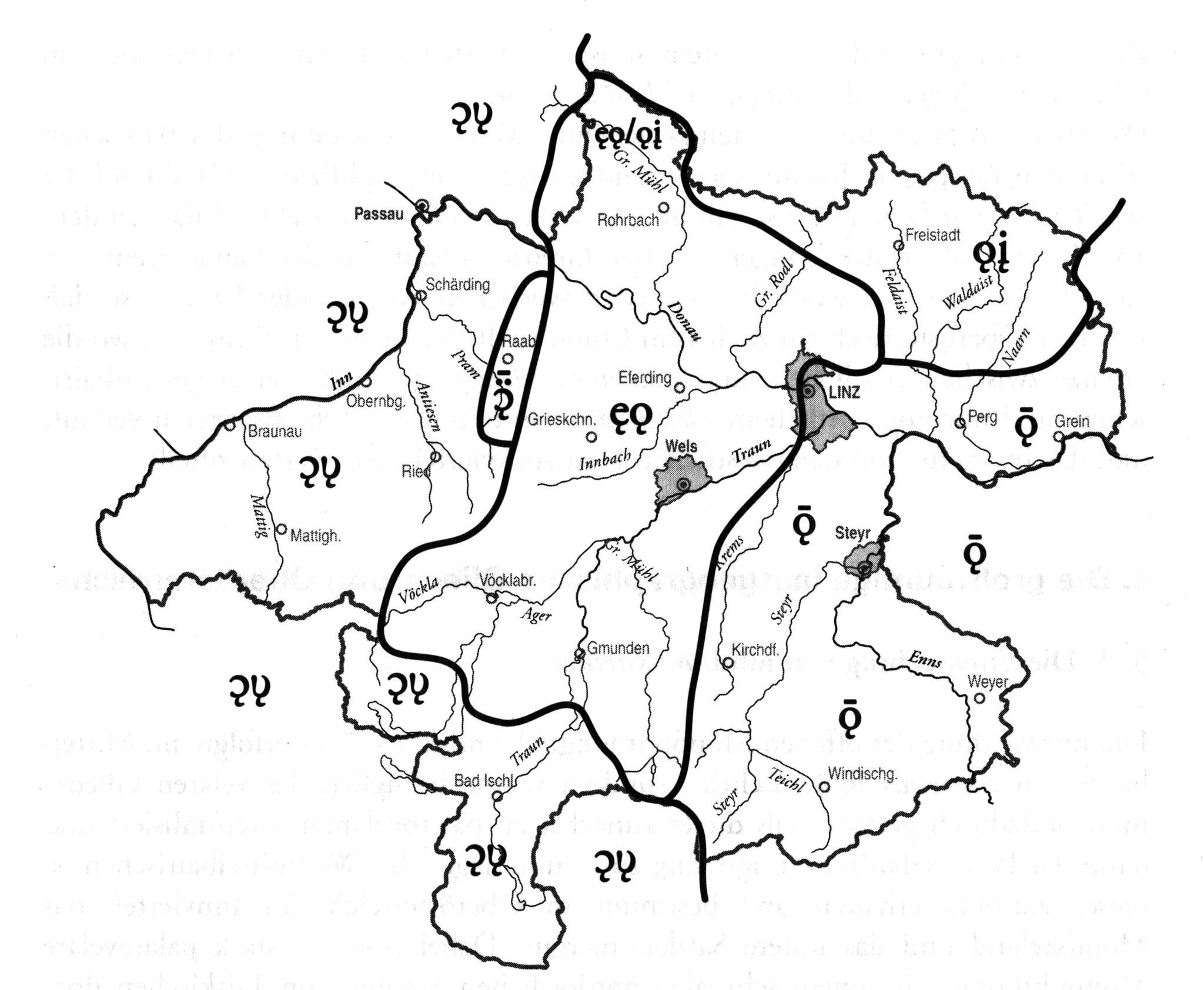
I’ve only heard Yiddish in movies and TV. To my ears, it does have a Bavarian flavor, but also lots of surprising stuff that you wouldn’t have in Bavarian. For example the vowel that would be long /o:/ in most German dialects comes out in Yiddish as /oi/.


Dutch has quite a number of Yiddish loan-words, many of them in (very) common use. Almost all of them have Hebrew roots (see https://nl.wikipedia.org/wiki/Jiddisch#Jiddische_invloeden_i...)