My understanding is that Houston is facing different issues due to sprawl and transit. Housing is cheap if the commute is bad, but very expensive closer to the job centers.
If that’s true (I’m not from Houston!), then it does seem like zoning reform is probably not enough to solve America’s housing issues.
It's hard to compare to some cities in the north since a lot of what is now considered Houston were actually numerous different towns separated by open fields earlier in the 20th century, and now they've all been swallowed up. But the inner part of Houston has famously (infamously?) had minimal zoning restrictions and the inner 610 loop had quite a bit more affordable housing than comparably-sized cities such as Chicago. Nowadays people get pretty annoyed at large new apartment buildings (even luxury ones) being built in the inner loop, but that's just because Houstonians have been so used to having far more houses in the urban center than other large cities (I'm thinking of walking down shadowed streets in NYC where you don't see the sun because the residential buildings are several stories tall--something uncommon here). But the lack of zoning is making it easier to quickly fill in with denser housing such as 3-story or 4-story townhomes and large new apartment buildings, so I'm curious if it will be incredibly dense in the center a century from now.
I lived there for a while and owned an okay condo in a very central / prime location. 2bd 1ba. It cost $100k at the time (peak recession). I checked recently and saw it last sold in 2021 for $140k. From my later experience living in SF I’d guess that place would go for $800k-1.2M in SF. So, I think Houston is still pretty affordable, even in the urban core, compared to most cities.
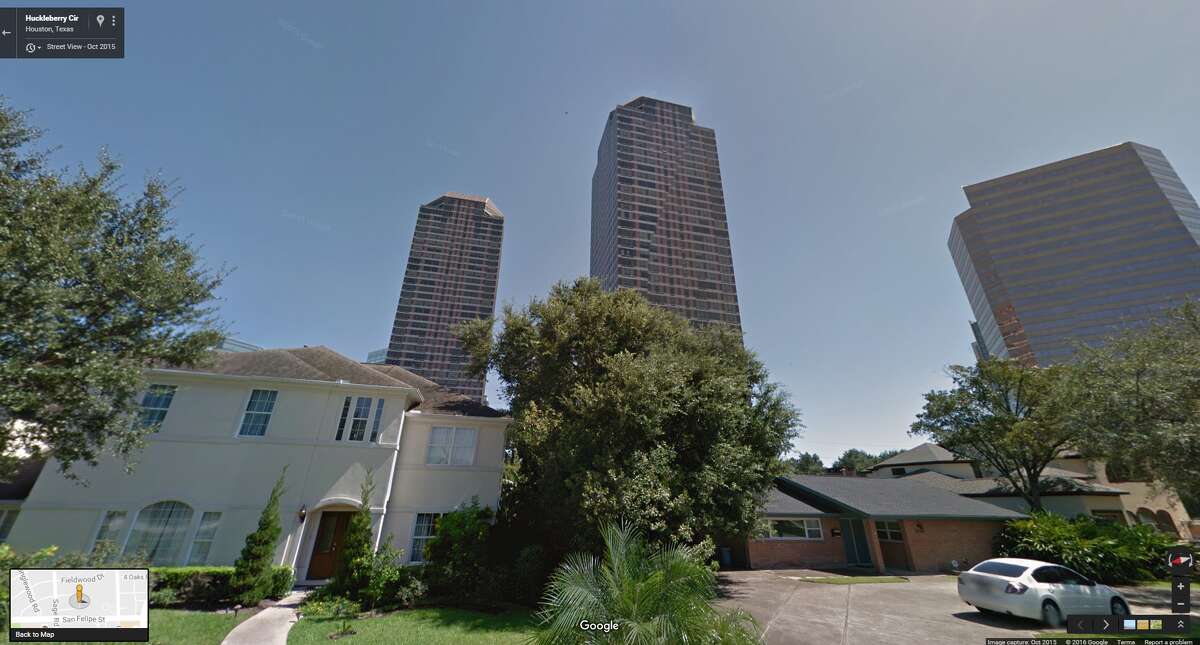
It's even crazier to think about that Houston isn't an example of zoning reform – they've never had any zoning to begin with! You can essentially build anything you want, anywhere, of any density. Yes, even skyscrapers in a residential area [1] or an industrial crematorium in the middle of a neighborhood [2] or, most famously, an amusement park-house-hybrid [3].
The problem is just that Texas, as a whole, has a planning philosophy of outwards, not upwards. Things are densifying in job rich areas now that they've just about expanded as far as they can (the city proper 669 square miles, or about twice the 5 boroughs of NYC, twice the geographic size of its sibling city Dallas, and 150+ square miles larger than Los Angeles; none of these sizes include surrounding suburbs, by the way).
All of this is long way to say that you're right – it's not just about zoning. It's equally about ending the grip of car-centric planning and not just allowing, but incentivizing densification and walkability. The fact 2/3rds of Houston is in (increasingly-frequent, due in part to the sprawl itself not allowing anywhere for water to runoff to) flood zones, too, is apparently not incentive enough.




If that’s true (I’m not from Houston!), then it does seem like zoning reform is probably not enough to solve America’s housing issues.