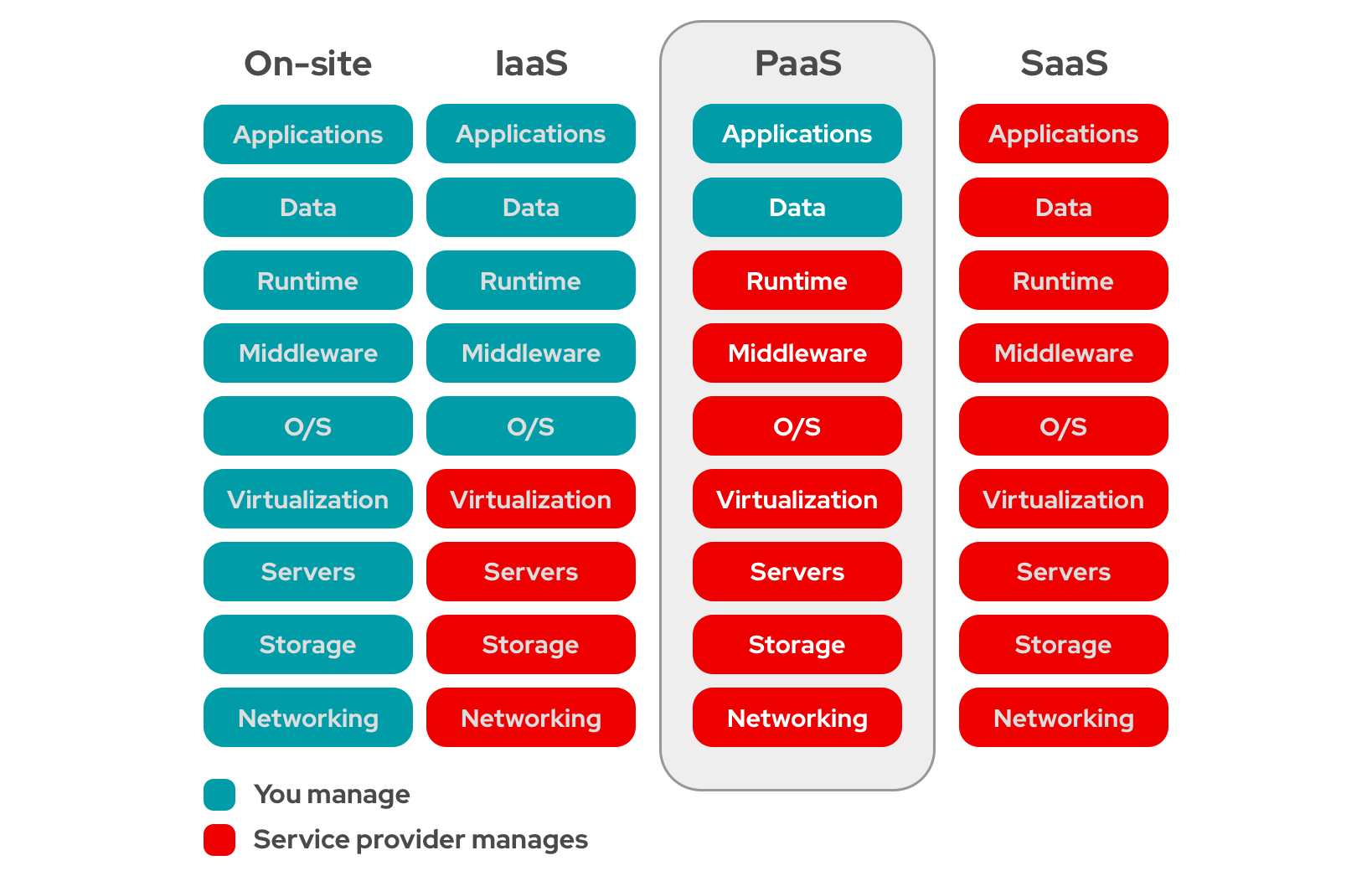
I might need some perspective. Every time I read one of these I'm just shaking my head, and yes the arguments are Less Power, Less Control, but also SysAdmin is me. That is my identity, and the part of the job that I like the most. I solve problems with configuration before code. So I hate to think that I'm becoming obsolete, of course. I also don't think that I am, because I do think that my way has some clear and definite advantages over eg. Netlify. I also think that "my site is free as in beer and also lightning fast" generally transposes to "my site doesn't have any traffic". Am I deluded? I recognize that I have a clear bias, but even stepping back, I do think that even if some don't need a VPS (or server) anymore, that there is still room for my ilk in the tech world.
I would note that every single company I've had in the last 8 years has essentially been replacing sysadmins with infra-knowledgable programmers working with AWS services (who might have been sysadmins in a past life). No one in the engineering org was hired who couldn't program. IT's "System Engineers" were aimed towards "you need to write code to do your job with LDAP/AD/Okta/etc". If someone identifies as a sysadmin and can't write Python/Perl/Go/Ruby, I would... strongly suggest changing that, because I think _that_ has become mandatory for forward looking shops, if not normal shops.
Also. With respect to cost.
AWS costs me something under $1/mo to host my static page on S3 and have my domain point to it. I don't have much traffic. If I did, I could sort that out with relevant tooling; it's still wildly cheap vs compute. The FaaS model (although I personally loathe it) is also reported to be very cost-effective for certain classes of problems.
> [..] If someone identifies as a sysadmin and can't write Python/Perl/Go/Ruby [..]
this is the difference between a systems admin and a systems engineer. some folk can't make the jump from sysadmin, despite best intentions and training.
It is a common (new) myth that sysadmins didn’t code.
There were some IT technicians who couldn’t code and some operations staff who couldn’t code (and would proudly claim this, for some reason). But tools like ansible, salt, chef and terraform were written by sysadmins.
In fact a lot of non-feature code in my companies such as database fencing programs and automated blue/green rollouts has been written by sysadmins.
We’ve just been starting to call them something else since 2013 now.
What's really interesting is that I've run into a lot of sysadmins who can't/don't code; its a continual surprise to me. Writing Perl to manage a system was just part of the deal back when (dating myself now. :) ).
I think that given people don’t believe now that sysadmins used to write a fair chunk of code; what has happened is people hiring “sysadmins” these days don’t make coding a part of the job.
Thus, sysadmins today are doing what helpdesk and system operators used to do 15 years ago. Which means it is now true that sysadmins don’t code, due to a weirdly shifted perception over time and that perception becoming self-fulfilling.
This is something that annoys me. I’m most comfortable identifying as a sysadmin for a few reasons. I spend a lot of my time on problems that don’t make sense to automate. I spend my time at the code level building automation tooling instead of creating or debugging application code. Historically I have often spent my time with developers guiding them on how what they’re doing fits into a broader ecosystem, teaching them something both critical and esoteric about the application so that they can do their job better, and often guiding them on specs.
It’s not everyone’s experience, but my experience has been that a lot of developers who don’t have a sysadmin background aren’t as skilled at those things. The business analysis, cost control, or the application meets infrastructure parts. Case in point, one of my best friends and frequent professional collaborators is a pure-programming guy who works in AWS. He knows everything there is to know about provisioning the most common AWS resources via CloudFormation and Terraform, but I have never seen him demonstrate a realistic understanding of costs or _why_ certain resources are used in lieu of others, or a strong aptitude in optimizing for specific workloads and business cases. If he hits on an area that is “traditionally” sysadmin work, it’s deer in the headlights.
Somewhere along the switch from "System Programmer" to "Sysadmin", probably around turn of the century Windows Server timeline, "sysadmin" somehow started to imply there's no programming.
Despite ridiculous amounts of Perl written by system admins, among other things.
Sysadmin long enough and you'll find yourself inadvertently scripting in Bash. A few languages and API later and you'll realize that you may be coding. That is how it went for me...
I cut my teeth on ancient VAX, AS/400, Solaris, HP-UX and Irix connected via NFS and Fibre SANs. Runbooks became shell scripts, then a DB backend, etc. Chef/Ansible/Puppet/et al all evolved from this practice.
At the time I moved on to greener pastures, I left behind a global Enterprise Storage environment that was semi-automated by workflow. Directly descended from ksh/bash and then moved to REST once that started to be available. Vendor tooling cost $ and sucked.
"Oh, you need to report on all your disparate proprietary backup environments, success/failure, generate reports and ServiceNow incidents? Cool, we'll just bang that out in python and store in Mongo."
Today, that would be a startup SaaS play (adjusted for technology of course).
It is amazing the stuff you learn and create to prevent burnout/churn while maintaining critical infrastructure as a cost-center org.
This might be pedantic, but DevOps originated in the idea that ops and devs needed to work very closely together to deliver capabilities. It _then_ turned into a role "cloud sysadmin" and then lately seems to be "build engineer".
I was a junior system administrator... And became an early cloud adopter...
I think your viewing is valid, but yes, biased by your knowledge.
Since you already know system administration, it's not hard for you to manage another system... That's your day job, what's a personal one?
But for people who prefer code, handing that off is a blessing.
I runs small light sail vps.. it took me only a few hours to write up scripts to manage containers.. and a few more hours to automate backups to a secure location in another AWS account... But for today years, what I just described is impossible, or a 1-2 week task.. not an afternoon...
And this is our bias... For us, it's easier than learning lambda, or api gateway... But for them, those are easier than learning system administration.
I also disagree with the idea we are becoming obsolete... I work in a serverless DevOps environment for 4+ years and still explain basic networking concepts regularly... Stuff that don't teach much of in computer science... Like failover DNS ... While managing DNS was moved to the cloud, many still don't understand the technical reasonings of things.
You're not obsolete. It's just that some people just want to drive their car and get it serviced somewhere every once in a while rather than doing it themselves. Same for servers.
> I also think that "my site is free as in beer and also lightning fast" generally transposes to "my site doesn't have any traffic"
its more about being able to handle spurts of traffic and sustained traffic. these services are good enough to power whole communities and mobile apps. and that means it covers most use cases, as well as the placeholder websites that may launch a product once.
and by most use cases, we're talking about just the 99th percentile of high load intertwined ratsnest products not being able to handle it, but even then that's only because of an insanely high traffic load that is loading unique queries that are impossible to cache and this breaks view rendering - aka the bottleneck is still elsewhere.
with things that render quickly and have that view cached on the nearest CDNs, and that have giant memcaches of the queries that will be used, you really aren't needed!
fortunately there are many web services that are not designed that way, cannot be designed that way, but more so can't/won't be redesigned that way.
I sometimes write code, I sometimes configure things, I sometimes write code to write configuration, sometimes I rearchitect the damn thing. I do whatever it takes to reach the business goal.
If all you know is how to configure something, it's like only having a hammer in your toolbox
If all you know is how to code something, it's like only having a hammer in your toolbox
If all you know is how to run a network, it's like only having a hammer in your toolbox
Not many companies want someone that will move from network problems to code problems to configuration problems to physical problems to supplier problems to security problems over the course of an afternoon, but if you do get a job like that it's nice and varied.
Well I appreciate the feedback, but I didn't mean that I only configure. But over a decade in the business, mostly as a dev first (an infra-knowledgeable dev seems to be the term being bandied about here), I discovered that infra is my first love. So I don't wish to outsource it.
You're not wrong, and I think the right way to think about it is in the context of a company that wants to go "multicloud" -- suddenly they need to abstract a suite of infra-as-code configuration components up out the individual services and APIs offered by various cloud/VPS providers and the reductio ad absurdum of this process is systems administration.
Essentially, a system that requires administration is the opposite (on the far end of spectrum) of vendor lock-in (whether that's AWS, or technologies like k8s, et cetera). Make of that what you will, in terms of the need for your ilk (and mine) in the tech world.
> there is still room for my ilk in the tech world.
Yes, there is. AWS/GCP/Azure are incredibly complex beasts, and people who know how to properly set them up (anything from proper user management and rights to correct ingress points and resource allocation) are as rare as 100-carat diamonds. It's a different kind of SysAdmin job, but it is that.
Don't believe people who are saying "you can just hire junior admins or infra-knowledgable programmers" are talking out of their asses (or until a kubernetes cluster upgrade or a lapsed IAM role brings the company down for 24 hours).
When the winds of change blow, some people build walls and some people build windmills.
You strike me as the type of person who wants to think about themselves as building windmills, but your resistance to embracing technology is building walls.
You’re being a Luddite, afraid of the textile mill because of the time you spent learning to weave. That’s not a good thing for someone who likes technology to do.
Go and learn go, and become an SRE.
That’s all the awesome parts of sysadmin, but modern, automated and without the massive downsides.
There will always be sysadmins in the same way there will always be Fortran programmers. There are benefits to the old way of doing things, but those benefits are of shrinking relevance.
Don't you mean Cobol? Atleast here in Aus it was cobol on mainframes... My understanding of Fortran was that it found its niche in high performance scientific computing.
Sure, COBOL works for this example too. I was originally going to be a little spicy and use C++, which was once also the "everything" language but now exists only in a few (shrinking) areas.
I would argue that production servers should be immutable appliances. They should not have mutable root file-systems, they should not have package managers, they should not have ssh or require direct modification. Those are security accidents waiting to happen. I do not babysit my servers in my home rack. I have a company to run and better things to do just like the author, but that is no reason to give up freedom, privacy, and security. I like my servers to be as reliable and low maintenance as a refrigerator. They are not pets or a garden.
Try container optimized appliance operating systems like Talos OS or application specific firmware-like images like Homeassistant provides and you can generally set up services with automatic updates and forget about them for extended periods of time, knowing they will auto-rollback and notify you if manual intervention is ever required. If they fully fail you can just restore a new stack in minutes from a git commit and your last backup.
There is still some work there for the use cases he's mentioned (git hosts, backups, web servers). Rotating https certs, adding mutable volumes for backups, ssh (you say you don't need it, but it's pretty useful if you're running a git server), and so on. So, yes, they can do much of what you're describing, but it doesn't always work out of the box...there's work involved.
Most of my services are at home in a dedicated lan but I still have one vps server that is used as a reverse proxy and which forward everything via a tunnel.
The OS itself doesn't need much maintenance. I have set up auto updates and auto reboot on a regular basis. And you know what? Distros do their job very well and it just works. We are talking home service, I can deal with (less than) 5 minutes of downtime once in a week. I use rhel derivated distro which means major disruptive upgrade are only dealt with once every n years. I may choose an immutable distro in the future when support ends though.
Rotating https certs? Certbot makes automatic rotation easy.
ssh? What is the deal? You set it up basically once. Add a bit of port knocking if you want more silent logs.
To add a bit of security, set up crowdsec, fail2ban. Again, these tools do not require a lot of maintenance.
Most of the burden of maintenance comes from the management of the apps/services you want to have live. PaaS won't really help you much with that. SaaS tend to be expensive or lock you, they help if the service you want to maintain is complex. I don't think that is the case for the services described in the OP: static websites, git and backups.
There are traps though. For example should you run containers to easily maintain certain services or use the distro packages? You can argue that containers whom upstream project provide image for allows you to easily upgrade any service. I can switch from any postgresql version in a snap for instance. However while it is easy to track and set up auto update a major version using a tag, you might want to be more cautious with major versions bumps. And this keeping informed with the various upstream project, know when and why to do major upgrade, what are the impact and potentially maintenance task of any major release upgrade. This is the hardest part. Sometimes it might be best forgetting about using upstream container for some services and sticking to the version supported by your long term maintenance distro that does the job of backporting any security patch to have that peace of mind. You can still run it as a container, but using the distro packages. That is what I do for databases for example.
I think the point there is that all of what you've mentioned are one-time "costs". You set them up in the beginning (and presumably the parent is managing this stuff in Ansible or Chef or whatever, so if the box irreparably dies, it's not hard to provision a new one) and then you don't need to worry about them.
(The one recurring thing is TLS cert rotation, but for a home/personal server I'd presume most people would just use Let's Encrypt via certbot, which will auto-renew via cron.)
I run ssh for git inside a "from scratch" container with the git binary running unprivileged as an application. There is no need to interact with the host operating system.
Backups can be handled by a backup container. If the host OS is stateless, there is nothing to backup. All you care about are data volumes, which you can then use any automated container daemon backup solution for. A very well solved problem.
For rotating https certs, there are endless letsencrypt containers that automate that for you too.
The point is you do the work for what you need up front, once, and then you don't need much work to keep it maintained.
There are several options, one of the most popular Linux options right now is Fedora Silverblue[0]
"The toolbox is using container technology to bring back your familiar tools and development environment on top of the immutable Silverblue base, for the best of both worlds."
There is Flatcar Linux which is literally based on ChromeOS for standalone systems. For high availability Talos Linux is the way to go with their k8s-appliance-os approach, IMO.
My Nix machine is stateless apart from a few directories such as home that I want to remain across reboots. When I shutdown/restart the server anything not in a mount I’ve explicitly configured to be persisted, gets erased.
The initial setup was a bit of work but the end result works flawlessly.
There are still reasons to have a VPS. However nearly all of them are driven by one factor for me:
American ISPs suck; cash from the wallets and otherwise.
For one thing, they often make it against the ToS to host 'a server' (generally).
ISPs with even remotely decent uploads, EVEN for their business offerings, in the metro area around Seattle (still crazy rent, can't even afford to try buying a house) are like CableCo for 1000mbit down 35mbit up for too much a month or DSL for (I am not joking) 7mbit down (if your connection is GOOD) and (LESS THAN) 1mbit up.
At least for CableCo they also have far too many outages for long periods. I strongly suspect 50%+ of what I pay goes to someone's profit instead of even a tiny bit of (maybe not 100% speed) redundancy and ways of performing maintenance that aren't several hours overnight.
Have these anti-server ToS clauses ever been enforced?
To me it seems like a “cover your ass” clause they put in there to be able to disconnect people who put undue stress on a shitty oversubscribed asymmetric network by hosting a very popular and heavy website, or if they notice a large business website being hosted and need an excuse to force the company to upgrade to a business-grade plan. It does not necessarily mean they’ll enforce it religiously without a good technical & financial justification.
As long as your overall usage remains within the bounds of a typical home user, you’ll be fine. Keep in mind that nowadays home users use a ton of upload bandwidth for things like cloud storage/backups and don’t get cut off even if they saturate the pipe for hours, so you have a pretty wide margin to play with. Torrenting and P2P also use upload heavily and have been around for decades without many horror stories that I know of (the main problem with torrents is copyright infringement and not bandwidth usage).
A self-hosted personal website or some apps (Nextcloud, etc) for personal usage will be a drop in the bucket compared to the above.
I'm in the metro area around Seattle (across the sound), and my CenturyLink bonded pair syncs at 92M/15M (it was 87M/11M but it mysteriously changed last November; pricing tier is 80M/unspecified). Although there are a lot of places where the speeds are what you quoted, if they'll install for you at all. It always shocks people when I quote my speeds though... but Comcast won't service my property even though they service my neighbors and are on the poll. My county's PUD has a reasonable fiber program, but the install costs are too high / too much hassle because I'd need to trench down a long driveway to the street.
Anyway, the speeds are OK, but PPPoE is terrible (and I hear they run PPPoE over fiber around here too), and at least my Remote Terminal has no battery, only utility power and utility power on this side of the sound doesn't have a lot of nines. I've got a LTE hotspot to failover to, but the cell towers get iffy when the utility power goes out too.
Anyway, I feel your pain. I run servers in my house, but I have to run a VPS for my 'important' stuff.
> I hear they run PPPoE over fiber around here too
Yeah, the old CenturyLink fiber installs have PPPoE. New installs under the Quantum brand are plain DHCP, but still on VLAN 201. (Perhaps to discourage people from accidentally plugging in their router wrong? Not sure.)
>For one thing, they often make it against the ToS to host 'a server' (generally).
Beyond this, it can also be impossible due to lack of a static IP or control over the router (5G internet service with CGNAT). A VPS with WireGuard and remote port forwarding allows access for things like SSH.
Many DNS providers allow you to curl a particular URL to set the IP address for your domain. Set your server to curl it periodically, and it solves the lack of a static IP.
"It's 2022, and I'm here to tell you, that deploying stuff online purely using SaaS / IaaS offerings is an option, and it's often the quickest, the cheapest, and the best-quality option (although can't you only ever pick two of those? hahaha), and it quite possibly should be your go-to option."
For me, the solution is Cloudflare + (pick 2) random cloud providers + a sanity check for failover or bypass of Cloudflare if something really messes up.
I run a custom stack on 90% of my sites, so it isn't feasible to use SaaS / IaaS.
> ISPs with even remotely decent uploads, EVEN for their business offerings, in the metro area around Seattle (still crazy rent, can't even afford to try buying a house) are like CableCo for 1000mbit down 35mbit up for too much a month or DSL for (I am not joking) 7mbit down (if your connection is GOOD) and (LESS THAN) 1mbit up.
There are residential ISPs offering symmetrical gigabit fiber in a pretty good chunk of metro Seattle. I lived in an apartment tower so had access to Wave-G (previously CondoNet)'s insanely good gigabit offering, but friends who rented houses in the suburbs also had residential fiber.
It sounds like you never really needed a VPS, that you could have just paid some shared hosting provider $10 a year to host your site and been fine, but instead you chose to do so and now somehow came to the realization that you never needed to do so. Cool story, but then you throw in a bunch of stuff like about how SaaS is hard to compete against but simply because you never had a reason for a VPS in the first place.
Once you calculate things like bandwidth, then SaaS is not hard to compete against... so if you need to upload 20TB+ a month with a 10GB uplink, then certain VPS providers make perfect sense cause you'd end up paying 1000+k dollars per month to do the same through some cloud SaaS solution.
The things he has moved to SaaS sounds like it's, simple, public low volume stuff. My only concern is what happens if the free provider just disappears, but reading between the lines it sounds he's got that covered. His web site is in git, he has a local copy of his git repositories and he backs it up to S3. Personally I've always used SaaS for stuff like that.
Much harder is personal private stuff like email / contacts / calendar / photos. Stuff you want kept private, you don't want to loose ever and must be online 24/7. In utopia the back end would be redundant store with copies stored at multiple vendors, so you don't care if one dies. And the front end is yet another SaaS provider that uses the back ends. If they disappear you just move to another one, pointing them to your back ends.
In the real world you use Google or a competitor to do all jobs, they make it hard to export / import your data to other providers, they mine your data, they will make it available to governments and law enforcement agencies and possibly lawyers on request without telling you, and if they get the shits with you it disappears and you loose everything.
In todays world that what SaaS delivers to most people, and it's reads like a deal with the devil.
Author here. That's right, I'd like to think I do have it pretty well covered, if the free provider just disappears. They're static sites, they can be hosted anywhere. I have almost no lock-in (except for a few config files, and function hooks, that could be ported fairly easily). If one provider pulls the rug out from under me, I can move to another one. In the worst case scenario, if all the providers stop offering free static hosting, I could just move all my www hosting back to a VPS (although I'd probably move it to S3 + CloudFront + Lambda, which isn't free, but is so cheap for low-volume that it might as well be free).
Yes, I agree, personal private stuff is harder. Before embarking on this static-site endeavour, I migrated my photos from Flickr to S3 / CloudFront, and that was a big project in itself (and Flickr is one of the nicer SaaS'es, that lets you export your data quite easily). For email / contacts / calendar, I'm pretty locked in (with one of the big providers), I wouldn't mind moving to a better setup where I own and I control the data, but honestly, it's in my too hard basket.
Author here. I never needed a VPS for the bandwidth. But I did need it for dynamic www hosting (mainly powered by Gunicorn + PostgreSQL). SaaS / PaaS alternatives (e.g. Heroku - which I've used occasionally), or IaaS alternatives (e.g. in Amazon land, RDS / ECS / S3), in that space, are generally more expensive.
Now that my sites are "static" (the inverted commas are because there's still actually dynamic functionality, powered by serverless functions), I can host them on a number of different SaaS / PaaS providers, that have fairly generous free plans.
And that is understandable. I have my site hosted on GitLab Pages for free and love that it is fast and feels dynamic even though it is static. However, I also have some other stuff that takes up quite a bit of storage that would only work on a VPS or dedicated server, but in pricing it out with cloud providers it was like 100x the cost.
We had some BIG surprises with Netlify billing. Basically we use the functions they provide, and we racked up a HUGE ass bill. They charge PER request, meaning as soon as we deployed a semi "real time" interface for one app, the usage spiked.
Really, "serverless" is just a fad, and overloaded term. How about you deploy containers instead, and MAYBE have your database provided by a "Saas" provider (database maintenance, backups, upgrades etc, are the real time consumer, not the app server itself)
maybe serverless is a fad, but it can be a very useful one to reduce costs.
our corp IT ops group has a google sheet that tracks staff's g suite/workspace-MDM'd corp mobile phones (is the OS updated? are the MDM policies up to date? when did the phone last check in, etc). the sheet is auto-updated every few minutes by a few lightweight cloud functions in GCP that query a few google APIs, state is stored in Datastore. the cost has never been more than $0.20 per month and it has semi-revolutionized how the corp tracked mobile devices.
of course our win was multiplied by our use of g suite + associated services and APIs. but, in our case, the savings in both hard and soft costs were very real.
Once there were a lot of free tera byte image hosting services. And then after some market ups and downs, most of them either closed down, asked for subscription fee or hugely restricted what can be done.
Free static hosting services might not remain such for long. At the very least, they might introduce terms or condition you might not like. Then it will be harder for you to shift to another service, compared to switching your VPS server.
Also I count my time spent on managing the servers as free. For me it's experimenting what else can be done, gaining experience and overall enjoyable time spent.
Sites hosted on Netlify literally just depend on a github repo with a TOML configuration file at the root.
For basic static sites, which I imagine fit the needs of the majority of personal hosting, it's incredibly trivial to point the same repo at a different static hosting platform.
If your VPS was build by hand over a long period of time, sure it's hard to switch to another service. If your VPS setup is automated by Ansible or NixOS or something, it ceases to be hard.
Fine if you can make do with static sites but that's hardly a common use case. Most of us who use a VPS are hosting Nginx with a reverse proxy to Rails, Django, Express or Laravel + PostgreSQL or MySQL where the memory costs are a fraction of the equivalent cloud offering. I tried Github pages once, rather than Netlify, and pulled my hair out trying to get HTTPS working with a personal domain. Last I checked it's still not possible.
Author here. A big part of why I'm saying "I don't need a VPS anymore", is because I'm also saying "I don't need dynamic sites anymore". I've been building dynamic sites for two decades (once upon a time "original LAMP stack" PHP + MySQL, more recently Python + PostgreSQL). I honestly never imagined that static sites could one day compete with that. But times have changed, and the JAMstack of 2022 has all the functionality you need. I've managed to convert all my old dynamic sites to be statically generated, without really compromising on bells and whistles. And the SaaS I'm now using is (almost) all free. As far as I'm concerned, I'm having my cake and eating it too.
I think you're overplaying the "static" card. If you're using the JAMstack the static bit is only half of the equation. Need a contact form? Now you need a form-processing service and it's no longer static. If you're replacing old PHP + MySQL sites you'll need a lot more than a static site generator. "Mostly static" might be more accurate but then how long does that last? Clients typically want WordPress plus a ton of plugins. I don't see how JAMstack addresses that need. You say it's nearly 100% free but I just looked at Netlify's free tier and you're only allowed 100 form submissions per month after which they're $19 each. I don't think I would get a night's sleep with that hanging over my head.
It's up to you when you think a traditional server back-end is still warranted, there are certainly still cases where it makes sense. But if all you need is a contact form, then I'd argue that it doesn't make sense! Yes, I agree, Netlify Forms is a rip-off, if you need more than the free limit of 100 submissions per month (which personally I don't, but of course many people do). But there are many other options for simple form handling, I'd recommend looking into them. And the JAMstack can compete quite well with WordPress and co these days, check out https://myclientwants.com/
The thing is I only picked on forms off the top of my head. There's a ton of functionality in your average client site which I can't imagine JAMstack catering for without it costing a lot more than hosting it on a VPS. JAMstack seems to cater for the painting by numbers model of web development but that's only a small fraction of what clients need. The JAMstack equivalent of a typical WordPress site, I imagine, would have to pull-in a dozen external services costing a lot more than the VPS alternative. Netlify make a big deal about the low-cost scalability of the CDN factor in JAMstack but it's only low-cost when you don't use external services. It's quite the opposite, I've heard, once you've outgrown static and need a third party service for every new feature.
Agreed. I used to be on the JAMstack train, but when your dynamic needs grows, you site has more and more dependencies and some are vendor specific such as Netlify. Now I have simplified all to use just one web stack for simple static site, to crud site to rest api backend, running from container. Minimise vendor dependency so I can easily move around be it self hosted at home, vps, AWS, Cloud Run or whatever. Rather than creating more Netlify clone, I hope HN crowd can create Cloud Run clones that let you easily host a container, not just static pages.
That’s right. Plus you miss out on control, functionality, optimization, flexibility on the dev side and predictability and simplicity on the business side. It turns things upside down and for the type of work we do these are exactly the wrong tradeoffs.
> It's up to you when you think a traditional server back-end is still warranted
All the cases outside of "oh, I dump my thoughts on the page once a year".
Even for a blog in the modern world I would like:
- automatic crossposting to Twitter and Facebook
- automatic retrieval and reformatting of external content (because, for example, twitter embeds are very cumbersome, heavy and slow)
- automatic retrieval of video and images from external sites (youtube, instagram, twitter etc.) because of link rot
- delayed publishing
- search
- and a plethora of other things
Yes, you can stitch togethe a bunch of "serverless" stuff for this, but you've just "replaced" the "traditional server backend" with a bunch of traditional server backends.
> A big part of why I'm saying "I don't need a VPS anymore", is because I'm also saying "I don't need dynamic sites anymore". I've been building dynamic sites for two decades (once upon a time "original LAMP stack" PHP + MySQL, more recently Python + PostgreSQL). I honestly never imagined that static sites could one day compete with that. But times have changed, and the JAMstack of 2022 has all the functionality you need.
This IMO should have been the main point of the article, not VPSes. No one can argue that a maintaining a live website is better if a few HTML pages will do.
> "I've managed to convert all my old dynamic sites to be statically generated, without really compromising on bells and whistles."
In your linked article you say:
"Anyway, site search is only a nice-to-have...and folks can just use Google with the site: operator instead"
To me that sounds like a compromise.
I'm out of my depth talking about SSG-powered sites because I've never developed them. My area is frontend design-dev, without the engineering stripes or desire for overly complicated builds. That's why PHP and the traditional dynamic sites work for me.
PHP, javascript, templates and a good reliable CMS allows me - the non-engineer, to do really interesting things such as site search with lots of added unique tricks to make users happy when they search for things.
Beyond my needs, the non-technical people I build sites for need to manage the content easily. That's where I scratch my head with the SSG offerings in that regard. Where the CMS is often the lowest priority, with bizarre suggestions and workarounds to fill the CMS void. For complex content-heavy sites with lots of products, forms, landing pages and categories, a good CMS is really important... and a general architecture that isn't scattered around big tech services IMHO.
Re: search. It's not that site search is impossible, or even particularly hard, with a JAMstack site. It's just that I didn't consider it MVP for my personal site. I know how it can be done, and I'll implement it when I have time.
Re: CMS. I know where you're coming from, I spent a good decade or so specialising in traditional CMSes / frameworks myself, mainly Drupal and Django. There are various answers to the CMS question for static sites - the ones that I'm most familiar with are https://forestry.io/ and https://tina.io/ (and I've heard no end of buzz about <https://www.sanity.io/>). Those solutions are solid, I wouldn't call them "bizarre suggestions and workarounds". And they're good enough for most needs, IMHO. But I haven't tried pitching them to clients yet.
>Fine if you can make do with static sites but that's hardly a common use case.
This feels odd to me. Unless you are building a web site that is a product, why do you need anything besides a static site? I am going to go as far as to claim that: most websites should be static sites.
>I tried Github pages once, rather than Netlify, and pulled my hair out trying to get HTTPS working with a personal domain. Last I checked it's still not possible.
Don't know when you checked last, but this is false and has been for years. My personal page/blog/demo has been running in Github pages for past 5 years and I've had custom domain the whole time. I can't remember if HTTPS was from the beginning, but it sure is there now.
If memory serves me correctly all you need to do is to point your domain to githubs name server and add a file called `CNAME` with your custom domain to your repo to get it working.
> I tried Github pages once…and pulled my hair out trying to get HTTPS working with a personal domain.
Last I checked HTTPs was available by default even on custom domains. I did have to remove and re-add my custom domain on a Github pages site that was created before this was the case. But after doing that, it was 0-config.
> Nginx with a reverse proxy to Rails, Django, Express or Laravel
/me over here reverse proxying to Hunchentoot with CL framework of the week. Have yet to see a serverless setup that even has any idea what CL is . . .
For most things we want to do there's more than one way to do it. Ultimately it comes down to having freedom to try different things, to experiment with web technologies as my interests evolve. I really really dislike having to bend to unnecessary restrictions. I don't think I'm alone in that regard.
A VPS is a great way to go. IMO managing a VPS is hardly burdensome, the amount of effort it requires is minuscule. Certainly far less than dealing with Windows on this laptop.
Currently I'm self-hosting a videoconferencing server (jitsi.org, with customizations) that is used pretty heavily. Also run a server for a website created with my own software, call it developmental, experimental, whatever. Keeps me interested and teaches me a lot.
No way I could do this stuff in conventional setups. While this approach works for me, certainly easy to see how it wouldn't work for many others.
It's good to have such great options to choose from at truly affordable cost.
Are you using Jitsi via Docker? I was self-hosting a Jitsi instance for a while for my friends, but among all the services I'm hosting, it required the most work and broke all the time. At some point I gave up and we're now using either Signal or, if Signal can't do what we need, some public Jitsi instance that we trust.
I'm self-hosting jitsi in a "regular" VPS (4GB/4cpu). Though Docker is a popular and supported option. In the years I've been using jitsi it's improved immensely. The current stable version is quite usable, works fine when participants have good internet connections. I mostly use it with 2-5 people. Once installed and configured very little attention has been required.
I'd agree that for larger meetings the public server at https://meet.jit.si is a better option. AFAIK it's trustworthy, but of course my own instance provides greater assurance of privacy. Anyway I'm confident that's true, though I couldn't give a 100.000% guarantee...
> I really really dislike having to bend to unnecessary restrictions. I don't think I'm alone in that regard.
You aren't. I'm one who actually moved from a more managed product to a VPS precisely because I couldn't get what I needed from the managed solution.
It's great we have options, but it's absolutely a false dichotomy that the author is presenting. You can have SaaS solutions for things that fit well, while having VPSs to research and develop things that don't fit into a neat little package (yet).
“If you wish to make an apple pie from scratch, you must first invent the universe” - Carl Sagan
The same can be said for self-hosting. Everyone trusts some other person or company at some level in the stack. It's all about balancing the tradeoffs and finding a sweet spot that works for you. Too many people miss the forest for the trees – the important thing is to create and get your work out there, not endlessly argue about what sized hammer to use.
No one never needs to trust copper wires or single transistors. One could, in theory, build an entire computer from discrete components and never have to trust external hardware or software. Of course, it wouldn't be very practically useful and would be a monumental amount of effort.
But hey, it's a cozy thought for those chasing the trust dragon.
I think in this context building a computer from individual transistors and copper wire is the same as “invent the universe” for the purposes of the expression.
Or baking an apple pie, to feed your electronics engineer? If you're going to carry it to its logical conclusion, "invent the universe" works in any context.
AFAIK, we don't currently have the ability to compile any of our software from scratch. Every compilation utilizes digital artifacts that were created externally. To operate a "no trust computer", not only would you have to build the hardware for scratch, but you would also have to recreate more than a half century of collaborative advancements in computer science. This isn't a cozy thought for those "chasing the trust dragon" since it means that a true "no trust computer" is impossible to create for any single individual and even practically impossible for any group operating on a timescale of less than decades.
You'd have to make an assembler then a compiler by hand to bootstrap. It's a monumental task, but reasonable to do. The blueprints are all there. Re-implementing modern operating systems and complex languages and the tools that run on them? That's wholly impossible for one human lifetime.
This is one of my favorite youtube videos in the past year.
You have to do that and much more. A "self-hosting" basic OS is a great achievement that I am not trying to downplay. However there really aren't any examples that I am aware of where that was achieved without relying on artifacts somewhere up the chain that come from an external source. I would say that achieving any self-hosting OS without relying on external artifacts is well outside one human lifetime. Edit: You have to completely manually bootstrap your hardware design and manufacturing simultaneously with your software.
Heh, check out the precursor. No blobs, serious concern over even simple chips like display controllers and keyboards. They implemented the risc-v CPU in an FPGA with opensource files, etc.
Definitely the most trustworthy computer I've seen.
Over the pandemic, as an ideological mission against surveillance capitalism, I went about as far as my technical skills could take me: self-hosting open source everything on a VPS, eliminating all FAANG software, Linux desktop, custom ROM on my Android. At the beginning, the amount of control I had over my data and my software was exhilarating. I learned a lot, and some of the changes will become permanent. But after about six months, I didn't have the free time any more to maintain all of that. I decided to switch to Apple's ecosystem and trust them to handle things for me. Yeah, I'm ideologically against some of their recent privacy and security moves. But at least they're not wholesale selling my data and attention to advertisers. I never did manage to find a suitable replacement for Google Maps, though I gave Organic Maps and OSMand a fair try. I tried ProtonMail and eventually switched to Fastmail. Still using Nextcloud for files, calendar and photos, but I'll probably switch to iCloud and/or Fastmail's options for those.
If you're interested, Here (the PaaS for automative industry in-dash nav), has a website based maps: https://wego.here.com. They also have a phone app. I only found this out because I was looking into where my vehicle pulled it's in-dash nav maps from.
>The number one thing that I loathed about managing my own VPS, was security. A fully-fledged Linux instance, exposed to the public Internet 24/7, is a big responsibility.
I don't share the view, if we consider small web sites or apps. For me, using containerized apps, having external backups of the DB, means I can reboot the app fast in a clean state if an attacker manages to break in and do nasty things. The OS and apps can be updated with ease, to stay up to day with security patches.
Apart from some limited cases, I think it's cheaper to have your own servers if you don't have to pay much for their administration.
And I hate not owning my data, my apps, having to depend on a third party.
> For me, using containerized apps, having external backups of the DB, means I can reboot the app fast in a clean state
That of course applies if the attacker only makes it into the containerized app itself, but (assuming docker is used for containerization) Docker has had it's share of 10.0 CVEs [1], and almost every other containerization platform out there has as well. Can you really trust a machine once it has been broken into ?
Then of course there's the whole thing about the data. Nobody cares about the application or the infrastructure. If a sysadm is running the show, chances are that the server will be sitting on a DMZ network with firewall rules in place, so hopefully the network integrity is still in place. Your data however may not be, so you need backups.
Depending on how you do backups, chances are that you're using push backups, which means that somewhere on your server resides credentials that can at least alter your backup, meaning if an attacker makes it into your server neither your data or backups are safe.
> Apart from some limited cases, I think it's cheaper to have your own servers if you don't have to pay much for their administration.
If all you're hosting is small web sites or apps, some of the major cloud providers has your back for free. Azure allows 10 million hits on their Azure functions per month for free, as well as free static websites. Oracle Cloud gives you 4 ARM cores and 24GB RAM for free to use in any configuration from a 4 core VPS to 4 one core VPS', as well as a lot of other stuff including 50 IPSec connections.
There is literally no reason to run and expose any infrastructure from home anymore, especially not if it's "personal infrastructure".
> And I hate not owning my data, my apps, having to depend on a third party.
Define owning. Your data might live on a server, but if you create backups at home or somewhere else, does that not constitute ownership of the data ?
As for depending on a third party, i'd wager that your data is much safer in a professional data center with redundant internet connections, redundant power supplies, redundant hardware, geographical redundancy, fire/flood protection, physical security and 24/7 monitoring than any setup you might have made at home, or if not, you're paying way more than you need to for your home setup.
Well, there is Cloudflare Tunnel if you need to expose something (ssh, database, http services, etc) to the internet without maintaining a vps to act as a tunnel/reverse proxy yourself.
I think people forget that unavailability can be caused by non-technical things like changing terms of service.
It's easy to recognize that you shouldn't run something critical on a piece of software considered "beta", but too many people happily seek the loss-leading free tier of cloud providers.
If your service is essentially losing money for the company hosting it, that's not a good place to be. Still trying to convince my company to stop using the Dockerhub free tier after they pulled the rug out once already...
I love so many of these kinds of services, but network charges really feel like a major rip off coming from the whole "you have a pipe, use it as much as you like" world.
I get that these services mean you can get better perf, but honestly I would rather just have stable pricing and bad perf (which is fixable by turning a knob) rather than super perf and super high bills.
When reading posts like this I often think, why do so many people not use Ansible (or an equivalent) for running these updates?
It's really easy to get a simple start. You can do one thing at a time. For a while I had only an inventory file and a small play that ran updates. With a single command I can make sure updates are installed on all the machines.
Cloud is all about buying resources(IaaS) and functions(SaaS) of your choice. That means, one can purchase storage and traffic like the case here, or CPU time and memory for data processing. One specific scenario can work for someone, but that doesn't define what cloud is or should be, because it's all about choice.
Your Ubuntu VPS is free, open, loosely configured, and vulnerable.
Your Netlify account is closed, tightly configured with specific focus on one problem, and secured with timely patches and a monitored network.
What product is free, open, tightly configured, and secured with updates and a default iptables that isn’t just -P INPUT ACCEPT?
Perhaps someone awesome is providing docker images that have the latest and greatest in single-problem-focused software, with a built in firewall, and a security team? That’s the kind of thing I’d be into helping out, in my spare time.
As a js/node guy I would pay money for a opensource "managed" base os image with only 22,80,443 open with app armor/selinux configured and user accounts with plug and play containers for select from (nginx,haproxy,varnish,node,redis,postgres,couchdb)
There was a hype on serverless, so a lot of people here on HN is a bit allergic on them and tell ‘an EC2 instance is all you need’. And it’s not wrong — I’ve seen seriously over-engineered serverless systems with so much AWS-specific code. But a few years passed now a lot more services now provide (almost) lockin-free APIs that are pretty useful for simple.
IMO blindly recommending ‘just self host’, a sentiment that I see a lot in HN isn’t a good answer.
Blindly, nothing is a good answer; you need to weigh your needs. But so most people blindly grab aws; unlike yourself, I find HN actually almost The AWS & K8s Promotion Team. People swear by this stuff here, even if you don’t need it, at all. They forget that not all startups have million$/year to throw away on devops to handle the bizarre complexity of those solutions while they also just really do not need them (now and, statistically, as they will likely fail, ever). It all always reads like resume driven development; I understand it; good people you hire want to do stuff that furthers their career. But it makes it blind in almost all cases I read here (which are tiny companies with no traffic at all, ramping up to be the size of TikTok overnight).
But I digress.
Ec2 is incredibly expensive (outside the free tier that is) compared to many other vps options.
And as for serverless; last month a startup without funding was making a scraper and used aws lambda because it was easy. With their js code it took me 1 day to save them 1/1000th of their cost by using a vps; on ec2 that would’ve been a 1/10th save (outside the free tier which would not work; not enough power). This saving allows them to hire an extra dev for free to work on, you know, extra bottom line features to actually create a business.
For a $10m-for-a-PoC seed invested startup, this is all the usual blah blah about ‘but it saves time on management’ (it doesn’t in this case or many others I have seen in the wild), but if you don’t have prior VC relations on speed dial, you might be funding it all yourself (for now) and cloud stuff is just shovelling money into a pit if you don’t need the upsides at this moment.
I find the argument that you shouldn’t be using serverless because you don’t have money to throw on devops a bit… strange? Isn’t the big reason on using serverless to avoid spending money and time to managing your own server?
And IMO the lambdas-are-cheap argument is more like that lambdas are expensive, but they multiply to your scale, so it’s super-cheap in small startups. I view lambdas as a starting point for PoCs — they eventually have to move to VPCs, but lambdas are free if it gets no traffic.
And that’s why I’ve mentioned lockin-free APIs: lambdas are terrible if you can’t migrate away from it. But if you can without much effort, it provides pretty good value.
Edit: Sourcehut pages is the most direct parallel to Github pages but there's a bunch more options for free hosting listed on gemini://geminiquickst.art/ And that's not even mentioning the number of Tilde's that are configured to let you host Gemini content.
There are two or three scare-mongering arguments in the article that I cannot believe to be true. The rest might be valid but throwing-in these makes the whole post less valuable:
- traffic might take your site down: it's never going to happen, although I understand why one would hope so
- SSH attacks: change your default port
- shellshock: you use or used CGI scripts in the last decade?
Author here. Sure, maybe successful attacks in those categories are unlikely. But my main point was, so long as I maintain my own VPS, they're still possible, and I'm responsible for defending my box against them. Whereas in SaaS land, I don't even know what physical / virtual boxes the provider has, nor do I care, because I'm not responsible for their security nor for anything else regarding them.
If you have run VPSes for some time, how come you have not learnt and taken some steps to make it less prone to attacks? That's the part I don't find credible enough, or can't share the rationale to include it in this post.
Author here. Like I said in the article, "... I've picked up more than a thing or two when it comes to Linux sysadmin". I did harden my VPS here and there, over the years. And there never was a successful attack on my VPS - not that I'm aware of, at least.
But that doesn't change the fact that I simply don't want to manage a VPS anymore. Like I also said: "However, I've learnt what I have, out of necessity, and purely as a means to an end. I'm a dev, and what I actually enjoy doing, and what I try to spend most of my time doing, is dev work. Hosting everything in SaaS land, rather than on a VPS, lets me focus on just that."
After decades of self hosting, and gradually warming up to "the cloud", only to promptly pull everything back home in 2013 when Snowden happened, i've yet again moved everything to the cloud.
For personal documents, privacy is handled by Cryptomator (https://cryptomator.org/), and i make local backups as well as remote backups to another cloud.
Everything else is in Azure. Their free tier offers generous consumption limits on Azure Functions and CosmosDB.
I'm currently playing around with Oracle Cloud as well. Their free tier has some generous offerings of ARM cores, 4 cores and 24 GB RAM that can be provisioned as either 4 x 1 core VPS' or a single 4 core VPS, but that just brings back the problem of having to manage stuff myself.
For the first time in decades, i have ZERO open ports in my firewall, and i'd like to keep it that way.
In case you still find yourself needing more than netlify can offer, you can get a pretty decent free VPS from Oracle: https://paul.totterman.name/posts/free-clouds/ . Just remember to make backups.
You also have to remember to choose the correct region, as their free offerings are not available everywhere (and they won't tell you which regions have it available before locking you into one).
The one surprise I've run into was that they shut down the arm instances at the end of the trial credits period, even if the arm instances are "always free". So I had to recreate them from the block device backups. But that hasn't re-occured.
I suspect it will be like Google is doing now, once they have enough market share or don't need whatever they're getting out of their end (eg. stress testing their VPS offering) expect the limits to come in.
They’re free tier is very good and generous. They have (or perhaps had) a fondness of killing peoples free accounts though so take care what you put on there
So the solution here was mostly (entirely?) Netlify?
Netlify is great (happy user here), but I was hoping to see the author's "suite" of solutions. Surprised not to see CockroachDB, Supabase, Firebase, NextAuth and the like. You can get pretty far these days on a free plan even if you need auth and a real database.
Author here. For all my personal and small-client sites that previously had auth and a database, and that I previously hosted on my VPS, I realised that, no, none of them really do need auth or a database. An SSG (Hugo or Eleventy) and a simple host (mainly Netlify) will do the job.
If I need auth and a real database, I'd probably still go with a more traditional architecture (Python + PostgreSQL is my go-to). Hosted either on a VPS, if I want to keep it cheap and simple, or on ECS / RDS (or non-AWS equivalent), if I want more scalability and resilience (and have the budget for it). But thanks for your suggestion, I'll mull over it.
Welcome friend, it's been too long we've been waiting for you. Through the process of acquisition I currently manage a physical data center that someone else setup to have "control" and an Azure data center that only uses Azure VMs "to avoid vendor lockin". I am in the process of migrating all these workloads to containers in a mixed ECS/Kubernetes and AWS lambdas. We generally see 90%+ TCO reductions. Almost 100% of my problems are in that stupid colo.
If I never have to decode how the mail relays are configured, mount a user's home directory, or spelunk through Sys V init scripts/systemD unit files again I'll die a happy administrator.
For people that self-host and manage security themselves, what steps do you take to actively monitor that you haven't been hacked?
I understand how people would set up their own backups and automate security updates, but what do you do to monitor that there hasn't been an intrusion without you noticing (e.g. login attempts, successful logins that aren't you, files changed, root kits, data stolen)? How does that compare to what managed services and hosting companies with teams who benefit from economies of scale would do for you?
You can run an automated rootkit detector, but I doubt anyone able to get that far will be caught that easily. Your best bet is using application specific monitoring, eg for WordPress there are excellent tools like Wordfence that monitor login attempts, file changes and block common attacks. For my custom apps I will be alerted on brute force attempts, weird queries (sql injection attempts) and pretty much any anomaly is logged and will stand out. Another big one is monitoring for weird resource usage, I use Netdata for this. But doing some upfront hardening is the most effective way. I have yet to be hacked (as far as I can tell) operating multiple VPS servers in 10 year+ timespan. But have worked with companies that frequently had their servers compromised due to poor security practices.
A long hold out! Works for most use cases. If you are doing any big data processing that doesn't neatly fit in a predefined resource plan then you are still doing all the SSHing etc. You might even be buying your own physical beefy computer to throw in the closet and SSH into from elsewhere.
I wonder how long the likes of Netlify and Vercel will last though, before they too introduce onerous conditions.
I have a side project where I need to store a large amount of data. If I were to use a non rental server it would cost me hundreds of dollars each month while renting a large ass server with unlimited bandwidth costs me around $70/month.
Sure if all you need is to host some static site it's all fine but if you need to host something more beefy that has requirements the costs are huge compared to rental servers.
Also, there is the point of nearly all managed hosting serverless solutions is done by american companies so if you want to host in the EU for example to avoid surveillance there isn't a lot of options out there.
There is also a bunch of different requirements that makes hosting on a serverless platform hard / more expensive for example:
* Connecting to a third party that has some firewall based on ip
* Using anything else than http
* Having multiple sites where with a rental server you could host everything on the same machine it usually gets quite expensive since serverless stuff costs usually are per app basis.
* As I've mentioned earlier, if you transfer and store larger amounts of data
* Any requirement from governments and such that data is not stored on american companies
* Long running processes
The list can be long for when serverless is not viable and for most of the apps I've worked on a lot of them couldn't be hosted on a serverless platform for some of these reasons alone.
Regarding the price aspect, I've found that if you have some kind of backend with a larger amount of traffic serverless solutions is always more expensive and I get why, it's managed and it's understandable. A rental server pricing is easy and predictable, a serverless solution pricing is complex and hard to understand probably by design. It appears cheap at first glance but in reality it's almost always a lot more expensive.
I find that serverless is often so much slower than my $5 VPS. I like making Next.js apps with backend API routes. When I run them on Vercel they're verrry slow, even once you get past the cold starts. Running it on my own little droplet makes it incredible fast and snappy.
I'm in the same boat. I ran and maintained my own VPS for a decade to host several WordPress sites. I'm not a sysadmin, and package updates can be a nightmare if you only deal with it once every few months.
Ultimately I gave up and moved to SSGs + CloudFlare Pages, and put the WordPress sites I couldn't convert on managed hosting. My life has been so much easier.
This all will change in the future - I do think the free SSG hosting is a temporary loss leader for these companies. Hosting on a VPS would yield faster builds and serving static files isn't hard. And I'm sure there will be even easier ways to host WordPress sites.
It's not really more power in hands of corporate overlords unless you give them your domains. Domain names are the first point of contact to anyone using your service, as long as you control them you can move to any other corporate overlord at any time. That's freedom.
I'm in the same situation as the OP. Except I still do have some VPS left mainly for tor exit nodes and DNS over TLS servers. The rest that did require some sort of VPS is now in managed k8s.
I run a kubernetes cluster on GKE for my dynamic tools, and host some other stuff on S3. Eventually I'll get all over to the big G.
I got very tired of the VPS/ec2 node "hassle". Too much grief, too little payoff. What do I need a "true" node for? Not much. I know Kube well enough it's a straight shot over for me, with a massive capability increase. (And boy, do I pay for it. But it does give me a nice playground @.@).
I did this a few years ago too. Turned my website in to static content and hosted it on Github Pages. Made all my sub-site project pages in to repos, moved the blog content to Github wiki pages, pointed my domain at it and done and done. I used to spend less than the author, $5 a month for my small VPS, but at the end of the day I realized less can be more and moved it all on to Github.
I haven't done this but in theory you could use something like AWS Fargate or fly.io to launch a bouncer/irc client. Really anywhere that lets you run a free container should work, if you can secure access to it.
I did some of this, but simpler: static sites on an Azure storage account with Cloudflare in front, moved some things to a homelab to get them off the Internet, etc.
But I don’t get using Netlify or other site providers, though. Seems like an unnecessary dependency on a free service that might go away.
I used to use AWS S3 public bucket plus the AWS CDN and it works well. Now I tend to use Netilfy as it’s easier with fewer configuration steps (no need to setup the CDN or SSL certs). I know I can go back to my setup if they charge a fee.
Use a server image as the base which uses the latest version of the OS and core packages and then have your own custom install scripts that initialise the new server with the elements you need from the latest versions.
Getting those scripts right is the key part.
Once these are set up, standing up new servers and burning old ones is a cinch.
Anything that's not in a repo or package needs to live off-server, possibly in a cloud
I still use a VPS because my websites present user data and I host a GraphQL backend to store that data (Strapi, KeystoneJS, and NestJS). What is the alternative here? AWS?
> There are plenty of attack vectors: SSH credentials compromise; inadequate firewall setup; HTTP or other DDoS'ing; web application-level vulnerabilities (SQL injection, XSS, CSRF, etc); and un-patched system-level vulnerabilities (Log4j, Heartbleed, Shellshock, etc).
The irony is that serverless doesn't even solve half of those problems.
Author here. Yes, I'm singing Netlify's praises, but there are plenty of alternatives - GitHub Pages, Vercel, Cloudflare Pages, to name a few - that are just as good. And it's a funny kind of "ad", when you consider that I'm paying $0 for my Netlify account, and I'm making it pretty clear that most other people should be able to use it for free too.
I fear too many simply do not understand the concept of classic computing and so "fail" to "self-host" simply because they try to reproduce a cloud service provider infra they do not need at home.
Personally I know few colleagues enthusiasts to have Proxmox set up at home and all of them fails to say why they need it. Similarly few "geeks" enthusiasts of their new toy no matter what, it's a "Widows classic" race toward colorful WebUI without asking if it's needed, useful or not.
Just as a small example: even a personal, small, static, clean, classic website, why not just making with a homepage saying "this website is just the advertisement of my feeds, there are same random post as showcase, if you like them just add this or this other feed to you favorite feed reader, full articles are in the feed, no ads or so". If the website is just a kind of blog that does not sell products, live on ads etc why maintain it at all will all classic web things?
Similarly why webmails? We completely miss modern MUA, yes, because all development is centered around web(cr)apps, but some for geeks/techies do exists (for instance notmuch, mu) and a frontend for generic user is not that strange (some exists, like astroid, but are not much nice probably because too few develop and use them) "hey but that means downloading their own emails!", yes. Emails are actually personal data no different than photos or pdf why consider them something else?
Long story short: why invest FLOSS development time and resources to copycat big tech tools built to lock-in and control users, not for users advantage when we can know from the history, just looking for it, how desktop computing was born, networked and so powerful?
A personal romance description: when I power on my desktop I hit a button and do something else while it boot (for instance taking a shower, eat something, get dressed, ...) it boot up with an "agenda view", witch means a sort of timeline and tasklist combined. A single key on my keyboard open a search & narrow UI for my personal data, anything, I can type first chars of a person name, get a pertinent result instantly, see the relative "card" with links to email exchanged with that person, specific threads I highlight, things we do together, things we have up/todo etc in a single "active" page. But also cards for my phone bills well ordered in timeline, with matching bank transactions, notes, notification mails, ... But also cards for ideas/projects, personal notes, investments, tools, ... My dishwasher break? Ok, a single key, few chars, enter/tab and I'm in it's card with info about where, when I bought it, relevant model, vendor, ... so in an instant I have all info I need to call someone for an warranty intervention or that's out of warranty etc. It's a magic web-app self-hosted on k8s home cluster run on two servers etc? No. It Emacs/org-mode/org-roam/EXWM/* and few bits of elisp and script to automate workflows enough. Easy to sync on all my machine via my simple homeserver with unison, no webui needed, from remote it's just fwknop+ssh just to be paranoid and get far more safety than a complex web auth with OTP, perhaps on crappy and full of vulnerabilities "smartphone" etc. Yes, collaboration is not so immediate, but just because Emacs community is not big enough, so certain aspects are not really developed and if you look around real collaboration is actually not really developed anywhere, for most that means a shared repo if you are a dev/ops guy or a shared "directory" to push&pull files from with some kind of extras almost ignored by 99% of users + some softphones. We have screen sharing, also good enough with certain apps, we have even near-real-time multi-users simultaneous edit of generic documents, almost no one use that feature. We just still have to learn how to push data/files around to really collaborate.
Since from the Xerox Star Office System (not to be confused with proprietary LibreOffice predecessor) years have passed it's about time to resolve such issues instead of keeping play with bloatware and anti-users tools...
Any recommendations for Java hosting? Most PaaS I have looked at seem to have a very steep price increase from self hosting. For example Heroku presumably is 50$/month, when currently I get by with a 7$/month VPS. And the next level would already be 250$/month.
I also find it very difficult to make the transition because of the different types of units. How much RAM and how many "dynos" (whatever) will I need to get comparable performance to my VPS? Worst seems to be Google where I have no idea how much it will cost me in the end. I don't care about prices per second for all sorts of individual things (RAM, CPU, Storage, traffic - all priced by the second or other units), I just want a fire-and-forget flat fee that covers my needs with a reasonable buffer against spikes in demand.
That said, of course the price of VPS is also high with the required time for maintenance. At least it is also a learning experience.
I think you are misinterpreting the joke... it isn't pejorative against or parodying religion, it is making fun of tech companies handling security by just confessing security sins and then thinking that is enough.