The interesting aspect is that it is evidently easier to put something on a personal blog than get it into Wikipedia. Every time I have attempting to make a basic edit, a handful of times over many years, I have been shot down by whatever editor sees themselves as king of that little hill. I doubt any new entry by a new contributor would last 48h. The days of freewheeling openness at wikipedia are long behind us. The "professional volunteers" are in control there.
Even worse, many of these self-appointed Article Sheriffs are part of little vigilante cliques that include members of varying rank and influence which they call on for reinforcements if they're formally challenged on anything.
It's gotten to the point where, to get the full picture of any topic that might be controversial, I immediately skip to the Talk page.
I tried to edit the entry for my own great grandfather, once a notable member of government and the military, to include some of his current living relatives who work in government and military jobs today, many of whom carry the same name. My father's generation was listed and I wanted to add my own generation to the tree. I though it was a basic edit to update a very minor article. I gave up after I was asked/told to present documentation. Presumably, they wanted birth certificates or military ID cards.
It sounds like you have somewhat of a misunderstanding about what kind of content Wikipedia aims to include. It does not aim to include every fact, only those which are “notable” - that is inevitably somewhat subjective, but the idea is it doesn’t want an article on every single government and military employee - only the particularly notable ones, who are generally going to be limited to elected officials (and even then generally only national and state/provincial, with local elected officials generally only being article-worthy for major metropolises), agency heads, generals, etc. Unless these relatives of yours hold one of those very senior positions, or has some kind of media profile/etc independently of their government/military job, they probably are not noteworthy enough to mention-even if they are relatives of someone noteworthy, Wikipedia isn’t trying to be a genealogy, so genealogical information is generally only included if the ancestor/descendant is independently notable, and otherwise is generally only limited to a generation or two (which may be why your father’s generation makes the cut but not your own.)
Furthermore, the demand for documentation is important, because how do they know you are not just making stuff up? (You’d think people would never contribute blatantly invented information, but people actually have done it-some people get some kind of twisted pleasure out of it, in other cases people have done it out of mental illness.) Reliable secondary sources (so not birth certificates or military IDs, which are primary sources) also help in distinguishing what information is “encyclopaedic” from what isn’t-if reliable secondary sources aren’t interested in a topic, Wikipedia will not be either.
Wikipedia has a list. The list is out of date. I was adding to it to bring it up to date. There was never any suggestion that these people shouldn't be there. There was never any mention of removing material from the original article. As for notability, every US senator, General or head of even the most minor agency seems to have a wikipedia page these days, along with all their wives/husbands and kids. I don't see those pages being deleted when they leave office.
Every one of those pages has citations to reliable secondary sources (if they don't, you can get them deleted by referring them to AfD). If you can provide sources for the person you want to write about, a source that includes some argument for their notability, your article will survive too.
It's frustrating, some of the pages that manage to survive on WP by dint of flimsy sources that have written about them. I spent a bunch of months trying to push back on spam pages in my own field on WP and ultimately gave up. But there's a reason it's like this: it's an all-volunteer project, and they have to draw a line somewhere, and it has to be a line that's easy for (very) part-time volunteers to quickly and cheaply adjudicate. WP:RS is exactly such a line.
Also, there's some extra rules around people that are still alive, not sure if it's politeness, not wanting to get sued or used for harassment but probably worth bearing in mind if you're frustrated that they won't let you add random family members.
The challenge with notability is that everyone, or at least a lot of people (and things), are notable within some community. "Celebrities"? Sure. How about senior executives of F500 companies, high school quarterbacks who are written about in local newspapers, journalists who publish regularly, tenured professors at "major" universities, authors, the most trivial political figure, etc.
A lot of people/things have some level of public visibility if you get to a sufficiently specific group--whether geographical or in terms of popular/professional interest. The system kinda sorta works but it's very inconsistent.
I have a friend and former boss who has a Wikipedia article. He has two careers in which he is about equally Notable, but the article is all about one of them, and contains not one sentence about the other. To someone who knows him, it's very weird. But to someone stumbling on the article, they don't know any better.
Of course I thought (for about 5 seconds) hey I'll edit the wiki. But I know better than to waste my time on it. It wouldn't work. There's nothing to cite. Just my personal knowledge, because I was there. His other accomplishments took place before the Web took off. Before stuff got written about everything. There's probably something in the way of sources I could track down if my life depended on it, but it doesn't.
So I left a comment on the talk page. That was probably 8 years ago, and nothing happened. I mean, even if maybe his other career wasn't quite Wikipedia-Notable, it would still make a really interesting couple of sentences given that his Wikipedia page did make the notable cut, and he was also super successful in this other field that you'd never ever guess he'd been involved in because it has zero to do with what Wikipedia thinks his main thing is.
It sounds like Wikipedia is working the way it should work here. If there are no reliable secondary sources that wrote about your boss' other career, there's nothing for Wikipedia to cover about it. The alternative, of people who believe they have firsthand knowledge about subjects just writing free-form in encyclopedia pages, obviously wouldn't work.
One of my wife's family ancestors has a Wikipedia article. They are a reasonably famous person in their niche, multiple biographies written about them - at least one of which was cited (and clearly plagiarised in one part) in the article.
There was a glaring, massive factual error in the Wikipedia article - 10 seconds with any source about him would have highlighted what the error was. They said he was X, and he was actually Y and being Y was a big part of his life. We edited it - given that every single primary source about him says he was Y (including the sources cited on the page) this should have been cut and dried. It was reverted. After a while the massive factual error was replaced with a weasel worded "there was some evidence he was Y".
Someone who clearly had no clue about the historical figure was involved in small minded, petty guarding of the article under cover of "avoiding controversy" - quite possibly agenda driven to keep him in the X categorisation. I note that even though the article is now massively improved it manages to totally avoid mentioning that he was Y.
If that is "working as intended" then Wikipedia is fundamentally broken and cannot be trusted for any information.
It's slightly funny that all the people complaining about the Wikipedia here, what they are really showing is that Wikipedia still works, and it is doing it as intended.
I struggle with how to describe it. Is it the most successful project in the history of the Internet? Probably! "Modern intellectual history"? Ew. But: maybe? We're blasé about it because we've lived with it for so long. But it's truly an amazing thing.
I'm going to say one of the most valuable creations of humanity, period. People compare it to an encyclopedia, but I had encyclopedias as a kid and wikipedia covers way more information in an order of magnitude more detail.
Even compared to say, the Library of Congress, it has 1) multiple authors per article 2) intense scrutiny over disputed information and 3) hyperlinks to primary sources
If I had to restart civilization from scratch, a copy of wikipedia would be the #1 thing I would want.
It's "working as intended" in the sense that its rules are being followed. The problem is that the rules are only there because we want Wikipedia to actually be useful as a source of knowledge, and the rules which demand removing this information have failed at this larger goal.
That’s how it was for the first few years, and it was glorious. Something of immense value (to inclusionists) was surely lost. The deletionists traded it all away for credit in the straight world.
many wikis with that premise have been created, Everipedia is the latest that comes to mind. of course they all have failed one way or the other. the comments seem to want something even more radical—a wiki without verifiability requirements. why that would be a very bad idea is immediately obvious.
Many, many attempts have been made to make a Wikipedia without this requirement. None have gained any traction. Perhaps the experiment has been done, and it isn't better?
Wikipedia itself was in practice a Wikipedia without this requirement for years, and it gained all of the traction before the deletionistas won their war and rewrote history. I know this because I was working in Microsoft’s Education Products Group during that time (aka Encarta) and Wikipedia completely ended us. What Wikipedia had not gained was serious credibility - i.e. professors were forbidding their students to cite it. How hard do you think we tried to use that to our PR advantage to save our product and the whole org? It didn’t make any difference.
What's the time period you're thinking about? I was somewhat intensely involved with Wikipedia back in 2007, and "deletionism" was so ingrained into the site that it was a joke to talk about it. You'd have to be telling us that Wikipedia didn't expand or improve at all in the last (does math) 15 years. Sounds like an extraordinary claim.
2001-2006, but front loaded in the first two years. Perhaps you can imagine why I would see/feel this as new people coming in and taking over a great thing. Of course Wikipedia expanded and improved astronomically in that time, but within its own constraints. If you've completely bought into the policy, then you would see that as expanding and improving, full stop, mission accomplished. It was a trade-off. Something gained, something lost. I expect that you think there is a "pick one" law at work here. I don't. I would have liked to see more aspiration to completeness, even at the expense of errors taking longer to correct. Like open source with less code review up front, vs. with code review and a lot more process. As it is, Wikipedia is still great, but how much knowledge will be lost forever? The world at large and future generations will never know that my friend, who has a Wikipedia article of his name that is for whatever reasons non-biographical (I have not kept up with the rules, at all), founded a company and created software that transformed an entire massive, critical, but very very boring industry.
You're not wrong. Be happy about what is. I'm sad about what might have been. Don't worry about it, it's part of my personality. Listened to too much Nine Inch Nails.
Network effects are what made Internet great and ruined it... Wikipedia has the existing content(could be stolen), but it also has the brand recognition which makes any new players very hard to usurp it. And regular users are annoyed, but really don't change their use patterns.
What does it matter what users do? The pages we're talking about aren't on the Wikipedia at all and never will be. It's not like you're competing with them as a platform for the content; it's all yours.
Sure, sure. Obviously. My frustrations with Wikipedia stem from having begun editing and delighting in it in 2001, and having ragequit circa 2006. I'm well aware that I definitively "lost" my side of that battle well over a decade ago. Just spinning a yarn.
I also gave up around 2008/9. It was such an amazing, wild west of people contributing in any which way they could, illuminating bad edits, and trying to coordinate it all among the chaos.
Now it's just solidified into maintenance and administration mode. If they allow anything wild again, they risk losing their position and every organization seeks to propagate and continue its own existence, so they don't allow anything anymore.
That's reasonable for the most part. Another, probably even more common case, it that someone's professional identity and work will often be pretty well documented, referenced, and discussed--while there will often be next to nothing about them personally. In fact, I'd say that was the norm for pretty much any executive, researcher, journalist, etc.
Family members two generations down from some famous person generally aren't relevant for the article or, if they are, someone else will at some point add them to the article. Seriously: you are surprised that someone may believe you have a conflict of interest when you're making an edit that has your name in it?
No, WP specifically doesn't want birth certificates or military ID cards, which are a form of primary source. WP wants you to cite other published works (ideally a URL to another reputable source) that document the facts in question.
For military or government officials, their office or command often will have a web page noting the names of their current/former executives, COs, XOs, etc. They might also have issued a press release when a notable person joins their organization, or which quotes the person in question.
If there are zero public sources documenting where your relatives are employed or assigned, then it's arguable that these relatives are not actually notable enough to warrant mention in the WP article.
WP ia not intended to be a directory of all facts or people.
Why would they allow just anyone to edit the article? They probably could be a better process, which goes beyond the scope of Wikipedia, to verify identity but why would they not ask for this?
Because wikipedia was meant to be open. When the article was first created it had zero documentation. Someone just wrote from memory and published it. It then sat for a decade without additions. Now it cannot be touched because editing an old article draws mod attention. I guess if I cared I could hire someone to make the edit, someone with a longstanding wikipedia account. Such things do happen. I guess that is the real future of openness.
Wikipedia publishes in exquisite detail what it's meant to be; it's one of the most rigorously documented communities on the Internet. Again: if you can cite a specific topic you've had problems with, along with the time the problems happened, we can probably see whether there was abusive administration happening (that definitely does happen sometimes) or whether you were just not careful about following their process (far more common).
The complete history of most articles is right there on the wiki. You've made several comments like this, you should be able to provide multiple examples to substantiate your claims.
No offence but that is shocking that someone would even ask that. The entire point for the existence of Wikipedia is anyone can contribute or edit anything.
Wayback machine capture of Wikipedia from Mar 31 2001
> Welcome to Wikipedia, a collaborative project to produce a complete encyclopedia from scratch. We started in January 2001 and already have over 13,000 articles. We want to make over 100,000, so let's get to work--anyone can edit any page--copyedit, expand an article, write a little, write a lot. See the Wikipedia FAQ for information on how to edit pages and other questions.
The nature of Wikipedia has evolved over time as the web has evolved over time. In fact, it followed the pattern of most large web institutions: open and freewheeling when nobody cares, consolidating and conservative as it becomes infrastructure.
Anyone can edit a page… but not all edits have to be accepted. The problem, as it usually is with anything open on the internet, is that a malicious user can do ridiculously more damage with less effort and time than a benevolent user can prevent or supersede. The scales are lopsided.
So it inevitably becomes that the onus falls on filtering out the crap before it hits (rather than cleaning it up afterwards)… and thus inevitably more policy, bureaucracy and requirements placed up front.
And while anyone can choose to meet these requirements, it becomes cost-prohibitive to learn and adhere for a drive-by editor, whereas it gets amortized out for long-term users. Thus it becomes open to all, yet open to few.
Following the logics of requiring an official government-issued docs, is it required for any fact written in Wikipedia, or where they draw the line?
In other words, how exactly is the "common knowledge" separated from the "controversal" one, which requires a proof to present to self-appointed guardians of the True?
They wanted a secondary, publicly available source, which is the standard for sourcing on Wikipedia. It is a good thing that "facts" that aren't publicly verifiable can't be added to Wikipedia, both because it protects people's privacy, and because Wikipedia is not the place for opinion pieces.
Evidently not all sources are acceptable. Government and military websites with people's names were not enough. I was asked for realworld non-internet documentation as "Those might have the same name but not be actual relatives". At that point I just gave up.
It sounds like you were doing original research: you were collecting evidence from primary sources (like rosters on military websites) and deriving claims (WP would call them "synthetic claims") from them. But Wikipedia is a tertiary source, not a secondary one: it's the job of books, journal articles, magazine articles, newspaper stories, and the like to present original research. It makes more sense if you understand encyclopedias the way Wikipedia does: as a sort of directory or survey of secondary sources, and little more than that.
Yes. I mean, getting your article published somewhere is even more effective, and WP is, with good reason, jaded about citing blogs (everyone who has ever wanted to spam WP has realized that they can claim a blog they wrote is a reliable source). But yeah, that's the system working.
We have a variant of that here! People want to control the titles of their submissions, but HN doesn't generally allow editorialized titles. But it will happily allow you to submit your own blog post about any subject, with any title you choose.
Note that if you're doing that (citing something you wrote) or really even doing what the other poster is saying (editing pages about a family member) you're subject to the conflict of interest policy too and need to disclose it: https://en.wikipedia.org/wiki/Wikipedia:Conflict_of_interest
If these relatives are already publicly acknowledged to be working for or assigned to those organizations, there's nothing malicious or harmful about citing those already public sources.
Put this another way... If a news reporter published a story about this person, would you call that "doxxing"? Probably not... That's just what "reporting" is.
Doxxing requires malicious intent, and an attempt to cause harm to the subject by placing their personally identifying information in the path of some kind of expected public shitstorm. Unless there's reason to believe these relatives are going to suffer, then it seems like a stretch to call it doxxing.
Except on, for one example, Wikipedia, where including relevant information about noteworthy relatives of people with entries is totally normal provided it can be cited from a reliable source.
It sounds to me like GP was asked to present documentation and assumed they wanted ID cards or birth certificates. But that doesn't make much sense to me, because an ID card wouldn't prove a familial relationship anyway, which is the fact in question.
In fact, uploading an ID card or Birth Certificate of a living person (potentially even your own?) to Wikipedia is almost certainly a violation of the Biographies of Living Persons policy: https://en.wikipedia.org/wiki/Wikipedia:Biographies_of_livin...
Can you cite cases where you've seen that happen? You don't even need links; if you have the topic and the rough time these things happened, we can go find them in the Wikipedia backlog.
short version, some old french dude wrote a book/theory on french sauces, original french cookbook mentioned mayonaise as the "mother sauce", but during translation from french to english this was changed to Hollandaise, alex found the original book, fixed the wikipedia entry, and stuff got reverted because the english books didnt mention mayo... then a whole bunch of edits from both sides fixed and unfixed things
I actually have the opposite opinion in that I think Wikipedia has done a good job (albeit versus a benchmark of real zeroes) handling itself in the so-called post-truth age.
The only people I know who have complained to me about Wikipedia are all contrarians (some of which I would call "Contrarian idiots", since the play on the green day song just popped into my head) who have so far been basically unable to substantiate any concrete argument, either structural or regarding more than the minutiae of a given article.
It's also worth noting that in recent years we've had a lot of very controversial and more importantly novel geopolitical and domestic "lore" being formed, and I think people make a fundamental mistake in expecting wikipedia to be as confident as it is for the new as it is for the old or perhaps merely mature.
Nah. Wikipedia is generally good, but the whole problem of people protecting their little corner of it as if it's their own personal project is very true.
I once deleted a little section of an article because it was some stereotype with zero foundation, and the only source cited was a random little book written in the 1910s presenting racial stereotypes as the truth. I deleted just one sentence from a long article, and cited the reason being that there's zero truth to the statement and the only basis was some 100 year old book. I tracked down the original book on Google Books and it was a throwaway statement passed as mere hearsay. No other reference exists to the concept in English or the language of the target country.
Within a couple hours, it was back up, and stated that the incorrect stereotype is still true, and most popularly known from the 1910s.
It’s extremely good for science and maths where there’s little room for argument or interpretation. History, or current events tend to be Abysmal. Literature tends to be underrepresented and the arts in general are not well-curated, either in completeness or in finding ways to display the work or discuss it.
I admire the project but ultimately at this point it’s not very useful.
No its not... as soon as i learn deeper into a topic, i more and more encounter situations where wikipedia just plain diverges from the textbook knowledge and references some half-assed journalistic work as source for it.
Basically, as soon as you have read the primary sources, you realize how crap wikipedia is in your field. And i infer that, for the other fields, wikipedia is similar crap, except that i don't notice it yet due to my lack of knowledge.
I think their largest mistake was accepting journalistic works as reference.
Another "wikipedia is shite but I'm not going to give any examples and I'm going to ignore the fact I could have edited it to make it better but didn't" post.
If i have to edit it to make it accurate, why should i rely on wikipedia in the first place?
When i wrote an MBR/VBR for some real mode x86 stuff, i initially relied but on the wikipedia and osdev pages for FAT and the bios/bootlader stuff. This is how i learned the hard way how unreliable it is. Details are left out, the scope of validity for information is rarely specified, vague "many implementations" phrases that do not give any hints whether a certain behavior needs to be emulated or not.
I ended up discarding both wikipedia and the osdev wiki and using the IBM PS/2 reference manual, as well as some details from the MS PnP specification.
I had similar issues with the wikipedia explanation of the german Hl- and Ks-Signal systems for train safety, as well as articles related to intel peripheral controllers and serial ports. Often they are just not deep and detailed enough to answer my questions.
[tl;dr] It feels like reading a pop-sci article when you actually need the original paper.
You are confused about wiki, it's encyclopaedic articles and an overview, a good jumping off point (that's what the references at the bottom of the page are for, does this help https://en.wikipedia.org/wiki/Master_boot_record#References), not the sum of all human knowledge
"If i have to edit it to make it accurate, why should i rely on wikipedia in the first place?"
And there we have it, the entitlement with no expectation of giving anything back. It's for other people too. You're not the only person who uses wiki, you just haven't realised it yet.
Read the primary sources! They are the source of truth, there is no need to rely on wikipedia editors or journalists to rephrase it correctly, which they are often unable to.
Just bypass wikipedia. Your implication that its something that the world requires is not correct.
Counterpoint: I fact checked and corrected an article - the original article author misread the cited source and claimed statistics that were plausible but incorrect. In the process I improved the readability of the paragraph I touched up. My change was never reverted, and it was within the last year on a page related to slavery and human trafficking - so not exactly fringe, and subject to lots of eyeballs.
I would not be surprised if a lot of the people carrying forward the “Wikipedia is uneditable” meme have not even tried to edit Wikipedia at this point.
Why are ignoring this whole thread, full of testomies to the fact that you can't, actually, edit any of it? May be this view isn't true, but in context of this conversation intellectual honestly requires at least to acknowledge, if not meaningfully challenge it.
Counterpoint: I fact checked and corrected an article - the original article author misread the cited source and claimed statistics that were plausible but incorrect. In the process I improved the readability of the paragraph I touched up. My change was never reverted, and it was within the last year on a page related to slavery and human trafficking.
I suspect people complaining about reverted edits follow the same pattern as people leaving negative reviews online: people tend to be vocal when unhappy, and people that haven’t had problems aren’t motivated to do the opposite.
I have made many minor edits across many articles over the years, and never had a single one reverted directly. Some have been swallowed up during later re-writes and that's fine too. The thing is with Wikipedia, is a) register for an account, and b) start with very small edits.
That said, I've never tried to create an article - maybe that's where the real battleground is?
Perhaps link to a few such testimonies? I can see eg. <https://news.ycombinator.com/item?id=31057311> where people are explaining why an edit might not have been accepted for good reason. Make a case instead of complaining you're so hard done by.
Edits can be done by asking rather than doing, a small edit was made after I asked for some clarity in the lattices article. WFM as they say.
The sleight of hand is to be Truth about science and math, then pretend you're Truth about everything else based on that. Pretty useful if you can pull it off. What could you do with that?
A common problem with math and some other science topics is that they often seem to be written by people who are overly fond of using the equation editor and are also often written in a very formalistic way that can be quite inscrutable to anyone who isn't already familiar with the topic.
I found reading about history of science interesting because you see how for long periods people "knew what was true" only to discover a better truth, that includes even brilliant physicists. It kinda killed the absolute aspect of science for me. Sadly a lot of people, thanks to the web / computer / wikipedia era are freshly jumping into science as a safe source of truth and cannot keep the implicit "if" regarding a lot of domains.
Which I think initially was, okay with me, since seeing through the political spin is easy on articles about politics. But it's invasive, on medical pages, on celebrity pages, on every page you can think of.
The real stinker of a rule is that they prefer media sources to first-hand accounts or direct sources. For example: an article about Linux CANNOT link to posts Linus himself has made on forums, but CAN link to media articles that get his posts incorrect. Then, because the editors enforce this real crap rule, you can have an article that lists the media opinion about some Linux component but you CAN’T even INCLUDE what Linus wrote!
It is unchecked madness.
That's not true, actually. The Wikipedia page for Linux has a bunch of direct-from-Linus citations. Here's one I found literally on the first row of citations.
Ah, so by "craft" you mean "make up something untrue that would have taken ten seconds to verify". I feel like I suddenly understand "Hackers and Painters".
You’re being a numpty at best. When someone is trying to illustrate a point, I can say something like “he was so drunk he saw pink elephants!”, and if you are stupid enough to confuse the illustration with the point that’s on you.
“Why not come up with an example that doesn’t use pink elephants!?”
Why not be less of a mindless pedant?
You stated that a thing could not happen. You received an example showing that thing happening. The example disproves your claim that it could not happen.
If you perhaps meant something more like "in general, you can't cite the subject directly", then you'd be right that a single example does not disprove your point. But you used quite unequivocal language.
It’s similar to if someone in public who is a non-famous figure said something and it was recorded on a phone but not posted elsewhere.
You can’t use the phone recording on the article.
Now, let’s talk about why that’s stupid.
Hey can you please stop breaking the site guidelines? We ban accounts that keep doing this kind of thing. I don't want to ban you (I don't think your comments are particularly malicious) so if you would please fix this, that would be good.
Hi dang,
I’ll read the guidelines and try to adhere to them carefully. That said, I’m not having much luck with other users being charitable in discussions, and that to behavior (being charitable) is something I’d like to mutually benefit both myself and others; if there is a way to be more approachable or clear I’d like to know.
Thanks for responding to me, and I also like your bio.
I think tension drives learning. :)
FWIW my advice would be to include enough information in your comments to disambiguate your intent (see https://hn.algolia.com/?dateRange=all&page=0&prefix=false&so... for past explanations about that). It's all too easy to assume that other people know what we know, because the contents of our minds are obvious to us, but of course other people have no direct access to that; they only have access to the information you explicitly put in your messages. Most online misunderstandings, including uncharitable interpretations, seem to come from that.
Beyond that, the only thing we can each do is raise our standards for ourselves and lower our standards for other people. That may sound unfair, but we're all biased in our own favor to begin with, so it's a balancing move.
Also, if you want Wikipedia to reflect a change to your name/pronouns you need to wait for someone to write a new article including them, or contact the publishers of existing articles and hope they make the change.
My father has some niche research interests and did a lot of primary research. Soccer clubs, dead kingdoms, a painter from the midwest. As a kid I spent hours in the library with my dad looking at microfiche. He essentially had to - for many of these things, make websites so he could quote the website on wikipedia. He's actually gotten quite adept at creating a digital papertrail for some of these interests.
Digitizing with OCR is nice - but someone still needs to write the story. Piece together the different news clippings.
In one case - it was a soccer team - Bethlehem Steel, which one of my great great something or others played for. They won a bunch of championships, there's a whole story, but nobody had really compiled it into a usable work. When Bethlehem Steel the name got resurrected as a feeder club for the Phila Union, they called HIM for the info - It was kind of fun watching my dad go onto an AM radio broadcast!
Another, he's currently interested in is a fairly important but not well known artist who did a lot of work in the midwest from the area we are from. He is currently writing up the story, interviewing family, etc. I guess he'll have to publish a news story in order for it to be real!
Looking at that artist's wikipedia page though - it does appear that most of his citations are directly to news clippings... like
First, I need to restate the rule to give it nuance. Original research isn't allowed on Wikipedia. Primary sources are acceptable for simple statements of fact, but editors can't make analysis of or synthesise what is contained in that material. That analysis or synthesis requires reliable secondary sources.
The epistemological basis for the "no original research" rule seems to be because Wikipedia is not a suitable vehicle for synthesis or analysis: it is written by anonymous editors with varying degrees of expertise in the subject area. They are not assumed to be competent to conduct such analysis. They are only assumed competent to find secondary sources that make such analysis and cite them.
The rule also has some pragmatism about it. If such analysis was allowed, it would have to be performed on Wikipedia with its reasoning clearly articulated and developed. Wikipedia is an encyclopedia, it shouldn't be cluttered by such reasoning.
The appropriate place for analysis and synthesis of this kind are peer reviewed journal articles or other secondary sources where the author's expertise or authority to speak to a point, and their reasoning, is made plain. A reader should, at least in theory, be able to check the source and verify as such.
It is also not seen as acceptable for editors, who lack accountability for what they post, to offer such analysis. A news report is expected to have some degree of accountability, to put the relevant statement into context and to consider competing views. A Linux kernel mailing list post does not do this.
That said, in my experience, a blind eye is turned to uncontroversial analysis.
Many of those things are the Wikipedia equivalent of legal fictions. They may not be true in any meaningful sense. News reports have very little accountability outside of cases where someone can sue the newspaper, and the "analysis" that people are assumed to be incompetent at and the "finding secondary sources" they are assumed to be competent actually require fairly similar levels of competency.
How is it a fiction that news reports come from identified individuals, while Wikipedia is edited by anonymous individuals with questionable credentials?
I'm not convinced of the characterisation as a legal fiction, either. There is a logical justification for this position, as stated, in detail, in my reply. A freely editable encyclopedia isn't the place for contentious analysis.
Where it fails is that media lies are not considered primary sources for this stuff, but instead secondary... When their follow the political spin editors want to present...
> it is evidently easier to put something on a personal blog than get it into Wikipedia.
I mean, that seems reasonable right? You have complete control and authority over a personal blog.
Personally I haven't had trouble making edits, but I often make edits on articles with not a lot of information. But I've also had success eg. adding new graphics to eg. the page on Lithium. I wonder if maybe it's specific types of pages that are less accepting of edits? I've definitely also had issues with other editors disagreeing and not understanding what I've added (usually on Wikidata, where I've made more edits), but generally for a small minority of my edits.
> The interesting aspect is that it is evidently easier to put something on a personal blog than get it into Wikipedia.
Yes, of course it is.
> I doubt any new entry by a new contributor would last 48h.
I've done a fair bit of editing on Wikipedia and can only assert with just as much evidence that this is untrue. in discussions on deletions, the author barely ever comes up and, if it does, it's because the author is obviously the article's subject or someone close.
Just looking at this thread, three out of four people are complaining about their edits being rejected on articles about their company, their grandfather, and similar. And yet only the person with the company does as much as hint at the fact that it's a massive conflict of interest.
To put that in context I probably average one edit a year and have never had pushback. I wouldn't suggest my changes have been substantial but for others, who've never made a change and might be put off doing so, I think it's important to understand this is not a universal experience.
There was also the drama of a teenager that wrote almost most of the articles of Scots wikipedia [0], with almost no knowledge of Scots. Some of the articles have been corrected, but the structure these few articles have is essentially the same as the version the teenager wrote. You might have run into a similar freak.
most recent experience of the "wall of NO EDIT" for me was two months ago.. I found documents pertaining to a living US Federal Judge who was involved in collusion with a local attorney and law enforcement. Formal review did find misconduct, and it was published. The subject area was something I care about. I went to the chat channel of admins and said "I am about to edit this Federal Judge's wikipedia page" .. and showed the evidence. No, no, no was what I got back.. even with the documents plainly visible, in hand, with references. Obviously this is serious since it is a living man, but so are the topics. The Judge has three "fluff" paragraphs about his excellent qualifications, degrees and the names of the courts he has run. Isn't real world evidence enough? yes, they did want media substantiation of the formal reprimands, btw.. I have not made the edits.
This story would be a lot more useful/believable if you included the judge's name. And maybe what "chat channel of admins" you're talking about, because I have 170,000 across wikipedia sites and have no idea what that is supposed to be.
edit sorry, not at all the topic (I did not make that edit linked below; did not know about it). As stated above, I have documented reprimand in print, and now I also have a media reference too.. here you go
The exact phrase appears few times, but similar things abound. The first one I tried is the Donald Trump article, which for obvious reasons I'd expect this sort of weaseling in.
I wasn't disappointed. "Trump's election and policies sparked numerous protests. Trump made many false and misleading statements during his campaigns and presidency, to a degree unprecedented in American politics, and promoted conspiracy theories. Many of his comments and actions have been characterized as racially charged or racist, and many as misogynistic."
That's one "numerous" and three "many" in a small space, along with the weasel wording "many have characterized", which is just like "accused by many"--it's used because Wikipedia wishes to imply that the accusations/characterizations are true without saying so explicitly.
Actual information would be something like "Trump made 500 misogynistic statements over his lifetime, but three similar politicians only made 100". Except for the little problem that such data doesn't exist. So the article claims that he made "many" statements. This is of course trivially true.
Well, you quoted an exact phrasing and said it was routine.
All of the things you mention on the Trump page are appear to be links to expanded parts of the article that go into greater detail (including, crucially, references). It's not a violation of WP:WEASEL which I wouldn't expect any how on such a high profile article.
You're of course right that weaselly language exists on Wikipedia, otherwise there wouldn't be a need for an editorial policy. It's a process.
>Well, you quoted an exact phrasing and said it was routine.
You're being overly literal in a way that's too common on the Internet. Whether the exact words are common is irrelevant. Things that are substantively like it are common.
>All of the things you mention on the Trump page are appear to be links to expanded parts of the article that go into greater detail (including, crucially, references).
It is, of course, true that many people have characterized Trump's statements as racist. Providing references for that is easy, and meaningless. What makes it weasel wording is that Wikipedia is trying to imply that the characterizations are true. But there are no references that establish that definitively, in a way that can't be disputed, so Wikipedia resorts to suggesting and implying it by using this language.
>It's not a violation of WP:WEASEL which I wouldn't expect any how on such a high profile article.
You just said that using such language is against Wikipedia policy. Now you admit it isn't.
As someone who occasionally edits wikipedia I can't relate all that much. I added a fairly a new chunk of info to an article that has a lot of head butting between bored nerds, and it's still there.
I agree with you. Though I'll usually only bother with low-traffic articles related to my local community, I've never spotted one of my contributions being reverted.
> I doubt any new entry by a new contributor would last 48h
The last time I tried (maybe a year and a half ago), they'd made it impossible to create a new article as a new user via their UX flows. I wanted to create a redirect and gave up after maybe 15 minutes of trying.
Counterpoint: I fact checked and corrected an article - the original article author misread the cited source and claimed statistics that were plausible but incorrect. In the process I improved the readability of the paragraph I touched up. My change was never reverted, and it was within the last year on a page related to slavery and human trafficking, so it’s not like no one was watching it.
That said, for all the randomness associated with notability, no original research, and neutral points of view it mostly sort of works out for many topics. Which is not to say that the depth of a given article can't be very uneven relative to its importance or, somewhat ironically, based on its degree of coverage in traditional media.
I wish the Hitchhiker's Guide to the Galaxy site could step up and fill this void, but from looking at it, it's covered in ads and not very functional. Shame the BBC ditched it.
I really think there's room for a wiki site which encourages heavy editorialisation and allows dubious information to stay, provided that it isn't outright libellous.
Ditto. Speaking as a past member of the Generative Art community. Good luck getting anything anything modern into the Wikipedia article tho. They've got it locked down.
I believe that disambiguation pages only link to other Wikipedia articles. There does not appear to be an article about this song, only one about the band:
The definition of 'Notable' is open to interpretation; in WP's case there needs to be an author ready to write the article and assert (with cites) that the subject has enough lasting interest.
For example, item:
>Publications International v. Meredith Corp ... cookbooks are protected by copyright, the recipes themselves are not.
WP already has an article on [https://en.wikipedia.org/wiki/Meredith_Corporation]. While it mentions that Meredith "acquired allrecipes.com" in 2012, looks like no contributor since 2005 (17 years ago) has known about and/or seen fit to mention that 1996 case - let alone write an article.
If it's really notable, there's room between 1994 and 2012 for a paragraph mentioning the case and citing how important the outcome was. But a whole article? Why?
The wikipedia entry for jq was deleted because the person who decided it should be deleted thought it was Stephen Dolan's personal project and not a proper programming language, so fuck it, it's gone [https://en.wikipedia.org/wiki/JQ].
I gave up arguing about it. It's truly unbelievable. Yeah, it is Stephen Dolan's personal project, and yes, it deserves a wikipedia entry because it's a fascinating and very popular programming language that now has more than one implementation.
I can't find that previous entry in the edit history, and the talk page history just has one question about Dolan's jq. Where can I see the background you're talking about?
> Expired PROD, concern was: The only reference is primary, as are all external links. No indication that this is more than a personal project. Article was created by Jordinas, whose contributions all involve adding links to jq from other pages; COI likely.
Thanks for digging this out, because it's an educational example.
Surprisingly, this type of moderation is what made Wikipedia thrive. You can be as flabbergasted as I once was about the process. But exactly those "dumb" criteria make the system work. The admin did his job here and probably on twenty more identical deletions the same day.
There's definitely a deletionist vs. an inclusionist school. And even if most of us agree that either taken to an extreme is problematic, many of us would also argue about where that line should be drawn. And, in practice, a lot depends on how much has been written about them/it in relative accessible literature or even whether someone at some point cared enough to create an article with good citations.
I don't know how to find the talk on the original page and its deletion. All I know is that the editor who deleted it refused to consider all evidence that it wasn't just a personal project, or that it was worthy of a wikipedia page.
In general, I'd probably be hard put to argue that any SCOTUS case with a written opinion wasn't noteworthy enough to justify an article. And there's almost certainly no shortage of analyses of essentially all cases.
I wrote the original sections, and have watched it evolve over the years. A lot of my original phrases are still in there (eg “However, more can be said from the point of view of [Morse Theory]). I didn’t actually understand Morse Theory, just linked to the article as it seemed relevant.
Back then I was a bit of a practical joker (still am) so I pushed the limits a bit and claimed that the Hessian of a higher-dimensional vector space is a tensor of rank 3. I just kind of made that up - generalizing it. The first few years, a few people were a bit bewildered but eventually, an entire theoretical background was produced to support this generalization, and it is now in the article! I find that fascinating :)
Oh, that's hilarious. One thing I notice about math/compsci wiki pages is they're not always fully supported in their references, the authors simply wrote down what they knew, and not that many people are capable of verifying it. But I didn't think you could write down what you don't know and get away with it.
Back when I was a younger man, and my company was in its infancy, I made a Wikipedia article for it... it got shot down fairly quickly via the AfD process.
It's the Wikipedia process working as it should... we were nobodies back then, and we wanted an article with no sources.
Except now my company's article has a black mark on it, and even though we're much larger, used by large corporations, and have some articles written about us, any attempts to revive the article are instantly shot down.
So we'll just never be on Wikipedia, that's okay too.
Have you seen the amount of stuff in Wikipedia that doesn't really merit an entry? Or noticed that Google usually returns a summary from Wikipedia to tell you what the thing you just searched is? The bar to entry is arbitrarily enforced, and the benefit of being in there is potentially huge.
Yes. They have to draw the line somewhere, and transaction costs (denominated mostly in volunteer time) are a non-negligible component of that calculation. So you end up with WP:N and WP:RS, which are imperfect, but straightforward to adjudicate.
I'm not saying that the previous commenter shouldn't exploit those rules to get their company in WP; fair's fair. I'm just suggesting that maybe the previous commenter shouldn't exploit those rules to get their company in WP, because WP is maybe one of the most important and successful projects in modern human history, and it's a shame to crud it up.
(But I don't know what their company is. Is it Moderna? Moderna belongs in the encyclopedia!)
Why should it not be? I want everything to be on wikipedia. I don't care about mainstream news. If a thing exists, there needs to be a wikipedia article about it.
There's nothing I can say --- nothing, really, anyone can say about anything about Wikipeda --- that the project hasn't discussed and decided in painstaking detail already.
It's difficult to argue with success at this scale; it's, like, world-historically successful.
It's important to remember that the true resource Wikipedia provides isn't hosting, or storage, or anything technical like that. Those things are cheap and easy to source anywhere. The core engine of Wikipedia is volunteer time. Anything you ask Wikipedia to do outside of the remit the project has chosen for itself comes at some cost of additional volunteer time to maintain and support it.
It's usually more sensible just to start some other site. The whole corpus of Wikipedia content is available for free to you.
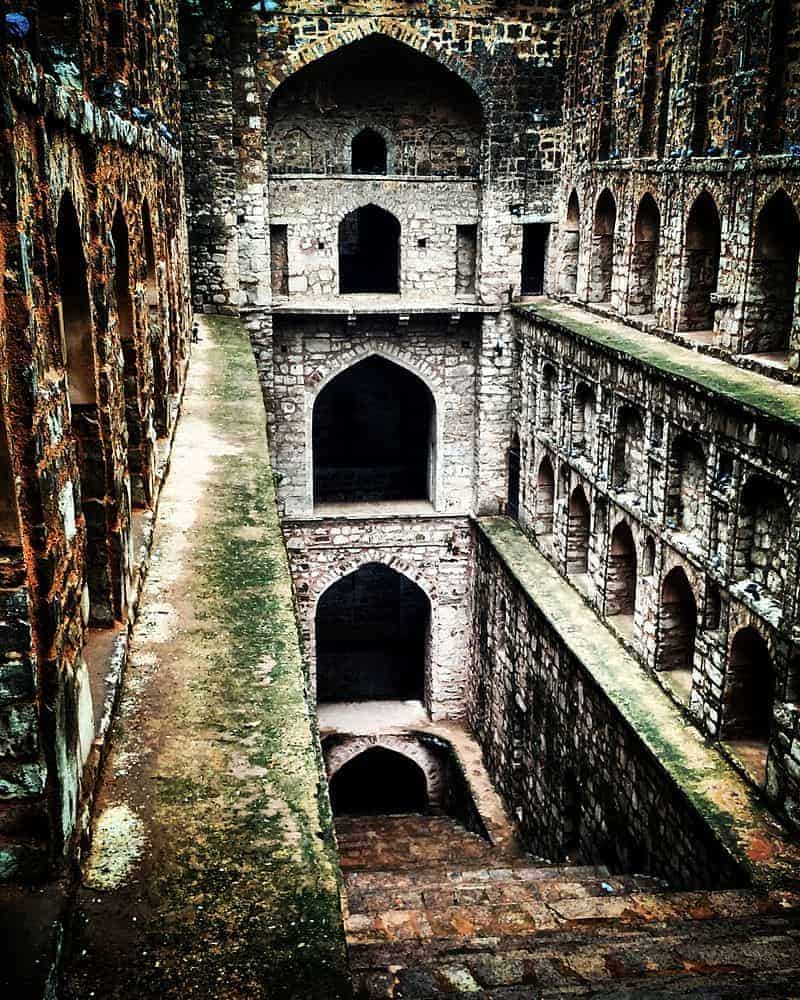
I faced an interesting issue where I took a fairly artistic photograph of a heritage monument & added it via my Wiki account to the monument's page. The photograph proliferated across dozens of clickbaity tourist sites & I received a speedy removal notice a year or so later, stating my photograph infringed copyright rules since it was probably taken from public sites. Oh the irony.
I am dumbfounded that no effort was made to check the provenance before it was marked for speedy deletion & the appeals process is fairly opaque. I am fairly certain several rich media items would be facing similar fate because rest of the internet finds copypasta easy enough, without writing any credits & Wikipedia believes the media was lifted & not being person's own work. The real loss is emotional to the people who contribute in good faith.
Now, it seems my photograph isn't mine & internet moderation has deemed its provenance belongs to some clickbait designer. I was fairly proud of the pretty rainy day pic adorning the article page for a couple of months. It hurts me whenever I think of it.
The monument is 'Agrasen ki Baoli', a step well system in New Delhi, India (and a tourist attraction). I had no mental bandwidth to fight this deletion, so let it slide.
- Speedy deletion here means that it would be deleted in < 1 week, assuming the user does not contest the deletion. I can't find if the deletion was contested.
- Pkbwcgs is on a semi-retirement/break, according to their talk page.
- The image was deleted by Fastily[4] on the same day.
Now that the image has been deleted, I think the option here is "Deletion Review". The purpose section is pretty informative (albeit dense): https://en.wikipedia.org/wiki/Wikipedia:Deletion_review#Purp... . But the instructions section recommends first contacting "the closer" on their talk page, since that is usually faster. I'm not sure who the closer is exactly in your case, but Fastily looks to be quite active, and since they have admin privileges to delete a page likely has the privileges to undelete a page. Posting a message on their talk page might be your best bet!
Backing this up, because without the context I thought it looked like a goofy/funny quirk in the law. But god damn...
> The tapes contained numerous vignettes of teenage and preteen females, between the ages of ten and seventeen, striking provocative poses for the camera. The children were obviously being directed by someone off-camera. All of the children wore bikini bathing suits, leotards, underwear, or other abbreviated attire while they were being filmed. The government conceded that no child in the films was nude, and that the genitalia and pubic areas of the young girls were always concealed by an abbreviated article of clothing. The photographer would zoom in on the children's pubic and genital area and display a close-up view for an extended period of time. Most of the videotapes were set to music. In some sequences, the child subjects were dancing or gyrating in a fashion not natural for their age. The films themselves and the promotional brochures distributed by Nather demonstrate that the videotapes clearly were designed to pander to pedophiles.
As far as I can find, the conviction was upheld in the end... definitely the right decision.
Yea I googled for that case and the missing context is important to the outcome... That said, it is pretty messed up, but on the other hand culturally we seem to be OK with those weird little girl fashion/beauty pageants which are also pretty messed up.
I mean, are you really going to argue that the sole fact that the kids' genitals weren't entirely visible makes it not child pornography? Despite the fact that it was children being 'clothed', posed, and filmed purposefully in a way meant to sexually arouse pedophiles? Thank god the law didn't specify that genitals must be shown for it to qualify as pornography.
Do you think the adults filming and directing this stopped there? Those kids were eventually raped and that's probably on film too. The slippery slope isn't a fallacy when the stats back it up.
On top of that- letter of the law and spirit of the law... letter of the law doesn't mention the necessity of visible genitalia ... spirit of the law, I'm going to go out on a limb and guess that if you ask every legislator that voted for the law and the president that signed the law if it was intended that something like this qualified as child pornography within the definition of the law, they'd agree wholeheartedly. And that intent matters quite a bit.
The controversy exists because people with 0 context took the "oh that sounds gross but not illegal" stance and made dumb public statements about it that they then had to go back on.
This extensive article goes into the full details of the case.
And, from the description in this journal article, the tapes were, as described in the submitted Plover link, rather more than “videotapes of girls in leotards and swimsuits”.
There is a lot to say about _Knox_; it had a very bizarre procedural history. I cut it down as much as I could and the summary still came out to be the longest one in my list.
To me the interesting part of the case is the procedural history; further detail about what was actually in Knox's loathsome videos is much less interesting.
The interesting part to me is the mental gymnastics and tests around what constitutes "lewd or lascivious" without nudity, and naturally that veers well into: "I know it when I see it".
To paraphrase: "The editorial direction in this video is terrible and punishable as crimes."
But also what a gross rabbit hole to go down. I am so sad that I clicked the link and wondered what this case might be about.
I think one could build a much larger list simply by listing important Supreme Court rulings that are still in force, and then seeing which ones don't have an article. Over the last 20 years the Supreme Court has averaged 80 rulings a year, of which perhaps a quarter have long lasting and profound implications. Over the last century there must be something over 1,000 rulings still in force and of significance. But here is a broad and inclusive Wikipedia list, which includes both Federal cases and also Supreme Court cases, and it only has about 300 cases:
That suggests there are probably a lot of cases that deserve coverage.
Also, there are many Supreme Court rulings that are no longer in force, but which need to be covered for historical reasons, of which the most notorious is probably the Dred Scott decision, followed by the horrendous Plessy v. Ferguson. Indeed, there might easily be 1,000 court cases that are no longer in force but deserve their own article. (But of course, the two cases I just mentioned do have articles in Wikipedia.)
wikipedia has links for 'this page in other languages', so just looking for popular pages that are missing an english entry should be a pretty good collection of those
of course you'd probably find a few which are simply missing the appropriate reference, and it would miss out on pages which have an inaccurate language reference to english, as iirc i've seen a few which i would call a bit too broad
(incredibly Mushy Peas has (only) been translated to Japanese and Javanese, and someone has taken the time to translate the article for Greggs into Galician)
A rough but easy to glance at heuristic would be to take the top 100 entries from each non English language Wikipedia and run them through Google translate before searching. Immediate thoughts if that isn’t effective are to increase the search range to 1000 and throw away anything that isn’t a proper noun.
I worked with both wikipedia pageview data and link data (between articles and between wikimedia projects). Both datasets are open, and huge of course, so technically possible. https://wikimedia.bringyour.com/
You don't have to use SPARQL. For example, you could download a data dump and run Cypher queries using the Knowledge Graph Toolkit: https://github.com/usc-isi-i2/kgtk
I just looked at one example being Richard Dattner who founded Dattner Architects, an architecture firm based in New York City.
The Wikidata item for Richard Dattner[1] was created in 2020 by a bot importing data from authority files such as VIAF. Other than being a human with a name, Wikidata didn't know anything else about Richard so I added a few properties from some public sites where the information can be found. I also created a new Wikidata item for the firm Dattner Architects[2] which Richard founded and linked it to other Wikidata items which Wikipedia indicates were architected by this firm.
I can see how no one has yet created a Wikipedia page for Richard Dattner or his firm because:
1. There isn't much public information on the Internet about Richard Dattner or Dattner Architects outside a few specialised architecture websites.
2. Not many English Wikipedia pages mention Dattner Architects as being an architect and when they do, it's because Dattner Architects were asked to redesign or upgrade a small part of a building or larger site, and English Wikipedia likes to combine small topics into large topics hence it's very unlikely that a head house (station house) of a larger train station would receive it's own article. Wikidata has no problem with having individual items for specific parts of a park, site or train station but no on has created the subordinate items yet.
3. The firm appears to be mainly involved with New York City based projects and therefore outside of Wikipedia editors interested in New York City architecture, would be less likely to have European editors (for example) interested in creating a new article.
Dattner was most active in the 1960s and 1970s. There is a good deal of printed material about him and the adventure playgrounds that dates from that time. But it is not available online; to find it, I needed to walk into actual libraries.
You should at the least make a stub article for Dattner with a few sentences about who he was, and a few citations to the most important printed material you found about him. If you have time, you could write a more complete biography of a few paragraphs, again with citations to relevant literature. (And likewise for your other suggestions.)
There are many, many interesting people missing from Wikipedia. The only way they ever get added is if those who miss their absence do something about it.
Making a list of “stuff missing from Wikipedia” and hosting it at your own site is much less useful.
I do agree that books are the primary source of information for most subjects pre-2000, but at some point the books become so obscure that outside of a special reading room request made to the central library of a large country, no one would be able to verify the one or two book references on a Wikipedia article that would adequately describe the subject.
Well, that is one of the--for lack of a better term--fictions that Wikipedia (at least in theory) leans on. Which is to say an admin may or may not decide to follow the fiction. But, in theory, so long as something is cited whether or not as a practical matter a person would realistically look up the cite that should be sufficient. Of course, even verifying the cite could also be hard in practice.
The issue with Wikipedia is the fact it's a web-app, or something managed by few by technical nature, no matter how many third parties contribute. That's why we need decentralized and distributed tools where it's really hard to centrally govern anything.
Think about HN, it's normally user friendly, mods do normally not work to censor but just to keep spam away, however HN is still a centralized services, we are all guest. On Usenet on contrary anyone can run it's own server and it's groups, there are moderated groups with mods acting as gods on land, others full of spam etc but overall a central governance it's not really possible.
Now the issue: how to index and present coherent content in such setup. Well... It can be done with a community standard, so no formatted content but only tagged information anyone can inject in it's own template to render and a distributed search like YaCy built-in. Something we already see in many domains, webapp included, to a certain extent. The point is: how many are interested and how many will act against such free system for their own interests?
I wish Wiki could associate same articles from different languages in a sidebar, perhaps sort by length and last update. Sometimes other languages have better/recent writeups.
it might be possible to script that: find a notable article in language A, that doesn't have a translation into language B.
i sometimes like to view a wikipedia page some 'other language'; sometimes you can get an additional point of view. What i noticed is that sometimes the function of viewing a page in 'other languages' is broken. (can't remember a specific case right off the top of my head)
Wikipedia is going to have a golden age in the 22nd century when many 20th century reliable sources (books, newspapers, TV) fall into the public domain and hence become verifiably citable.
So much is digitized but so little is published to open URLs.