"There's a lot of "don't blame Framework, blame Intel" sentiment in that thread, and while it's absolutely true that it's a flaw in Intel's driver for Intel's hardware, that doesn't matter a whole lot to someone who's just spent a thousand dollars on a laptop that advertises strong Linux support. Framework is both lifted up and brought down by the many contributing parts of the Linux ecosystem, credit can't only be given for the positives."
This. When my Mac has GPU problems, I don't complain to NVIDIA or AMD; I complain to Apple. Since Apple is the final integrator, it has the ultimate responsibility for ensuring that all parts work well together.
Similarly, whenever a laptop is advertised by its manufacturer as "linux compatible" or "linux certified", it is their job to ensure that linux actually works out of the box.
Thanks for the feedback. As noted by folks elsewhere in the comments here, the lived experience with Linux on the Framework Laptop is highly dependent on which distribution you use, and specifically, the distros policy on taking on and delivering kernel updates. Our policy at Framework has been to publish setup guides for the most popular distros. Where we've been able to build bridges and get contacts in place with distro maintainers, we also deliver them hardware and reach out to them when folks in the community run into issues.
The obvious issue with this is that when issues occur upstream, we end up reactive to them alongside Framework Laptop customers. There are several possible solutions to this (which are not mutually exclusive):
1. Building our own Linux distribution for the Framework Laptop. We don't believe this is a good business to get into, and we've seen strong distro preferences in the community that mean that even if we did this, we may not address a plurality of customers' needs.
2. Partner more deeply with specific Linux distributions to attempt to validate kernel updates on Framework hardware before they are accepted for release. We see this as much more viable than option 1, and it's something we are discussing with distros (and we would love to work with additional ones on this).
3. Provide more clarity in our recommended Linux distributions and setup guides around which ones have more conservative kernel policies that are unlikely to run into issues (Ubuntu LTS with an OEM kernel for example) vs ones that more aggressively update and have more risk of driver breakage as a result (basically all of the other distros we currently list). Also as noted in this thread, the risks here will be higher for newer platforms (Intel 12th Gen) than older platforms (Intel 11th Gen). This is something we are now going to prioritize based on feedback we've gotten in the community.
We're always open to any and all additional feedback.
Appreciate the response. My main advice would be to try and be as upstream-focused as possible. Partnering with distros is great, but if your hardware is well supported upstream, you cover everything anyone would ever want to use. If there's fixes that need to go into older distro kernel it's typically trivial to get them backported if they're already upstream. Making Ubuntu work fixes Ubuntu, making upstream work fixes everything - and you're gonna have a lot of users that like living on the edge with distros that follow upstream closely like Arch and Fedora anyway.
Critically, the bulk of the resources on the distro side that would test your hardware as part of their regular testing are quite distant from upstream (Ubuntu is the closest, Fedora is largely community driven, RHEL and SLES aren't appealing desktop distros for most users), so having some upstream testing in-house would probably help a lot in getting ahead of problems.
Maybe you could try and get boards into kernelci.org? They're mostly focused on ARM SoCs but they have x86 boards in there too, though I don't think there's much on the desktop side. The i915 driver which has caused me much pain and suffering over the last couple of weeks has some test automation that could be run too: https://intel-gfx-ci.01.org/
I'm sure there has to be more upstream automated testing initiatives for laptops but I'm not super familiar with that space.
It would be of great help and peace of mind if you would partner with _one_ reference distro (realistically Ubuntu, Fedora, Debian, Arch or maybe SUSE) and prove that the hardware can be _fully_ supported in their LTS release.
Yep, we've heard the ask and the feedback. I wrote a response in an earlier in an earlier thread on why we don't communicate on hardware plans: https://news.ycombinator.com/item?id=32180273
Building your own distro or "partnering" with a specific distro is just about the opposite of what I would want to see.
Hire more kernel devs full time, sponsor some more, get the hardware in their hands, make it their job to do nothing but fix or improve frameworks, and then get your shit merged upstream not in some random distro.
> This. When my Mac has GPU problems, I don't complain to NVIDIA or AMD; I complain to Apple. Since Apple is the final integrator, it has the ultimate responsibility for ensuring that all parts work well together.
This is a significantly different situation than Framework's situation.
Apple controls the hardware and the operating system.
Framework only controls the hardware, not the software.
Let's look at a totally hypothetical example:
Let's say the Framework laptop ships with Ubuntu 22.04 running the 5.15 kernel, and the Framework folks test it carefully, it works great, all is well.
Ubuntu then decides to ship an over-the-air software update automatically to the 5.17 kernel, which has a driver bug causing the laptop to freeze every minute. Ubuntu does this without consulting Framework, Framework has no chance to test it.
Who's fault is the above? Is it Framework for not building their own operating system too, like apple did, and putting the software experience of their hardware in someone else's hands? Is it the linux kernel for breaking something? Is it ubuntu for shipping an update to a laptop the distro developers may not even own?
The answer to whose fault it is is: Whoever the customer thinks is at fault. Having a strong brand cuts both ways. If Framework develops a strong brand of "buy our stuff, it works great" (as I think they have!) and people buy the machines largely based on that brand, then that's obviously really great for Framework in lots of ways. But this is the other edge of that sword: they're going to be the one lots of people blame when there are issues.
This is no different than the situation for decades with Windows and PC vendors. When I built a PC from commodity hardware and installed Windows on it, if something went wrong, I'd blame Microsoft, or the manufacturers of the components I used, or myself. But when I would buy an HP laptop, if something went wrong, that was HP's fault.
>Apple controls the hardware and the operating system.
They do now, but prior to ASi, they were using Intel CPUs and AMD/Nvidia GPUs until Nvidia pissed them off so badly around 2010-2011 that they went exclusive with AMD.
The trashcan Mac Pro had a GPU issue that affected renders from Resolve. Resolve said AMD. AMD said Apple. Apple said not us, and crossed their arms pointing at the other two. The fun thing was if you used BootCamp to run windows on the exact same hardware with the Windows version of Resolve on the exact same footage using the same grading session, the timeline would render without any errors. Reboot back as Mac, and render errors. So, clearly, not a hardware issue. Definitely seemed software, but I gave up on the issue well before any errors were resolved but switching back to the latest cheese grater chassis.
Yes. I was also going to mention that the entire point of Linux being open is that anyone else can modify it to fit their needs. If Framework wants to actually ensure support, they can create their own patches or hacks. Since it's popular, they'll probably get upstreamed and then everyone's happy.
Framework controls their marketing. If they say Linux works but Linux does not work, that's not good. They could say that Linux doesn't work or at least not say that Linux works.
This is why Dell/System76 certify specific builds (or build their own distribution).
The company the person pays money to is the company responsible.
Yes there are limits to this (if you install something outside the supported software then you are on your own) but if you are doing what they say and it doesn't work then they are responsible.
Actually, this was more than a hypothetical situation. I got my 12th Gen Framework and and started with Linux 5.18 which was fine. Recently 5.19.12 was released which had a potentially panel killing display flicker regression [1] apparently due to a bad automated backport [2]. You can see from the thread that this was only noticed because someone pointed out the Framework community forum thread [3] on the kernel list. AFAICT, this regression could have potentially affected all Intel laptops (here's a report on an issue w/ an 11th Gen Lenovo laptop that seems to have been affected for example [4]).
To me, what's interesting is that none of the ISVs that are Linux-exclusive vendors actually caught this in QC/smoke testing. The alternative seems to be "certifying" to a particular distro, but I don't think that'll help most people who run Linux and have the distros they like. Sometimes Linux pre-loading can be a negative as well - Dell is notorious for not actually bothering to upstream their kernel changes for the Developer Edition Linux laptops to mainline for example (they'd done it before w/ their touchpads, and currently have the same w/ their webcam drivers).
One of the big things in Framework's favor is there's an active official forum, w/ a very active Linux section [5]. I think Lenovo is the only other laptop vendor I've seen that has something comparable. [6]
they curate the hardware and develop popos for their hardware. but they aren't building a whole new hardware pipeline like framework is. Its still a small company.
> Similarly, whenever a laptop is advertised by its manufacturer as "linux compatible" or "linux certified", it is their job to ensure that linux actually works out of the box.
I disagree, given that there are a bajillion different Linux distros.
To be clear, if Framework shipped a version of their laptop with Linux pre-installed, that to me would say they have tested everything together with that version of Linux, and I would expect it all to work, and if it didn't I would call up Framework.
But (at least looking at their website right now), Framework only offers a "bring your own OS" version for Linux. The answer to the "Can I install Linux?" FAQ says "Yes! We have installation guides for Fedora, Ubuntu, Mint, Manjaro, and Pop!_OS. In the Framework Community, there are even more community-edited setup guides for additional Linux distributions." Perhaps I'm just jaded by all my experience over the years installing Linux on my own, but I'm never surprised when there are driver issues, etc. when I'm installing OS on hardware where it wasn't pre-installed.
> Perhaps I'm just jaded by all my experience over the years installing Linux on my own, but I'm never surprised when there are driver issues, etc. when I'm installing OS on hardware where it wasn't pre-installed.
and
> To be clear, if Framework shipped a version of their laptop with Linux pre-installed, that to me would say they have tested everything together with that version of Linux, and I would expect it all to work, and if it didn't I would call up Framework.
are exactly why I stopped doing that so long ago. I only buy from vendors that ship with Linux and which support it.
This is an ironic example because Apple fans (and Apple execs themselves!) spent years blaming IBM, and then years blaming Intel.
The good thing is they found a solution. But despite being a hundred billion dollar plus company it took then anywhere from 5-10 years to find solutions in both cases.
That a new startup hasn't been able to resolve it in less than a couple of years is significantly less worse than the blaming Apple and its fans have done.
Edit: I was looking up some supporting articles and I completely forgot that before Intel and IBM, Apple was blaming Motorola:
Ironic because it only took a "consumer luxury brand" company 5-10 years to "find a solution" by making their own chip that runs circles around the top name brand CPU at a fraction of wattage? "If you're so unhappy why don't you try it?" may be a less popular rejoinder from future monopolists like Intel.*
Meanwhile, how many assemblies of PC components in the shape of a laptop get a unique part number each year? Surely someone knows how to meld kit into a SKU and make sure important bits have drivers for the OSes you market.
* If Apple starts grumbling about your chips, check your calendar. Not long till your lunch is gone. Every time.
Apple only just started making chips when they became a company earning $200+Bn revenues.
They’ve been complaining about their chip makers since 1999 at least.
The example is ironic. Apple’s behavior isn’t. They conveyed the truth. Just like Framework is conveying the truth.
Is that a valid excuse for Framework? Not for their customers at least. Just like it wasn’t a valid excuse for Apple when it was selling absolute lemons with Motorola chips in them and then absolute lemons with IBM G4 chips in them towards the end of their IBM relationship, or absolute lemons which couldn’t support 32GB of memory when their much smaller competitors using the same chips had been doing so for years.
> it wasn’t a valid excuse for Apple when it was selling absolute lemons
Presumably an "absolute" lemon wouldn't work. All those models you mentioned worked fine for most folks.
To the point about checking the calendar, it takes time to re-platform, Apple can't stop filling buyer need for Macs for the years that takes to re-platform, and they definitely signaled recognition of chip unhappiness so buyers could beware if they cared.
It's not like Apple shipped something to your door that didn't work and said "Oh, that's IBM's fault". Complaining that IBM wasn't able to meet their demand seems utterly fair to me, though I don't know what the root cause of the delay was. But regardless, Apple was still standing by the products that they actually sent out.
You either do compatibility testing, and frame the marketing around the truth, or you have pissed off customers. There's not really an alternative in the hardware world. The logo on the exterior of the product is who they'll, rightfully, blame.
People usually blame the manufacturer they paid the money to. In this case Framework could have chosen AMD or tested with Linux or stated that Linux is unsupported on 12th gen Intel or... There are so many possibilities.
Framework did choose Intel even though AMD's offerings in the low-voltage laptop CPU space perform better (and perhaps don't have the problems we're hearing about here).
Maybe there were good reasons for that. Maybe it was parts availability or engineering support. The reasons aren't all that important to the end user though; Framework made that choice and bears responsibility for its consequences.
(repeating second hand knowledge from a past HN thread here) I believe Intel provides a lot more support to third parties around motherboard design and overall hardware integration - it's possible that this is the reason that AMD wasn't a practical choice.
As far as we are aware they have never spoken to AMD. They avoid every question in relation to AMD. I'm convinced they are just Intel fanboys over at framework now and have lost any desire to buy a laptop from them. Initially I was super excited. Dies off when they don't want to answer questions when they say 'ill answer any questions...'
Linus "Tech Tips" Sebastian introduced the Framework team to the highest level people at AMD he knew last year after his investment in Framework but as of his update video a couple of months ago, nothing really went anywhere.
I highly doubt it's a fanboying issue, they're a small company with big challenges and supporting multiple platforms is not easy at any scale. They also wouldn't want to say anything positive or negative that could sour relations with AMD or other partners in future.
Ryzen 5000 didn't have USB4 (TB3) support so that was a no-go - Framework uses 4 x Burnside Bridge ( JHL8040R) TB4 re-timers [1], one for each of their expansion module plugs. Ryzen 6000 uses Kandou retimers, which is probably a much bigger lift than plopping 12th Gen in (looks like the PD controller was refreshed (and the RTC fixed) but basically the rest of the board stayed the same [2]).
I think one thing to keep in mind also is that for whatever reason, 10 months after launch, the number of Ryzen 6000U laptops I've ever seen advertised for sale I can count on one hand (I was watching all year, I would have much preferred a Ryzen 6800U laptop!). Currently, only the Asus Zenbook S 13 and Lenovo ThinkBook 13s are available in retail stores in the US (Amazon and Newegg, respectively). In the EU, Geizhals search turns up exactly 1 6800U model (Lenovo Yoga 7 14ARB7). [3] Personally, I'm not convinced Ryzen 6000U ever actually shipped in quantity...
Sometimes, and it depends, but far more so than others in my experience.
Perhaps most famously, when Nvidia manufactured defective GPUs, Apple launched a repair program at their own expense [1], and IIRC the fallout from this is what (at least somewhat) led to the severance of ties between Apple and NVIDIA.
I’ve had multiple cases of bad GPUs, bad batteries and the like, and while Apple has denied me service before, they’ve repaired or replaced far more as a percentage than any other computer manufacturer I’ve dealt with.
Linux is not a whole, vertically integrated operating system but a kernel. Depending on which distribution you pick, there can be compatibility issues, related to the kernel used and corollary software. There's absolutely no comparison with Linux and OSX; maybe if such a laptop came out with BSD support, but it's still quite a stretch.
? I looked at framework laptops and as far as I could see there is zero official Linux support. There are some community forums for it, but no warranty if something doesn't work or officially support distributions or anything.
> Available in configurations with Windows 11 Home and Pro, we’ve also tested for compatibility with the most popular Linux distributions and written step-by-step setup guides for them.
> We designed the Framework Laptop from the outset to be a great Linux laptop
> We deliberately selected components and modules that didn’t require new kernel driver development and have been providing distro maintainers with pre-release hardware to test to improve compatibility
> We and members of the Framework Community Linux sub-forum have been testing a range of Linux distributions for compatibility with the Framework Laptop to highlight the ones that work best
in fairness, 'tested' doesn't mean passed, and re 'highlight the ones that work best', none of the distros on the list appear to be highlighted
"I genuinely think the out-of-box experience of the Framework laptop is worse than anything I've ever seen in over a decade of Lenovo laptops. "
He does say he likes the laptop and doesn't think the issues he hit with 12th gen Intel should keep you from buying an 11th gen Framework.
On the other hand he's been a kernel dev for seven years and had to spend "ages debugging including building my own kernels with additional debugging as well as trying different firmware versions before giving up." He had issues with wifi, power management, brightness control, the GPU, "and my computer is locking up constantly." Oy.
Frankly, I got a Lenovo T14 Gen 3, 12th gen Intel.
It's the worst laptop I've had in a decade.
They spent 6 months fixing an issue where two internal DP ports where visible to the driver which caused the kernel to not survive a suspend. The issue is with the Tigerlake reference design, and a lot of companies will need to push firmware updates to get things sorted out.
This is actually an important comment, because it is about the same CPU in a different machine, which could help isolate the problem. The more interesting question is whether there's a general problem with Intel's 12th gen chips, because that will affect far more people than anything Framework does.
> The issue is with the Tigerlake reference design
This. I have two T480 laptops that run Linux extremely well, but I have no intention of upgrading until Intel/Microsoft sort out their bullshit "modern standby" issues. Just let me fucking suspend.
My Ryzen 4000 laptop (Tong Fang PF5NU1G) had regular S3 suspend that worked reliably, but sadly it seems many Ryzen 5000+ models seem to have it stripped out (these can sometimes be added back in by loading patched ACPI tables [1]).
Oh, and for a bunch of Ryzen 6000 laptops it's been even more dire since they've also had s2idle issues that have only just gotten patched [2].
I don't know about the very latest generation or about other OEMs, but my work laptop is a previous-generation (Ryzen 5xxx) AMD-equipped ThinkPad. It did "modern standby" by default but that can be flipped to S3 sleep in the BIOS settings.
I used company-provided dell/lenovo laptops for more than a decade. This isn't specific to the 12th gen intel version.
Intel GPU issues on linux were/[are?] omnipresent. Aside from a few lucky generations, for me it always took 1yr after obtaining a new laptop to resolve most of the issues. We go from random suspend issues related to the display not coming up, to massive framebuffer corruption when moving the hw cursor around making the display unusable without workarounds. The biggest issues usually get resolved within the first 2-6 months, but still it's extremely annoying for the absolutely most popular gpu in linux territory, and often quoted as "the best supported gpu" from a driver perspective too. I know intel employs a few full-time employees for this. Far too little apparently for a company of this size. First to get KMS, yet I couldn't ever get opencl working without their own custom/broken driver which is not even part of mesa, not to mention the amount of software that downrights blacklists intel drivers everywhere.
I'm on a T14 amd now. Can't say it's all rosey (it isn't), but I had next to zero issues on the GPU front with vega straight after getting it.
Eh - I threw Arch on it right away and it's been ROCK solid. No freezes, no wifi disconnects, running gnome/wayland without any hitches. All ports work fine, settings keys all work fine, basically - no issues at all.
Suspend even works relatively well, although I tend to turn on hibernate on lid close since modern laptops boot so quickly, and it entirely eliminates battery drain.
I'm also on the 12th gen intel version - None of these issues, so either OP isn't quite as good as he thinks he is, and borked a bunch of things... or the issues op hit are just "Ubuntu" related. Frankly - I like their server products but their consumer desktop releases have been dogshite since they dropped unity.
I'd go with basically any other distro at this point for a laptop device (popOS, Arch, Fedora, etc). It's sort of a shame, since Ubuntu was the distro that really focused on consumer support for a while - but they aren't that anymore, at least in my opinion (although again... they do good stuff server side, if only they would cut it out with forcing everything to snaps. I don't even mind snaps, I just want the option to do a real install)
---
Long rant aside - it replaced a more expensive Dell XPS that was designed to work with Ubuntu (although I also ran Arch there). The Dell had some of the same issues OP complains about while running Ubuntu - so I would suggest he try something else.
I like mine a lot. I didn't have to think about it much. It just runs Arch well.
That does hit me a bit. I've been reluctant to use desktop linux again after I finally got tired of how often I'd have to repair everything after a few years of use. People on threads like this keep claiming that it's "better now" and you just have to "pick the right hardware". How are the odds of that working well when that's the experience with a community-favorite device advertised for compatibility?
The thinkpad T series (igpu only) issues will eventually get fixed. Lenovo puts in some minimal effort to fix these issues; they are just slow. The usual advice with laptops is to give things a year or two. So being on slightly older hardware usually works.
> He had issues with wifi, power management, brightness control, the GPU
Hmm I wonder what kernel version he was debugging. I've only had issues with the GPU and power management (very clearly due to the gpu); on latest releases of kernels 5.16 till 5.19.
"In the last 7 years of that time I've been a full-time Linux kernel developer. If I'm complaining about the amount of effort it took to make this laptop functional, then the average user is boned."
Same song and dance since 2006. Great only if you have no money and lots of time to learn and experiment.
My two cents as a Linux based developer - my 11th gen Framework has been largely fantastic. There was some annoying BIOS issues but they pushed a fix, there was bad battery life, but they pushed a fix.
Overall it feels like an indie device still, but I’d take that over the mass production walled garden nonsense of competing machines. I feel like I own this device more than any other recent electronic purchases other than perhaps my Raspberry Pis.
I second this. It definitely has some issues and I wouldn't recommend it just yet for people that aren't willing to tinker with it but at least you can tinker with it and I haven't had a problem yet that I don't think a reasonably competent user couldn't find a workaround for.
If that's not your jam, then you should probably wait a bit. I really hope framework is able to get things sorted out so it can be more mainstream but for that to happen, they need early adopters.
If you don't mind a bit of tinkering (I've spent maybe 2-3 hours in the 2 months I've owned mine), don't be scared. Before getting mine, I read some stories and was really worried I'd be in over my head and end up regretting a $1400 purchase but as of right now, I'm really thrilled with it.
I agree with both of you guys. I've had my 11th gen Framework (DIY running Linux) for a year now, and I'm in love. However, I wouldn't recommend it to the average person. That person should probably just get a cheap Chromebook (not the $999 one sold by Framework), or Surface Pro running Windows S mode that's impossible to break (in software), which runs perfectly out-of-the-box and can go to the Best Buy Geek Squad or Microsoft store whenever they need help. My opinion is that the Framework will never be a mass market product because the average person doesn't want to spend time choosing individual hardware components and taking it apart to swap them when they need a repair or upgrade. I think they should just double-down on serving the niche desktop Linux and tinkerer market.
I’d love to read on your blog next “how I debugged the Linux kernel on my Framework laptop.” I have always been so curious about how this actually gets done.
I tend to debug like a caveman so I don't know if I'm the right person for that - in this case, I just went through config options (make menuconfig) and turned on CONFIG_DRM_I915_DEBUG and a bunch of associated things, then built and booted and played around. Got nothing useful out of that but I didn't spend a huge amount of time diving into the driver.
In this case it's pretty different to regular kernel debug because I'm not debugging kernel code itself, I'm trying to glean more information out of hardware that I have no knowledge of, it's not as simple as "there's a bug on line X and I need to find out why this pointer is invalid" etc.
Author here, I don't necessarily think they need an in-house kernel dev, but it wouldn't hurt. Mainly they need someone familiar with the ecosystem that knows how upstream works, knows how to interact with distros, knows how to do some kernel debugging themselves, etc. Hiring a kernel dev makes sense because they'd already have those skills and can help out on the firmware side for Framework as well.
Realistically it looks to me like they need a reasonably technical desktop Linux user with social skills and anything else is a bonus, but I have no idea what skills they have internally
I'm not even sure that would help - they've got devs from the Fedora and Elementary teams who are openly posting guides and claiming they're working to ensure compatibility and my experience running both OS's has been... flaky at best, and this was on the 11th Gen CPU that evidently works better than the current model.
Fedora definitely is doing the best, but audio, mic, and webcam all barely/randomly functioned, and a stiff breeze made the graphics driver crash.
Arch, Ubuntu, PopOS, Elementary and LMDE all purport to work, but half of them wouldn't even install properly as documented, and the ones that did had just as many or more errors and crashes as Fedora. I'm on LMDE right now and Cinnamon crashes 50% of the time I try to change workspaces.
It's gotta just be something amazingly wrong with their hardware choices. I've been full-time running Linux on my desktop for over a year and had more issues in an afternoon with my Framework than with a year of that.
I am so riled against Fn/Ctrl (I use Ctrl way more than Fn and my pinkey finds the corner easily) that I honestly didn't know some hackers prefer it that way round
I have never encountered anyone in real life that prefers Fn/Ctrl on a Windows or Linux machine. I have helped at least a couple of poor souls that had acquired a laptop that does it Fn/Ctrl to flip it in BIOS to the obviously superior Ctrl/Fn.
(macOS, the situation is different because it’s ⌘ you’re mostly aiming for rather than Ctrl, and it’s further in which makes it easily thumbable. On other platforms, Super/Fn/Alt/Ctrl might be a decent order, but I think you’d still probably end up wanting Fn to be second in rather than edge. But really, all I actually want is for Fn to be a regular modifier, please, not handled in the firmware where it only works on a few keys and is just dead on the rest. Fn keys are really stupid in this way.)
Same, so much that it is one of the reason I am holding off buying an M1 (that and the fact that I am still waiting for Asahi to get more polished and that 2013 laptop works just fine were it not for the plastic case that is breaking apart as they always do, which is incidentally the reason why I am eying those Macs, long digression sorry) but I guess Mac users would disagree.
Some people like to map Ctrl to Caps Lock as it used to be where it stood on older keyboards. Vim users prefer to map to Esc, but some clever have hackers have it behave like Esc or Ctrl when combined with another key. In the end, as always there are better ways but better ways are not standard and you loose the priviledge on the standard. I have to use other people's machine and I swear the first thing I do is launching a command to remap Caps Lock to Esc else I can't work. Tough call. In the end one gets used to anything, and old habits die hard, change is not welcome. And... Oh ! A better layout than qwerty that looks way more rational, I must try this. I am already writing a blog post in my head lamenting on how that new layout although better does not work well with the rest of the ecosystem.
Because you don't need to move your pinky as far? There's no need to hunt for Ctrl anymore than you need to hunt for left shift. Takes like 10 minutes to get used to.
I actually press Ctrl with the pad under my pinky, as I keep my hands straight (somewhat diagonally across the keyboard). This way you can avoid the crook in your wrists.
Are you talking about tmux? Remap to Ctrl+Space. Ctrl+B is one of the worst defaults I could imagine. I wonder if they did it just because it's one higher than Ctrl+A from screen (which was much easier to type).
If you're not talking about tmux - also consider remapping if possible.
I remapped tmux to control-\ (which didn't conflict with anything in emacs that I cared about). It kind of sucks to hit that in a non-tmux shell or one without my config file though ;).
Control-space is mark in emacs (even though I am using vscodium these days - I do fire up mg for quick things). It does make it a two handed chord (left control) but it's quite fluid for me.
I'm assuming I'm not understanding you properly, but are you suggesting that flashing a custom firmware is an easier solution than changing an option in the BIOS?
Assuming there'd be a nice UI in userspace to adjust the keyboard firmware settings, that would be a lot more accessible to casual users than going into BIOS. (Although, casual users probably don't care that much about Fn-Ctrl vs Ctrl-Fn)
I can't speak to Fedora, but Debian stable runs great. Best laptop I've owned, hands down.
Caveats:
+ Wifi needs kernel 5.19 from backports (USB tether your phone to download.).
+ fprintd (fingerprint) from testing/bookworm.
+ Brightness keys conflict with the ambient light sensor.
+ Power optimization fiddling.
I found answers for all the above on their forums, day 1.
Pleasant surprises:
- P-series chip gets out of my way. (U-series battery life sounds nice, but dev tasks can be jarringly slow. YMMV.).
- Fan is not distracting at full load
Disappointments:
- Fractional scaling. Workaround: bump font, icon sizes in desktop settings.
- SD card reader consumes ~1W idle.
- Speakers could be louder. I believe there's a new module.
Agree with a lot of these points. It's wild to me that the brightness keys are nonfunctional (unless you sacrifice the ambient light sensor) and there's no ETA on a fix. Random freezes and graphical issues aren't fun either.
Another annoyance is weird handling of non-integer scaling on Linux. It's not great on Windows, but I don't need to dig into config files for most apps or use one off launch arguments.
Yeah, as another fairly technical Framework owner, my experience was basically 100% the same as the author's.
Are you on wayland? This is my first wayland experience (if you don't count the Steam Deck), and it was mostly seamless only after upgrading to the latest KDE, which disables scaling for Xwayland programs.
Firefox still requires a janky workaround for wayland though, but as I understand it, wayland-based setups depend strongly on what the compositor implements (in my case, Kwin I think).
My experience is completely different. Yes, there's the brightness key/light sensor thing. (I'm okay with that, because I hate ambient light sensors anyway -- the constant fluctuating brightness drives me nuts -- but it's a real thing.)
But I haven't had any freezes or other issues, with a totally untweaked Fedora 36 on a 12th gen Framework. Everything works great. It is exactly what I would want a Linux laptop experience to be.
There are enough people reporting the crashes that there's obviously something real going on, but the part where it hasn't hit me _at all_ really makes me wonder what it is.
I have the full spec Framework laptop, 12th Gen, running the latest Ubuntu. I haven’t found a single issue, apart from the brightness keys. I don’t have any freezing issue at all.
My Dell developer laptop didn't get full support of obscure peripherals for about a year, for very obscure ones for almost five years. It was speaking DCI to a monitor over their Thunderbolt dock, IIRC. I had worked around it with an extra hdmi cable, so never got to enjoy the supposed single-cable detach that was promised. By the time it was fixed and deployed to distributions, I was ready to move on to my new Framework. It's the nature of the beast with Linux.
I think expecting Apple level R&D from a startup is unrealistic. Dell I expected a bit more of, but they did acceptably. Remember when wi-fi was a crapshoot!?
Hardware support is one of the major issues with Linux. When the common retort involes not needing new hardware it's obvious they're missing the point.
It's great that Linux works well enough on ancient hardware. The fact that it doesn't work well on newer hardware is itself a problem. Heaven forbid you need to used Intel rst or an lte modem. Just mentioning either if those inevitably triggers a "why would you need those" response.
"Late" support. That's easy to say when you're not the one needing to use hardware that Linux doesn't support a decade later. Or the more mainstream features that aren't supported for 3-5 years after they went Mai stream.
I'm not a fan of what MS has turned windows into but their surveillance is easier to mitigate than Linux insiting we use hardware from he 90's.
fwiw, I have a 12th Gen running Nix and I don't have any of these problems (well the brightness keys don't work but at least the sound/volume keys do - this is probably a DE issue).
Sleep/resume work, but I haven't tried to get hibernate working. I don't use the fingerprint reader. And I am connected pretty much full time to power (I did set the max charge to 60% in the bios) so battery life is not such a deal breaker for me
I DID see the stuttering/laggy issue in X11 but the fix I found for that worked like a charm (note I only saw this issue after a few days of playing/switching DEs). Currently running Cinnamon but also tried Plasma and Pantheon.
I do wish the palm rejection was better on the touch pad. I have lazy fingers/thumbs that hover over the touch pad and I get a ton of spurious clicks which is driving me crazy.
How so? My machine doesn't lock up at all, no random crashes or freezes. Things work. Now you are correct that there are things I don't use or care about that may or may not work out of the box perfectly out of the box but the tweaks, settings and fixes are getting to be pretty known like power management for better battery life or suspend-then-hibernate.
I've been following Frame.work since the beginning and it seems the early days of the 12th Gen seem much smoother than the early days of the 11th Gen.
Your experience with NixOS mirrors mine. I got hibernation working with a little fiddling. Suspend-then-hibernate also mostly works but occasionally turns my laptop sleeve into an Easy-Bake oven, so I've started triggering hibernation manually before I put it away. Plasma's touch pad settings help a bit with the extra clicks, but a little extra palm rejection is something I wouldn't complain about. Pretty happy overall, though.
I used to be bullish on Intel for laptops because throughout the 2010s they always had excellent ethernet, wifi, and integrated GPU support in Linux. I currently switch between two older-gen Intel laptops (4 and 7 years old) and they both run Linux pretty much flawlessly for everything I need. Suspend/resume works every time, good battery life, external display through a _real_ hardware dock (not USB/Thunderdolt).
Right now, I'm scared to upgrade to anything newer just based on the sheer number of problems I keep hearing about laptops that run hot with atrocious battery life, and non-functional or at least unpredictable suspend/resume behavior, and heaven help if you want to use two non-identical displays. For a while there, Linux often had earlier and better support for mainstream hardware than Windows. It's sad to see that trend regressing, I wonder what's causing it.
Do AMD-based laptops have any of the power management (battery life) and suspend/resume issues that have plagued recent Intel chipsets?
> Do AMD-based laptops have any of the power management (battery life) and suspend/resume issues that have plagued recent Intel chipsets?
Battery life is better. Suspend/resume stuff is still a problem. And yes, there does seem to have been a regression with Linux support earlier in the hardware lifecycle than Windows. Not sure when it started, but it’s a trend I’ve noticed over the last 3 years or so.
I develop using an 11th gen Framework and have run into none of the issues that this person talked about full-time on Fedora for a year. Must be only the 12th gen that has these issues.
I believe he says that his issues stem from the fact he is using a 12th-gen cpu. At the end of the article he mentions trying to get an 11th-gen if you can as that won't have the issues and will be slightly cheaper.
I bought a System 76 laptop a few years ago and stuff like this is why I went back to Apple. I was always dealing with one weird thing or another. One day it decides it wont wake from sleep if I have it in clamshell mode, another it decides it can't find my bluetooth peripherals. I finally rage quit when my webcam went down for no reason. I spent 2500 bucks on that thing and gave up on it in less than a year. Meanwhile, I have a 2015 MBP that runs like a champ. My new M1 air goes 2 days without a charge and I never have to think about dumb shit like waking from sleep.
Oh and theres the resale value. I can't give away my S76 but I bet you if I put that 2015 MBP up on craigslist, it'll still fetch me a few hundred bucks...
When I was a younger man with more free time I would have fought the good fight but these days? I just want my shit to work.
Interesting. That's the polar opposite of my own experience. And I usually put Gentoo on them instead of Pop. They've been rock solid for me since 2013 or so, when I first started with them. And their support has been top notch.
Any one here able to offer a comparative on Framework versus System76?
I pulled the trigger on a system 76 and I've been disappointed. I really want to support this Linux first movement, but I need something that's a daily driver that just works.
> Brightness keys don't work without disabling a kernel module.
Why brightness in every laptop is software controlled? I am so frustrated when every time I press brightness+ or brightness- on my Linux laptop, the desired effect comes after 5-10 seconds just because my CPU is busy by something else. If I have 20 steps of brightness then changing from minimum to maximum or vice versa is never less than a minute.
I'll admit that after reading about the train wreck that is Intel's Linux support for their 12th gen platform, my first thought was "ooh, maybe Ryzen frameworks next".
The (other) dream would be an Apple M1/M2-comparable ARM CPU, but I don't think those even exist, let alone are feasible for a consumer laptop.
From the current crop of laptop manufacturers, I'm most optimistic about Starlabs. They have in-house staff for coreboot development and linux related things, and they have more independence in hardwware design as opposed to being a Clevo reseller.
What's missing is what distro they're using. I've got a Framework running Pop! and I've got none of the hardware issues the author describes. In fact my biggest issue (aside from battery life and speakers) is that the 22.04 Gnome DE seems to be less capable than my Ubuntu 18.04 work machine: system configuration applets have been simplified to the point of near uselessness, I can no longer make screenshots via hotkey, etc. Oh, and somehow Steam still isn't able to handle hidpi in 2022?
I really want to support and try the Framework, but my experience with Intel lately has mirrored this.
Poor drivers, weird iGPU issues. Even my last Intel MacBook Pro had some issues.
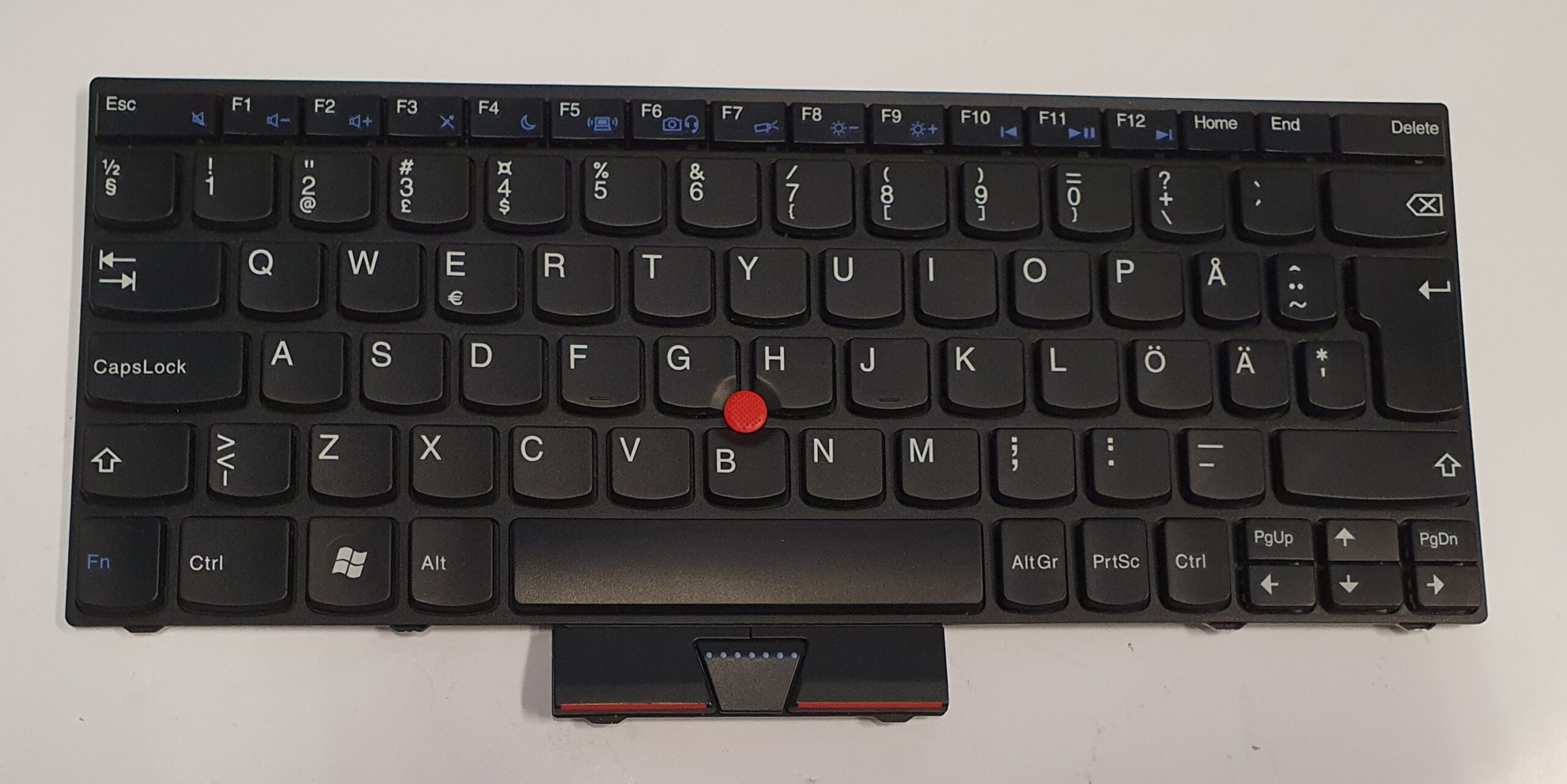
That, plus it’s puzzling to me that perhaps the most viably customizable thing - the keyboard (which the author of this post also calls out) is available in such few configurations.
I would love a keyboard with a non-Windows super key, with a FN / Ctrl / Super / Alt layout.
Offering an array of layouts isn’t even a viable option on anything else, so this seems like a market they could own.
I use linux laptop and what he described is the reason why I buy linux certified laptops. I would send it back if that was the out of the box experience
Hmm. Maybe the issue is with the factory install process or I lucked out and picked the right distro because I'm super happy, surprisingly so, with Ubuntu 22. It was the first time in a LONG time I've done my own OS install, so I was a little worried, but I made it a relaxing, non-rushed experience making the USB stick on another computer. I've done no tweaking to the OS and its...great. And by great I mean "I don't really think about the OS and sometimes I forget I'm in Ubuntu".
Of course, there are some quirks. The thing seems to leak power while suspended - but the work around is to shutdown, since it boots in ~5 seconds anyway! The fingerprint reader on the power button doesn't work, but that's not something I would really use anyway. Snap seems to be broken in ways I don't understand, because it periodically prompts me to do the same thing over and over and never seems to succeed. That seems more like an Ubuntu problem - like, ditch snap, whatever it is.
Did you get the 11th gen or the 12th gen? The 11th gen experience is largely free of issues (after a few BIOS updates), but the 12th gen experience is composed almost entirely of them.
The 11th gen is definitely not free of issues. I have an 11th gen, and my Framework takes about 10 seconds to wake from suspend. Yes, I'm using 'deep' sleep:
    $ cat /sys/power/mem_sleep
    s2idle [deep]
And no I'm not switching to 's2idle' because that results in far greater battery drain.
Also, even when in 'deep' suspend mode, there was some pretty significant power drain when I had the HDMI and USB-A expansion cards installed. I "fixed" it by replacing them with USB-C cards. Not a huge deal for my usage pattern, but annoying nonetheless.
It took a while for Framework and the community to figure it out, but the s2idle problem is fixed with the nvme.noacpi=1 kernel argument. You get instant wake and no more battery drain than deep. This is in the official Framework installation guide for Fedora and other distros now.
grubby --update-kernel=ALL --args="nvme.noacpi=1"
The drain with USB-A and HDMI cards is real, though. I see 2-3% per hour (as compared to <1% with only USB-C cards), and there seems to be no fix on the horizon. Not a huge deal for my usage pattern either, as I'll power off or put it on the charger if I'm not going to use it again for more than a couple hours.
Interesting. I had ruled out s2idle completely because I just figured it would have much higher battery drain. From the Linux kernel docs[1]:
    State:  Suspend-To-Idle
    ACPI state: S0
    Label:  "s2idle" ("freeze")

    This state is a generic, pure software, light-weight, system sleep state.
    It allows more energy to be saved relative to runtime idle by freezing user
    space and putting all I/O devices into low-power states (possibly
    lower-power than available at run time), such that the processors can
    spend more time in their idle states.

    This state can be used for platforms without Power-On Suspend/Suspend-to-RAM
    support, or it can be used in addition to Suspend-to-RAM to provide reduced
    resume latency.  It is always supported.
And notice that for 'deep' mode, the same docs say:
    State:  Suspend-to-RAM
    ACPI State: S3
    Label:  "deep"

    This state, if supported, offers significant power savings as everything in the
    system is put into a low-power state, except for memory, which should be placed
    into the self-refresh mode to retain its contents.
I do already have 'nvme.noacpi=1' set, so I guess I'll try out 's2idle'. Thanks for the tip.
Yes, in the installation guide, because s2idle is the default setting, it just advises adding the kernel argument under "Step 4" where it talks about SSDs. On that note, Western Digital apparently told Framework that this is only a problem with their older firmware, but most of us have found that the kernel argument makes a big difference despite having the latest firmware.
Also, I don't understand the details, but I've read that Intel's 11th Gen CPUs don't actually (fully?) support S3, so that might explain why it doesn't provide any noticeable power savings over S0 with the kernel argument.
For what it's worth, the battery drain on s2idle is absolutely unbearable. It doesn't even last 24 hours before it's dead. In the past week, my laptop has died twice on me because I forgot to plug it back in. Before I switched to s2idle, it never died on me.
So it looks like my choices are huge battery drain while in suspend, or 10+ second delays when resuming from suspend. Ug.
Yeah... The s2idle battery drain is awful. It lost half its charge overnight. (I only have USB-C modules connected, so I shouldn't be getting any of the battery drain associated with USB-A or HDMI.)
I'm not sure which I dislike more. The obscene battery drain on s2idle or the 10-15 second delay every time I resume from suspend.
Aye thanks. I'll see how the battery drain is overnight. It certainly makes resuming from suspend quite snappy. Thanks for the tip.
And yeah, I'm not happy with Intel. My Thinkpad T430 had flawless suspend-to-ram and probably better battery life than my Framework. They have really gone to shit.
>the only thing that's actively annoying me day-to-day is their objectively incorrect choice of a Ctrl/Fn/Super/Alt layout instead of Fn/Ctrl/Super/Alt (and the fan is a little loud).
Has anyone managed to shim an actual Thinkpad keyboard with Trackpoint buttons into this yet? That would probably satisfy most.
I have the 12th gen dual booting windows 10 and jellyfish, and have not had any problems with jellyfish other than the issue with the brightness adjustment which has an easy workaround.
I read the article quickly but I didn’t see which kernel or os he had an issue with, but 22.04 is fine
I'm hopeful that the Chromebook edition works out. People who want things to "just work" can run that. By the time Chrome OS support expires, hopefully Linux distros will have pretty polished device support.
It is my understanding that ChromeOS aggressively tracks mainline Linux. I don't have enough information to tell what the kernel/userspace split on problems is, true.
I just bought a Lenovo laptop and wiped Windows off it / installed Linux for the first time.
As largely a newcomer to Linux, it was very smooth. Had some issues getting the wifi to work, but once that got resolved, everything has been super smooth. I must admit there is a bit of a learning curve, i didn’t fully appreciate the differences between the various distributions.
Shame that an indie company who is actively selling linux machines, can’t have them working off the bat. That’s unacceptable
The biggest issues I've had with this on Lenovo laptops have been uefi based. Of course the Lenovo uefi isn't exactly great regardless of your OS choice.
System76 is really the only option making both the hardware and maintaining their own Linux distro but then you're still left with a Linux distro...
I'm happy with mine, even though I did notice the brightness keys don't work (but there's a software slider in ubuntu that does the same thing, so I don't really care).
Way better than the last two Lenovos I had. Your milage may vary.
The "build" part is really just installing the SSD and RAM, which has been extremely easy even as a novice in terms of hardware thanks to how well-built the Framework is + installation manual available online. Do not let the "DIY" part scare you.
Personally, I found the "DIY" edition to be great. It was REALLY easy (probably took me 10 minutes, but could be done under 2 with practice), and by needing to "assemble" the product myself, I got much more comfortable opening it up.
Since getting my OG framework, I've needed to open the case a couple times to clean the keyboard, which isn't something I've ever felt safe doing with previous laptops.
My guess is they make a nice margin on those Windows licenses and they figure if you're going to install your own OS you might as well put in your own SSD and RAM. It does suck for consumers though.


This. When my Mac has GPU problems, I don't complain to NVIDIA or AMD; I complain to Apple. Since Apple is the final integrator, it has the ultimate responsibility for ensuring that all parts work well together.
Similarly, whenever a laptop is advertised by its manufacturer as "linux compatible" or "linux certified", it is their job to ensure that linux actually works out of the box.