By contrast, acknowledging the dystopian elements of the present is productive and important. They are real and should be addressed for the betterment of mankind.
It's not an approach, it's step one. To develop answers you must first figure out the questions. I agree merely acknowledging the status quo as bad is not enough, but I fail to see how one would intentionally address issues without first understanding them.
It's exceptionally relevant. Excuse my French, but this constant doomerism is really fucking up the kids.
>"More than half of the 16- to 25-year-olds in the Lancet survey said they believe humanity is doomed. And close to 40 percent said that fears about the future have made them reluctant to have children of their own." [1]
We gave an entire generation anxiety and depression, and it's going to wreak havoc on the fertility rate in a decade or so.
Having a realistic picture of the future is important for long-term life planning. It is not the reporting of the facts that’s fuckin’ up the kids, it’s the facts themselves. Burying your head in the sand is not a valid technique when addressing anxieties, it only makes the inevitable emotional breakdown worse when things come to a head.
It is not a "fact" that climate change will cause our extinction. Point me to one serious report that says that. Your nonstop doomerism has half the kids believing that absolute lie.
>It's exceptionally relevant. Excuse my French, but this constant doomerism is really fucking up the kids.
Think of the children?? Lol, as if the environment being 20 degrees hotter isn't going to "fuck up the kids". The kinds should be worried. Many of them actually are worried and try to do something about it, it's the adults that won't listen or curb behaviors, or in many cases try at all - and at worst they call climate change "a hoax".
>We gave an entire generation anxiety and depression, and it's going to wreak havoc on the fertility rate in a decade or so.
That's a good thing, and is exactly what the planet needs - less humans. Every human added to the planet generates a non-zero amount of carbon. Adding more humans isn't the answer to anything, and it won't make anyone less worried for their future.
During the cold war you would get similar stats amongst youth over fears of nuclear holocaust. (the risk hasn't gone away).
As a kid in Canada in the 80s I was taught to hide under a desk in case of nukes, and also I was taught about the greenhouse effect and it's relationship to our actions.
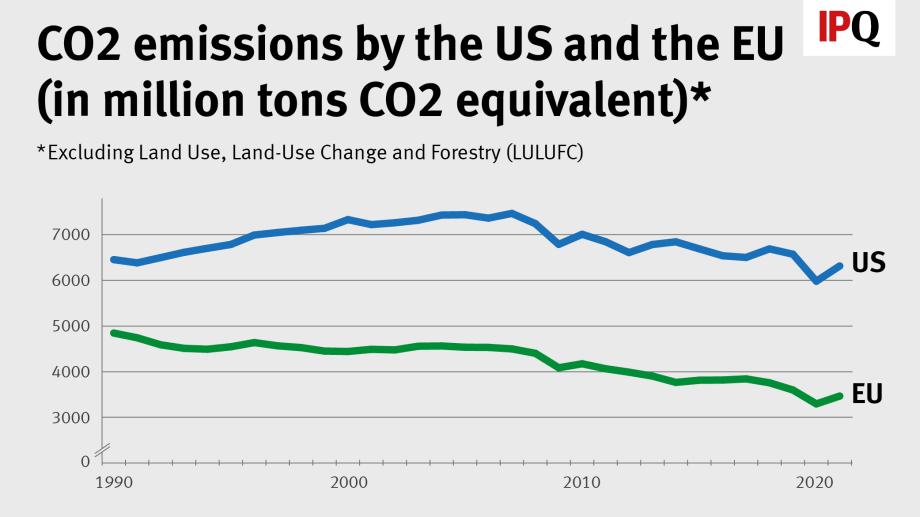
Who is "we"? The US has reduced emissions records while increasing energy output for a number of years now.
Europe has increased both, regardless of their rhetoric. China of course has increased both as well with more coal plants being built.
Most of the reduction in the US is thanks to fracking/nat.gas displacing coal. Which a lot of people are against.
Focusing on nuclear could get us a lot farther in displacing fossil fuels with nuclear as the baseline energy source.
Unfortunately most people just want to nag each other or cat-o’-nine-tails themselves or yell doomsday on loop instead of pushing for things that actually matter.
What has not worked either so far is ever stronger talk about impending doom.
We might have to contemplate things like geoengineering or whatever but thinking the future is bad is not enough. There has to be a positive vision, too.
There are plenty of ideas like carbon tax, or more clumsy ones like higher gasoline tax, banning gasoline cars, etc. But no country has sufficient buy-in to do anything that even just is a little inconvenient.
Again, not a positive vision there: initially increasing costs with a very long payoff period (and also having to live through the change already backed into the climate for quite some time)?
That cannot the best we can do - there has to be more we can get out of an energy transition. For example, could have an explicit policy of wanting lower energy costs in high cost places.
I must be misunderstanding what you are looking for, because my understanding of your wish for “lower energy costs in high cost places” sounds the same to me as wishing for everyone to be rich, nobody to be hungry, or for every child to have a pony.
Ponies aside, directionally the right way, I'd say.
Pushing down energy costs is certainly possible when switching energy sources (and also quite visible in data on effective costs per MWh for different technologies), however, it is rarely made an explicit target.