The most important context is this image[1] from the Guardia Civil. Using Google Maps, and using as context the tree, post and yellow connection box in the image, we can place its location at 180m before the accident in the tracks of the Iryo train. The image appears to show a track welding failure. This would match the reports of some passengers[2] that reported that the "train started shaking violently" before the accident.
Photo at 38.00771000519087, -4.565435982666953
Accident at 38.009292813090475, -4.564960554581273
Just a few weeks ago, terrorists twice tried to sabotage rail lines in Poland, endangering a passenger train with hundreds of people.
> "[Prime Minister Donald] Tusk said that a military-grade C4 explosive device had been detonated on 15 November at about 21:00 (20:00 GMT) near the village of Mika."
> "The explosion, which happened as a freight train was passing, caused minor damage to a wagon floor. It was captured on CCTV."
> "Tusk said the train driver had not even noticed the incident."
> "A previous attempt to derail a train by placing a steel clamp on the rail had failed, he added."
> "The second act of sabotage, on 17 November, involved a train carrying 475 passengers having to suddenly brake because of damaged railway infrastructure, said Tusk."
Wouldn't the gap simply be the result of loss of tension after the weld broke? Metal expands in the heat (about 1cm per degree C per km). Weather shows it got down to around 0C in Córdoba last night while the summer record is around 47C so one would expect a fairly large gap once tension is released.
As I understand it breather switches are used rarely in high speed rail systems. The ride on Spanish high speed trains is very smooth. At 300km/h (5km per minute) you’d notice going over a breather switch. It’d be like taking Amtrak’s Acela.
The gap looks about 50cm which is maybe 1.5km of contraction from installation tension.
I disagree. Though I've never ridden Acela, I did Intercity Express at 330kph. Since I've been rail fannig in my youth, I still look out for rail-related stuff. Even if it's 'only infrastructure'. Meaning I notice that stuff in pictures in reports about building/opening new HSR track. No matter where. Seems like they are mandatory. You just don't notice them, even when looking out of the window onto the other track, because it's all just a blur. Need to be on an overpass, and looking down onto where they are, for instance, or from the side, during construction or maintenance, watching how the machines operate, and wondering about what they are doing there. Because it's an interruption :-)
Your pictures show breather switches installed at a tunnel portal where they are necessary to handle the large differences in temperature and on what looks like various bridges which can be subject to their own thermal expansion. But at least as I understand it there's normally no need for them on continuously welded rail otherwise.
Looks like a pull-apart: bad weld, then cold weather caused contraction from both sides making a gap. Pretty massive for a pull-apart but not impossible.
If sabotage it will be plain as day to a trained eye. I await the report. That break could also be explained by the rail heading away in that photo snapping at that point because the train pushed it out, noting the rail has rotated 90 degrees clockwise -- something did that work, and it was probably the train going out and over. I'm not a rail tie expert (nor is anyone likely to be on HN) so I don't know if this is an unusual failure mode. But there was a line change point intersection immediately south of the crash. My money is there was a fault (accidental or deliberate) there, not at this snapping point.


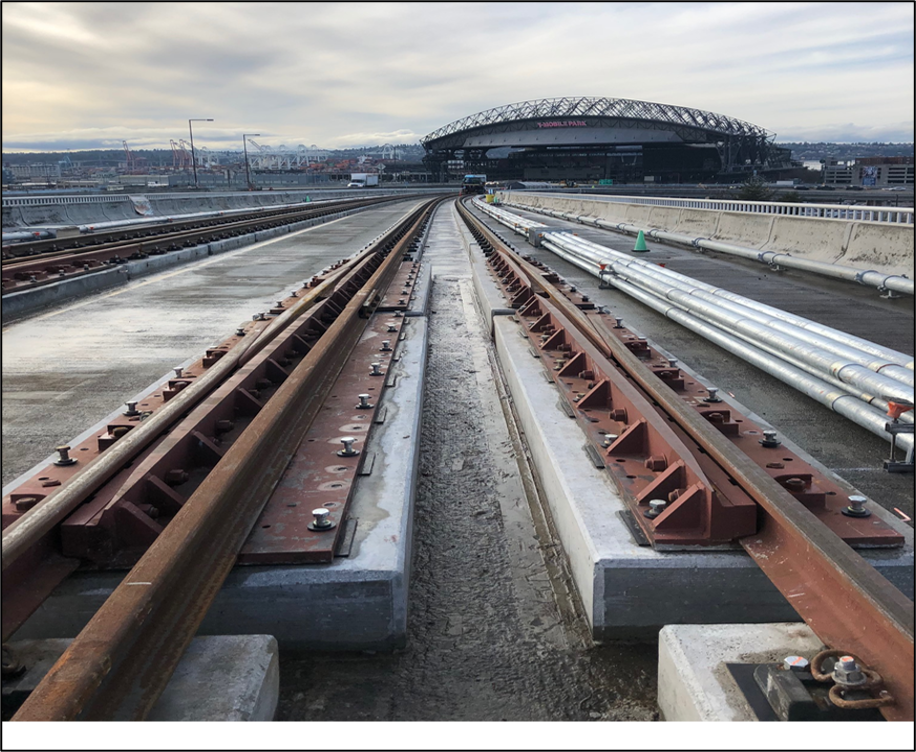
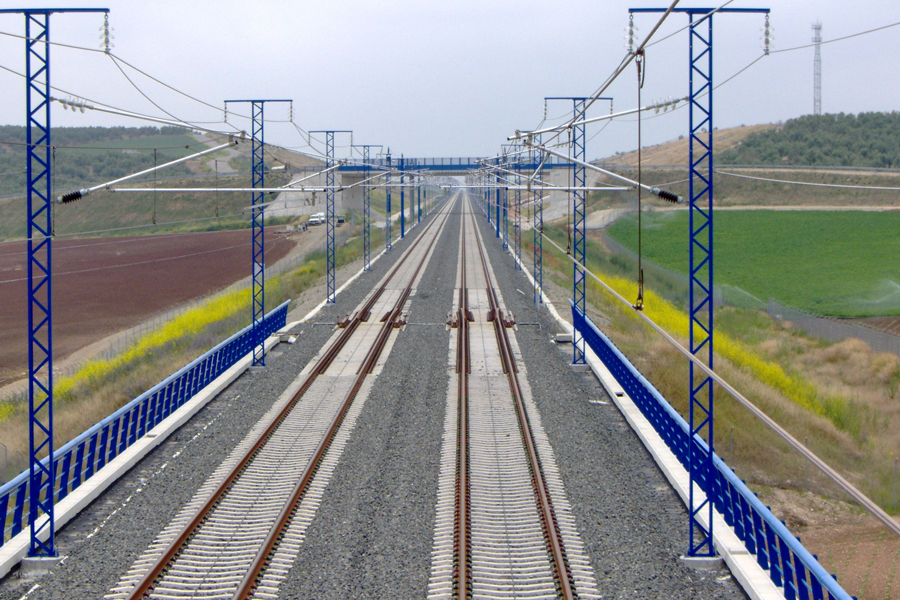
Photo at 38.00771000519087, -4.565435982666953
Accident at 38.009292813090475, -4.564960554581273
[1] https://img2.rtve.es/im/16899875/?w=900
[2] https://x.com/eleanorinthesky/status/2012961856520917401?s=2...