As someone who works in dementia research (...), I can't help but notice the total absence of any well defined target for the challenge, which makes it, for a goal-oriented objective process, a poor choice.
"If Dementia wins the vote, the challenge for Longitude Prize 2014 will be to develop intelligent, yet affordable technologies that revolutionise care for people with dementia enabling them to live truly independent lives."
This reflects the fact that there's not an obvious solution to the dementia problem - yes, there are good big picture targets like this, I'm not sure how well this translates into day-to-day operations.
Beyond this, should we be focussing resources/time/money on conditions which, fundamentally, are a byproduct of a high quality of life for a minority of the worlds population, or should we, perhaps, be focussing on ensuring clean drinking water for everyone, or developing antibiotics. I feel like dementia is somewhat incongruous with the other problems presented, but I suspect it might do well because it's so prevalent in the lives of the specific population voting for this.
The same old blind spot in place with respect to aging I see. The cause of two thirds of all deaths worldwide, more than 90% of all deaths in the first world, and the largest share of suffering and medical expensive, all of which falls most heavily on the poor of course.
But actually do something about it in this age of biotechnology and rapid progress in medicine? No, never.
The organizers point to age-related dementia as one of the potential items, but strangely not to attempt or incentivize any work to fix the problem at all through medical research. They treat dementia as a result of aging as a given, something set in stone, a thing to be made marginally better with palliative treatments and accommodations, not fought with medical science in search of cures.
Craziness.
The world drowns and dies in this blind spot related to aging and age-related conditions.
I was expecting trite problems, but only one of them (flight) was, the others are real, and difficult.
Although two of them (water, food) are not problems in discovery but in execution. Enough money or attention? Problem solved. This means there will be no one to award the prize to. Plus food is actually just a subset of water.
That leaves 3, and all of them are medical, which is interesting if you are thinking about what to learn in school.
(Flight is silly to include because if you want to stop pollution (of all types) stop China from burning coal, you can eliminate flight completely and it wouldn't make a dent.)
The importance of the Flight challenge is debatable, I suppose but it is defined well. That's important.
"If Flight wins the vote, the challenge for Longitude Prize 2014 will be set to design and build a zero or close-to-zero-carbon aeroplane that is capable of flying from London to Edinburgh, at comparable speed to today’s aircraft."
If you don't think its environmentally valuable, at least it's valuable as an engineering challenge.
The definition of the Food challenge is much poorer:
"If Food wins the vote, the challenge for Longitude Prize 2014 will be set to invent the next big food innovation, helping ensure a future where everyone has enough nutritious, affordable and environmentally sustainable food that people want to eat. A successful solution will demonstrate benefit at a small scale now and show projections of the potential environmental and social impact of scaling up to provide for millions of people."
If no one had seen a potato before, growing a field of them could presumably win this challenge. It would be easy to demonstrate on a small scale and make the case for scaling up. The whole problem is scaling up with all the political & economic hair that goes with it. We're pretty good at cheap calories.
I disagree about Water:
"creating a cheap, environmentally sustainable desalination technology."
Clearly defined and would have many high value implementations including many humanitarian ones. The only knock on it is that I think there is sufficient economic incentive that a £10m prize won't make much difference. I could be wrong though.
There was a BBC Horizon episode that went into each in depth to show that each is not as trivial as they seem. Money and Attention wouldn't really be able to solve what they're aiming for.
The example they used of why this prize was a good idea was how it helped sailors centuries ago with the ordinary watch/timepiece.
It was not possible to find one's position while at sea quite long ago without accurate time. Money couldn't solve this one, no matter how they tried they couldn't accurately know where they were at sea.
There were people with the resources to solve it and they did try many things but were not able to.
A prize like this for a working way to find someone's position at sea accurately got someone involved in making a unconventional timepiece that would be accurate at sea. This simple breakthrough probably saved many thousands of ships & probably pushed civilization ahead a few hundred years.
The flight problem isn't really a FLIGHT problem: it's about energy. Is it possible to create a zero-carbon source of energy, or, maybe, an accumulator good enough to power the flight of commercial aircraft? We've already seen that for cars it is possible (Tesla), so now it's time for the next step.
One I would like to see is cheap/clean energy in a system that transports well. Arguably this would solve both food and water issues. IMO an affordable and acessable energy breakthrough could have more impact on the world than anything else on that list.
Also I suspect a challenge like this is more open the the amateur hacker (like those gravity lamps) than most of these. This seems important if trying to crowd source solutions.
Part of the food problem is the lack of water for agriculture in many population-dense areas (but poor) areas. Providing extremely cheap water would enable livestock and crop growth in a significantly larger portion of the world.
Dementia - Not a real solution but we force people to move often thereby erasing their associative memories. Houses could stay in the family so that one can grow up and grow old there, surrounded by objects triggering memories. (think of them like checksums)[0]
Water - Use offshore wind turbines to throw water up in the air. Some vaporises into clouds, the rest goes back with the salt. [1][2] (there is some academic work on this that I cant find, it used a vertical axle turbine shaped like an egg beater, the water was carried up the arms by the centrifugal force)
Flight - Use air evacuated maglev tubes.[3]
Antibiotics - vibrate the body on the resonant frequency of the disease. If something has a fixed shape it has a resonant frequency. When matched it makes life unbearable for any single cell creature or virus. It cant dampen it's vibrations anymore.[4][5] (10 cents per patient kind of profits)
Paralysis - I'm clueless about this one.
Food - Permaculture includes A self-maintained agricultural systems modeled like natural ecosystems.[6][7]
Viruses don't have a fixed shape, so can't have a single resonant frequency. Take a look at x-ray crystallography of virus structures - even for non-eveloped capsid structures, there are many regions which can not be resolved. Also, any resonant frequency will change depending on the local environment; pH level, salt concentration, etc..
In any case, viruses are basically thermally coupled to a water bath, so while a virus "can't dampen its vibrations", the water it's sitting in certainly can.
Your [4] has nothing to do with the topic, that I can tell. I looked at your video [5]. It doesn't have enough information to be meaningful. I didn't see a control as the reference, and I didn't see what happens at other frequencies. The presenter had to set an alarm because the amp was getting too hot and a 25 MHz radio source is basically a microwave oven - how hot was the water in the slide? Simple heat would explain all of the observations.
In any case, many things can kill microorganisms in vitro. The problem is killing them in the body, without worse side effects - eg, how many human body cells will be disrupted by the same process?
My interest in the topic is mere curiosity. So far, while it doesn't prove anything, the skeptical side of the argument is mostly nonsense. While yours isn't an exception I do have to say I've never seen a skeptic raise such elegant issues. For completely uninformed conjecture yours is most admirable. It reads as if you know what you are talking about (at least the medical part)
(I cant think of a nice way to say "conjecture", sorry about that.)
The link is there because physicists claim an optical microscope is limited to Rayleigh criterion.[0] Their uninformed conjecture holds that Rife's microscope[1] is not possible. After imagining the microscope not to exist it of course follows "logically" that Rife could not adjust the frequencies to those variations in shape and ph that you so elegantly pointed out.
But try telling that to the medical professionals looking though the microscope? A bit like going to the airport to tell people heavier than air flying machines are impossible. According to the physicists the further Rife zoomed in the less credible he gets. Maybe I'm ignorant about the terrifying consequences of accepting empirical observations physics?[2]
In short:
in 1931 Dr. Arthur I. Kendall, Director of Medical Research at Northwestern University and Dr. Milbank Johnson of Pasadena Hospital. Dr. Alvin G. Frood, President of the American Association of Pathologists joined Rife's research. Moving microorganisms from prepared, diseased human tissue were photographed and filmed. On November 20, forty-four doctors attended a dinner to celebrate "The End To All Diseases" at the Pasadena estate of Dr. Johnson[2]
in 1932, Kendall speaks before the Assoc. of American Physicians at Johns Hopkins University about the successes with Rife's methods and treatments.
In 1933, Richard Edwin Shope discovered the first mammalian tumor virus.
Also in 1933, Rife completes the universal microscope. Upgrading his resolution claims from 17 000 X to a resolution of 31,000 times and a magnification of 60,000 times.
In 1934, The first clinic is opened. A special University of Southern California Medical Research Committee chaired by Milbank Johnson is formed to oversee the research. Committee members are: Whalen Morrison, Chief Surgeon of the Santa Fe Railway. George C. Dock, M.D. George C. Fischer, M.D., Children's Hospital of New York, Arthur I. Kendall, Dr. Zite, M.D., professor of pathology of Chicago University. Rufus B. Von Klein Schmidt, President of USC. Also in attendance: Dr. James Couche of San Diego. Dr. Carl Meyer, Ph.D. of the Hooper Foundation, SF. Dr. Kopps of the Metabolic Clinic in La Jolla. The clinic is held at the Scripps Institute in La Jolla. Sixteen terminally ill people are treated. Fourteen are cured in three months, the other two are cured in six months.
In 1935, Dr. Milbank Johnson opens a second clinic with the same results.
In 1937, Dr. Milbank Johnson opens the third clinic with the same results. Drs. Couche of San Diego, Gruner of Montreal are also having great success.
In 1938, Fourteen machines are built. Two go to England, one goes to Dr. Richard Hamer of the Paradise Valley Sanitarium, one to Dr. Arthur Yale, two to Arizona doctors, and eight to Southern California doctors. Dr. Hammer cures an 82-year-old from Chicago of terminal cancer. Through this man, Morris Fishbein, head of the AMA in Chicago learns of Rife and his work. Fishbein visits Rife. Wants to buy in. Rife and his associates turn him down.
In 1938, The AMA indicts Rife for fraudulent medical practices. Rife wins the case, the AMA is made to pay $200,000. During the trial and afterwards the AMA visits all doctors involved with Rife. Those who didn't stop using the Frequency Instruments lost their medical license.
Rife makes a career switch to alcoholism.
the end!
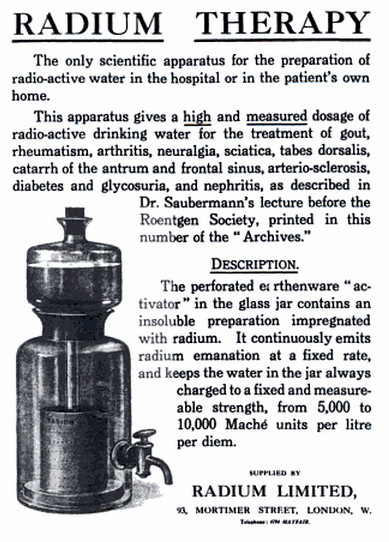
I know it sounds very dubious, I would stick with the radium therapy.[3][4]
You could try a web search for more information and/or check out http://www.rife.de
I don't understand why you've switched from discussing audio-modulated RF energy for resonance induction to microscopes and some 80 year old history.
The basic premise - shaking a virus at its resonant frequency, where each virus has its own frequency - doesn't make sense. On the other hand, what does make sense is to induce vibrations in bonds. This is how microwave ovens works.
The video demonstration you linked to is identical to what I would expect if the RF source acted as a microwave oven heating up the liquid in the slide. In order to be effective evidence that the effects are not due to heating, a researcher must also keep track of the temperature across the slide and/or in the view of the microscope. Since this didn't occur, it isn't convincing evidence.
For what it's worth, near-field scanning optical microscopy has optical resolution beyond the Rayleigh limit.
2004 - Extremely low frequency electromagnetic fields as effectors of cellular responses in vitro: possible immune cell activation.
http://www.ncbi.nlm.nih.gov/pubmed/15352165
2009 - Amplitude-modulated electromagnetic fields for the treatment of cancer: discovery of tumor-specific frequencies and assessment of a novel therapeutic approach.
http://www.ncbi.nlm.nih.gov/pubmed/19366446
2013 - Targeted treatment of cancer with radiofrequency electromagnetic fields amplitude-modulated at tumor-specific frequencies
http://www.ncbi.nlm.nih.gov/pmc/articles/PMC3845545/
Abstract: In the past century, there have been many attempts to treat cancer with low levels of electric and magnetic fields. We have developed noninvasive biofeedback examination devices and techniques and discovered that patients with the same tumor type exhibit biofeedback responses to the same, precise frequencies. Intrabuccal administration of 27.12 MHz radiofrequency (RF) electromagnetic fields (EMF), which are amplitude-modulated at tumor-specific frequencies, results in long-term objective responses in patients with cancer and is not associated with any significant adverse effects. Intrabuccal administration allows for therapeutic delivery of very low and safe levels of EMF throughout the body as exemplified by responses observed in the femur, liver, adrenal glands, and lungs. In vitro studies have demonstrated that tumor-specific frequencies identified in patients with various forms of cancer are capable of blocking the growth of tumor cells in a tissue- and tumor-specific fashion. Current experimental evidence suggests that tumor-specific modulation frequencies regulate the expression of genes involved in migration and invasion and disrupt the mitotic spindle. This novel targeted treatment approach is emerging as an appealing therapeutic option for patients with advanced cancer given its excellent tolerability. Dissection of the molecular mechanisms accounting for the anti-cancer effects of tumor-specific modulation frequencies is likely to lead to the discovery of novel pathways in cancer.
In the late 1990s, with the rise of cell phones, people were worried that the RF energy from the phones and towers, while low, might cause physiological problems. The first paper specifically concerns this topic. Note that it says "It was concluded that, although hazards from exposure to high-level (thermal) RF fields were established, no known health hazards were associated with exposure to RF sources emitting fields too low to cause a significant temperature rise in tissue."
The second paper is because starting even by the late 1980s there was a concern that the background 50Hz/60Hz EMF from power lines might be causing a problem. There was a 1979 epidemiological association between power lines and childhood leukemia. See http://www.cancer.gov/cancertopics/factsheet/Risk/magnetic-f... for more details. This second paper presents a hypothesis for how that mechanism might work, should it exist.
The third paper rings warning bells. For example, it references clinicalTrials.gov identifier NCT00805337 but the research protocol was never explained in the submission, and no research results were ever published there. It was also registered at about the time the paper you pointed to would have been submitted, so it feels like it was added because it was required by the publisher, and not because it was a well-run clinical trial.
Also, frequencies like 10456.383 Hz are incredibly precise; to the point of unbelievability. They don't show a plot of the signal as a function of frequency, they don't have information about reproducibility, and they don't describe control, since surely they should have RF interference from the environment, and feedback effects from the equipment itself.
In any case, the last 4 papers all list B. Pasche as a co-author, and from the conflict of interest section in one of the papers it says "Boris Pasche and Alexandre Barbault have filed applications for patent protection and hold patents related to electromagnetic fields amplitude-modulated at tumor-specific frequencies as they relate to the diagnosis and treatment of cancer. They hold stocks in TheraBionic."
Thus, they aren't really independent confirmations of some observed effects, are they? Why did you list them all?
There is also a billion people living one-single-error away from starvation. The fact that we value their lives below the emotional well being of rich people that feel bad about the state of the environment (but aren't willing to give up any of their comforts for the sake of it) tells a lot of who we are and why we ended up with such a list in the first place.
There are plenty of people that care about global poverty. The issue is there are no simple solutions because the problems are societal not technical.
More than two-thirds of all agricultural land is devoted to growing feed for livestock. There are 1.4 Billion cattle right now, "simply" swapping 1/2 of that to chicken would free up enough food to easily support the poorest 2 billion people in the world. But, good luck actually changing peoples behavior on a global scale. Not to mention things like food waste etc.
PS: War and Corruption are far more important issues when it comes to global hunger than food production.
EDIT: There is easily enough farm land right now to feed ~20 BILLION people a healthy and sustainable diet using current farming practices. Which is well behind and expected global population for the next 200 years.
Is it possible to "liberate" women of Saudi Arabia, Sudanese refugees in Kenya or political prisoners in Russia? The answer is generally "No". Unprepared society will not maintain the necessary institutions and any political changes enforced by foreign military will receive proportional resistance. There's no "silver bullet" ideology or religious prophet who can turn entire population of a country to the different path. This means that for liberating the world you need to do some boring work by educating the ruling class and directing it to the reforms that drive the economic growth to the point, when growing educated middle class will demand the liberties inside the country. Definitely, it's a political and organizational challenge, not the scientific one.


"If Dementia wins the vote, the challenge for Longitude Prize 2014 will be to develop intelligent, yet affordable technologies that revolutionise care for people with dementia enabling them to live truly independent lives."
This reflects the fact that there's not an obvious solution to the dementia problem - yes, there are good big picture targets like this, I'm not sure how well this translates into day-to-day operations.
Beyond this, should we be focussing resources/time/money on conditions which, fundamentally, are a byproduct of a high quality of life for a minority of the worlds population, or should we, perhaps, be focussing on ensuring clean drinking water for everyone, or developing antibiotics. I feel like dementia is somewhat incongruous with the other problems presented, but I suspect it might do well because it's so prevalent in the lives of the specific population voting for this.