I have made my peace with the fact that Car and Airline Lobby will not let this happen. I mean we are the richest frikin country in the world and we cannot build a decent high speed train network. Only reason is that some strong forces do not want this to happen. I hope I am wrong.
I also hear funny arguments (in my opinion) about why high speed Rails are a bad idea. Oh it's too expensive. Oh it is ok for countries like China because they have lot of people etc etc. Excuses. I thought we like choices as Americans. Right now, if I don't want to drive, my only option is to fly mostly in a shitty plane cramped up with strangers on a 4 hour flight. I would gladly trade that with a train even if that takes say an additional hour or so. Are Amtraks the best we can do America ?
It's a Western problem. China just moves people out of the way. In the West, you have go around, under, or over. Labour costs are low. The CCP answers to itself. Can I build this? Of course you can!
In the UK, there's archaeological surveys, bio-diversity/green considerations, carbon impact, political lobbying. The list just goes on and on and on.
The US, at least, is largely an empty continent. You can probably draw a line between cities and not hit many things. Plus the US love-affair with cars means you could, if you wanted to, build terminals outside major cities and rent a car to drive the last part and still conceivably run a profitable service.
In the UK, we must have our terminals in the city centres which adds so much more to the cost as we have to tunnel under and into the cities.
Even in the US the government needs to buy/take land from every individual in the way.
In my experience that maybe wouldn’t be a problem but they try to get it for a ridiculously low amount, so then people (understandably) fight. That leads to delays and more costs until that’s finally settled.
When the county replaced a road that ran next to my parent’s property, they wanted to move it up, taking half of their 60 acres. They did this because they wanted to expand the county park (for RVers) that’s across the road.
They offered $500 an acre. That land is easily worth $10,000 an acre, and that would have also reduced the value of the rest of their land and house. Their house is on a hill and the view is wonderful, and the county also tried to put a water tower up right in front of their house.
Long story short after a long fight a man with some pull got involved on my parents behalf, and the county ended up with some extra land (sold at a reasonable price) and the water tower was put behind a woods (from their perspective) instead, all of a few hundred feet away. It was years of stress for my parents.
> Germany alone has like 3 major extremely over-budget infrastructure projects I can think of
I'm going off cost per mile to build rail and road. Even when European projects go over budget, they still clock in below the U.K.–on average–which clocks in way below the U.S. (The latter gap is best explained by institutional ineptitude.)
> European states with Napoleonic law appear to avoid the cost spiral.
At least not in France. The "SNCF" had to be rescued by the French state three times since it was created in 1937. And it was created because the private companies it replaced were bankrupt. [0] (in French)
Each year the French state gives ~16 Billion Euros to the company [1] (in French)
Each and every country loves to complain about their railway services. I bet you're selling the French railways short here. I'd assume you're doing better than UK, and definitely an order of magnitude better than US.
Could also be that first past the post systems leading to less competent administrations than proportional representation and coalitions. Common law and first past the post seems to go hand in hand.
Technically speaking, the US has eminent domain laws which allow it to force people out of the way (generally by paying fair market price for the land).
The problem isn't legal, but entirely one of political will.
It’s not that simple, people can and will legally fight it. Even if they’re given fair market price for the land (big if), the rest of their land’s/home’s value will be reduced. Nobody wants a train going right next to their house for nuisance and danger reasons, it might split their land, etc.
Some people will have an emotional attachment to their land/homes as well. The only way for something like this to work is to spend so far above market rate that people come out ahead.
> the rest of their land’s/home’s value will be reduced.
That's part of giving them fair value. It's not just the number of square inches you take, but what you did to the value of what they have left.
That's just calculating money. The real problem is time. They can tie you up in court for, probably, a decade. (IANAL, but I think a determined individual who was willing to spend money on lawyers could do something around that long.)
Maybe unpopular view, but another way is to just have stronger eminent domain. I don't think market price should be paid when land is assigned to infrastructure. I also think cities should use eminent domain (with nominal compensation) to acquire land before all zoning to be able to fund the urban infrastructure and control housing prices.
So you want to get something for less than it is worth, at the expense of the owner? You can just nationalize their property, why bother paying something? Viva la revolucion, comrade Che.
Yep, that's what eminent domain basically is about. Land ownership comes with different strings attached compared to other kinds of wealth. No need to evoke communist imagery -- this is common practice in western countries, some pay the market price and some do not.
This just seems cruel. If someone bought a home for 500k and has a 400k loan, then the city forces them out and gives them 100k, then that person has a 300k loan and no home.
Eminent domain should be used for non-zoned land. I'm fine with full market price compensation for zoned land. It's a long term planning failure if it ever comes to that.
I live on non-zoned land. So do my parents and at least 2 of my friends. You're basically saying that nobody should live in rural areas or risk having their life's work wiped out (or worse) at the whim of the government.
We have compulsory purchase orders in the UK that are often used on large infrastructure projects such as high speed rail to clear the route, but they’re politically unpopular and not used as often as they perhaps should be. And politicians are nothing if not about self interest and popularity.
The UK's HS2 is really about freeing up more commuter capacity on the existing lines into London - currently both the express and stopping services use the same line requiring large gaps. By separating the fast and slow trains they'll be able to schedule more trains. If you're going to build a new line might as well make it high speed.
If you've ever been on a London commuter service you'll see they're pretty packed.
I don't think people particularly care about high speed rail in Britain since the vast majority of the population live within 200 miles of London and our existing trains go up to 125mph on the mainlines so get you to London in a couple of hours or so.
Edinburgh or Glasgow to London is a similar distance as LA to SF. Those trains take about 4 hours right now versus 8 hours on Amtrak, about the same as the 8 1/2 hours the Flying Scotsman took from Edinburgh to London in 1888.
The stretch of California high speed rail currently under construction includes a costly grade separation roughly every one and two thirds miles. The result should be safe and robust, but the expense is evidence of something more than a largely empty continent. And that is in a largely wide open mostly agricultural area of the US.
I assume you're referring to the Caltrain upgrade. It was completely wild to me that a railway line through a major metropolitan area would have level crossings. They're usually a rural thing in other countries.
No, I'm talking about the current round of work in the Central Valley that just started. Currently all the big HSR works are going on there. I can't currently find the report with the oddly high grade separation count and it is possible that my read of that was mistaken, but I am pretty sure that if you look at the recent documents they just moved on from CP1 and started on either CP2 or CP4 in the south end of the Central Valley and it includes a very large number of grade separations. That report was posted somewhere on either https://hsr.ca.gov/ or https://www.buildhsr.com a month or two ago.
Fortunately these Central Valley grade separations are merely expensive while the CalTrain corridor work on the peninsula is experiencing explosive growth of costs from the the complexity of grade separations because of the very tricky maze of rights of way especially in and around Redwood City: https://caltrain-hsr.blogspot.com/2021/05/the-exploding-cost...
I don't see what's stopping the US from building elevated rail over interstate highways. They already own the rights of way, and the radii of curvature are already pretty large. As a conservative lower bound, they should at least be able to match automobile speeds.
Additionally, those highways typically enter cities, so stations could be built over them, often right in the city center. That does leave details about how those stations are accessed, but this seems minor since everything else has already been dealt with.
I wonder if an executive order could make it happen.
I'm not American, but I wouldn't be surprised if there isn't much appetite for building transport infrastructure above existing transport after the Oakland viaduct collapse in the 1989 SF earthquake. I'm old enough to remember it, and watching from abroad, it was pretty horrific.
The cost of building something like that is likely to be prohibitive because you'll need to dig support pylons by the road and each and every pylon would need a ground survey for existing utilities, and so on. It adds up really quickly, even with a concrete factory on site manufacturing identical parts (which they do for tunnel building for example).
I don't know the cost in US, but in my country Euro prices are: highway at 6 million/km, rail at 10 million, viaducts over 15 and tunnels over 20 million. The elevated rail would be at least 50% more expensive, probably more than double because in case of viaducts there is no restriction on what is below the construction and you can put pylons anywhere, if it is above and existing highway there are many limitations.
So it is doable, maybe a good idea if you have the money, but I heard California is burning money like there is no tomorrow and there are no funds for such a project (maybe not true, it's just what I heard).
Lower yes, but not zero. Concrete and steel for construction of the railways produces a lot of emissions. Even if the trains are electric, a lot of the U.S. grid is powered by fossil fuels (mainly coal plus some natural gas).
Even in a state like California where the population is pro-rail and mass transit, the sheer cost of building high speed rail means the project won't come to fruition any time soon. The automobile and airline lobby is powerful, yes, but the sheer cost of public works projects in the US seems to be the biggest limiting factor.
In the PRC, if the government wants to build a high speed rail line, it's getting built and F-U if you want to stop it. In the US the process is 'democratized' and every little busybody comes out to protest the construction, drag the process out, or get some variance approved for some hitherto unexpected concern.
I hear you but it is weird to see America falling behind in these things while the rest of the world catches up. Americans built a World Class Highway System in the 50s and I am sure we had the same argument back then on how it is so expensive or democratized that we cannot take away people's land etc etc. Yes it is tougher in democratized countries and there are good reasons for it but do we really give up ? I cannot imagine that.
Some of the current US backlash on eminent domain is a direct result of neighborhoods destroyed by the Eisenhower highway system... often poor black neighborhoods which nobody cared about in the 50s. The Voting Rights Act was passed 9 years later.
I know this is going to come across as an apologia for building highways through poor neighborhoods, but I see that as a natural consequence of the land simply being cheaper to acquire. I'm not denying that there was possibly some racial malice in the planning. It just seems obvious to me a government with limited funding is going to put the infrastructure through the cheapest path it can find. It was still a terrible thing to do to those neighborhoods, however.
The key argument against this is that many of the planned highways were also supposed to go through richer neighborhoods, but never got constructed because the residents of those neighborhoods were able to successfully fight against them.
(For one example, check out the incomplete stub at the eastern terminus of I-70 -- I don't believe the cost of the land was a major factor in that case)
US built first a large railway network, then a highway system, then stagnated. While there is room for debate on why this happened, the reasons are fairly obvious but writing about it here would bomb the writer to oblivion.
The difference is that the interstate highway system was not simply built for mass civilian transit, but as part of a post-WW2 initiative, functioning as emergency landing strips and providing easier access between airports, seaports, rail terminals, and military bases (which tend to reside near interstate highways).
In the US that’s true (according to Wikipedia), but in a lot of places around the world, landing strips on the highway used to be (or still are) a thing. https://en.m.wikipedia.org/wiki/Highway_strip
yeah, i would think that, generally (maybe even universally), the interstate roads in the us are neither wide nor thick enough to support aircraft. i didn’t realise that there are countries that actually did this though; that’s pretty neat.
There are some depression-era eminent domain laws that the federal government can use if they really want to. Literally the proper filings are made and the bulldozers can roll the next day.
The reason we don't have nice things like China does is just political will, not any legal barriers.
The federal power for eminent domain that allows for 'seize the land and deploy the bulldozers the next day, deal with the court stuff later' comes from the Taking Act[1].
States have their own eminent domain powers which vary, however in general they're easy to sandbag in the courts for years, preventing the state from doing anything while the landowners argue over the money.
It's complicated, but my understanding is that the government can take things, as long as it actually has plans to use the stuff it takes to help the public. E.g. building dams, highways, etc are the common use cases.
Importantly those highways don't need to be free to use. The government can take land and build a for-profit railway, in conjunction with a private corporation if they want, as long as it was to benefit the public.
It was found in 2005 that they can take your property and give it to another private party simply by making the claim that its for the public good. This has been used to take homes from people so they can be bulldozed and replaced with new construction, the idea being that the larger tax base is for the public good. This makes the power in effect limitless as you can claim almost anything is for the public good.
A major problem I have with this is appraisal prices often don't jive with reality. For example in San Fransisco houses almost always sell above asking, if the government were to step in and give the land away to a private person at asking they would be in effect getting a discount. Similarly my own home has had a lot of work put into it that doesn't effect it's appraisal price meaningfully, if forced to sell at that price I'd lose money.
The Supreme Court recently ruled that this is pretty general. Specifically they ruled that Chicago could take land (with payment) in order to give it to a chocolate factory that wanted to expand:
America simply has an issue with construction costs, look at say the big dig in terms of millions per mile. HSR along reasonably flat terrain like most of the US isn’t that expensive. The real issue is it’s very easy to cut from budgets. Unlike highways you don’t connect every city let alone town which makes it extremely unpopular at the state level.
I think the Texas high speed rail is running into issues with eminent domain along its proposed route and they're trying to use some 1800's era law to get around the lawsuits from the landowners looking to cash in.
What incenses me is that here in Wisconsin, they can declare farms that have been in our families for over a hundred years "blighted", and take them for a non-existent Foxconn plant with nary a peep. But if they need land for a high speed rail they can't do the same? If the people against high speed rail want to lie, OK, I get it. But why not come up with something consistent with the reality that the people are observing?
At this point, they don't even pretend to respect the intelligence of the people.
Just to correct, in PRC if your property is in the road planning area, you would be very happy because the compensation is very good compare to what you have. Of course, in developed countries, things are more expensive, and maybe people already have nice houses so they don't want to move to a new building.
The way environmental legislation works in the U.S, if some environmental non-profit wants to start throwing spaghetti at the wall to stop infrastructure construction, they can stop it basically forever by tying it up in court for decades.
You're getting downvoted, but it's true -- CEQA is a great example of how well-intentioned environmental legislation can be abused by basically anyone to stonewall any project for any reason.
A common-sense change might be requiring minimum quantities of local signatures to limit the potential impact of a small opposition.
Yeah CEQA is why the high speed rail project will never get built. It grants godlike powers to NIMBYs in California. Every single mile of the high speed rail project has the potential to get stuck in CEQA hell.
"In one case, anti-abortion activists filed a CEQA lawsuit to try to block a new tenant (Planned Parenthood) from using an already constructed office building in South San Francisco. They cited the noise caused by their own protests as the environmental impact requiring mitigation. This lawsuit delayed the new tenancy by at least 18 months."
"Governor Jerry Brown, in an interview with UCLA's Blueprint magazine, commented on the use of CEQA for other than environmental reasons: "But it’s easier to build in Texas. It is. And maybe we could change that. But you know what? The trouble is the political climate, that's just kind of where we are. Very hard to — you can’t change CEQA [the California Environmental Quality Act]. BP: Why not? JB: The unions won’t let you because they use it as a hammer to get project labor agreements." "
> Right now, if I don't want to drive, my only option is to fly mostly in a shitty plane cramped up with strangers on a 4 hour flight.
Would high speed rail be that different? Not being snarky, I really don't know. I just figure that if it's very fast and/or expensive, it's probably not going to be very roomy on the inside. That Chinese train looks like it's about the same width or less than most airliners.
As someone who travels frequently with both plane and trains, (Modern) trains are much more pleasant to ride than planes.
- More space (including the Chinese ones). While it might not be wider than a plane, it's order of magnitudes longer. So, each row has less seats, and rows are much farther from each other than on a plane.
- More room for bags and suitcases as well. There's usually no need to check your luggage, unless you have an excessive amount of them.
- No turbulence
- You can stand, walk, eat, drink, open the table, work with electronics, etc. at any time.
- No long-ass waiting time before and after. For a 8:00 train, all you need is to be able to walk onto it at 7:59. Whereas for a plane, they won't let you on unless you are present at the gate before 7:45 (the exact time depends on the airport). And not to mention the security checks.
This is how it is today, but imagine you need to do pre-boarding to trains by TSA one hour in advance, increased density for seating so that premium-economy can be sold at a higher margin, baggage limitations and payment per kilogram, restrictions to wear a belt at all times (no moving around allowed).
These restrictions were added to flying one by one, boiling the frog. It can and it may be implemented for trains also.
As someone who has taken the Shinkansen in Japan, the seats and legroom are vastly bigger and more comfortable than on airplanes. Moreover, the view is nice and normal air pressure is nice too.
In theory I agree, although in practice the experience is a lot different due to 1. less security theater (even in China, HSR security isn't as bad as American flights), 2. The vehicle itself is generally pleasant to ride on, as opposed to the turbulence, the takeoff/landing, and the air pressure that a passenger on a flight experiences, 3. It generally feels more scenic / touristy in the train because you can see the mountains and villages go by.
That's a really good question, and I think is better than a plane in this ways:
- No need to wait in any way to out your bags or suitcases. Maybe a fast X-ray scanner where you put them in a side and pick them in the others in about 10 seconds.
- You know and can select where you want to sit precisely during the ticket purchase, unlike AmTrack.
- Due to the previous detail, you can show up to the train door even a minute before leaving without Any problem.
- All trains have a previously programmed leaving and arrival time, so there's no need to wait for traffic control in normal conditions.
With all of this, even with a train and a plane having the same travel duration, in a plane you will have to wait for a lot more of "bureaucracy" than in a train.
All of this is based in personal experiences using mid-distance trains in Spain, and the fast long-distance ones are even better and more comfortable.
We can argue all we want and present other points of view and narratives, but it seems the basic fact is just that the Chinese system is better...at least for these kind of big projects. Somehow America can't get it's act together for projects with some public good. we need to ease off the military shit for a while!
Their system just hasn't been around long enough to accrue enough legal debt - pesky thing like "property rights", "environmental regulations", "labor laws", and "due process" that people start demanding as they go up Maslow's hierarchy.
The enshrinement of property rights in America has led to such wonderful things as ridiculous housing prices, rampant income inequality, endemic homelessness, the absurdity of Prop 13, etc. and yet we still trumpet it. When do we start reexamining these foundations?
We can always find something to justify putting on airs of superiority, but the fact remains that our infrastructure stagnates while the rest of the world manages to modernize. Forget the China comparisons if they are so triggering. Europe still manages public works. Individual rights have to give at some point for the good of society.
Start? The entire labor movement, the public accommodation portion of the civil rights movement, and the rest of the transition from gilded age capitalism to the modern mixed economy has been a process of reexamination of and evolutionary progress from the classic capitalist conception of properry rights. Just as, for that matter, the several centuries of evolution from feudalism and other pre-capitalist economic systems through Enlightenment liberalism to the peak of gilded age capitalism was such a reexamination of pre-capitalist ideas of property rights.
And while you can conceptualize them roughly as successive and mobotonic, both of those are oversimplifications; elements of pre-capitalist patronage-oriented systems were still around past the peak of capitalism, and isolated points of reversions from capitalism to them or to purer capitalist models from their replacements occurred throughout the process and still do.
But the idea that society is sitting on some static foundation of property rights that is waiting for a beginning of a reexamination is...not remotely tenable.
Well touche, I'm fine with saying I'm wrong and that we've started. But it sure seems like a glacial pace. Whether we have already been reexamining property rights or not is IMO the least important part of my stance
Fundamental reorganization of society tends to take place in one of two ways:
(1) painfully slowly, or
(2) catastrophically, with massive bloodshed.
And while #2 often produces more rapid change considered over a short term, it also tends to be less secure change subject to equally rapid and equally bloody reversal.
It's frustrating, but I’m not convinced its solvable.
The bigger problem is the US "environmental review" process. That's its name — it is only minimally environment-oriented. It allows anyone who comments to sue and delay the project by months or years, which means that every big project is a big shakedown, paying off and appeasing groups who would otherwise threaten to sue. This is the primary reason why the nation hasn't really brought big new infrastructure projects to the table since the 1970s. Some places like California and San Francisco add their own layers, which exacerbate local crises in housing.
The best explanation I've heard is that the interstate system killed the need for trains here. We're the only country in the world with anything like it. (Fun fact: It's the world's largest infrastructure project.)
Because of highways, we're already connected in ways that wouldn't even be possible with trains. It's just faster and more practical to drive the entire way, or drive to an airport and from an airport to your destination, than to add a train station into the mix. In France, you can walk from your apartment to the metro, change to the regional train, and even go international without getting in a car. This will never be possible in the US because we build cities and suburbs around the highway system.
German drivers on the autobahn with no speed limits still drive about the same speed as US drivers on the interstate. Trains around the world regularly go much faster. That is before we get into how much safer trains are than even the best drivers (sorry humans, you all suck as drivers, it isn't "just the other guy"), or other environmental issues.
There is plenty of room for more rail in the US because I want to get "there" faster and planes are not faster for many trips.
Well, it's the only thing like it in the world! We are the only country that has a highway network (as in, multilane, graded, exits, safety areas, services, etc.) that runs "from sea to shining sea" and top-to-bottom as well. Literally every city in America can be reached from it and, paramount in its construction, every military base. A design requirement was that military airplanes be able to land on major highways if necessary for military maneuvers.
The interstate helped make America what it is. It created a massive westward expansion even greater than the railroads. It turned San Jose from prune and peach trees into Silicon Valley. It turned Florida from a useless swamp into Miami. It enabled the escape from Detroit that led to that city's bankruptcy. It wiped out countless communities (especially communities of color and rural farm communities) when it skipped over them in its development, or put a pylon right through a local neighborhood.
I think the history of the interstate and what it's become is fascinating. This fab promo video from the construction era shows some of the PR they used to sell it to the public: https://www.youtube.com/watch?v=wnrqUHF5bH8
> Well, it's the only thing like it in the world! We are the only country that has a highway network (as in, multilane, graded, exits, safety areas, services, etc.) that runs "from sea to shining sea" and top-to-bottom as well. Literally every city in America can be reached from it
No offense, but that sounds so violently American. Do you realize that most of Europe is covered by a network of standardized, multilane highways with exits and services that is much denser than the IHS?
It wasn't meant to be violent but definitely American. Specifically, the fact that we developed this early in our history and instead of an expanded passenger rail network, while Europe went the other way. It simply is not true that other countries have both the same road systems as we have in the US and functionally-equivalent passenger rail systems. Every country has one or the other. We are the country that first committed to total car-ization (with many unintended, unforeseen, and unfortunate consequences) and we took roads to a whole 'nother level of utilization and commercialization. I don't think that's in doubt. Is it?
> not true that other countries have both the same road systems as we have in the US and functionally-equivalent passenger rail systems. Every country has one or the other.
Eastern part of EU bursting in tears. Former soviet republics cry in agony. Me watching the permanent queue (tens of kilometers of stationery cars) on the Bucharest ring, a 2.5 million capital of an EU country.
I'm not saying things couldn't be even better, but looking at Google Maps, I could still reach Bucharest from my ex-eastern block country capital (Prague) via highways with just a short stretch of non-highway road in Romania (I'm actually considering the trip, I've never been to Romania).
You're right about the former soviet republics though, the trip to Riga and especially Tallinn doesn't look very comfortable.
Just for info, after you enter Romania via Arad you have another 350km of highway, then a 170km break (mountains, bad traffic) and another 100km before Bucharest. 600km that you can drive in 4.5 hours on highway takes over 8 hours. If you enter via Oradea, it takes even longer. 15 km in Bucharest at rush hour takes 2 hours. If you want to come, you are welcome, there are some nice places.
> It turned Florida from a useless swamp into Miami.
...I love poking at fun at the state of Florida as much as the next guy, but come on, "a useless swamp"? You really are asking for downvotes with that one lmao
I lived in Florida for 17 years so I say this with some authority.
The true history of Florida is that it was abandoned by everyone from the Spanish to the US military because it is basically uninhabitable without mosquito repellent and air conditioning. Lacking those inventions, there were no investments or population in Florida of any size. It was a useless swamp.
When oil tycoon Henry Flagler was gifted a friend's property on what is now Biscayne Blvd in return for his promise to build a hotel there for the wealthy patron and her friends, Miami was born. It did not develop much further than the railroads, however, until Flagler's railroad was lost at sea during the Galveston Hurricane and never recovered financially. It's now known that if the Florida Overseas Railroad had operated for 100 years, it still wouldn't reach profitability. Transportation to and from Florida (other than by boat) was a fantasy propped up by oil money. There was still no serious business development. Key West was the capital of Florida for 100 years, if that tells you anything, because it's a port city with better access to the rest of the world than anywhere else in Florida.
What changed all of this was the interstate system. For the first time, Americans had both cars and somewhere to take them. Jackie Gleason famously semi-retired to Miami only to wind up ruthlessly promoting it on a weekly TV show where he encouraged Pennsylvanians and New Jerseyites to leave their snow-covered driveways behind and come down to sunny Florida. Even Disney World's location was selected by Walt because of its easy access to the interstate, meaning guests would come from many states to visit.
Without the failure of the railroad (and its subsequent rebuilding as a freeway) and the connecting interstate to bring people to Florida, along with the charm and influence of Jackie Gleason, Miami would not have become The Magic City -- a name it gets from being the only city in the US which went to "City" status in one step, without ever being a town or settlement or any other geographic designation prior to that. There would be no Disney World. And Miami would not have become the Latam capital that it is. It is, after all, part of US 1, the very first (most important?) of the interstates. To this day, all three of the major north-south routes in the Miami area parallel the original US 1, which still exists in many places, places occupied by about 5 million people. All of that happened because of the interstate.
Huh, cool history, but I was mostly just poking fun at the idea of calling the Everglades "just a swamp" which is a great way to upset Everglades-enthusiasts hahah
It's a pretty cool swamp. In fact, I think the PBS documentary and the book about it are called just that. What the sugar industry has done there is terrible and had consequences for the water table all throughout Florida.
It's quite something to see an alligator from your car, I can tell you that!
Ehm, just so you every european country has such a system. Since you have to compare europe as whole to the US for size comparison. You can drive anywhere in europe through a system of highways and interstates. You can also fly to each city, but we still have a rail system.... That goes everywhere. You can drive from the northern most point in finland down south to the most southern point in italy. Same from west to east. You could even drive to moscow, china, korea and japan.
Tldr the americans interstate system is nothing more than a copy of the german autobahn... And was never something unique.
What's unique about the US system is its scale. It's 48,000 miles of graded, standardized highways with safety features, exits, services, etc. There's just nothing like that anywhere and it helped our country develop in the unique way that it did.
The idea definitely germinated in the Autobahn. The proof is in the pudding. (I just love that expression.) The US used its scaled interstate system to achieve a range of product and population distribution that was unprecedented. It also clobbered passenger rail in the process. Conversely, Europe, not having a well developed interstate (would need to be inter-country to even scale to a few US states), did not develop or extend its road system in the way the US has. Instead, it built trains.
It's not a matter of one is better than the other. Each one is better for the countries involved because of their size and geography.
This link[0] says that Europe had 77000km = 47845 miles of motorway in 2018. It's probably not quite as standardised as the US system, but it seems broadly comparable. See the second link[1] for a picture.
You're comparing all European motorways to the largest category of motorways in the US. Not all motorways in the US are classified as part of the Interstate Highway System, even though they're connected to them. The US also has many motorways that are part of State Highway systems[0], and the Federal Numbered Highway system[1].
If we're talking about all motorway style roads, there's some additional roads in the US that qualify: 67,353 miles or 108,394km[2].
The Interstate Highway System is a different system - entirely controlled-access motorways, with a minimum of 4 lanes, divided, and no at-grade crossings.
I don't think the parent is saying the whole E-road network is the equivalent; just that it provides examples of moving country to country without leaving motorways.
As someone who actually just finished a month trip from eastern Canada to the Yukon and back, and drove almost the entirety of the trans Canada highway, it’s laughable compared to the US road infrastructure.
There are large sections that are 2 way single lane highway.
There are parts of this “highway” that slow to 40km/hr as you drive through a small town.
I mean I’m glad it’s there, but I’ve also taken long road trips through states and found the interstates highways to be a big step up in quality.
The Florida Turnpike system is the most amazing road I've ever been on. It's 309 miles with incredible Service Plazas that contain separate areas for trucks and cars, a gas station, sparkling restrooms with attendants (and sponsorships), branded restaurants, convenience stores, etc. All of this is open 24 hours, patrolled by lots of cops, road assistance services, etc.
While not part of the Interstate system, it's of course connected. The road is quite expensive and the tolls make so much money for the State of Florida that they don't need to charge income tax or corporate tax. Pretty amazing.
hehe, I know it's nothing compared to the interstate system I just wanted to give it a shout for connecting across a good chunk of an equally large country etc
I love our Interstate Highways and wouldn't trade it for anything BUT why does it have to be 1 or the other. Why not both ? America can do it. I know we can.
Great comment. It's just not practical to have two systems. Too expensive. Too hard to get anyone to sign off on both. Both take a lot of public money and it's hard to get people to duplicate spending when the other thing is "working." Worse is better, to use software speak!
I wouldn't trade our Interstate for anything, either and anyone who says that the roads outside of Paris are anything like US interstates just hasn't been on the latter. Anyway, I also love European trains and have spent lots of time on those. The benefits of going from Métro in France for a day trip to Belgium, then back to Paris in time for dinner is just fabulous. No car. No luggage. That is simply not happening in the US.
I accept that accusation with exceptional American pride. I think everyone should be proud of the unique features of his or her country and how they led to its history.
I love your definitely non-random town selection in the US. Excellent. My comment was aimed at the overall level of standardization and features of the American interstate, as well as its early and pivotal development in our country's history. That's all. It was not a slight at anyone else's roadways, however exceptional.
Desirable land is finite. Tax dollars are finite. Time is finite. Americans have spent generations and trillions of dollars building highways, roads, and parking to make driving really convenient. Every acre used for highways and parking is an acre that can’t be used for train stations, apartments, and fully grade separated bike roads.
Any discussion on reallocating some land or dollars to alternative transportation is immediately rejected by the car dependent majority. “Why should a portion of gasoline tax go toward public transportation?” “Bike lines increase traffic!” “The new development would change the neighborhood character!” “Add more lanes!”
> In France, you can walk from your apartment to the metro, change to the regional train, and even go international without getting in a car.
This is absolutely possible to do in the USA. When I worked with an engineering team in Copenhagen I did it several times a year. I don’t even live in NYC.
Even domestically I can take the train from my West Coast city to the airport, fly and then take the train to my family in the Virginia suburbs.
Yes, I was speaking of country-scale. Specifically, countries the size of the US, which are few and far between. This is not possible at country scale in the US.
It's the rail line's issue too -- they only care about shipping freight and passenger traffic is a second class citizen. They also are pushing back against Positive Train Control because they don't want to spend the money (https://en.wikipedia.org/wiki/Positive_train_control) (sorry no citation on pushback because lazy).
We could do much more with our existing rail lines if the will was there. I maintain that we should "nationalize" the rail lines (the literal rails and whatnot) and invest in making it safer and faster. Not maglev, but at least have passenger trains run at a decent clip and not have to be sidelined for freight.
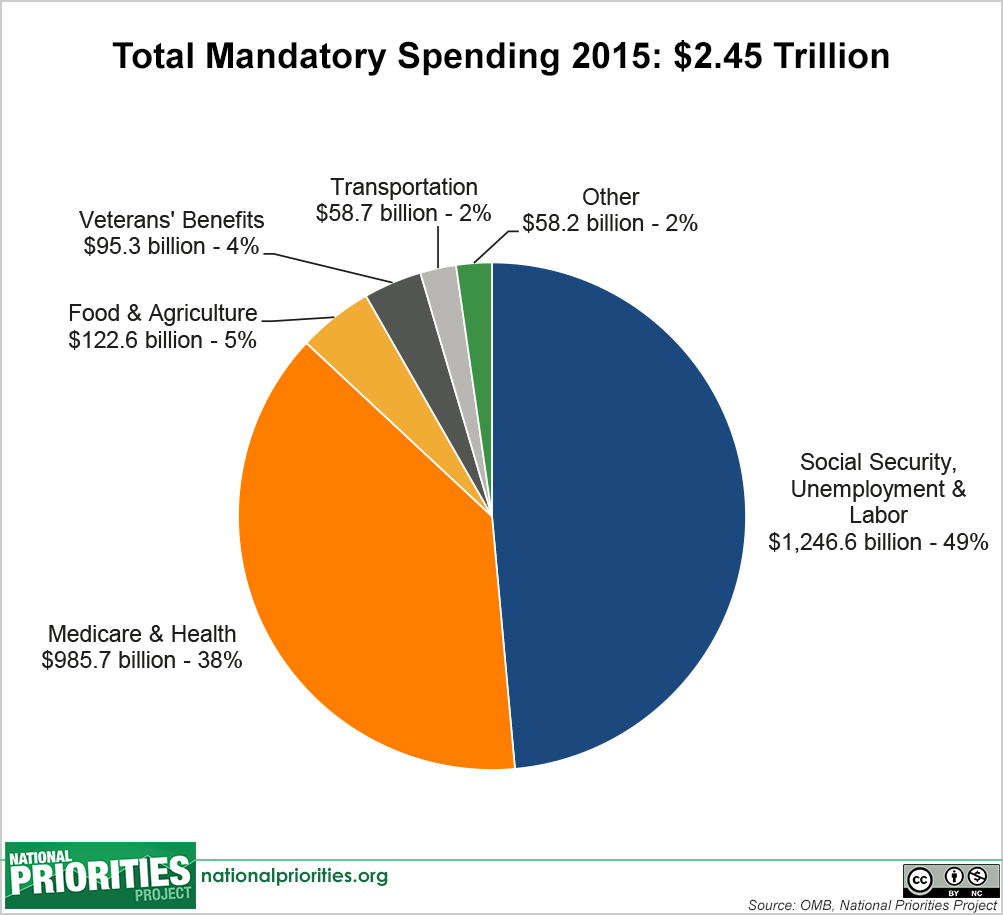
Why do you make a comment like this when the US federal budget breakdown is clearly available online. Most goes to social services benefits, welfare, and socialized healthcare.
In fiscal year 2015, Pentagon and related spending will total $598 billion, accounting for 54 percent of all federal discretionary spending. That's roughly the size of the next seven largest military budgets around the world, combined.
China can do this because their technocrats have no issue demolishing the homes of half a million rural folks to help the urban elites. There are trade offs in a democracy, it is designed to be slow because as a feature everyone has a voice.
We don’t get shiny trains, but we might have a more stable form of government?
I don't understand the nuances of Chinese property law, but I doubt you would see things like this if Chinese authorities could run people off their land for any old reason:
They can just demolish it, because it is their property. It's just the local authorities are stubborn in upholding the illusion of there being a choice in the matter. The media then got involved and it no longer became worth it demolishing it since it sets a good example for public opinion, and the owner will move out eventually anyways.
I'm imagining that L5 vehicles will be able to travel at vastly higher speeds than human drivers, on a dedicated high-speed autonomous highway network, which could be constructed at a fraction of the cost of rail infrastructure. We would want that because it would eliminate the last mile problem.
The reasons why we wont have a high-speed train network any time soon, in priority order (my opinion):
1. Eminent domain and generally-high construction costs make the initial time and money outlays exorbitantly high, resulting in projects never getting off the ground or having to compensate with much-too-expensive tickets
2. Even if you get to the middle of another city, having to rent a car to get to where you need is a pain. It's easier to drive from Dallas to Houston in a car, because you have a car at the end of the trip. Only some cities have fast public transport; the rest are so big it's hard not rent a car or Uber everywhere, both options are expensive and time-consuming.
3. Trains likely take more time than flights for the mid-to-long distance journeys planes are good for.
4. A cultural lack of interest in passenger rail. It's just not a part of the culture, and is seen as weird/enthusiast thing to do, unlike in Europe, India, or China.
3 is underappreciated and incredibly important (it should be #1) for the simple reason than labor cost. You have to pay flight attendants/rail attendants and that starts adding up.
Moreover a rail attendant/engineer for a long haul trip cannot be back at home to family at the end of the day, for a transcontinental flight attendant or pilot it's possible, so the labor pool is meaningfully different, and supply and demand is a thing.
> Moreover a rail attendant/engineer for a long haul trip cannot be back at home to family at the end of the day,
That would be problematic for some long distance train connections in germany as well (north-south connections), but they just schedule around that: attendants change mid-journey as needed.
You don't need attendants on rail at all - what is there for them to do? For flight you need them to oversee preparing for a crash trains should get this failure mode should be designed out - which does imply doing the regular maintenance and using good safety systems. Just give a small discount to anyone with current first aid/CPR and you can be sure there are more than enough regular riders to take care of the remaining issues.
Even if you do decide you want attendants for some reason, train should stop not less than once an hour, which means the crews can get off the train after 4 hours and staff the one back home. (I don't believe freight rail shouldn't do the same, but they have different operations from passenger rail such that more than an hour between stops might be reasonable)
Note that if the train really is going through the middle of nowhere at one hour you just pick a random dot on the map and grant it a station just to get your stops. The cost to stopping a train is less than 5 minutes for the full trip (this adds up if you stop every few km, but when it is once an hour it isn't a big deal)
Not true. You need people manning the cafeteria car, cleaning the bathrooms, checking tickets, etc.
>train should stop not less than once an hour
The Southwest Chief goes from San Bernardino, CA to Albuquerque, NM in 14 hours. It makes 8 stops along the way, inclusive of the endpoints. Your point here still largely stands, but these long haul trains most certainly do not stop at least once an hour.
So no food options on a 14 hour train? The train's losing a lot of captured audiences there and people like to... eat. In that time the average US person eats at least three meals, you simply can't pack that much, especially for a family.
> Do it at the end of the line when the train is stopped.
Ever been to a music festival and looked at the toilets at the end of the day? Now imagine you're in a semi-airtight tube with that for 14 hours.
> Amtrak is a bad example for anything. They are running tourist trains, and should follow the practices of cruise ships not modern railroads
Have you ever taken one on the East Coast? They are not tourist trains, they're commuters and travelers.
Train trips of more than 5 hours run on cruise line principals and are not about getting to a destination. Any train for those trips is a tourist attraction and should pay for itself and all crew needed. Boston to NYC isn't 14 hours, and should not stick to steam train principles.
As for food, get off at any station and eat.
Yes bathrooms beed to be cleaned. However that is one person who cleans them between 2 stations and then nobody for the next station, and someone the station after. (This is an example, the real way to handle it might be different )
Checking tickets can be done by not allowing anyone on the platform. Or world best practice is random checks and large fines if you are caught without a ticket.
Breaking rules is tricky. There is some need for that, though there are options, though in the end I will grant you this.
Trains should never serve food or drink. Passengers can get off the train at a station when they need that, and get on the next train. Space used for the food and drink is space that could be used for more seats. There is a reason all railroads have been trying to do away with food and drink service. It is considered bad practice everywhere.
> Trains should never serve food or drink. Passengers can get off the train at a station.
There aren't going to be stations all across Nebraska or what have you. And even if there were, stopping repeatedly would defeat the purpose of high-speed rail. All that time speeding up and slowing down starts to add up very quickly.
Don't forget it would massively extend every stop. At least an hour+ at each station if you expect every passenger to detrain (with their luggage, because they're not leaving it on the train), wait in line, probably dawdle and then reboard.


I also hear funny arguments (in my opinion) about why high speed Rails are a bad idea. Oh it's too expensive. Oh it is ok for countries like China because they have lot of people etc etc. Excuses. I thought we like choices as Americans. Right now, if I don't want to drive, my only option is to fly mostly in a shitty plane cramped up with strangers on a 4 hour flight. I would gladly trade that with a train even if that takes say an additional hour or so. Are Amtraks the best we can do America ?