This isn't discussed much, but I think homes would become noticeably more affordable for families just by having the government stop subsidizing the mortgages of investment properties (e.g. only one mortgage subsidy is available for each family). This isn't even getting into tax write offs which are too complicated for me to understand the consequences of changing.
As it stands, mortgage rates being below the rate of inflation make housing a very attractive investment.
The sources of mortgage subsidy that I am aware of are secondary market purchases:
  * Federal reserve mortgage purchases
  * Fannie Mae/Freddie Mac mortgage purchases
A big portion of quantitative easing by the Federal Reserve is buying billions of mortgages every month. The Fed is trying to start unwinding this now, but they have had trillions of mortgages on their books since the GFC.
The subsidies aren't the root of the problem. It's municipal zoning laws. Just look at Japan. Went from having the worst housing bubble in world history to affordability in 20 years thanks to sweeping zoning reform.
Your point should be a pretty easy hypothesis to test, you may not know this unless you are from Texas but Houston effectively doesn't have zoning laws.
Cost of living calculation between Dallas and Houston says costs are roughly 15% different (as apples to apples a city I can identify to isolate zoning effects). So definitely some effect and a good lever to pull (in addition to others I am sure.)
I agree that zoning reform is part of the issue, I think zoning reform combined with other tweaks would go a long way.
I think that multiple issues cause these problem, we have runaway negative feedback loops in multiple areas, the problems has evolved organically over time so I doubt any one factor is enough to resolve the issue (as nice as that would be.)
I'm not making the assertion that zoning is the sole issue so I don't need to defend it but I figured I could take a quick look and bring some numbers into the mix so we have some numerical grounding for conversation and exploring the problem.
I lived in the Museum District/Third Ward in Houston for almost 2 decades now. Houston definitely has zoning. We just don't call it zoning. In fact, in addition to stealth zoning, we have neighborhood based facility also where even people in a neighborhood can tell you to piss off.
I'm not familiar with the ordinances in Dallas, but I think this may not be as much of an apples to apples comparison as you imagine if the thesis of that comparison is that "Houston has no zoning".
You have to find an actual free city to do the comparison.
So, I've lived in both Dallas and Houston (and Austin). Zoning has nothing to do with the price delta. It has more to do with employment, jobs, income, etc. The market will charge what the customer can afford kind of thing. Same reason RE in Austin is much higher than Houston or Dallas. It's all about tech money and influx of wealth from coastal cities. This is not COVID, it's just Texas - although, the supply shock really threw things out of whack. Years prior, we always did good enough to keep supply coming online at a reasonable price. Shutdown, commodity prices, supply chain, etc destroyed that and prices.
Anecdotal, but Greater Houston differs from DFW as it's more blue collar and DFW tends to be fairly white collar/corp focused. Ironically, Houston also has much more wealth. So what this means is DFW feels like it IS middle class with some lower, some upper, and a few Mark Cuban's. Houston has a whole neighborhood of Mark Cuban's, you see lower income everywhere, and it's kind of unclear where the middle is. In the exurbs? Is exurb A a middle, upper middle, etc. it's not clear where those lines get drawn. Dallas in particular is more segregated on income (which is correlated with.. you know) with the southern part of town being almost exclusively lower income. Houston is more integrated in this regard, there are pockets of wealthy areas surrounded by lower income areas and the folks interact with each other.
I actually don't hear a ton about the big money buying here in Dallas (Zillow, etc). It's just people that sold their west coast house for $2M+ and move here cash rich. I see a lot of mid-lifers so school district & distance to office is the biggest draw for which areas are seeing the largest price gains.
Not only this, but clearly whatever zoning laws are in place are not hindering new home construction in and around Dallas. Uptown, Deep Ellum, Design District have all had enormous booms in the last few years near downtown, and Cedars is currently having a new home construction booms. That's effectively every neighborhood anywhere near the city center. So it's not like you can't build new housing inside the city limits. The biggest factor delaying the projects right now is it's too easy to become a homebuilder, so many of the people don't know what they're doing and are way behind schedule. There also seems to be a shortage of licensed tradespeople. But it isn't hard to get approval to build.
Agree, zoning laws here are not meant to hinder new construction just control it's use. However, permitting went from ~30 days to about 6-12 months in Dallas. Supply is still causing a shock and construction just takes longer now as materials get delayed, etc. and it messes everything up. The trades are less capacity. They stayed busy though lockdown, or moved back to their native country to ride it out. I know several that just never came back. There are a lot of contractors turning builders, some delay due to their inexperience, but I don't see that as a widespread issue. But all in all, you see a lot of construction around but it's actually probably less finished goods than what was occurring in 2019. The lack of property and prices means people are building on any dirt they can find. I've seen some insanely horrible tracts of land get developed because all of a sudden, prices being what they are, it now finally makes sense to invest $250K in dirt work. I've seen land that has been for sale for 10+ years due to nobody wanting a 100% flood zone get developed in the last year; again because there's nothing better available and people have the $ to fix invest in drainage.
Dallas itself is competing with it's suburbs, Plano/Frisco etc. The development you see was planned 2+ decades ago and really only a surprise to folks that don't keep up (most people, I know, but I tend to keep up with this stuff and like to buy and hold land ahead of development). Bishop Arts for example has been a 3 decade overnight success, similar story with other areas you mentioned. Many of those areas I felt like they took way longer than they should have to get developed, and it's because all money goes north to the burbs. Uptown is about as far south as most money is willing to go. Design District, Deep Ellum, Cedars are proximity plays after Uptown got kind of expensive.
I don't really do much nightlife stuff. But about 10-15 years ago, Uptown was like the young professional/college kid place to be. Many of those folks moved to the burbs after a certain age. But many stayed. Now the prices are high, it seems like it's more full of those same folks that never married, never had kids, etc and just happen to be 10-15 years older. I think it still has the reputation but realistically, younger crowds (<30 or so) don't seem to spend much time there anymore in favor of Deep Ellum, etc.
My understanding is that japan does have historically protected districts, they call them preservation districts. I think it would be really helpful to have someone actually dive on the details.
Houston does rely on a lot on developers being able to put "deed restrictions" in place, which seems like their free-market/libertarian/state enforced private contracts solution.
I'm not familiar with Japan but their property laws are not unregulated so I think it's worth sussing that out so people can properly back their assertions with arguments and maybe we can derive a defendable % cost impact from zoning laws.
Japan has serious zoning law, but the issue is that it's reasonably scoped zoning that doesn't do things like "only single family homes here, no commercial properties including ban on corner shops" - they define what could be termed maximum allowed nuisance level, and the defined categories create a spectrum with overlap at both ends of each category. Even category 1, low rise residential, permits low-rise multiple units, small offices and shops etc. as well as certain public utility buildings (schools and the like). Compare it with zoning (or zoning hidden under other bylaws) in USA where you can end with a big area that permits only single family houses - no shops, not even a small grocery store, etc.
Do you have any examples of buildings like this, I've looked but can't find examples online? It seems zoning has a 15% overhead (all things being equal and as best as I could argue with the data I've found so far), maybe it's higher but I haven't found articulable/shareable evidence of that yet. IANAL, so hopefully an expert on HN can help chime in.
I've looked (links below) and have done more querying than a comment thread like this probably warrants but wasn't able to find your assertion articulated anywhere.
Neither Japan or Houston are unconstrained free-markets without land use control so I'm doing my best to roughly/quickly tease out zonings isolated impact on affordability. Neither locations have 0 laws so they are close to apples to apples and since we're just doing relative comparison I'd rather keep things data driven. Houston has deed restriction but that is a simple free-market/libertarian private contract solution. Does Japan ban deed restrictions? Both japan and houston have historical zones
I've linked these two jstore articles as well as a more digestible video.
If there's enough bylaws that the only building you're allowed to build is in the shape of a SFH with a driveway, that's the only thing that will get built
Houston has a lot of other land use restrictions. I should have been more specific. Even without zoning, you have rules like floor-area-ratio, parking minimums, setback requirements, etc.
Tokyo actually isn’t growing that fast in population. They just construct a lot of homes there because the Japanese don’t like to buy second hand ones (so tear down the 30-40 year old house and build a new one).
40% of homes in my city were bought by institutional investors with basically cash offers that no one can compete with. They openly state the point is to corner the market on a scarce resource and drive up rents which are also up 30+%. This is clearly a problem zoning or not.
The zoning laws didn’t change in between. Japan got burned on property speculation, and no one no longer sees residential real estate as much of an investment. Also, no one wants to buy second hand structures, so your appreciation is limited to land and the existing housing on that land is a liability (buyers have to tear it down before building a new house on the land). Japan has a large amount of housing starts because they have a large amount of demolitions. Liberal zoning allows for this, for sure, but I’m not sure many Americans would be willing to go that route.
2) Unfuck building codes. Person signs their own death warrant? Let them live in a yurt or a the kind of shack people keep their garden tools in. There's a county east of Tucson like this, guess what, people no ded.
3) End all subsidies and government involvement in mortgages. Best way for skyrocketing price is for government to guarantee loans in a way a relatively free market would not.
4) Permit fees dropped for building housing. Cost of evaluating permits should drop without zoning or building codes. Only examine development to make sure it doesn't cause imminent harm to those outside the property line.
Zoning fixes are absolutely required, but Texas (particularly Huston) is not a good model. While many places in Texas don't have so-called 'zoning' they manage to implement pretty much all the restrictions zoning reform advocates want fixed through things like land use restrictions on deeds (which are even tougher to reform than zoning)
Japan is the model I'd like to see: inclusionary zoning. A small number of zones that allow for maximum use.
This might have the opposite effect. Permits and building codes are there for the lender. They want assurances that the property is going to last for at least the duration of their loan. If lenders decide these deathtraps aren't worth the risk, and they have no way of offloading that risk to someone like the government, they aren't going to bite.
The entire housing industry is designed around lending. If policies are make that screw with the status quo, the industry is going to collapse then reform around the new one, and that could take decades.
We have regulations for a reason. When you blindly get rid of all of them, history repeats itself. We find ourselves looking to solve the same problems. It wasn't that long ago in the USA when entire cities would burn to the ground because a cow kicked over a lantern because lack of building codes meant buildings weren't built with safety in mind.
> Permits and building codes are there for the lender.
Aight, so if I'm the lender for myself let me nix them. If they're for some third party lender, let the lender and lendee solve that through private market rather than government. Surely someone can be trained to inspect a house.
> [ mention of Great Chicago Fire ]
The classic "make hundreds millions of people work for decades to afford a house, costing tens of millions of lifespans of work so we can save 300 people once a century from the great Chicago Fire". The calculus there is way way way off.
I'll take my chances.
>It wasn't that long ago
It wasn't that long ago housing was far more affordable.
> because a cow kicked over a lantern because lack of building codes
You've fallen victim to a big tale, like santa clause. No one knows the cause of that fire. We do know that many of the conditions were completely unsubject government, such as a windy dry spell.
>We have regulations for a reason
They're there for good reasons, unfortunately the worst tyrannies and misdeeds happen at the gunpoint of those who purport to be acting for the common good. Building codes in practice are as much about taking your life away as they are as preserving it.
Building codes aren't nearly so bad as zoning and the NIMBYism that is strangling the country. There's certainly room to liberalize building codes, but I don't think the impact would be as large as one might hope. Liberalize land use please.
Everything you just wrote sounds like a good thing to me. The fact that housing is structured around lending in the US is part of the problem. It should not require a loan to get a roof over your head, and combined with zoning making basic housing illegal, there's a lot of perfectly sound shelter that cannot be legally constructed in the US.
I believe that one of the things that make Texas more affordable is high property taxes. It keeps people from borrowing more money and competing as aggressively on price. So they pay in Taxes what they would be paying in interest. Taxes at least are spent in the community. Schools, roads, parks, etc.
Housing prices have little to do with property taxes, just in how the amount levied is paid by homeowners, not in the amount levied. The reason property taxes are high in Texas is for the same reason they are high in Washington state: no state income tax. That doesn’t really keep our housing prices low, however.
Texas sucks just like almost everywhere else. Oregon's reforms we're pretty aggressive though. The entire Portland metro area is zoned to at least quadplexes in residential areas, and duplexes statewide. No SFH zoning allowed. California I think only made the minimum two units.
I think it could be greatly simplified by holding the building owner/manager criminally liable for defects that lead to major injury or death, and civilly liable for smaller defects.
There's no reason for the government to have an opinion about what type of concrete you're using or how many feet of wire you're using. They should be policing outcomes, not hiring and sending inspectors all over. If a building collapses, the people who own it and the people who built it should go to jail.
And insurance companies can come after the owners for the smaller problems.
How is "let the building collapse then send the owner to jail" an improvement over "don't let the building collapse"?
Why would we get rid of building codes, but then still jail people who don't follow the old building codes that we just got rid of. All this would accomplish is sending well-meaning people to jail, just because they didn't know their house had a serious problem, because we got rid of the building codes.
The argument is probably something along the lines of "most building codes are costly but not necessary for safety" aka "it can be somehow done significantly cheaper but just as safely, a way that doesn't follow the building codes".
I guess it comes down to comparing the risk of poor quality housing vs the risks of homelessness. Kind of like that saying "the real minimum wage is zero"
For many of those people, it's not a risk of homelessness but rather that they would have to rent someplace outside the favela at a much higher price, one they may be able to barely afford. Sort of like in the US, where zoning/building don't generally make people homeless but instead put a person into the situation of the favela dweller who has the option to rent while paying a large portion of their income, except without the option to build their own sub-code housing.
No one wants liability. Builders wants to build and be gone ASAP. They'll build a $350k home using the cheapest parts and labor they can find and do their best to run away with the profit. 5 years time, after any sort of warranty, their workmanship (or rather, their lack of it) starts showing.
I think your idea would be great, but there would be turmoil while the liability hot potato is thrown around until the industry figures out where that lands (probably some form of "malpractice insurance" on builders would become a thing, with higher premiums on those who suck more, eventually forcing them to be better or quit entirely).
I’ve developed a heuristic where anytime I hear phrases like “affordable housing”, “make college affordable”, “affordable healthcare” I simply translate it to “unaffordable”.
Inevitably when these become government programs, they simply throw money at the problem without addressing fundamental supply and demand issues and accomplish very little except drive up prices. Then, when investors see prices going up and to the left, they rationally throw money at it in a way to make even more money, which drives up prices even more.
There’s a really good book I recommend called “Systems Bible” [https://www.amazon.com/Systems-Bible-Beginners-Guide-Large/d...] that beautifully articulates this phenomenon in a way that applies to government policy, software systems, management, org structures, or any complex system of people or machines.
It's insane how these once affordable services like healthcare or university, that you could pay with a summer job, now take years off your life.
You may enjoy this article [0]. To quote from it:
> In the past fifty years, education costs have doubled, college costs have dectupled, health insurance costs have dectupled, subway costs have at least dectupled, and housing costs have increased by about fifty percent. US health care costs about four times as much as equivalent health care in other First World countries; US subways cost about eight times as much as equivalent subways in other First World countries.
That would require a much larger change to the tax code as currently interest on business loans are tax deductible. I suspect changing this would be a good idea, but it’s a huge change.
The obvious fix is a nationwide property tax that doesn’t apply to primary residences, but again it’s hard to say what that would do.
Somehow there need to be less incentives for investors/hedgefunds to buy up homes and more help for people who need housing and are increasingly priced out of the market. Housing affordability is a serious crisis right now and neither political party seems to be recognizing it. The party that makes this a priority and actually addresses the underlying problems could do well, but neither of them are taking it as seriously as it needs to be taken.
> Housing affordability is a serious crisis right now and neither political party seems to be recognizing it.
Why do you say this?
There have been numerous bills introduced at the local, state, and federal levels which specifically aim to address housing affordability. Seriously, just type in "affordable housing bill" into your favorite search engine and look at all the articles coming up from the past six months.
My local city council has affordable housing on the agenda for several of the committee meetings.
None of the local "affordable housing" actions I'm seeing seem like they actually address the problem at the level it needs to be addressed. They give incentives to developers to build a certain number of "affordable" units which must stay "affordable" for X number of years for them to get their tax breaks. In the meantime they build a lot more high-end units and very few mid-level units. Mostly this seems like a gift to the developers. Do we get some more affordable units? Yeah, but it's a drop in the bucket and after some number of years they can go back to market rate. People are on waiting lists for these "affordable" units for years. These units are reserved for people making some percentage of the poverty level income. People in the middle get nothing.
In my area/state they've dropped most of the zoning restrictions for locating apartments and ADUs. So you can add an ADU (a small dwelling that can be rented out), but that takes capital that most residential homeowners don't have. Add to this the fear that by building an ADU your property tax will likely go up very substantially and there aren't a lot of takers.
tl;dr Most affordable housing efforts are currently aimed at people who make poverty level incomes (and that's great). I don't see much locally aimed at providing housing that's affordable to folks in the middle. And as rents rise, more and more folks in the middle are not able to afford housing.
That indicates a lack of understanding of how to solve the problem (or, at the very least, a disagreement with you about how to solve it), not a lack of recognition that there is a problem.
You get affordable housing by building more housing not simply designating a percentage of housing to be affordable.
If anything current affordable housing initiatives just make things worse by discouraging new development. Building 10,000 new apartments is strictly better than building 5,000 apartments even if you designate 30% of them to be affordable. The ideal solution is to designate minimum density, so for every acre of land you must have at least X homes.
Wouldn't the obvious fix be elimination of 1031b exchange, capital gains on all house appreciation, and only allowing 1 active federally backed mortgage at a time (with some consideration for allowing a purchase of a new place & selling the old place).
The land appreciates without development on it. If anything, we want only appreciation from developing. If you don't do something to the property, you shouldn't get a profit from it
I think that’s what they where suggesting, however that’s really expensive and hard to implement. If you simply calculate based on the value of the land then a 200 year old house counts as “new” development etc.
Worse it doesn’t actually help. The incentives are there to develop land it’s only local zoning that prevents it.
They've eliminated this deduction in both the UK and NZ in the past couple years, at least for individual landlords. NZ does allow it for new builds to incentivise construction of new housing.
Big landlords already incorporated in the UK. Small landlords (the majority), who haven't yet, just move in that direction and get screwed with legal and accounting costs, but otherwise nothing changes.
Most limited company buy to let mortgages in the UK are underwritten by a directors personal guarantee. It's just a technicality compared to a personal mortgage and so only shakes out the laziest of landlords
It’s a lot more complicated than that with a mix of short and long term effects. It should make home ownership more desirable, but taxes don’t destroy wealth so lowering income taxes for example could largely offset any increases in rent.
Further the value of property would decrease, but the cost of empty properties would increase. That would put downward pressure on rental costs.
> having the government stop subsidizing the mortgages of investment properties (e.g. only one mortgage subsidy is available for each family).
I think you are confusing home loans (which are subsidized) and business loans which are not subsidized).
Fannie Mae/Freddie Mac loans are only on 1 primary home and 1 secondary home for individuals. These loans are limited and really don't work in high property value states. You should google the difference between "conforming" and "non conforming" loans.
You might be thinking of the mortgage deduction on the income tax. Trump already did this. This only hurt young people in high property value states.
Business real estate loans are more expensive because they are not subsidized. However, businesses do pay taxes only on earnings (income-expenses). Loan payments are expenses that reduce the earnings. Good luck on getting rid of business expenses. Yang proposed changing the tax law because of this.
All this means your proposal would have a very limited impact. It would only hurt individuals who live in an expensive property where the homeowner has mostly paid off their mortgage (old people) and used the principal to buy a rental (up to 750k).
For Freddie/Fannie: some sources say that they support investment properties for conforming loans [1]. They have information about loans for investment properties that I am still trying to make sense of [2]. I have seen other sources say they support loans for 10 properties.
Even if the support were only for 1 secondary home, why should the government be subsidizing this?
I understand these policies work differently in expensive markets. But as per this article, investors are targeting rentals in less expensive markets.
Idk how this translates into policy if it's even possible, but people just shouldn't be so attached to home ownership. It's a not a great way to invest your money and it doesn't make any sense at all to tie your personal net worth to a piece of real estate you rely on to live. In high cost areas especially, renting is usually more fiscally sensible.
On the smaller scale, and for certain kinds of multi family purchases, government-backed financing is available and it is usually cheaper than what one might find on the private market
Not for the mortgage itself, but real estate investors typically pay very little tax on their rental income. You can take depreciation, and deduct maintenance/repairs, property management fees, property taxes, insurance, etc. in addition to mortgage interest.
Are you suggesting a business should pay tax on the gross income, regardless of their costs? A store should pay income tax on the gross sales, without deducting the cost of purchasing the things they later sell?
So if they increase interest rates, buyers won't buy the homes that would liquidate their balance sheet and prices would drop as well, undercutting the value of their balance sheet.
So what is the Fed's motivation to raise interest rates to curb inflation in this case?
Housing will never be relatively cheap until it’s easier to build a house. It will never be easier to build a house until zoning is more lenient.
No state is incentivized to make zoning more lenient. Therefore it falls on the federal government, who lack the authority.
The only thing they can do is something similar to what they do with the highways and threaten to take away funds unless all plots of land can be zoned for up to 4-family houses (FHA limit).
Potentially quadrupling the amount of housing will do it.
Zoning is an issue but there's also the onerous costs to building something today even when you do have the zoning to add capacity to a given lot. For example, you might notice every apartment you see has a balcony. That's because code dictates balconies for every living unit, meaning the build just got that much more expensive per unit just because some people on city council 50 years ago thought apartments with balconies were more seemly or something. There's also long review periods. It's typical even in growing urban areas to see lots bought for development, raised, then seemingly left to sit vacant for years sometimes even with earth-moving equipment or cranes laying idle, biding time, while the permits cycle through the purgatory that is the building office in city hall.
This is all the result of corruption. City councilmembers in cities across this country found themselves in the position of kingmaker. Decades of entrenchment of the political class saw this role refined, distilled, and now it's practically impossible to remove the layers and layers of ossified process that has corrupted anything we do. This is why housing is not being built, why construction costs on projects are so high, why timetables of doing anything at all are decades out, and why the FBI indicts major local politicians for corruption every year. Decades and decades of systemic corruption that has not ever been rooted out has led us to this current broken state.
> Decades of entrenchment of the political class saw this role refined, distilled, and now it's practically impossible to remove the layers and layers of ossified process that has corrupted anything we do.
I would love to see a federal regulation stating that any housing construction permit that isn't reviewed within ten business days is automatically approved.
Not all states are that bad. In the midwest things tend to be approved much faster. Which is why our housing costs are not as bad as CA (still not great, but they much more reflect the cost of building)
That's because there isn't usually enough demand to really set up a good building office greasy palm operation, but corruption certainly happens there too (Cuyahoga county has seen issues over the years and Chicago alderman corruption is legendary). If you don't have demand, onerous building process will just turn developers away and they will opt to build somewhere with about the same demand and less process. Sometimes that's even used as a tool to quiet development on purpose. If you have a situation where there is a lot of demand, like in the bay area where they've added 7 jobs per unit of house constructed over the past decade generating huge latent housing demand, councilmembers know they can make the process as slow and unforgiving as they want and developers are still strongly financially incentivized to build to meet this huge demand, and not only will suffer through the process but will often actually pay the councilmember a bribe or echange favors in some way to speed up the wheels. The more obtuse and complex the process, the more levers a corrupted official can pull to speed things up or slow things down and keep it looking like routine process on the face and out of the press, until the FBI finally gets prosecutable evidence of quid pro quo and puts in the indictment.
Yes, I'm really disappointed to see so many other comments here that misidentify this fundamental problem. Investors are only interested in housing now because prices were already rising thanks to constraints on building due to zoning.
These investors aren't the ones making the prices higher (or they weren't initially, at least); they're responding to conditions that were already making prices higher, which makes their investment more attractive.
But you don't have to take my word for it; it's literally what they say in their prospectuses:
Everybody has their favorite group that's easy to hate in this space -- it's the vacant investment properties, or the foreign investors, or the REITs, or the rich people with vacation homes -- but those are tiny factors relative to the main driver of this, which is your typical one-house-occupying all-American homeowner who opposes any new housing in their neighborhood.
Exactly this. Investors aren’t buying up housing for fun, it’s because their investment thesis tells them they’ll make a lot of money.
As soon as the prospect of housing appreciation disappears so will the investors. But then we’ll have sad stories about people being underwater on their mortgages.
Massachusetts is trying to force Boston suburbs to lift single family restrictions. Great intention, though i have feeling each town is going to fight for years against it.
It's not compulsory and it's not lifting, only requiring multifamily zoning around transit catchment areas. Towns that refuse to implement it lose out on state funding meaning the wealthy towns are free to ignore it. Perversely, those towns will now cost even more to live in because they need to offset the lost state money.
> No state is incentivized to make zoning more lenient.
Zoning is largely a local issue. And zoning is talked about a lot at local council meetings. The problem is people have very strong opinions when it comes to how the place they live will change. It's trivial to get a sizable contingent of people to oppose zoning permits.
There's a huge argument going on a few towns down from me as to whether a 100yo, vacant building in disrepair should be torn down to make room for a community center. One would think this is something obvious that would go unchallenged by locals, but nope.
Making zoning a state issue would probably help a lot, but it would piss off home owners. Even early champions of the change are going to hate it when their neighbor's houses get torn down so that a casino or something can be built in their place.
>Making zoning a state issue would probably help a lot, but it would piss off home owners.
Given the current situation in many state governments, this would have huge ramifications. You might live in a mid-size city and have the wingnut state government refuse to let you build any more homo-muslim-crack housing anywhere in the city center. Or the rural/exurb dominated state house will only let you build a unit in downtown if it comes with 3 parking spots large enough for lifted Ford F350s.
Personally, I live in the South in a city where local politics are dominated by the suburbs and it's bad enough already. "Not enough parking downtown" because you might have to walk 3 blocks to the nearest street parking lot, so of course more lots must be subsidized. Huge portions of downtown taken up by 6-lane corridors impossible for pedestrians to cross so that suburbanites can zoom through at 50 MPH. And that's set up by people who live and work 20 minutes away! Imagine the situation if zoning and city planning was primarily determined by car dealership scions who will never come here in their lives.
> Even early champions of the change are going to hate it when their neighbor's houses get torn down so that a casino or something can be built in their place.
Even the strongest critics of the status quo don't think we should eliminate all zoning, so that you'd be able to put a casino on a residential street. What we believe is that you should able to build more residences (and maybe a corner store) on residential streets.
From what I see from zoning reform advocates, many look at Japan as the solution, precisely because in most of japan, residential houses can go in most any zone. Meaning, an old warehouse could be torn down and replaced with SFH without any change in zoning, but theoretically, a gas station or strip mall can be built right next to those same houses.
You can replace an old warehouse in the USA with SFHs. The major difference is the area will have to be rezoned completely before construction starts and the public will get their chance to voice their opinions. This allows everyone to agree on what else may be built on this land before houses go up. Will it be mixed use? Residential only? Are multi-tenant buildings allowed?
Then there's the big issue of who controls zoning? Should it be at the state or local level? Both have their positives and negatives.
What about the new elementary school and sewer lines they are going to need to convert an industrial zone into residential property. It’s not like Japan where we feel comfortable sending our kindergarteners off to the train alone to go to a far off elementary school. Oh, ya, we don’t have a train anyways so it’s even more complicated.
I agree completely. While its fun to place the blame for high prices on the investors, in reality the high prices are for the same reason that we see high prices of everything else: there is a shortage.
Zoning reform is a solution to get out of this mess, but zoning is not the only cause of this problem. If you look at the last 10 years of housing construction in this country, and you compare it to the previous 50 years, you see that we have simply not been building enough housing:
If a nation spends 10 years not building enough housing, high prices are what happen. If you add low 2020 interest rates to the mix, the effect on housing prices are explosive in the short term.
>No state is incentivized to make zoning more lenient.
All states are actually incentivized to increase their supply of housing, because an increasing population allows them to eventually gain greater representation in Congress relative to states with less growth. States like California, New York, and Illinois are losing out to states like Texas, Florida, and North Carolina.
Zoning laws are determined at the municipal level. It's local government that is the problem. State governments have actually started pushing reforms thankfully.
Exactly, this is one of clearest examples I know of where small, local government backfires. For example, my small town recently passed a law allowing all homes to have an accessory dwelling unit. Come to find out the only reason it was passed was because the state required it by law. But within my towns borders there's an HOA that doesn't have to allow them, since of course HOA's are a loophole to the law. I imagine more HOA's are going to start appearing.
I don't think it would take quadrupling. It would take adding enough housing that housing quits being a good investment for investors, so they stop buying up houses and start selling the ones they have. I suspect we reach that point long before we quadruple the supply.
Why? Because investors would have more and more houses sitting empty. That would force a change fairly soon... wouldn't it?
The people electing the officials that make these policies are the ones that want to keep low-density housing. It's suicide for a politician to sponsor rezoing legislation.
We're in the housing hunt right now and we're losing to all-cash offers and ridiculous terms (like months of rent-free to the previous occupany: those sort of terms don't come from someone looking for a new place to live). We even lost on two offers where we were the high bid. We have pre-approval, solid financing and were willing to even waive the appraisal. It's not enough.
Also on the housing hunt and have had the same experience. It's really disheartening to tell someone I'm going to give you exactly what you are asking for and have that transaction, that seems so easy without any kind of counter-offer back and forth, fall apart... multiple times. An article like this definitely brings out a little anger.
You said it. One of the most galling things was sellers' agents that don't even let your agent know that you didn't get the bid (let alone ask for counteroffers). We only found out we lost out a couple times when it went pending on the MLS; we never heard a word. We're just interchangeable piggy banks to these people, apparently.
Been house hunting as well. You know what I've seen more than ever? Seller's agents behaving as jerks. Things we experienced going to open houses:
- Agent sizes us up (I dress down on purpose), says something to the effect of "You know this house will probably sell for even more than (already high) asking".
- Agent just sits around playing with her phone. No shits given.
- Agent sizes us up, realizes we're just window shopping/taking our time, "mansplains" to us "you know how this works, right? 24 hours from now there will be multiple offers and it will be gone"
The other unfortunate thing right now is that loan rates are (finally) spiking. Like > 4% for 30 year fixed. I wish we bought before the winter... And even worse if this keeps up the housing prices will crash just when we bought high. Oh well.
I hate to say it but when you are on the selling side and you are getting all sorts of offers, you just go for the most money and the easiest closing (in most cases). Then it's your turn to enjoy the buyers side of the sellers market... Unless you've decided to just rent for the foreseeable future with your newly attained cash horde.
Do you expect things to get better in the future? I'm not in the market to buy right now, but I'm trying to understand if the current situation is the new normal or still a reaction to covid upheavals. My gut tells me that in 2-3 years things will be much closer to normal as rates rise and people that fled to suburbs decide to move back to the city.
My theory is that places that are inherently more desirable, whether because of culture, geography, or employment opportunities, will remain high. This probably includes most coastal regions and trendy inland spots (Austin, Boulder, etc.).
I think a lot of 'secondary' markets could take a hit. These are places that the main appeal is their current relative affordability or proximity to a more-desirable area. I think buyers that are priced out of 'desirable' areas today are effectively settling for these secondary areas, which is raising those prices. I feel like those will be the first areas to take a hit. How big that hit will be, I certainly can't say. It could be as little as a reduced rate of property appreciation, or it could be as large as a 20% hit.
I'd expect a lot of this depends on where you are. Some places it won't matter a whole lot what happens with Covid/rates.
Friends in the DC region aren't worried as this has been an ongoing trend for quite a long time (they have enough equity that a dip won't matter much). Friends in Southern California would probably say the same thing. But in Phoenix, I already hear some questions as to whether this will come tumbling down in a year or two.
Myself, bought a place (not a city and not quite the 'burbs) last year and I'm still curious about my local market so I still constantly check the real estate sites/apps just to see how things are moving in my area. Would suspect I'm not alone in doing this.
My assumption is that a large percentage of the people who fled NYC/SF in March 2020 are either 1) going to miss the city once it fully reopens and they remember why they lived there in the first place; or 2) their "remote forever" job is actually going to become hybrid and they won't want the 2 hour commute.
Probably not. The majority of the tenants in my building are young professionals and empty nesters. Families with children come through but are gone after a year. Once you're on that track it's very hard to go back to city living. Space is at a premium and kids need space for 18 years. I assume the suburbs are made of people that love suburb living (so much space!) and people with children.
Outside of finance and government there isn't a large sector in most cities. Most businesses are in cheaper, suburban office parks. So beyond the social and cultural aspects there aren't that many advantages to city living, IMO.
I'm sure some people will return to cities, but I feel that many will remain in the suburbs. To me, one of the pieces of this surge in prices is due to millenials reaching prime homebuying age. But millenials are also at prime ages for starting and raising families, so I suspect many will prefer to keep the larger size of their suburban homes.
Sometimes (or often?) mortgages and financing can fall apart at the last minute, so sellers often prefer all-cash offers because they know there's virtually nothing that can make the deal fall through or drag on long. Pre-approval is usually done by different people than much stricter people who do the underwriting, so things can fall appart there, too.
When I bought my last house (newly built), on the DAY OF closing, 2 hours before the closing appointment, my mortgage officer calls me to tell me I'd need to bring another $5000-ish (due to a reason I've blocked from my mind). He told me my builder would bring a check for an equivalent amount made out to me, but to make the accounting/financial all legal, we couldn't just "zero each other out". The money had to clear from both accounts. (I wish I could remember exactly the circumstances). And, this money couldn't just be a check but had to be a cashier's check that was guaranteed. It couldn't be cash, either, because it had to be from an account that the underwriters had reviewed and done money laundering screening for.
Due to the logistics of that day, I had to go through herculean efforts to get that cashier's check made. I usually bank with online-only banks, and thank god that I had a local bank with just enough balance to make it all work... And that's for someone who is lucky enough to be able to bring that extra money and to be able to take the day off of work to make happen. I imagine many others wouldn't be as lucky.
That closing could've been easily pushed off a couple days had this surprise made us unable to close that day.
Sellers like not dealing with this, so they prefer cash offers.
It de-risks and accelerates the transaction. Most mortgage based purchasing requires the loan lender to approve the house for the value (even if you are 'pre-approved' for a loan of $X, if the bank doesn't think the house is worth $X it won't let you take the loan out for it). All cash offers don't have those approvals or risks, however slight, and also have no/less time delay - you can close in a week (just a title/deed history search, generally).
Because with cash you have the money to actually make the deal happen. With a mortgage you depend on a bank giving you the money.
A bank says they will lend 75% LTV, you are preapproved for a $2M house, so will bring $500K to the table and bank will provide $1.5M you think.
But wait, the appraisal comes back for $1.6M instead of the $2M you bid. Bank says no problem, we will lend 75% LTV or $1.2M. Now you have to find (within days) $300K. And you can't borrow it because that will mess up underwriting on your current loan.
Or you buy a car before closing. Whamo - your DTI is toast.
Or you have someone open a CC in your name. Whamo - no closing.
One reason I can think of is because the bank does an appraisal and may reject the loan if the appraised price is too low. They don't want to be stuck with a house worth less than the loan. I had this happen several years ago with a house I bid on (I was also pre approved and all that stuff).
Time to close a loan is couple of weeks at the very least (could be 4 or more). The cash offer closes in days. Sellers prefer the latter: bis dat, qui cito dat.
What kind of mortgage allows you to waive the appraisal? Seems a little negligent for the bank. How can they finance something if they don't know how much it is worth?
No, you waive the appraisal contingency; the bank still does their own appraisal. If the property appraises low, you pay the difference. In this market, we kept some reserve for that eventuality to make the application competitive. The sellers want a buying frenzy and that's what's happening, so many properties don't appraise since those values are usually calculated on historical sales.
The bank will only cover what it is appraised at. You have to split the difference with cash. Some banks might be willing to give you different terms (higher apr, more down) but that is generally how it works in my experience.
I'm in this boat too. It feels like a line was drawn sometime in 2020 or 2021: either you bought before then, and now you can enjoy your appreciation and relatively low mortgage, OR you're currently desperately trying to grab onto the last rung of the ladder as it gets lifted above you.
Regarding all cash offers, have you looked at all cash options that are available through lenders like accept, inc [0] or better.com [1]?
I’m in the market for a place now and recently lost to an all cash bidder. Turns out they were using [0]. I was already pre-approved through a conventional lender, but all-cash seems to be the new norm.
pre-approval doesn't amount to much. One thing you can do to compete with cash is to get a fully underwritten mortgage (you need to find a lender that does this). For a fully underwritten mortgage, the lender will give a $10,000 guarantee that the mortgage will close: this makes the offer more similar to a cash offer.
These still have lots of stars. They will close IF property appraises at value you bid. Heads up, in a multiple offer scenario it very likely WILL NOT.
I went though exactly that, and it's disheartening, indeed. I was fortunate enough to finally get my financed offer accepted, but only because the sellers were explicitly rejecting cash offers from investors. It was a family home, and they wanted it to go to someone who would maintain and live in it. Keep looking, keep trying, and maybe you'll get lucky too.
I dunno, I'm looking for a place to live, but ideally starting in July, so if I can get a better deal by offering the current owner/tenants free rent until then, that'd be perfect.
If you're starting a job in a new town in March, it's not a great option, but if you're looking months ahead of your preferred move date, why not?
Another why not-- you've just signed a tennancy lease. If they don't voluntarily leave on the assigned date, you need to run eviction proceedings.
where do you start? what grounds for evicition? Unpaid rent? You've already agreed that rent is zero...
Why would a REIT/Private Equity not care about this? Because their goal is to rent the property in any case. Professional landlords already have this in their risk models.
Trespass; at the expiration of the lease period, without an agreement (which can be inferred from acceptance of rent after the expiration, so don't do that) the tenants become trespassers.
> Unpaid rent?
That or other lease violations are typically only needed as the basis when the tenant has a current rental agreement. (Either in writing or inferred from acceptance of rent by the landlord.)
But, yes, the potential of having to deal with the process isn't something that should be ignored (nor are all the positive obligations on landlords.)
Why not pay thousands of dollars to let someone else live in your house for free? Is that a serious question?
The idea of rent-free occupancy wasn't even a thing two years ago. It's just sellers taking advantage of the current market where a lot of the buyers have no intention of living in the house and so a few months of rent-free occupancy make absolutely no difference as long as they get to buy the house.
No, for a house. If I'm spending $600,000-$700,000 on a house, paying $600,000 + three months rent is still on the lower end of that range. It's just a different structure, not more money.
Sure, but a month's rent is something like 0.5% of the cost of a house. If they simply offered 1.5% more for the house to get the one they wanted would anyone say "No person actually looking for a place to live would do that"?
$10k on the base offer or $10k in "free rent" is $10k either way.
The difference is that if they increased the price by $10K, you can get the loan to pay them, and you amortize that payment over 30 years. Many people are financially stressed enough to pay the downpayment - essentially you are saying the downpayment should go up by $10K. They may not have that $10K.
Yes, this is a very material difference to a lot of people, but the original claim was that it's something that only a speculator would do. I'm saying that as a person looking to buy and move into a house, this is 100% something I'd be happy to do.
Where I am, I'm seriously considering down payments in the hundreds of thousands. Should houses be that expensive? No, I personally believe we should build so much housing that it tanks the market. But the reality for people trying to buy a house here (Austin TX), +$10k to the down payment is insignificant compared to the price variation between home A and home B.
I wanted to highlight the alternative approach take by China. I don't agree with what their government, does but its useful to see what they're doing.
China has essentially realized they're in a demographic crisis so they've enacted the following policies:
- Stopped their speculative debt fueled housing bubble, this I hope makes it affordable for their citizens to own homes, without prices skyrocketing.
- Stopped for profit educational institutions, this is so that education and specifically tutoring aren't exclusively for the rich.
I think they're enacting policies for childcare as well.
Given in the US investors are buying up property, and costs of both education and childcare are skyrocketing. I don't see how the US won't avoid a demographics crisis as well.
The US can't mandate its industry to follow a similar approach, but can't the government provide stimulus or some other Manhattan Project type drive to encourage entrepreneurship and companies to start and resolve these underlying issues?
Why look to China when we can look to Japan? They had the worst housing bubble in world history, now housing is affordable. All thanks to a streamlined national zoning code that took power out of the hands of local government. There are twelve nuisance levels and you can build anything that falls below the maximum allowed nuisance level for a lot, no community approval process necessary.
Oh yes, I've seen videos about Japan's approachable housing. [1]. I'm sure Korea and other Asian nations have similar approaches.
I mainly wanted to highlight a market driven approach that works with the other industries in the US as opposed to a government directed one. Albeit the government provides stimulus of some type to kick start it, like how NASA drove the privatization of Space and now we have lots of launch vehicles via different companies.
Japan's population has also been flat since 1993. It's quite a different situation. Many countries have struggled to maintain sufficient new housing development to keep up with rising population numbers.
it appears that the US is heading in the other direction, with mandates to force developers build % affordable housing. Just let developers develop. Rich people move up, middle people move up, making the cheap places cheaper for low income residents. It's all backwards
China's alternative approach is hukou, which is in practice the only way US superstar cities could get what they want, to be both quaint and affordable: just ban people from moving there. China is allowing the countryside to urbanize but they are doing it at their own pace; it's not a free for all where every bright kid from every backwards place is simultaneously bidding up the price of housing in Beijing.
In the US these kinds of internal migration controls violate the Equal Protection clause, so they are mostly a pipe dream. Like anywhere, the US has a lot of places not worth living in, but the people from those places are all able to compete for spots in the cities, so those spots will necessarily be competitive.
So if that's the case, won't investing gov't funds into those uncompetitive places (e.g., by moving gov't agencies there, moving some industries that could move there etc) even out the level of competition?
Rather than spending money subsidizing the poor in these competitive places, it's better and cheaper imho, to add/create a good place to be in a currently bad place.
There might really be the magic window, where a place is big enough for real opportunities and amenities but small enough for cheap large-lot housing, high-mileage low-traffic commutes, and ample free parking. But if it exists, it's very narrow. We have no track record of getting population centers into that window or holding them there. Most population centers, whether driven by government spending or not, either undershoot or overshoot it in the end.
We have thousands upon thousands of towns sustained by the local military installation, prison, defense plant, research lab, state university, etc. Even some mid-sized metro areas where the economy is mostly Medicare. Usually it is more of a life support thing. They're too small to be desirable. On those occasions when they do take off and become desirable (defense spending made Silicon Valley!) they quickly become competitive.
Rather than trying to manufacture and maintain dozens of places on this knife's edge Goldilocks window for postwar sprawl (that may or may not exist), we could instead choose a building and transportation architecture that provides a high quality of life at reasonable cost over a wider range of population levels.
There's just too many folks here who'd rather make a quick buck then provide some longevity to the nation (at the top and in politics).
China and other nations realize that there is more money and happiness in the long term view, so they're either pivoting or have pivoted. I'm afraid we just don't have the gumption / community oriented view to do that here in the USA. Folks want "freedom", even if that freedom means degrading into massive poverty / wage slavery. I don't blame them particularly, our education system massively touts the successes of USA above all.
Seems like there has been pretty heavy asset inflation across the board for the past ~decade and investors are desperate for returns. I mean it seems to make sense, the ultra cheap money isn't really available to most people. Most people's marginal rate is probably a credit card at 20+%.
Big businesses/very wealthy can access very low rates by 1. pledging collateral and borrowing-> buy assets-> pushes asset prices up-> collateral worth more-> back to step 1.
With houses they know the average person(who is a homeowner) will fight tooth and nail to keep prices high. Especially people who have bought recently. The higher prices are the more incentive people have to keep them high as it becomes a greater % of their net worth. Tyranny of the majority.
Feels like in Canada we are basically seeing the emergence of some sort of neo-serfdom where the majority of young people(and older renters) who don't have significant family support are spending so much on rent they will never be able to own and year after year rent takes up a greater and greater amount of their salary. It's not at all uncommon to hear about people living in hallways or many people to a room in the GTA/GVA.
This is largely an artifact of low rates. Most retail thinks in terms of cash flow: what can I afford to buy (relative to rent) based on monthly cost. This includes mortgage (both principal and interest), insurance and taxes.
But investors, particularly institutions, think in terms of return on capital. The very important distinction is that the part of the mortgage payment going towards principal does not constitute a cost from a corporate accounting standpoint. Rather, principal payment goes on the balance sheet as accumulated equity in the property.
In other words retail is sensitive to total mortgage cost, whereas institutions are only sensitive to the interest component. As interest rates fall to zero, principal grows to nearly 100% of the mortgage payment. Even at todays rates principal constitutes about a third of the mortgage payment from day one, giving institutions nearly 50% more buying power. (Particularly in low property tax states like California.)
Besides raising rates, the only real option is to underwrite increasingly longer duration mortgages. When interest rates fall, extending the mortgage duration makes principal fall proportionately. Hence why many countries in the low rate macro environment have moved to 50 year mortgages to avoid systematically disadvantaging retail.
It's become basically impossible to buy a house as a normal person, even on a higher tech salary. In most markets around the US now, the expectation is that buyers will waive inspection requirements, make an offer as all-cash (e.g. pre-approved financing), with no contingencies (e.g. not based on sale of their previous home).
I'm currently trying to buy a different house, my older sister just bought a different farm, we both have had a horrible experience. My sister had multiple properties where her bid was beat out by someone offering $100k+ over ask, all-cash, mostly REITs and other types of corporate investors. This wasn't even in a city (farm obviously). I'm trying to find both a house and a place to rent, because my realtor/broker has advised me that I need to rent for at least a few months while I sell my existing house so I can buy with no contingencies, or I'll never get under contract. I finally found a proper spot for us to rent, was supposed to be available April 1st and was accepting leases starting March 15th according to the listing. Was just informed yesterday that the owner has already got it under application and has four other renters waiting in the wings.
This market is ridiculous if you actually need a place to live, and it's not even a matter of income. I'm in the top 1% of earners overall in the US, and I can't even close the deal on a place to live. I've had my current house for a bit over ten years, and it makes me almost want to give up and not move, although I must for family reasons. When I look into it, most of the properties being swept under me (and others) aren't even being bought by people, they're being bought by REITs or other investment vehicles, mostly by foreign money. You've also got companies like OpenDoor and Zillow scooping even high-earners trying to buy a place to live.
> It's become basically impossible to buy a house as a normal person, even on a higher tech salary. In most markets around the US now, the expectation is that buyers will waive inspection requirements, make an offer as all-cash (e.g. pre-approved financing), with no contingencies (e.g. not based on sale of their previous home).
In some places that may be true, but I was able to get a home last January on a single relatively moderate-high tech salary, I have a friend that signed for a home on a single person decent salary as well near me, and my next door neighbors again single relatively decent tech salary just bought a new home elsewhere.
You may be right about places in like LA or Toronto or NYC, but to generalize that everywhere is a little absurd. I know that the market I fled in UT was that way, and things are getting pricier here in the neighborhood that I am living in, but we are definitely in the middle of a crazy bubble right now; however it won't last forever, things are going to pop eventually. There are good affordable places to live even if they aren't in CA. Much of the Midwest is great, I think part of the bump we are seeing is rise of remote work exacerbated an already existing bubble brought about by government subsidization as it allowed tech salaries to be redistributed geographically.
I do agree that part of the problem is large investment firms purchasing housing as an investment and an article the other day on here pointed out how they are able to take advantage of government subsidies to purchase more homes, but a bubble can't last forever it will pop, and I feel like the popping is going to come soon.
It's just more anecdata but I live in Western MA and this is exactly the situation we have out here: people are being pressured to waive inspection and to offer in cash and without contingencies. Honestly, it seems crazy risky to me to buy a home under those terms and I suspect that regular people simply end up renting.
> This market is ridiculous if you actually need a place to live, and it's not even a matter of income.
The US needs to make a policy decision: are houses investments or a way to nurture and grow the lower and middle class?
If it's the former, they can use tax policies to encourage the desired behavior. Tax every residential home (single family or condominium) at 10-30% of its total value per year, regardless of who owns it. Give a complete write off for your first home. Maybe give a partial write off for your second home. Make owners bear the cost of appraisals, and if appraisals aren't available, tax them at the most expensive 90th percentile.
But of course maybe the US decides homes are investments. Great for the wealthy, but the lower and middle classes are really going to get hurt. Birth rates will slip even further.
> The US needs to make a policy decision: are houses investments or a way to nurture and grow the lower and middle class?
They already have. home buyer loans are backed by the government. You can write off loan interest. Investors pay taxes on income from the investment (net rent and capital gains) ...
Also just like in education space the more the government subsidizes the pricing, the more it gets inflated. So more incentives will just lead to more demand and higher prices.
What we really need is more supply and elasticity. More houses, and more people willing to say "F--- this I'm moving to CheapTown"
> just like in education space the more the government subsidizes the pricing, the more it gets inflated.
People keep saying this, but I haven't seen any real evidence of that. In education or personal home ownership. Do you have any studies that actually show any causation, or is this all correlation?
> But of course maybe the US decides homes are investments
They have. By not deciding, they have decided. It would be incredibly harmful to reverse course now. Typical US policy is to get backed into a corner until doing the right & obvious thing is incredibly difficult and practically impossible.
They're also welcome to change this decision at any time if enough of the electorate demands it, or if it becomes obvious it will lead to impacts to the policy stakeholders.
I found your comment thoughtful, but it seems to me you meant “latter” rather than “former”? iirc hacker news let’s you edit a comment for up to an hour after posting.
Wouldn't that tax proposal just increase rent for people who don't own their home (landlords pass on the costs) and not affect homeowners other than lowering the value of their home if they come to sell it (i.e. upside-down on mortgage).
Well they made an exception for the first building. In general if you construct laws such that the property tax is progressive on total assets then there is a pricing advantage for smaller landlords. They can charge lower rates, make more profit, etc.
Do you actually have any evidence this is true in "most" markets? It seems like only in a few markets around highly-desirable cities is this true. Farms don't sound like they're going to be representative of the types of housing that most people are looking for.
I'm 45 minutes south of Seattle and I purchased a large house with a backyard, recent-ish construction, no contingencies waived, for less than what a 500sqft loft is going for in Seattle.
Farms are also what investors are looking for, at least the types of farms this person seems to be talking about. "Farm" the land for 10-20 years, and then put in a development as the city grows out. These investors are betting that the land will be worth a lot more in a few years.
I put farm in quotes because they are intentionally mining the land of all long term fertility - not a problem as it won't be farmed in a few years anyway, but if you intended to farm for more than 10 years then proper care for the land will ensure better profits of the wrong run.
This explains why a half assed, poorly maintained, corn crop would randomly pop up in a lot between commercial buildings, across from where I used to live.
I live in a rural area (relatively speaking - town of about 1000 people) - around me if you don't show up to look at a house, ready to buy, and with no contingencies - you are not going to get a house. I know many folks near me who have listed their house, had 40 people show up the first day (open house) and sold it the next day, for cash, for 20% over the asking price - around me, those stories are very common.
I study the RE market in several places that I am connected to every day - I watch houses come on the market, and are under deposit within days. I feel really bad for young people looking to buy their first place (including my kids) - they can't pay cash, and they are on a budget - they have almost zero real options other than to continue to rent and wait for a RE crash. IMO, it's coming, but who knows when.
Home prices around where I am (LCOL area in MI) are creeping up, but not to the absurd degree they are in actually desirable places to live. That said, anywhere that's decent to live is getting slammed. For instance, sticking to MI, Grand Rapids and the Ann Arbor area are insane compared to where they were a few years ago.
The only reason there are any decently priced houses where I am is that a lot of them are over 100 years old and some of the school systems are so bad even our current asset bubble can't make families want to live there. (So no point in buying to rent out for twice the mortgage because no family is paying 2000/mo for a house in a school district with a math proficiency rate of 15%.)
It's also creating a situation where the actual quality/value of properties for price is completely out of whack. There are large swaths of the country where low-grade cookie cutter houses in the suburbs that are legitimately worth maybe $350k at the current inflation rate are asking for $850k+ and generally selling $100k+ over ask. I have a $1.25M budget for a house and I can't find anything that's not a trash heap I can afford, and I'm not even looking in a coastal area, this isn't the legendary market in California, this is in the middle of the US.
It astounds me that more homes weren't wiped out from the Northridge earthquake. A lot of the housing stock in California in particular is like rotting toothpicks on eroding sand for a foundation. At least the homes generally lack basements so they will only fall a few feet off the posts. This particular reddit users is a contractor that posts their typical finds from structural inspections. People are paying between 800k-5m for the homes featured, generally:
Where you see winters homes are generally even in worse shape. Basements are leaking and eroding your foundation. Roofs are leaking and rotting your studs. Poor insulation is costing you a lot more money than in California. Chances are your water mains and sewer situation, both from your parcel as well as the municipal lines on the street, are all approaching end of life. Right as climate change brings heavier rains and flooding that stresses infrastructure where there isn't money as it is to maintain it even for old climate projections.
It's a real concern of mine and it's driving me towards considering building a custom home, at this point it's almost cheaper to do, especially since much of the work I can do myself and already have the necessary skills and tools. It's really and truly absurd what people are being expected to pay in comparison to what they get... I feel like most of the houses in the US are actually unsafe to live in because they don't care in construction about efficiency, indoor air quality, or mitigating common environmental concerns in those areas like radon gas. The minimal building codes in the US are truly obscene, and yet these slapdash houses are now priced for 3-4x what they are actually "worth" given the inflation rate.
I have a 5 page document of bullet points making simple asks/requirements for a new home build, and most of them are focused on safety, reliability, and efficiency, and none of them would be done by default by any builder in the US, most are required by law in Europe. It's kind of nuts.
Sure, this is non-exhaustive of course, but here's a few of the items on the list I personally think are very important.
* Foundation footings set to bedrock and insulated above the freeze line
* Exterior walls framed in 2x6 or 2x8 studs w/ a preference for non-bridging stud products like t-studs
* Exterior continuous insulation
* Kitchen range hood needs to be externally ventilated with proper make-up air system
* Using an ERV (Energy Recovery Ventilator) with filtered intakes for doing fresh air distribution within the home
* No use of plastic flooring products (e.g. linoleum, vinyl, carpet, LVP, LVT, et al) which off-gas and spread plasticizers within the indoor envelope
* Consider use of alternative methods of framing vs stick framing, like using ICF (Insulated Concrete Forms)
* Natural gas on-demand hot water heaters w/ electric instant hot systems close to tap for showers
* Roof trusses and decking properly constructed to account for the weight of solar panels on the south-facing slope
* Split electrical paneling for high voltage (230V+) and low voltage (120V) circuits
* Post-meter paneling for breaking out to circuit panels w/ a space for setting up a transfer switch to support future grid-tied solar with battery backup
* All electric appliances w/ the exception of on-demand water heater and sealed gas fireplace, this provides a pathway for higher energy efficiency / lower carbon emissions by using solar
* All cabinet work should be hung using french cleats for durability
* Exterior door frames should be installed fully to the studs (e.g. use 3-4" long screws)
* Interior doors should be solid core
* All interior walls should contain sound-rated insulation to reduce noise pollution and improve climate zoning
* All interior walls should be boarded with sound-sealant and noise rated drywall-type products
* Subfloors should be insulated and there should be sound/thermal insulation underlayment below the flooring
* The final construction prior to drywall should be able to achieve a blower door test score of ACH50 1.5 or lower with the make-up air and flue vents closed.
Not all of these things would be required by code currently in Europe, but they're all good ideas for durability, efficiency, or safety. This is obviously with the intent to use rooftop solar power as well. If I do build a custom house, it'll be built to the Passivhaus standard.
Your list is a 100% match with my requirements list for my build in the Chicago area in 2018. Sounds like you may have also spent a lot of time on Green Building Advisor articles and forums.
Our biggest challenge was finding contractors willing to execute to plan. My wife and I ended up doing a lot of work ourselves especially around insulation details and HVAC systems.
Yes, I am a big fan of Green Building Advisor and I also watch a lot of building YouTubers, predominantly Matt Risinger's Build Show[1].
He has featured other builders and home owners who also have websites or channels, and there I've found more information. There was one chap in central Canada that built a ~5k sqft house that only needed around 1600W to heat in the winter in subzero temperatures. That's the type of energy efficiency we need in new home construction if we're ever going to make a dent in climate change.
> Foundation footings set to bedrock and insulated above the freeze line
Not knocking it, but is this normal for single family home construction? Is it possible with reasonable cost? Is it primarily for an earthquake-prone region? The idea is cool, but I thought only skyscrapers went down to bedrock.
The answers to your questions definitely vary by region. If you're building a house, one of the first things you should do is get a structural engineer's assessment of the lot before you plan the foundation, because soil type, bedrock depth, freeze lines, environmental concerns, etc. all affect this.
But yes, it's fairly common to do this if you care about structural integrity over the long term. In areas with soil type that support it, it's more common to do simple slab foundations without footings, but in most of the US footings are used and the foundation is built as part of a crawl space or basement. Sometimes excavation for a basement is deep enough to get below frost line, or to bedrock itself, it depends greatly on the region.
"Reasonable cost" is kind of a subjective thing, but I'd say starting with a a good foundation is a bare minimum of requirements for what would end up qualifying as "constructed properly", so at least as far as I'm concerned this is an absolute requirement.
I'm still confused. Basements go below frost line, sure, but bedrock can be hundreds of feet below the surface. I don't know of any home I've ever seen that has piles driven down to bedrock. Is this just a regional thing? What am I missing here?
Yes, bedrock can be many hundreds of feet below the surface, and in other areas bedrock can be pretty near to the surface. This is one reason why you should have a geologic and structural engineering report done on a plot before you build (and arguably before you buy the plot). Depth to bedrock greatly factors into the cost if you intend to have piles put in to support your foundation.
In some areas, it's not actually necessary to drive piles to bedrock to get similar stability, instead piles are driven to refusal at a calculated depth based on the expected foundation load. In the regions I'm planning to build though, bedrock is nearer to the surface (or in some cases exposed above the surface as an outcropping), which means that the proper way to do things is to drive piles to bedrock.
I am not a structural engineer, and I don't know what is necessary where you live, my list was made for my specific purposes and shared because it was asked, it's not an argument in favor of any specific structural techniques, you should speak to a structural engineer in your area.
This sounds like you have thought about it a lot. Assuming I live in a moderate climate, is there a version of your list for someone who prizes having the windows open as much as possible? Eg I'd like a house where the kitchen opens onto outdoor living space, and we keep those doors open almost all the time. In that context, I've always thought leaky old windows were a good thing, because they allow for fresh air. What am I missing? Are these sealed houses nice to live in or do they feel stale?
> Are these sealed houses nice to live in or do they feel stale?
These well sealed houses actually have /better/ indoor air quality than a typical house designed for cross-flow from open windows. The reason is that they use powered ventilation that essentially runs all the time, so you have constant fresh air entering the house and stale air leaving, and you have specifically designed and planned exhaust points. The bonus to it is that it's much more energy efficient because the ventilation can be done using energy recovery ventilators (ERVs) which equalize the temperature between indoor and outdoor air +/- 3F, greatly reducing the cost to maintain a set temperature indoors while getting fresh air from outside, and the air can be filtered through MERV16 / HEPA filtration, reducing dirt and allergen ingress.
If done properly, the absolute best indoor air quality is found in Passivhaus construction.
Yes. We are not quite net zero given snowy winters in NH, but overall feels good.
We are on air sourced heat pumps. I think the US is really behind in thinking about creative geothermal like borehole heat pumps which act as a thermal battery (pump heat into ground in summer, extract it in winter.) They work but I can't imagine they are the best solution in my climate zone.
Also, for energy usage is seems appliances could use innovation. Why am I not recapturing the heat from my clothes dryer? Why do I have a separate refrigerator (heats house) and water heater (cools house) inside my house?
We tried a heat pump water heater but it was a total fail, as it is equivalent to putting an air conditioner inside your house. We had it in the ground floor of our walkout, which even in summer never breaks 70 degrees. Kids were complaining and actually turning the heat on...
That's... not actually true at all. In fact, in large parts of the country it's /required by code/ to separate 240V and 120V circuits, such as in most of South Central Texas (pop ~5M or so). There are absolutely 120V panels, and they are commonplace.
I will agree, however, that in much of the Midwest and Northeast it's more common to see single-panel installations. Separating the panels is important for safety, though, and it also allows better circuit routing when running the electrical.
This is really interesting. It must be region-specific, because I'm in the northeast and have never seen or heard of this practice.
Residential power around here is delivered as 240V split phase. Meaning, the service entrance load center has a bus bar for each leg, and the neutral is 120V from either leg. So you can have 240V circuit breaker that spans both legs, or a 120V that uses one in combination with the neutral.
How does the arrangement you're describing work? I tried searching for 120V-only load centers, but wasn't really finding anything. Or, did you mean bridge together the two legs on a traditional load center and use it as a subpanel of the service entrance?
Yes, that's how it works. Residential panels technically aren't rated by voltage, they're rated by amperage and the number of breaker openings. What is generally done here in South Texas is that on the exterior next to the meter there is a small primary panel for all the 240V circuits, and off of that a 100A leg feeds a physically larger subpanel in the garage area that has both legs bridged, acting as a 100A subpanel for 120V circuits.
Personally, I think having the 240V circuit panel outside is dumb, and the amount of times I've seen my or other folks breakers fail due to weathering is pretty much the reason why. How I've seen this done on new builds where care was taken is that both panels are brought indoors and the only thing outside is a split out to a subpanel specifically for the A/C / heat pump unit. Everything else comes indoors, there is a smaller panel setup for 240V and a subpanel for 120V circuits.
Obviously as the power entering the home is 240V split phase, you must break out a subpanel for 120V only if that's your intention.
My concern isn't square footage, it's safety, efficiency, and quality. Please point me to a place in the Denver metro where a properly built high-efficiency house (let's say blower door ACH50 1.5 or lower) can be purchased for $600k. I'll buy today.
You may want to consider realigning your expectations with reality. The reality is that if you have location flexibility, you can certainly find a nice house at a nice price in the USA. Your expectation that you can find a nice house with bleeding edge environmental efficiency is unrealistic. Maybe it shouldn't be, but that's life.
edited to add: the people who are really screwed are the people who need to work in a given location where housing prices are absurdly high and the housing stock is truly garbage. Silicon Valley and such.
I don't think my expectations are unrealistic, or perhaps it's better to say that our current reality is broken. I actually don't want a large house, it's wasted space that costs more money to build and consumes more environmental resources just to be a bigger pain to clean and maintain. My ideal home is less than 1800sqft, which is smaller than almost all new builds today because home building in the US is optimized on how quickly a house can be constructed and on square footage in the lot space so that they can get the highest ROI for the builder/developer.
Upthread somewhere I said my budget was $1.25M and I was having trouble finding houses that are even bordering on acceptable. I don't expect a house to exactly match my wants if it's not custom built for me, which is exactly why I'm resigned to likely needing to custom build (and surprised by how cheap it is compared to buying, when it used to be a luxury). The issue I have, and most people have, is that low-grade cookie cutter homes are MASSIVELY overpriced relative to their actual value as a place to live. Nobody in their right mind would be happy paying $850k+ for a KB Homes "starter home" in a suburb that cost less than $60k in materials to construct and was built to the absolute minimum standards they could get away with.
I think there's a huge disconnect between you and the parent's definition of "nice house." Because it's kinda nuts that for $600k you can't buy small exceptionally-constructed house. In this market there is no way to find houses where you pay more to get build quality instead of bigger.
Yes, you understood my point exactly. I would happily pay $850k for a 1800sqft house that is constructed properly with efficiency in mind. I don't want to pay $850k for a trash quality 3500sqft McMansion, but that's what's on offer at that price.
That is a massive budget, at least where I live (Southwest). You can get a nice place here, as long as you spend > 700k. Below that it definitely is trash heaps.
I'm really curious about opinions regarding "how this ends..."
Seems to me that, if current trends continue, home ownership will basically become extinct; everyone will become renters. Home ownership will take the same path as music over the last 20 years, where we used to "own" music (CDs), now we just "rent" music through streaming services like Spotify. But that's just my 2-cents. I'm curious about others' thoughts.
Will NIMBYs become an endangered species? A lot of regulations are aimed at keeping property values high with the idea that most (or at least a substantial portion of) voters own real estate and want it to appreciate. If we become a nation of renters with only a tiny minority owning real estate then who cares about keeping property values high anymore? It's not your problem! Your net worth will no longer be impacted by changes in the market value of the house you live in. Housing will be an expense, not an asset, and "the rent is too damn high!" might catch on.
It ends with a crash, like always. In 2008 home prices got cut in half. An REIT will overextend, miss loan payments and fail, flooding the market with homes, which will drop the market prices. This will cascade, taking out more REITs.
Exactly. Marks said that a crash is often inaccurately thought to be caused by a valuation excess; except in reality, they're caused by credit excesses and a failure to meet obligations on said credit on a large scale.
> Seems to me that, if current trends continue, home ownership will basically become extinct; everyone will become renters.
Yes, this seems to be the trend. In fact, it's not just home ownership that is now more commonly being rented, even the cloths on people's backs is up for rent. Between the rent-seeking behavior happening globally and the gig economy, it's hard to feel optimistic about the future. There's of course that famous prediction from the World Economic Forum: https://www.independent.co.uk/money/why-you-ll-own-nothing-b...
Agreed. The future for the masses is "freedom" to be a wage slave to whatever corporation provides a "job". It's weird how dystopian fiction seemed outlandish to me around 10 years ago, but now seems pretty on target.
I'd love to be proven wrong, but as you say, the rent-seeking is too damn high. I live in the US at the moment, but definitely looking to leave to somewhere with an actual social safety net / infrastructure.
Nowhere is perfect, but damn if the USA isn't moving backwards. I imagine the top plan to just hide in their fortresses / go overseas if it goes to hell (as the dystopian fiction tried to foretell).
At a certain point, I'll quit my job and go on strike if I have to deal with endless annual rent raises, moving between apartments, annoying landlords, etc. Can't imagine I'm the only one.
I don't see the analogy. I still own lots of music and don't rent it at all (unless you count listening to the radio). It hasn't gotten any more expensive to own music, either, digital tracks and CDs are still readily available and inexpensive.
The analogy imply that things are really good! The price of renting is so low, that even holding the price of purchasing constant people don't think it's enough savings to bother purchasing. People get to experience a wide variety of things, because the commitment is low. Multiple competing services aim to make consuming music (or housing) very easy.
The real analogy is furniture rentals for low income people. Paying 10x what something is worth for low quality alternatives and an inability to escape a cycle of being stuck renting when people want to buy.
I'm like you with music, but I feel obliged to point out that folks like us are outliers today. So the GP is correct in the sense that the majority of things are moving from ownership -> renting (though there'll always exist some die-hard holdouts).
You're right, and that is an important dimension to consider -- thanks for pointing it out!
I was coming from a perspective of ownership erosion, precipitated through the continuous encroachment of corporate rent-seeking behavior (because that leads to consistently growing revenue streams).
It ends with all homes being controlled and rents skyrocketing because they can make it as artificially scarce as they like and then god knows, squatting?
Yes, and in the interim, their behavior overpaying worsened the housing crisis and further inflated the assets in the markets they operated in. They absolutely did (and continue to) contribute to the problem.
Barely a drop in the bucket. But they did incur losses and are offloading their properties at losses. So wherever they did bid up properties, they are now providing discounts.
> "In most markets around the US now, the expectation is that buyers will waive inspection requirements, make an offer as all-cash (e.g. pre-approved financing), with no contingencies (e.g. not based on sale of their previous home)."
It's ridiculous trying to buy a house now is like it's buying from the Louis Vuitton store or trying to get into a fancy club - especially when the "thing" is a normal-ass house in the suburbs.
Calgary (albeit Canada in this case, but [Canada is just as bad if not worse than the US with regards to housing](https://www.cbc.ca/news/business/crea-housing-december-1.631...) is a great example of a city like this. They aren't landlocked and so they can expand as they want. Also a decent sized city, and world class skiing within an hours drive.
My gut tells me people will then complain that the housing market in places like this are not worth buying into as houses are only increasing at the cost of inflation.
Housing market in places like this are not worth buying because it regularly drops to -20C in the winter here and the economy is heavily reliant on one industry (oil) so even if you work in tech, you will dramatically feel the ebbs and tides of oil prices in the community around you
IMO Calgary has screwed itself over the long term: they’ve spread out from the city center to an absurd distance, and the cost of maintaining the infrastructure is going to be crippling fifty years from now. City taxes are going to be insane when the water, sewer, gas, and electric systems start to require repair and replacement.
The complain people from Toronto/Vancouver have about Calgary is that it's Canada's red neck province, and also that there is nothing to do in the city.
If you get a remote job, it's probably the most affordable place in canada not in the yukon to live.
Granted its been nearly a decade since I've been there, maybe covid broke it.
But 17th ave, Stephen ave mall, kananaskis, banff, breweries, river bike paths, reasonable food scene (for it's size and not being on an ocean), go to Edmonton for the weekend (it's only a 3hr drive, or a short flight), sylvan lake day trip, lots of conventions/shows on the stampede grounds... THE STAMPEDE!
What is it you're looking for it doesnt have? (or what has change since I've been there?? )
I’ve never been there, I lived in Vancouver for 2.5 years then moved to the us, I couldn’t visit more of Canada since I couldn’t drive at the time.
The common complaint I saw at r/Vancouver and r/personalfinancecanada was that the food scene was lacking compared to those cities, and the conservative/redneckness of the city/province.
I hope you see the funny side of the complaint there's nothing to do there, while also never having been there. :)
Really encourage you to go. It's beautiful, and if you like hiking/mountains you have a "playground in your backyard". After moving to the bay area I was so spoilt and couldnt believe people would drive 3-8 hours (traffic) to Lake Tahoe, when I was used to 1.5 hours and sleeping in my own bed that night.
People do move for jobs and leave where they grew up and much of their family lives all the time of course. And, at least for certain types of workers, living where you want to live with fewer job-related constraints is increasingly an option.
Agreed. Feels like my choices are "start a new life somewhere totally different" OR "rent forever". It definitely causes some cognitive dissonance when I weigh that tough choice against my relative well-paying tech job.
When you're born into a HCOL area, and all your friends and family are in a HCOL area, it's not exactly such an easy thing to just move out to some random cheaper place. For one, I don't even know where to look, there are too many choices and too many of them are shitty places to live. And that's to say nothing of having to start a brand new social life from scratch.
I find it silly that appraisal waivers are the norm now. It's like saying, "yes, I know I'm going to overpay for this house" before any negotiation even takes place
Very true. We have faced this and we know friends across different cities facing the same issue. Houses in previously affordable neighborhoods are so expensive that even with 2 tech salaries people are barely able to afford. This is great for people who already have home whose prices have doubled but I cant imagine how anyone is able to afford a home let alone good homes near good schools (this may be specific to the US). I am personally really hoping for a real estate correction.
I’m truly not trying to be rude or snarky, but there are a massive number of people living out of cars/RVs/vans in California already. I don’t have a source for this, but I’ve lived in LA and the Bay over the last 3 years. You just gotta drive around.
The Instagram accounts with the $90k tricked-out sprinter vans are a vanishingly small fraction of that.
The “bubble” you’re describing is California’s homelessness crisis.
No worries mate. First I knew there was a homeless crysis, and the crazy housing (students living in cars) and quite a few vanlifer, but not the real extent (instragram and youtube are bad measures indeed). Second, I meant a larger bubble, something that would pull the rug under all the investors buying land and homes thinking people will just eat the costs.
The book Nomadland covers the roaming vanlife pre 2017 that was supplying a lot of seasonal workers to Amazon warehouses, forest service employees and farm workers. (recruiters for all those places targeted people living vanlife who could move and live close to the place of work.) There are several streets I commuted on in the peninsula area of San Jose/San Francisco where all of the parking is used by people living in cars and RVs since 2005 at least.
I have not watched the movie but read reviews - they fictionalized and combined different aspects to make it filmable. The real writer embedded herself in vanlife for years and met a lot of different people across the USA who were living vanlife for one reason or another, so instead of focusing on one person's life per the movie as I understand it, the book spends time with different people for months, the audiobook was about ten hours with people and background stories about people and situations which might give a more comprehensive overview of what was happening at that time and now.
This doesn't mirror my experience looking at housing over the last year in a major metro. Houses are going quickly and for maybe 5 to 10 percent over asking, but that's about it.
You must be in an abnormally hot market. That sounds pretty awful.
> My sister had multiple properties where her bid was beat out by someone offering $100k+ over ask
This really isn't bad, consider Toronto, Canada where house that's over 100 years old (tear downs) cost well over 1 million and increase in value by over $2000 a week, yeah you heard that right.
There are houses outside the city (almost anywhere in Southern Ontario)that were anywhere from 200k -400k pre pandemic that are now approaching 1-2 million. I have seen 50 year old 1200 sq/ft Condos in Toronto go from 300k pre pandemic to now 800k. I believe by the end of this year the average price of a house in Toronto Canada will be approaching 1.5 million plus and is probably on a trajectory of 3-5 million in the next 5-10 years. Before you say it can't keep going, it's been on this path for the last 15 years and is showing no sign of letting up.
Governments are bankrupt and can't raise interest rates meaningfully ever again.
> This really isn't bad, consider Toronto, Canada where house that's over 100 years old (tear downs) cost well over 1 million and increase in value by over $2000 a week, yeah you heard that right.
How much of that is completely self-imposed with out of control immigration quotas and a lax policy on foreing money laundering? [0]
I'm not sure you understand what I meant by someone offering $100k+ over ask. In the current market properties generally get listed and then are under contract in under 72 hours, which means in the market you're describing in GTA this would be like someone listening a property for $1.5M, expecting it to increase in value by (let's be generous) $10k in the 72 hours it takes to sell, and the bidders offer $1.7-$1.8M for that property. It's hard to express how much importance is also being put on these offers having NO clauses and being all-cash. It's just a straight, NSA cash offer, which is something investors can do with hedge fund / foreign money laundering capital, that someone who actually has to live in the place cannot. Personally, I will NEVER waive an inspection because I don't want my family's health put at risk.
Houses are frequently getting sold $300-400k above asking in the GTA, listers are intentionally low balling the asking price to strike bidding wars.
Usually what happens is a seller sets the house up for viewings which are so packed you only get 15 minutes. Then they take offers 2-3 days from the initial listing date, where you will compete with at least 10 other offers (usually a lot more) in a blind bid. There is not room for conditions like a home inspection and home inspectors are actually going out of business because of it.
> There is not room for conditions like a home inspection and home inspectors are actually going out of business because of it.
Wow, that is truly ridiculous. I guess as the saying goes, "it can always be worse". I'm glad I'm not trying to buy in GTA, at least. This is not a tenable and sustainable situation though, at some point people will be fed up enough it'll cause the break down of societies.
I think he's implying that it means those houses are underpriced, to be snapped up at 100k over asking so easily.
By comparison, a GTA home with a sale price of 1.5M regularly sells for 1.5-1.6. But last year it would have only cost 1.2M (not joking, I've been watching that market for about 3 years). In Toronto, real estate is religion. It's how a significant fraction of the population accrues wealth. And owning a home is held as the highest ideal.
Also I agree, I would never waive an inspection.. but right now that's congruent with saying "I never want to buy a home".
> Multi-generational mortgages. Again not great, but not everyone has access to $1-2MM.
This sounds like literal debt slavery. I'm not sure this is even legal in the United States, and if it is, it shouldn't be. This is a type of financing that cannot be described in any other terms than being predatorily usurious.
I imagine you are getting downvoted because other users believe that you are proposing these as viable options. Mobile homes are not constructed to even the horrid minimal building codes that a free-standing structure must meet, so don't even remotely qualify as "efficient, reliable, and safe", and I've already said my piece about multi-generational mortgages.
So, why not the Midwest? I actually grew up in the Midwest and have nothing against it, in point of fact. I think a lot more people should move to the Midwest and that it has a lot to offer. For me, particularly, I am moving locations for family reasons, so the location I move to isn't so much my choice. If I had my choice, I'd actually really enjoy some places in the Midwest, in fact one of my favorite cities is KCMO and I also really enjoy parts of Arkansas. The reality though, is even in the Midwest the places that are actually nice to live and have real broadband Internet service cost quite a bit, maybe not $1M, but at least $450-500k for a decent house.
FWIW, the methodology note at the bottom of the interactive:
> The Post analyzed Zip code-level data provided by Redfin. Redfin defined investors as buyers whose name included the keywords “LLC,” “Inc,” “Corp” or “Homes,” or whose ownership code includes the keywords “association,” “corporate trustee,” “company,” “joint venture” or “corporate trust.” (For our analysis, Redfin excluded the buyer keyword “Trusts” from its analysis to be more conservative in its findings, since some families own their homes through trusts.) Redfin included the 40 most populous metros where counties disclose sales prices. Redfin’s metro boundaries are either Metropolitan Statistical Areas or metropolitan divisions, depending on the metro.
The Post excluded Zip codes with fewer than 10 sales in 2021 from the maps, and those with fewer than 25 sales from the race and income analyses.
Race and income data is from the U.S. Census Bureau.
This is a bit problematic. In the text of the article it says:
> Real estate investors can be large corporations, local companies or wealthy individuals, and they generally don’t live in the properties they are buying. Some look to flip homes to new buyers, while others rent them out.
The methodology described above does not catch individuals buying houses to rent out.
I actually like the methodology, because I think residential housing capture by corporations is an important (and negative) feature. But the article text makes it sound as if they are also describing people choosing to buy a single rental property, and I suspect that even though this may have negative effects on the housing market, it should likely be considered differently from the purchases made by entities caught by Redfin's methodology as described.
"Some families" interesting language. In Berkeley, where I have comprehensive data on the subject, about 13000 parcels are held by family trusts, in a city with only 29000 parcels. Everybody uses them because it's the best way to scam Prop. 13.
We have our house in trust not because of some prop 13 reason but simply because putting your major assets in a living trust is the right thing to do avoid probate.
It massively reduces headaches for your descendants upon death but AFAIK it makes no difference in terms of taxes.
Anyone who has a little bit of assets (a single house is enough) would be a fool to not have a living trust.
Primarily ease of transfer. Probate is a pretty long winded process that can take month to close. A living trust avoids most of that.
Apparently there are some potential tax optimization options as well, but I don’t know how that really benefits my particular case. (It’s definitely why we did it.)
There's an entire financial structure the trust provides with a bunch of benefits. No probate, no will/estate issues, it's not counted as an asset for disability determinations, etc.
I thought of a term a while back for this kind of investment: "fiscal pollution."
It's when surplus savings is invested in ways that cause active harm to real people, communities, and productive businesses.
The pollution term comes in because this investment often flows from somewhere else. In the case of RE a lot of it is flight capital and money laundering. Money is being haphazardly parked somewhere that is not only non-productive but actively anti-productive. The people doing it don't care because they don't live there or are too rich to be affected, just like with many other kinds of pollution.
that seems impossible by definition? we're talking about factors that the market doesn't account for (externalities), which can't have a value because they aren't traded. what units are you going to use for magnitude?
This is what happens when you have year long rent moratoriums. Smaller landlords who used to just rent out their vacation homes are getting out of the market.
If you own two homes, and you rent one out as a source of income, but all of a sudden that tenant doesn't want to pay, you have a problem. If you own a portfolio of 100 homes, and half the tenants don't want to pay odds are you can just sit on your appreciating assets until you sell it anyway.
What's even scarier is many of these units are going to remain un occupied forever. If you buy a house, and it goes up in value $50,000 per year, it might be easier to leave it vacant. The only solution is much easier zoning, and laxer building requirements.
For example, in LA apartments are mandated to have a parking space per unit. This can easily make the apartment cost 30 to 40% more to build. So the only apartments getting built start at $3,500.
I'm hoping this does eventually spur some change, it's getting too hard for working class people
Building code is one of the worst things for housing. Most of the celebrated "missing middle" type neighborhoods are illegal today. You can't build like that anymore. You can't build a single room occupancy apartment and share kitchen hookups across units, everyone needs a dedicated kitchen with a full stove and fridge to live apparently. You aren't allowed to build a brownstone where you can price it at a rate competitive for working people anymore. You can't build an apartment without a balcony in some cases, or an elevator after a certain number of stories, and of course parking requirements, but also egress requirements like how many stairwells you need to build add costs, sometimes councils even add requirements for there to be turf for dogs to pee and other things that are not housing, but have to be built because code says so, and serve to drive up the cost per unit of actual housing.
It's like, if having one fewer stairwell was so tragically unsafe, why are we not demolishing all of our single stairwell apartments across the country and starting over? Why let them live in such unsafe conditions? That's because they aren't tragically unsafe. Local leaders have just parroted a handful of rare events to justify adding yet another layer of process to development, another cost, another factor that makes it just a bit less financially safe to build an apartment as a developer, much less a small business landlord.
It all adds up. It's a death by a thousand cuts. If we the public fixate on just the one thing that the media presents on it, we allow those who benefit from the status quo to divert attention from the entire set of systematic issues that has to be fully appreciated in order to be fixed.
>. Most of the celebrated "missing middle" type neighborhoods are illegal today. You can't build like that anymore. You can't build a single room occupancy apartment and share kitchen hookups across units, everyone needs a dedicated kitchen with a full stove and fridge to live apparently
Amen, something like my first apartment,a $600 place where you didn't have a stove, didn't have a parking space and definitely didn't have a balcony, would be illegal to build.
I strongly suspect this is to drive poorer people out of certain neighborhoods. I saw a fantastic Reddit post once we're a building architect outlined all the stupid reasons. You can't build affordable housing in LA. Fighting years and years of legal challenges, having to have a minimum amount of outdoor space for each unit or whatever . Whatever .
Are any cities in America building compact transit friendly living space? I really want to travel more and see how other countries do it.
Yeah I still can’t believe they did that, basically allowing someone to occupy your property and there’s nothing you can do about it. At least the state I was in paid me for all the outstanding rent, but this kind of thing is also increasing prices because I know that the tenants had money and were still spending it, just not to pay their rent. I still haven’t been able to get a rent check and they are planning on submitting it all to housing relief again. I increased the rent to match the market (still very low for a single family home, 3 figures) and I expect the government is going to pay me.
I can’t wait to get out of this situation because I hate it and feel like I have no control over my property but the government incentivized them to not pay rent.
For now, I am also incentivized to not put them out on the street and deal with all that if I think I am ultimately going to get a fat check from the state. I expect this is not going to end well for anyone.
I will never become a landlord after seeing this unless I'm wildly wealthy and it's something like I'm owning it as a part of my portfolio. It's just way too easy to stretch out an eviction even without moratoriums.
I have a friend, and I use the term loosely, who foolishly purchased a house to rent out despite having to go into massive debt to do so. We're talking credit card debt because he couldn't afford to refurbish the building.
If a single tenant has a bad month, he's having a bad month.
I'd rather invest in anything else.
I actually think standalone single-family homes are kind of outdated. I want the freedom to live without a car, In an urban setting. Nothing like being able to walk to your local bar, Walk to the supermarket, and then take a train to a concert.
> Yeah I still can’t believe they did that, basically allowing someone to occupy your property and there’s nothing you can do about it.
The eviction moratorium didn't take anything from landlords, which is why the courts allowed it. They simply had to wait for payment and couldn't evict. The tenants still owed rent.
The alternative was potentially having roving bands of millions of angry, newly homeless people violently overthrowing the government, in which case landlords would be in an even worse predicament.
> I can’t wait to get out of this situation because I hate it and feel like I have no control over my property but the government incentivized them to not pay rent.
You can seriously look at housing prices and think to yourself that now is a good time to short the housing market?
On the bright side, it's very likely that any losses in rental income have been more than compensated for by a huge windfall increase in equity. Beyond that, the losses in rental income can probably be written off on taxes.
Sold both of my properties right after this started for this reason exactly. Don't regret it at all, despite the recent appreciation.
Crazy how long it took the courts to overturn that. The eviction moratorium was imposed by the CDC, keep in mind. So the CDC has authority over private rental stock now?
> What's even scarier is many of these units are going to remain un occupied forever. If you buy a house, and it goes up in value $50,000 per year, it might be easier to leave it vacant. The only solution is much easier zoning, and laxer building requirements.
Changes to the tax code are a better fix. Investment properties (non-primary residences) should be taxed more heavily; unoccupied properties even more so.
Recurring land value taxes would prevent people from hoarding property as an appreciating asset without putting it to productive use.
>>Recurring land value taxes would prevent people from hoarding property as an appreciating asset without putting it to productive use.
There is an awful lot of people, myself included, that don't feel vacant land is 'unproductive'. We still need trees, and places for animals to live. I for one don't want to see all available land developed.
Not vacant land vacant housing. For example there is a small apartment complex near me that was bought by an out of state investor. They moved their kids into one unit to keep an eye on the place. The rest of the units they aren't renting out. Why bother dealing with renters when the property value has more than doubled since they bought it?
> Smaller landlords who used to just rent out their vacation homes are getting out of the market.
This is a really good perspective!
I’ve been mentioning to people to remember that their local landlords - their neighbors and existing corporations - are just as responsible for gentrification when raising rents and asks to the highest possible rate their market will tolerate. They always had the option to do so but didnt take the gamble, they still dont have to, so there is an opportunity to point fingers at them more than the out of towners signing or moving in. Pressure might actually work for the landlords since they have a local network, compared to the out of towners who often times have nothing to do with what price is offered to them[0]. The landlords didnt have to raise but the speed at which they all are really could be related to trying to have an investment property during a time when their municipality was not a market based economy.
[0](Although there are also many people buying/renting way over the asking price, as well. Most landlords are just jumping on the bandwagon, hoping to see if the market applies to them too.)
Single family residential REIT as a category should not exist. Caps on landlord ownership should be enacted.
Like medical and food, shelter is a fundamental human need and it is very dangerous to introduce a profit motive without very substantial government regulation. The rate of investor ownership is getting uncomfortably close to feudalism, at least in areas and categories and price points of homes.
why are you furious on REIT? They are pouring money into housing, at at time when we need more housing. It's not a problem. The problem is that we're not building enough. And a big part of that is zoning
Because they are buying up stocks of that limited housing and holding onto it for rental income and capital gains. Previously, that had been off-limits as part of a generational wealth building process for regular families. Now more houses will be rentals and that money will compound capital for investors. By definition that further concentrates wealth.
We need more low cost apartments and condominiums that are close to jobs. Low wage workers are being expelled from urban areas because they cannot pay rent, and are forced between living in slum like urban conditions or paying high costs to commute from distant affordable areas. Corporate ownership of housing won't solve their issues, solve zoning issues, or increase housing starts.
edit: "off-limits" to the extent homebuilders could make a profit and lenders could make a profit, but not excessively.
How can we reasonably expect the availability of homes for low income individuals to increase if corporate ownership is banned? Under this hypothetical ban, very few houses would become available, and hardly reduce prices. Housing construction would also slow further, thus negating any short term reduction in prices.
Additionally this does not make any positive impact on the construction of new housing.
The problem with hard restrictions like a cap on land ownership is that they would just find a way to circumvent the limit. The best approach is to incentivize them in another direction.
That class of objection is defeatist. Selling unregulated pharmaceuticals is illegal because of the harm is causes. While people may break the law, they at least face consequences and groups that pursue that business are criminal by definition, and face much lower access to capital markets and ability to cause harm.
Blackrock made it's rationale public and explicit -- as long as the supply of new homes remains low and building new homes continues to be difficult, then the expected value of properties in places people want to live will continue to go up. Build more housing and their investment returns fall.
I'm not exactly sure what we can do here to counter this, when the government is completely controlled by rich assholes who just want to see their already paid off homes go up in value.
>“We know historically that places where minorities live are undervalued or lower priced,” Redfin’s Sheharyar Bokhari said. That, he said, makes them more attractive to investors, driving up prices for residents.
This is undoubtedly true, and hurts potential first-time-buyers in those neighborhoods, but at the same time it benefits existing homeowners in undervalued neighborhoods by increasing the value of their homes.
Having predominantly black neighborhoods cost less than comparable neighborhoods that are not predominantly black is probably not, on balance, a good thing.
The caveat is that in many of those neighborhoods the units are rentals, so the people living in the house don't see any of the gains from the property value. They only see their rent increase as the value of the land goes up.
The caveat to the caveat is that property value doesn't always go up, and there are benefits to not owning your primary residence. If property value goes down, it is better to be a renter, because you just end up with cheaper rent instead of an underwater mortgage, or you can decide to just exit the neighborhood if things get too bad.
That said, property values tend to go up over time. While there are cases of it going down in most places the trend is upward. If you are betting on them going down you are usually going to lose the bet. Renting is usually a bad bet.
That really depends on your local area and your needs. If you decided to keep renting in Vancouver instead of buying in 2002...yeah, you made a mistake. If you decided to keep renting in Detroit instead of buying in 2002 - you have come out quite ahead. Also, even if property values tend to go up over time, that doesn't mean that homeowners can bridge the gap of maintaining ownership in down periods. If you bought in 2006, you might find yourself underwater on your mortgage 3 years later, with stagnating or declining wages and threats of unemployment, and forced to sell, even if you believed the market would rebound eventually.
Others have pointed out some problems resulting from gentrification, but another is that of your home price rises a lot, so do your property taxes and you can still end up priced out of your own neighborhood that way.
It hurts the traditional character of the neighborhood, too, though: as the people that historically lived there move out (cashing out or just pushed out by rents or property taxes), and an entirely different demographic replaces them at a new price-point.
The American housing crisis is really a "housing in top 7-10 metro areas" crisis. There is no shortage of cheap land and houses just 30-40 minutes away from where you really want to be. Maybe the real solution is to continue making remote work the default so people aren't tied to an arbitrary radius from an office building in their home search?
I thought this too until I tried to move. It's not true. It's in pretty much every state and city in the US. Even my house price more than doubled in ten years, and I'm currently residing in one of the lowest cost of living cities in the US.
The only places where you don't see this happening are also places where you can't get a proper broadband Internet connection, which makes it a nonstarter for even remote workers. So, really, no. My sister had this issue buying a farm in Eastern Colorado (which is not even considered a desirable area) more than an hour away from Denver, as a simple personal example.
This might have been the case during the 2007 bubble but today this isn't really the case anymore. Even podunk midwestern places far from major midwestern cities are seeing huge surges in housing prices. This is a generational problem: millenials are attempting to buy homes but over the past twenty years, literally across the board everywhere in this country, we have failed to build housing for this coming generation. The last time we had a crises to this scale was after WWII, when returning veterans found no housing stock for them, and had to literally wait in quonset huts with their approved GI bill mortgage while the first suburbs were developed at a rate at which we cannot seem to build at again today. Now there are more millenials than those in the greatest generation, and the lack of building supply has been going on for even longer than what we saw after WWII.
Prices everywhere are relatively high, relative is important. You might have your remote gig, enjoy it. You are of the few. Most people are finding their remote gigs are turning into hybrid gigs; the old guard doesn't care you are efficient at home. So now you are beholden to local jobs anyhow even if 50% of it takes place on zoom and 100% could easily be done as well. If you want to take advantage of midwestern home prices, now you are being paid at midwestern salaries and competing with midwestern doctors and lawyers and business executives like you did in the bay area. The octave has shifted by an order of magnitude, but its the same song you are playing. The same lack of supply. You might even net out worse considering the tax structure especially on property in different places means your costs might go up as real estate continues to go up, and your salary generally does not tumble up 10-20% per year to help you afford those reassessments, and there are few places you can laterally jump ship to and find higher pay in the much smaller midwest (which is why educated midwesterners flee to places like the coasts for their jobs anyway; its cheaper on paper but its often not in practice).
The current uptick in prices is affecting all markets. I bought an unremarkable bungalow in South St. Louis for $72k in 2016 and sold it for $135k in 2020. Zillow says it's worth $150k now. That's still a relatively cheap house, but the houses that were $150k in 2016 are now $250k. These are big jumps for an unfashionable neighborhood in a Midwestern market.
> The current uptick in prices is affecting all markets
Maybe, but not all markets equally, and not all market segments equally. I bought my townhouse in 2015 and Zillow says it's now worth 8.6% more than I paid for it.
I don't know the numbers but a buddy of mine who bought a 1-bedroom condo in 2008, and then ended up starting a family, has been renting it out for years since he's underwater on it. I would have thought the past year would have gotten him to the point where he can finally break even and get rid of it, but apparently not.
I think this has always been the case, but especially in COVID times, single family homes seem to be outgaining townhouses, which are outgaining apartment-style condos.
> The American housing crisis is really a "housing in top 7-10 metro areas" crisis. There is no shortage of cheap land and houses just 30-40 minutes away from where you really want to be.
Sort of true, except it is far more than 30-40 minutes away. You'll have to commute at least ~4-5 hours from the bay area to get into affordable territory.
Some cities levy a tax on rental properties. If the city wants to encourage home owners instead of home renters, just levy a rental tax and/or property tax that makes it cheaper to own a single family home than to rent or leave vacant. REITs and their ilk will cut their losses and move on.
A tax on renting is a tax on low income people (who disproportionately rent rather than own) to the benefit of upper-middle class home owners.
Even at the peak of 2006 era lax underwriting standards only 70% of households were owner occupied. It’s a utopian but naive dream that if somehow we just tax renting enough everyone will magically become a homeowner.
There will always be a segment of the population that needs to rent. Rent taxes will massively drive up their living expenses, and have an at best marginal increase to home ownership rates.
Taxes can be a profitable way to encourage the results you want to see. If you want to encourage SFH ownership, make it more expensive to rent a SFH than to own.
Coincidentally, increasing rental turnover is a great way to discourage small-time landlords as a vacancy for 1-2 months can often wipe out any hope of profit or even just covering the mortgage for the year. Most small time investors would see buying a rental property as a money losing investment.
Also, why would everyone want to be a homeowner all the time? Renting is preferable for many at different stages of life. 70% is probably the most it should be.
Well investors also bought a record share in 2020, 2019, 2018, etc. . . .
The problem is not the finance stuff, it's the lack of supply and the crunch will not reverse until the US learns how to build abundant housing. It'll either break quicker than anybody thought possible or last for another generation. Who knows.
Regardless, artificially taking the REITs out of the equation won't fix the problem. The reason they're buying is that housing is a good investment. The way you fix that is by making housing a boring, low return investment.
> In the hearing, Democrats as well as Republicans on the committee, led by Sen. Patrick J. Toomey (Pa.), raised concerns about an underlying problem: the stringent zoning rules in many cities that prevent more homes from being built.
This is key. Home prices in the US are kept artificially high by zoning laws. I can maybe imagine NYC to have high prices, but I can't imagine a city like Austin,Tx to have home prices triple every year.
Its insanity triggered by the Fed.
The Fed should be reigned in by having them not participate in the mortgage market
Even NYC makes no sense at all. A lot of properties have been sitting empty for many years asking for ridiculous rent/leases which nobody is willing to pay.
But instead of lowering the asking price, the owners just leave them sitting empty. It's like they aren't even trying to rent them out anymore because they make more money waiting for the value to go up.
I was recently looking at apartments in NYC since I've always wanted to live there for a year or two at least. One of the things that shocked me was how many had $5000+ monthly fees on top of the rent. Basic apartments would have reasonable rent and become completely impossible to afford with the extra fees.
When I drove across the country in my early 20s what struck me the most was that we have nearly unlimited undeveloped land. I believe we are close to a tipping point in this country, with WFH becoming even more widely accepted, and push for more energy efficient homes, that we will see significant single home developments across rural areas over the next decade. Whether that benefits homebuyers or developers/corporations will be up to regulations and incentives.
I would like to believe this is true, because it's where I want to be in 10 years. I would love nothing more than to sell my house in the city and build a custom house in the country, especially since you can get most luxuries these days even if you're in the middle of nowhere.
There have been big improvements in the following areas, and I'm excited to see them develop further:
1) Solar power and battery technology
2) Water filtering technology
3) Satellite internet
4) Geothermal heating /cooling
5) Insulation
I believe further improvements in these areas will drastically decrease people's reluctance to move out to the country.
Having recently relocated from a fairly populated region to a fairly rural area... A few things to add to your list that some people might not think about until they need it:
1)Doctors/pediatricians/dentists etc.
2)Emergency veterinarian (for those late night "what the hell is going on with my dog" moments)
3)More than 3 lousy restaurants
I'm sure there are many more, but these are the ones that were the biggest shock to our family!
Jobs are concentrating in metro areas and so that’s where housing is concentrating. Costs going up in a growing metro economy creates a cycle where more lucrative jobs are attracted and thus more expensive housings are built.
At some point, it becomes far more profitable to build a housing development or luxury apartments than regular affordable apartments. Some places have zoning that limits new construction but even if they didn’t, all you’d get is housing built to chase the highest profit, single family homes, luxury apartments, and 55+ apartments, instead of affordable apartments.
The low income people I know all commute an hour or more into the metro areas because of their car allowing it.
This is, big picture, the death throes of a dying society, where the wealth has been stolen from future generations so much that there is no stronger incentive to produce and build for the laborers required to sustain a general economy, but rather it is most profitable to simply bleed off some wealth from the holders of it instead with ostentatiousness and luxury. Everyone is just trying to steal a piece from each other for themselves like in crypto instead of creating value.
Maybe I'm cynical, but as someone who has been struggling to buy a home for 10 years, I think we're fucked. NIMBYism was already a brick wall with trying to convince people to allow more houses to be built, because no one will voluntarily agree to something that will cause their house to drop in value.
But now it's not just even about your house. Now your 401k might be tied into one of these investment firms that flip houses. So trying to convince a retiring boomer that not only will his house be worth less, but also his retirement fund might dip? Not gonna happen.
I am just as cynical that this problem can be resolved, there are too many voters actively voting against housing affordability; mostly homeowners but also a subset of the left who hate property developers and the concrete jungle aesthetic.
My main hope is that WFH tech gets so good that living near a city is no longer a competitive advantage.
A big city location might cease being an advantage for work, but culture/social/dating life is richer in a city and I don't anticipate that materially changing (unless the Metaverse comes along much sooner and better than one would expect)
Move somewhere where there's a lot of housing. I live in Baltimore and there are plenty of sub 200k homes in non-terrible neighborhoods (relatively speaking)
Curious what neighborhood you ended up in. The "relatively speaking" part is huge in a city where a mile can make the difference between "reasonably decent and can still walk to things sometimes" and "might as well have bought in the county if I have to drive everywhere".
And I wasn't just looking in the heart of gentrified neighborhoods either (didn't even bother with Canton/Fells/Hampden/Fed Hill/etc). I was shopping for over a year back in 2017, and even when I found a place in need of some work, a little ways out past the recent renovated flips and dual-income-large-dog-owners, I'd still get beaten by cash offers, even if I put in my offer the day it went on the market.
Those "decent spot, but haven't been updated in a while" places are prime picking for flippers and rental property owners, whereas in the past those were how you got a deal and "bought up" into a halfway decent area without mortgaging your life away.
Around Charles village: station north, Barclay, old goucher, Abell, etc. Greenmount is seeing some development now and it's becoming less of a dividing line than it used to be.
We picked up a 2 bdrm/1.5 bath for ~190k in 2019. We're within walking/biking distance to a ton of cool restaurants and things to do.
Millenials are entering peak voting age in huge numbers and will be the driving political force in a few years. We’re 25-40 years old and started outnumbering the Boomers in 2020.
Whether said Boomer can be convinced or not will soon be immaterial.
I make pretty good money, well above median income in Nashville and can't afford a home in the area unless it's a very rough area. Some home prices in the area are up 5x+ in just 10 years. The returns have been insane between Nashville, Huntsville and Atlanta. Rents are creeping up too, I honestly don't get how people that make less than me are able to live at all and have any money left for retirement or emergencies. Obviously a dual income stream helps couples (I'm on a single income) but it's still crazy.
Commercial property tax rates (incl rental) should be higher than residential. All things being equal, it would be preferable for someone to own the house they live in, rather than pay rent to another party indefinitely for exclusive access, and our tax code should incentivize in that direction.
Land is a finite natural resource. Owning more homes than you can live in should get exponentially more expensive the more you purchase. Imagine if we sold chunks of the sea or of the sky off like we sell chunks of land.
The cost of raw land may get exponentially more expensive, but the cost of higher density building is at most marginally higher than low density building.
For example 50 story skyscrapers are actually slightly cheaper per square foot than 10 story buildings on a per square foot basis. Without artificial restrictions on density, the cost of housing is essentially invariant to the cost of raw land.
Does this same argument hold true for farming? Should large farms become increasingly more expensive for people to own, because they are growing more food than they need for themselves?
If you don't want an investor to buy your house, just look at the letters sent in with the offers. Pick the best one and sell to them if they match the high bid. Investors won't even bother writing a letter.
One problem with this is that it is a new large, entrenched interest that will be against new home builds and zoning because it's competition to their bottom line. That's a huge problem.
I think the only advantage someone in this industry has is remote work. Live somewhere that real estate is cheap, but get paid above the average salary.
Homes are not like a normal product because people NEED SOMEWHERE TO LIVE.
Maybe if we allow homes to be investments (to spur development of homes in locations and of a certain design/quality as demanded by the market), then the government should be required to provide a basic home for every single person that requests one.
Much like health care, residential real estate is a market that should not exist in many ways. I respect buying and selling a house between two owners as a transaction, but without proper regulation the United States could be (in some ways already is) a bunch of empty buildings owned by proxy, with residents sleeping in the streets.
We can't keep talking about how great capitalism is when it turns most of the "lower class" population into sickly renters.
I don't know what you guys are talking about? Residential real estate should not be in the "free market." It should be heavily regulated (aka controlled) in who can own American homes, what their value is, etc.
There is nothing to do with Crony Capitalism in this discussion.
First we need to realize that rising home "value" just means rising prices. Our policy is to essentially make housing more expensive since pre-existing home owners benefit.
Sure, I don't think individual homeowners are the enemy... it's the large investors that treat housing stock like gold to lock away in a safe. Some large investors don't even operate as landlords (which is another industry that could use a cap), they'll buy new units in managed buildings and keep them vacant.
It's also probably too late to really do anything about it, other than try to slow it down. A price crash would help people who want to buy their first home, but it would bring also fair amount of economic devastation along for the ride.
Realistically, we're in a place where significant prices increases (which has happened, obviously ) and a significant price drop would both have a significant economic impact. Both groups (home owners, and renters) are large. And while a chunk of people that own homes are investors, there are a ton of people that own their home and pretty much depend on selling and capturing the equity in the future for either their next house or retirement. Many of those people are just middle class folks, well into the fat part of the bell curve. Obviously on the flip side, more expensive homes makes it more difficult for new homeowners to buy in, and break out of the renting cycle, build equity, build wealth, etc, etc, and that's also bad. Just wanted to point out the flip side of it.
Are you going to reset the mortgages for all the Americans who already own their home? Give them rebates if they've already paid it off?
I get that this seems like an unpopular observation on HN. But still, any significant price reset on real estate in the US would cause a LOT of people to lose a huge amount of their net worth. And if they recently bought their first home, they will then be massively underwater with all of the negatives that brings.
It's pretty easy to say that only investors are going to lose, without appreciating that you're advocating for destroying more than half the population in order to provide a better future for the remainder. Think of a better plan.
A price crash would help people who want to buy their first home...
It absolutely wouldn't because first time buyers would still be competing with investors, except the investors would be able to buy properties in cash with no need to spend time arranging mortgages, and with guarantees that they won't need to drop out of the sale because it'd happen so fast, which would be very appealing to sellers. Plus, investors would still be able to outbid private buyers no matter even if prices are lower. Everything about selling a house favors selling to an investor (apart from morality maybe).
At this point a house price crash without legislation to block corporate investment in housing stock would likely see a massive shift of ownership from individuals to corporations.
And put countless people into upside down mortgages as well as give investors/corporations an even bigger incentive to grab properties at a premium discount.
Homestead tax abatements are common. Owner-occupant's primary residence gets a big RE tax break, second homes and investment properties pay full freight. That works pretty well.
My homestead deduction is a few hundred dollars a year while I pay thousands on property taxes every month. Rental properties are still eligible for all kinds of tax write-offs. I think the bigger issue is that the government is there to support the mortgage of those buying multiple properties. The low mortgage rate relative to high inflation rate is the underlying financial that makes the housing market a very attractive investment right now. Taking away government subsidies for low mortgage rates for investors would radically alter the market.
This, when I lived in my apartment, I'd save 300$/year on 10k of property taxes. When I rented it, I got a 30k/yr deduction for depreciation - between that and rent, it basically pays for itself right out of the gate as long as I have the income to use the deductions.
I live in one of these areas and I can tell you that it's not working well enough. Investment properties still dominate the market. New buildings go up with vacant investment units. Investors pay cash over asking price for existing housing.
Can't housing still be an investment for owner-occupants while investment companies are disincentivized from buying every available property in competitive housing markets?
By limiting investors you'd likely slow down an individual's appreciation on housing as an investment, but I can't imagine it would disappear entirely.
> Can't housing still be an investment for owner-occupants while investment companies are disincentivized from buying every available property in competitive housing markets?
Not really effectively. There are two big problems.
The most fundamental is: If you have a good return on your house (outstrips inflation by a decent amount) and wages stay flat (actually it's been worse than that recently) - who do you think is going to be your buyer 20,30 years on?
The other: You can't effectively keep rich people and institutions out if the ROI is good enough. If their money doesn't have a better place to go, it will end up here some how.
1. Those who own houses as an investment have an incentive to block new housing construction. So ending RE as an investment helps accelerate laxer zoning laws.
2. There’s a limit to how much housing can be built in an area, but no limit to the leveraged purchasing power of an investor.
If you look at high density property markets around the world such as several Asian cities and NYC, I think it’s clear that more construction alone can’t stop price increases due to speculation.
Tokyo has in fact stopped price increases by building a ton.
NYC is a good example of my original point; NYC barely builds any housing in a proportion to their existing housing stock, and they aren't even that dense outside of Manhattan!
And that means federal reform to municipal zoning codes, which are the primary driver of suburban sprawl. It should be legal to replace any single family home with a quadplex.
Oregon did it at the state level in 2019 with HB2001.
The federal government lacks the authority to regulate zoning, an amendment to the constitution would be required, and a constitutional amendment would be virtually impossible to pass.
That's easy to fix. The feds just say "You won't get $20 billion in infrastructure grants unless you do X" and suddenly zoning reform is on the table. Like so:
They are only buying it up because prices are rising so fast. More housing would mean more stable home prices, which makes the sector less attractive to investors.
Just to be clear, we shouldn't throw the baby out with the bathwater. Houses can and should be appreciating assets. However, their rate of return shouldn't be as astronomical as they are at present. In inflationary environments, money will always flock to real estate. That shouldn't change.
The goal of increasing supply is to lower returns to such a point that they remain attractive to first-time buyers but are suboptimal for the institutional investor.
Tokyo had a massive real estate bubble driven by speculation. It’s also seen weak population growth in the recent past, so it’s unclear whether it can be generalized.
That's the thing, we just keep building and selling to them, and then we take that money and build more. Eventually they'll run out but the state is never going to run out since it can just make more money.
You can try to solve a problem on more than one front. Zoning is a huge and fractured problem that will take decades and decades to solve at scale, if it happens at all. We need to be trying more than one thing.
Lowering interests rates only favors investors, speculators and banks. Definitely not the average Joe. Yeah FED definitely screwed up a lot of people, transferring more wealth in the hands of wealthy people.
No, investors bought 100% of U.S. homes in 2021. The entire housing economy is structured around expected zero-risk capital gains. Every buyer is an investor.
Housing as an investment is in direct contention with affordable housing. If housing is going up faster than inflation, it will forever be more and more out of reach.
We need massive zoning reform, cut back on NIMBY enabling policies, and massively reduced mortgage financing. People hate on them, but 5+1 housing can enable large walkable cities, which are much better for the environment and allow people to build roots in their community through property ownership, families, and long term residency.
I get your point, but the house you live in is an expense, not an investment. The fact that for a long period of time it seemed like an investment because home values kept outpacing inflation made this common thinking, but there's no reason to assume that it will go on forever. We know the line doesn't only go up because we saw it crash in 2008 and it wiped out a lot of paper wealth. The government has done everything it can think of to continue pumping those numbers higher but we don't know yet if those actions have completely changed the economic fundamentals of home ownership.
This sounds ridiculous at first, but there some truth to it. Even for first time home buyers, the debate between buying and renting typically is about how good an investment buying is. If housing prices remain stable or even drop slightly every year, renting would be much more prudent choice in current market conditions.
> Even for first time home buyers, the debate between buying and renting typically is about how good an investment buying is.
I think this is true, but is missing some nuance that changes the equation. The conversation is /and should be/ about the fact that buying w/ a mortgage means that the payments you make every month create equity (ownership percentage) and have an end date where you fully and outrightly own the property you live in. Rent is a situation where the payment never ends, you never gain any ownership or equity, and you will never own the property no longer how long you rent. Classifying this as an "investment" is true, even if home values don't outpace inflation, because its an equity asset you can later sell and recoup your equity.
But that conversation is not remotely the same thing as foreign investors using Western real estate to launder money they smuggled out of corrupt dictatorial regimes and Wall Street colluding with each other to buy up housing stock in a rent-seeking bid to extract as many pennies as possible, even if it puts working citizens on the streets.
I think making the false equivalence between them does a disservice to home buyers. While it is absolutely true that resident home buyers should value a property primarily /as a place to live/, their understanding of the economics of renting vs buying does not make them part of the problem. The problem is systemic and starts with allowing foreign corporations or foreign-directed corporations to buy real estate and the existence of REITs.
>>You're not entirely wrong, but some people just want a house and are less interested in the investment aspect.
I agree - I personally never thought of my house as an investment, doesn't really do me any good that it went up in value unless I plan on selling it - and then I just need to plow the money into something equally inflated value since I will still need a place to live. Maybe when I die and my kids benefit, but what my house is 'worth' doesn't mean much to me while I am alive.
Of course, but the government will do absolutely everything in its power to make homevoters whole, including, if they get the chance, inflating the entire economy to catch up with bloated home prices, thereby devaluing the savings of people who don't own their homes.
I've said this before in another thread. The way I square this conundrum is with the notion that you are born short housing. Your parents cover your short position when you're growing up. But as an adult, renting is also continuing to short the market. Buying your first house is therefore just covering your short position.
Its buying a second house that makes your position long.
It'd be great if Gordon Gecko were the boogyman but the fact is that Mom and Pop petite bourgeoisie are the ones responsible for the disaster we're facing.
The FED ruined young peoples ability to afford a home. This will have ripple effects across the next generation. Much harder to start a family, and if you do, you have a long road of hard work and stringent saving.
They claimed they were helping the middle and lower classes with all of that money printing, but what they really did is send a 600$ check and then push those classes further into wage slavery. We are watching the looting of the american citizen in real time, communism/collectivism is once again the wolf in sheeps clothing.
There is no free lunch.
Last thing, theres an equation in finance, I forget it, but roughly:
Cost to borrow money (for an institutional investor) and buy a home with that money, is generating a positive return. As long as that is true, they will continue purchasing homes at a rapid rate. This is a monetary issue, money should not be available to buy homes like this. This is incompetence and negligence from the financial elite governing our nation.
Wealth inequality did this. It would have happened with or without the fed. As long as r > g the problem will only get worse.
If the US returned to a 1950s style tax system or enacted very high wealth taxes this problem could be avoided, but the forces arrayed against you for proposing such reforms would mean political suicide for anyone who does it.
Which makes me think that the problem will get worse until some sort of structural break occurs (at which point, as with 2008, it'll probably get worse at an accelerated rate with a cure worse than the disease).
No. Just like the student loan crisis, when you make borrowing money really easy it drives prices up. Home prices vary inversely with interest rates. Student tuition well that's even worse because the risk to the bank is zero (because the government is backing those loans).
Unfortunately some people think they can spend their way out of problems without making worse problems - I'm looking at congress here.
As they say, when you're in a hole the first thing you need to do is STOP DIGGING. For personal finance this involves cutting up credit cards so you can't go further into debt. For the loans they need to stop talking about the government paying them off (or some of them) and STOP guaranteeing them - then we can talk about the people who are already fucked. For everything else we need the Fed to increase interest rates to a good 3 percent or so. Yeah that will tank the economy short term, but I say so what it's already going to crash lets get through the pain and straighten things out.
>No. Just like the student loan crisis, when you make borrowing money really easy it drives prices up.
Of course it does. However, the net result of lowering interest rates is just that the middle class pays through the nose for assets (housing) instead of for money (debt service).
The parasite sucks the same money from a different location.
Wealth inequality with high interest rates and with low interest rates are two sides of a very similar coin.
> No. Just like the student loan crisis, when you make borrowing money really easy it drives prices up. Home prices vary inversely with interest rates. Student tuition well that's even worse because the risk to the bank is zero (because the government is backing those loans).
This is unrelated to housing, but you have the order backwards. Prices went up, and students took out loans to pay them. The root cause of the increases in higher ed tuition is dis-investment in higher education by state legislatures, not increases in expenditures by colleges. Given that most colleges are state-run or non-profits, they can't just increase prices and dump the proceeds into profits; they have to spend the money they bring in, and I have yet to see any evidence that universities are spending 100% more (or any large number that scales with the recent increases in tuition) on a real per-full-time-student-equivalent basis.
>> Given that most colleges are state-run or non-profits, they can't just increase prices and dump the proceeds into profits
The school I went to in the 90's has been on a massive building spree the last 20 years. Many large new buildings. The number of students has nearly doubled in the same time so it's not a complete waste. They even built a new clock tower with funding from some rich donor.
No wealth inequality is coming from monetary policy. Its too cheap to borrow money and invest with it. Theres an equilibrium. People dont understand, when you make the interest rate on money so low, people can borrow billions and throw it into new assets, running the cost up on those assets. Thats whats happening with housing, cheap money is buying housing and generating a return
Had monetary policy not made borrowing cheap the wealthy would be lending everybody cash at high interest rates instead of buying up and renting out houses none of us can afford.
The net effect would be the same. It doesnt restructure everybody's relationship to capital it just restructures the form in which capital gets hoarded and deployed.
IANAE but this doesn't track, the amount of money people are willing to borrow at a high interest rate is less than what they are willing to borrow at a low interest rate.
A high interest rate with high wealth inequality just means that the wealthy suck wealth from the middle classes by lending out money instead of renting out property.
Either way you're still getting screwed it's just the delivery method that changes.
My parents were similarly middle class. They bought an enormous asset on credit and spent ~4x its purchase value on interest payments. This was pretty normal back when interest rates were high.
Had monetary policy not made borrowing cheap, the wealthy would have lost wealth too. To the point where economic activity would stop completely and we'd be in a great depression.
Monetary policy was necessary. Only lower interest rates for the poor, not for the wealthy or for institutions with assets.
I'm sorry it's simply not what's happening in housing. For a place that prides itself on logic and deductive reasoning, there's a whole ton of tinfoil hat economics around here.
Let's introduce some facts.
1. The inflation-adjusted cost in $/square-foot of a house in the United States remains unchanged from the 1970s according to BLS data. Wages kept pace with inflation (but not productivity). Okay, so why are houses more expensive then? [1]
2. New homes have on average twice the square footage that they did in the 1970s and this is particularly felt outside of urban areas. This is due to zoning rules, setback rules, minimum size rules, etc.
3. Since the 1970s, major metros have significantly restricted new development. San Francisco built less than half the homes needed to sustain the increase in demand over the same period. [3] This is managed through punitive zoning rules and obstinate city councils.
Houses in places people want to be became way more expensive because supply was not allowed to grow to meet demand. Houses outside of these urban areas are now twice as big. Housing is expensive because Americans believe housing should be an investment first - and the goal of an investment is to become less affordable over time.
You cannot have something be both a good investment and affordable. You must pick a lane.
We know it's not what's happening in housing because Japan has basically the same monetary policy, and the same low interest rates - and has tripled their M2 money supply since 1990. But their CPI and their cost of housing remain dead-ass flat for thirty years. Because they have federal zoning rules that allow supply to meet demand. Look at this graph. [2]
Your cause is noble but you're pointed in the wrong direction, Quixote.
> We are watching the looting of the american citizen in real time, communism/collectivism is once again the wolf in sheeps clothing.
We in this case is not the Fed (properly capitalized this way btw) it's city councils. And that's not communism, if anything it's feudalism.
I'm no better than a tinfoil hat economist, but is the house investment thesis really true? As a homeowner I'll just say in my experience owning a house is very expensive. Renovations, improvements, maintenance, etc.. cost a lot on top of interest, taxes, and insurance.
It's very true if you are lucky (or smart, depending on who you ask) with the location it can be an incredible investment. But there are many neighborhoods where houses barely increase or even decrease in value as well (relative to inflation).
If you compare it to the S&P 500 over the past 2 decades as well it probably fares far worse.
On average it tracks inflation, in metros it far outpaces it due to artificial supply constraints. Because you only make a 20% downpayment on the property, youre actually making a 5X leveraged bet on real estate at the outset. The S&P goes up what 7% geometrically on an annualized basis but due to the leverage inherent in your mortgage, your house only has to appreciate (at the start) 1.4% to achieve the same return on your equity.
Like all leveraged bets, if it doesn't beat inflation you get destroyed by interest. If we have a crisis like 2008 the leverage works against you.
I understand in certain markets if one is diligent they can be quite profitable as a real estate investor. That is not what I am talking about - I mean the median U.S. home. That's not quite as strong of a case for investment. I'd suggest most buy a home for lifestyle first, and maybe at best a forced savings account second.
But huge congrats to those living in areas which have seen incredible growth! Just understand it's not the norm.
Now what happened this past year is rather peculiar and it's going to be interesting to see how that unfolds.
> Like all leveraged bets, if it doesn't beat inflation you get destroyed by interest. If we have a crisis like 2008 the leverage works against you.
This isn't actually relevant because mortgage interest, minus tax credits, is well below inflation. The base case on a 30 year fixed is that you end up ahead just by having the loan.
> That is not what I am talking about - I mean the median U.S. home. That's not quite as strong of a case for investment. I'd suggest most buy a home for lifestyle first, and maybe at best a forced savings account second.
I'm not sure there is a "median US home" because it's super multi-modal. There's an urban homes, suburban homes and exurban/rural homes. Each will have a different risk/reward profile.
> Now what happened this past year is rather peculiar and it's going to be interesting to see how that unfolds.
Indeed.
By the way, all this is to say, I also do not think that buying a home a guaranteed win by any stretch. You have maintenance/upkeep costs, insurance costs, potentially HOA dues. You lose a lot of flexibility. And potentially most importantly, you lose out on the opportunity cost associated with your down payment. Plus, you have a lot more risk if the market moves against you. Returns are never guaranteed even if you're in a historically appreciating market.
There's some great calculators that cover all this to tell you if you should rent or own - and in my early 20s, the calculator rightly said I should not own, even though I was in an appreciating area. [1]
My house has more than doubled in value over the past 8 years. If you consider a 20% downpayment, it's nearly a 1000% return on the non-borrowed part of the investment, on something I needed to live in anyway. I can't say I'm unhappy about this, and yet it's also totally insane. And I agree with the GP, this is all thanks to city councils blocking market dynamics.
I think in this situation, comparing housing to stocks isn't quite apples-to-apples. One of the appeals of owning a house is the money you no longer spend on rent.
USA M2 graph is on pace to double in 5 years, that's quite a bit different than the 30 year comparison you make with Japan. Real estate happens on the margins, very few people are selling homes as a percent of homes owned. When I look at Japan's chart there are effectively zero inflection points after 1990.
There's no reason to think that, actually. Certainly not to think that it's responsible. You can pick from any of a large set of developed countries - Canada, the UK, much of Europe - they all had different monetary policies but punitive zoning rules and saw the same effects on housing prices.
The ones that stand out as having the most liberal zoning rules see the lowest increases in housing prices.
You seem to have identified a case where there is an obvious effect, but that shouldn't then be used to dismiss the obvious potential for other effects. Anyway that's besides the main thrust of my response, that is, M2 of USA in 2020-2022 is nothing like the 30 year history of Japans M2.
Do you have some evidence to support that causal relationship? Wealth inequality has been growing since long before current monetary policy in ~2008/2009. And I don't know that low interest rates generally create inequality - everyone borrows, not just wealthy people.
> People dont understand, when you make the interest rate on money so low, people can borrow billions and throw it into new assets, running the cost up on those assets.
People understand that very well: it's the fundamental reason for lowering interest rates, to encourage economic activity. Sometimes you need more economic activity, sometimes you need less.
Current monetary policy is literally a massive transfer of purchasing power from currency holders (poor and middle-class people who keep their savings in cash or low-interest bank accounts) to the first people to spend the money, which is the people and institutions working in the financial system. If I counterfeit a billion dollars and go out and spend it all, I've got more stuff and everyone else is a little bit poorer. If the central bank prints a bunch of money and lends it to its buddies in the finance industry for near-zero interest rates, they get more stuff and everyone else gets a little poorer.
Now this argument wouldn't apply if it was possible for the average person to borrow money directly from the central bank at the same near-zero interest rate the banks pay, but that isn't the case.
I believe there’s a name for what you’re describing: the Cantillon Effect.
> An 18th century French banker and philosopher named Richard Cantillon noticed an early version of this phenomenon in a book he wrote called ‘An Essay on Economic Theory.’ His basic theory was that who benefits when the state prints a bunch of money is based on the institutional setup of that state. In the 18th century, this meant that the closer you were to the king and the wealthy, the more you benefitted, and the further away you were, the more you were harmed. Money, in other words, is not neutral. This general observation, that money printing has distributional consequences that operate through the price system, is known as the “Cantillon Effect.” [1]
> Now this argument wouldn't apply if it was possible for the average person to borrow money directly from the central bank at the same near-zero interest rate the banks pay, but that isn't the case.
Any time you take out a mortgage (at well below inflation by the way) you are obtaining new money "from the printer." The same is true any time you take out a loan.
This whole cantillon effect business is trotted out and flogged each time we mention economics on here but as far as I can tell, nobody has ever even attempted to quantify the impact of the cantillon effect.
> If I counterfeit a billion dollars and go out and spend it all, I've got more stuff and everyone else is a little bit poorer. If the central bank prints a bunch of money and lends it to its buddies in the finance industry for near-zero interest rates, they get more stuff and everyone else gets a little poorer.
This isn't actually true. Japan tripled its M2 money supply since 1990 but both CPI and housing CPI remain dead-ass flat. This model is way too simplistic. Which is why it was thrown out alongside the rest of Austrian economics.
The poor and middle class aren't currency holders, they are debtors. Their savings are dollar denominated, but so are their debts, and their debts exceed savings.
This is an incredibly basic, fundamental fact, and your omission of it in your analysis is telling.
The poor and middle class cannot take out as large a debt at as low a rate as those closer to the money supply.
Debt at 3% against an asset will on average net 4% return just due to 7% inflation
So massively leveraging against a home is extremely beneficial as it is the closest the poor and middle class can get to taking advantage of our monetary system.
So, it's not about the poor being debtors or holding currency, but that their debt is at higher rates, in smaller amounts, and typically acquired for everyday needs instead of assets.
That is true regardless of where interest rates are, or whether inflation is happening, and thus, irrelevant to the initial nonsense claim of 'the poor and middle class are hurt by inflation because they mostly hold cash (never mind their debts...)'.
I mean, I'm willing to entertain the possibility that they are, but despite that claim's popularity in these threads, that claim can't be the reason for it.
> That is true regardless of where interest rates are, or whether inflation is happening
If there was no inflation, there would be no inherent profit from taking out a large loan.
From my comment above the math is 7% inflation minus 3% interest rate equals 4% profit just from taking the loan.
That's the problem.
It's not just that the poor can't start a business or buy an asset, it's that debt itself is incentivized, and those that are wealthy get the best access to that debt.
Our current monetary system then exacerbates that as the lower the interest rate, the higher the inflation.
Thus the looser the monetary policy, the greater the incentive to take out debt, the less the poor and middle class have access to debt.
Further, this all compounds into inflated asset prices for basic needs like housing.
> If there was no inflation, there would be no inherent profit from taking out a large loan.
Only if you are a spherical cow that intends to live forever.
Most people value money now more than money later. Money now lets you buy things you need, today. If you expect your earning power to increase (which happens for most people without inflation to one respect or another), but you need the asset today (a car to get to work, a house to live in), you'd still want to borrow money.
> It's not just that the poor can't start a business or buy an asset, it's that debt itself is incentivized, and those that are wealthy get the best access to that debt.
Yes, that's one major driving factor for inequality.
> Our current monetary system then exacerbates that as the lower the interest rate, the higher the inflation.
Okay, that's a far more persuasive argument than 'Bob's $500 savings account lost 2% of its value this year.' And it does hold true for asset inflation, as asset prices take a few years to normalize to, say, a P/E ~inversely proportional to the prime interest rate.
But once they do normalize, why do you expect asset price inflation to continue?
For sure, but you'd be met with market rates that tame your desire for money now. Buying a car on credit is a lot less tempting at 20% interest than 4%. Right now used car prices are going up and it's easy to get low interest financing.
Used cars are not supposed to go up in value. It's madness.
> But once they do normalize, why do you expect asset price inflation to continue?
I expect asset prices to continue to inflate as long as we continue with our current monetary policies.
I expect us to continue with our current monetary polices because the US would be unable to service its debts in about decade otherwise.
That's due to a demand spike and supply shortage. Blame bitcoin and video games and people not wanting to take public transit in the middle of a global pandemic. It's not because of monetary policy, or because Scrooge McDuck borrowed a trillion dollars for free to buy up a bunch of used cars, or because GOOGL doubled in value in two years.
> I expect asset prices to continue to inflate as long as we continue with our current monetary policies.
Why? If it didn't make sense to invest money at a P/E ratio of X at a Y%-for-you interest rate, why would you invest money at a P/E ratio worse than ~2X, at a Y/2%-for-you interest rate?
I get that the process of going from X to ~2X is painful, but why wouldn't it stop there?
As I frequently try to point out, wealth inequality seems to only meaningfully decrease during market corrections, which the Fed is determined to prevent at all costs, despite the side effect of increasing wealth inequality (which could be a feature rather than a bug) [0].
The more the Fed distorts normal market signals, like interest rates, the less efficiently capital is allocated, and so the wealth distribution morphs from one that roughly represents human skill at allocating capital to an extremely top-heavy skewed chart that rewards incumbents.
>The US didn't have a "wealth tax" in the 1950s, it had a very high marginal income tax rate which applied to a tiny slice of earners.
The net effect was the same. Putting an effective cap on income throttles wealth inequality growth.
>A wealth tax would be hard / impossible to implement
It absolutely would be. Any political effort to do so would be sabotaged every step of the way by institutions dedicated to protecting enormous agglomerations of private wealth.
Moreover, closer it got to the finish line the more willing American oligarchs would be to flirt with political violence and ally with and organize the underlying, disorganized currents of fascism in order to keep their wealth.
This is a path we've been along before, almost 100 years ago.
However, the US middle class was more willing to organize and fight to protect its interests back then. There were actual communists among them and the US government was legitimately afraid enough to kowtow to their demands every so often. Not any more.
You’re talking about political will/ability to implement.
It’s also operationally almost impossible to implement, as what counts as ‘wealth’ is highly ambiguous, and in most cases valuing it even in the best situation is nearly impossible. In a taxation situation even more so because it isn’t changing control between disinterested parties, so there is no one who has the time to really look at and form their own opinion and holding anyone accountable to it on a short timeframe.
A lot of the trump real estate scandals are from him (supposedly) manipulating real estate appraisals for favorable loan and tax purposes, and that is for something with relatively easy/straightforward/understood valuation and an army of appraisers.
Private equity? Partnerships in ongoing concerns? Controlling vs non-controlling interests in various things? Trusts?
There are so many valid ways to look at, account for, and structure these - and they all have wildly different values, levers to change those values, and short or long term valuations and cash flows. If you own a controlling interest in a large business, but don’t sell anything and don’t have income from it (you reinvest it in the business), that may or may not be a lot of wealth. If the business tanks without it, was the business worth anything? Or was it worth something and then it was another factor that killed it? If the business is producing a lot of cash and the owner pulls it out, that is clear measurable income and easy to quantity.
To the point if you threw 5 independent evaluators at any of them you’re probably going to get 7 different actual numbers, all meaningfully different, and all of which could be argued are legitimate.
Your Trump example shows how possible a wealth tax is. Sometimes you need to show you have money and the wealth tax can be hooked into those situations (among others).
Not sure how since these specific transactions are still not cleared up, are already covered by existing laws quite thoroughly, and they’re by far the easiest types of things to tax in the ‘wealth but not income’ space, as real estate is pretty hard to hide and he was literally putting his name on it in giant letters.
If the wealth tax goes after real estate, folks just won’t put their name on it directly and voila, good luck.
This is also despite those alleged shenanigans being hamhanded and pretty obviously done and by probably the most well know and controversial ‘wealthy person’ in current society, enforcement still not only didn’t work, it still hasn’t actually been enforced. And is surrounded by massive controversy and legal BS and will probably drag on for another decade.
It’s like pointing to OJ Simpson’s murder trial as an example of swift and non-controversial justice that supports your legal policy?
> A wealth tax would be hard / impossible to implement.
The "impossible to do" is a common excuse for people just not wanting to do something.
The common excuse is that the ultra wealthy aren't actually cash wealthy. They have all their wealth in investments that are rarely if ever actually realized. People throw their hands up in the air and say we can't tax unrealized wealth. But how do wealthy people get cash? They borrow millions, hundreds of millions, or even billions against their unrealized wealth. So limit or tax their borrowing of this money such that it forces the realization of wealth, which would be taxed, or they are taxed on what they borrow, respectively.
The "hard / impossible" part is that the taxing unrealized gains requires a policy around recognition of unrealized losses, and a policy in either direction has empirical and well-understood adverse consequences. Governments generally avoid tax policies that unavoidably have nasty and unmanageable adverse consequences that exceed the value of the revenue generated.
If you do not recognize unrealized losses, it strongly biases investment toward low-risk rent-seeking investments because the expected return is much higher than long-term high-risk investments under this tax regime. Startups, biotech, etc become unattractive as a place to put money because the financials don't make sense relative to rent-seeking and investment is not a charity. Paying taxes on non-liquid assets is a massive risk for average people, greatly reducing the practical investment opportunities available to them.
If you do properly recognize unrealized losses, it creates a scalable new mechanism for tax avoidance that would reduce tax revenues. Not only are valuations strictly notional and effectively fictional for many assets, but intangibles are often entangled in asset values that can't be accounted for in a sane way (e.g. the act of transferring an asset can greatly reduce its value ipso facto). These intrinsic logical inconsistencies allow almost any tax story to be constructed using assets.
While no government wants to deal with the consequences of broadly recognizing unrealized losses, they also don't want to incentivize all investment to go into low-risk rent-seeking endeavors like real estate instead of long-term high-risk investments in technology and innovation. It is a damned if you do, damned if you don't, so governments generally opt out of this type of tax altogether.
But you're still discussing unrealized gains/losses, when I'm suggesting to ignore them. If someone is borrowing millions, hundreds of millions, or even billions against untaxed collateral, then they should be taxed on what they borrow, limited to how much they can borrow, and/or taxed more on what they buy. It's their and the bank's problem if they're borrowing against unrealized gains or losses.
The wealth inequality problem in the U.S. is INSANE. If the U.S. had a population of just 10,000,000, literally 12 people would have as much wealth as the bottom 60%, i.e., 6,000,000 people, combined. And yet, here we are talking about how "impossible" it is to simply tax wealthy people.
These systems were made by humans. They can be fixed. Wealth inequality and taxation of the wealthy are not laws of nature that can't be changed.
Finally someone who gets it. It isn't impossible to do but you have to take into accoutn that it isn't realized. Imo the best way to do that is actually aggressive consumption taxes on the things that the wealthy primarily consume (vacation properties, yachts, private schools, etc). Taxing loans directly is difficult to do because I imagine you don't want to be taxing student loans or mortgages. I guess you could tax all collateralized loans above a certain collateral value but that can be gamed. So personally I prefer consumption taxes.
> I guess you could tax all collateralized loans above a certain collateral value but that can be gamed. So personally I prefer consumption taxes.
Interesting idea. We sort of already do this, we apply property taxes based on the value of the property as pegged at purchase (re-assessed over time). We could exempt loans on collateral already subject to property (or other value-based) taxes, but could then put a wealth tax on any other asset used as collateral for a loan at the collateral value agreed on by the lender.
Wealthy person: whoops, my wealth ended up in a bank account in Vanuatu. Unfortunately it's held by a foreign corporation there that occasionally donates to my trust. I don't have control of it, it's in control of a lawyer who has strict contractual terms by which he can only transfer into a few trusts. Really is a shame!
> A wealth tax would be hard / impossible to implement.
What do you think property taxes are?
I agree it would be really hard to tax all forms of wealth. But I'm fine with rich people hiding their wealth in artwork or stamps or whatever to save it from taxation. Keeps the money out of useful assets like stocks and houses.
Property taxes are not wealth taxes in most locales. If it was then the tax on your house would only apply to the difference between your asset value and mortgage principal (liability). I can't think of any locale that lets you deduct your mortgage principal from your property tax bill.
I understand what you're saying. But I don't understand why the tax needs to be based on value minus mortgage balance to be considered a wealth tax. You get use of the entire asset even if you still owe the bank money. And the tax goes up (or down) with the assessed value of the property.
One massive difference: Property taxes are state and local taxes, which are not barred by the Constitution in the way that federal property/wealth taxes very likely are (absent an amendment, of course).
(There is debate on this point; I personally find the side arguing that such a tax would not be barred as needing to use fairly tortured lines of reasoning to arrive at their conclusion.) If you can’t pass a wealth tax federally, then whatever state wanted to compete on having a low/zero wealth tax would find plenty of wealthy takers as residents.
"2. A wealth tax would be hard / impossible to implement."
This is the standard excuse for stopping any thoughts of changes in the US. Let's not even think about improvements because they are impossible anyway. A sane health care system is impossible, doing something about rising wealth inequality isn't possible, reducing opioid deaths is impossible. The only things that seem possible are things to move even more money into the hands of wealthy people. I still remember how in 2008 Congress quickly was able to produce 750 billion when the banks and the banker's money was threatened.
The US had a whole host of laws that made pulling out cash from businesses very expensive, but investing in them very easy.
So you had a strong incentive to increase salaries, hire more workers, invest in more machinery, diversify, etc. simply because getting more cash out of a business wasn't worth it
"So you had a strong incentive to increase salaries, hire more workers, invest in more machinery, diversify, etc. simply because getting more cash out of a business wasn't worth it"
Unfortunately they focused on increasing executive salaries and forgot about the rest.
"If the US returned to a 1950s style tax system or enacted very high wealth taxes this problem could be avoided, but the forces arrayed against you for proposing such reforms would mean political suicide for anyone who does it.
"
It's also a culture thing. Companies used to accept some level of social responsibility outside of making money. The shareholder value over everything else since the 80s broke social contracts and made it ok for wealthy people to only look after themselves.
I think we have to get back to a place where it's shameful for companies to lay off people while making record profits and paying bonuses to execs.
How does a wealth tax help? I make 400k a year and can’t afford to buy anything. Even taking half of all the richest peoples wealth in the US does nothing to help. What would the government do? They spend that in a year. Wealth tax is a brain dead argument and I haven’t seen anyone explain how it would help the average person in anyway.
Wealth inequality isn't the problem IMO. Regulation, housing codes, zoning, and taxes are why housing is expensive. Let me build a yurt as primary residence on a 30x30ft dirt plot if I like; it would suit my family fine and get the job of housing done for under $50k yet in most cities this would be near impossible.
Even in city, land isn't that expensive outside the coasts. It's building up to code, while being restricted into what your zoning locks in, while maintaining all the permits and paying year after year of property tax.
The book Strong Towns covers this extensively. The modern standard of doing all new development at the peak standards basically ensures that neighborhoods can only ever go downhill, and leads to all kinds of other problems. It's a good read.
I live in a former communist country where taxes are still higher than 1950s US were, and our housing system is as fucked as yours.
There are two problems... first is, that "back then" you could build (almost) whatever, wherever, and people built stuff, now with NIMBY-ism and regulations, you can't anymore.
The second problem (the larger one) is, that what was once a thing you bought, because you needed one, and sold, because you moved somewhere else, is now an investment... noone invests in cars, in pasta, nor in pretty much anything that degrades with time.... somehow the housing market got so bubbled up, that it's worth it to buy a house, and instead of prices going down as it ages, the prices actually go up. Limiting investments or limiting number of houses a person can own, would solve a lot of those problems.
Of if consumers bought 1950 style houses there would be no problem, since they're incredibly cheap.
Massive increases in the stuff people want in a house over the past half century have driven prices more than anything. Triple or quadruple the area, expect triple or quadruple the inflation adjusted cost. And that is the majority of the cost increase.
r cannot possibly be greater than g over the long term.
It’ll revert to the mean. Even if it’s greater than g due to an exceptional investor like Warren Buffet, eventually his heirs will take over, and they are likely not as good as he is.
It is profoundly hard and unusual to keep a family rich for many generations.
The reversion to mean will probably happen as a result of a violent structural break, though, not as a gradual reversal.
This means economic or political crisis. And, the same people who were made so fantastically rich from r > g will likely be the ones deciding what to do about it.
It's not like governments will wake up from their stupor and implement a basic income. Whatever happens (fascism, war, financial crisis), it'll likely make us wish for the good old days of right here and now.
I'm almost more afraid of the structural break than I am the inexorable rise of wealth inequality.
Piketty’s empirical research has been thoroughly refuted and found to have major gaps that it’s not even funny anymore. This is why he hasn’t won the Nobel, for research that if actually accurate would have otherwise been a shoe in for the prize.
>Piketty’s empirical research has been thoroughly refuted
Your link is somebody arguing that perhaps the data doesnt look so bad if you squint at it in the right light.
It's not a refutation. it's not even a rebuttal. It's basically disapproving FUD - "oh well if you pretend the 2008 housing bubble never happened things dont look quite so bad...". Um, ok?
There's even a little plea at the end for the reader to "understand that this is all very complicated and hard to understand". How scientific.
It's absolutely a rebuttal. If you're making a statistical/empirical claim, especially one that goes against orthodox economic theory, than robustness to the underlying assumptions is really important.
Subsequently empirical research has found that Piketty's conclusions are extremely sensitive to the way he slices the historical data and the modeling parameters. At best that's evidence of an incompetent econometrician who doesn't understand the tools enough to perform the required robustness checks. At worse, it's evidence of data snooping to shoehorn the the results into a pre-determined hypothesis.
But you don't have to take my word for it. The IMF itself performed an exhaustive robustness check and found that Piketty's conclusions simply don't hold up:
r is not intrinsically a result of g, even if they are "supposed" to move in lockstep. The soviet union had g without corresponding r. A high g just makes a high r easier to stomach.
Inequality doesnt really have an inbuilt limit as such and we are still a way off people owning entire countries, which wouldnt be without historical precedent.
Wealth inequality did this all right, but that wealth didn't come from wages and you can't touch it with income taxes. The unconscionably wealthy in today's world are ordinary, sympathetic, everyday "middle class" families who own the land in productive cities.
If it became impossible to convert it into income without paying 98% tax for sure its price would fall eventually.
However, it probably wouldnt be the most effective way of extracting that wealth. A lot of families would try to restructure their holdings to convert income into unrealized capital gains and try to wait a few decades until the tax could be brought down again.
The wealth is the ability to live in a desirable place, that is structured so not many others can live there. You could mess with the accounting or the liquidity, but it is still wealth that few people have and most people don't. In fact most such real estate multimillionaires are not interested in cashing out. Only in continuing to live there, and making sure that not too many other people start to live there. Liquidity is worth something so it would reduce the price somewhat, but I don't think it's central.
> And this wealth inequality is mostly caused by people making dumb choices.
For what it's worth, people have studied this a lot. While it's true that bad choices can get you in financial trouble, it doesn't seem to be true that most people who are are financial difficultly got there due to poor choices.
It contributes, but on the whole a) it's way more complicated than that and (b) the general narrative around this stuff has very poor SNR.
In general "I did [path dependent thing] and so did my friends, so anyone should be able to" isn't a very good argument for nearly anything. It works as a solid existence proof, but has little to no value for anything else - too much selection bias and path dependence".
Note that previous works regardless of the negative/positive aspects of what you are claiming. Literally none of us have a good idea of how things work in general based only on observation of our own lives and those we know. To get anywhere real on this you have to go vastly broader (i.e. study real data, but first fight the uphill battle to figure out if you can get any that isn't fatally compromised). It's hard work.
Another point is that in general, unless you know someone incredibly well and intimately, your observations of them are by nature pretty weak. Drawing strong conclusions from any of it a dicey proposition.
>And this wealth inequality is mostly caused by people making dumb choices.
It was caused by economic parasites, not choices.
I know a fair number of people who inherited property and do almost no productive work.
They live lavish lifestyles and live almost entirely off the hard work of others while their wealth - the result of the hard work of others - both grows and sustains them.
I know a fair few others who are worth to society far in excess of what they are paid and have very little left of that once bills from monopolies, rent and taxes are accounted for.
Been going pretty well for about 1000 years now. ( how many revolutions have there been in the last 1000 years, and did wealthy people stop being wealthy? )
There are only about ~180,000 people with gender studies degrees in the US. I don’t think that’s responsible for an entire generation’s struggles. Furthermore, the average wage for somebody with such a degree is ~83K, which is pretty respectable.
> I live in a very nice neighborhood, million dollar houses. My neighbors are: a plumber, an accountant, a few programmers, an investor, a retired NASA guy. (...) All of my friends in their 40's are making at least $200K. (...) I literally don't see any poor construction workers, plumbers, electricians, nail or hair stylists.
This is one of the stupidest comments I've ever read in my many years here. You're the walking epitome of privilege and survivorship bias.
Of course you don't see any poor workers, you live among rich people. You have literally no knowledge on why others may struggle. Do you think those 99% of people worse off than you all are lazy and dumb? Really?
I always wonder if people live in such bubbles they really don't know or can't even perceive the struggles others deal with. To me it tends to feel disingenious most of the time. When I encounter these sort of retorts I like to sit down and force the person to consider the situation an average minimum wage employee is likely in or even someone doing a bit above minimum wage, say $20/hr, do a little basic arithmetic and budgeting. They usually end up "well that sounds rough, glad I don't have to deal with that" and brush it off where the creep back in their cushy little bubble.
I grew up poor and have plenty of money now so maybe I just have a more unique perspective that's difficult to have without living it. But I often find so many really just want to tow the narrative because they understand how much inequality really works and so long as they're doing better than most, the can continue to do fairly well as long as no one rocks the boat. They like hiring that person to do that thing for virtually nothing. They like all the services they get for marginal costs because the people who work there are being exploited. As long as it's not in their face as as long as they can br the lords and vassels of today, they get to enjoy enough of the spoils of human exploitation to ignore all the terrible ways we treat each other through financial abstractions.
So much success or lack there of has little to nothing to do with work ethic, value creation, or contribution to society and has so much more to do with gaming the current systems.
Human nature - it is a b*tch. Let's face it - as you say, most people are looking out for themselves; they rarely, if ever, think about the cashier or stock clerk who's working 3 jobs and still not making it. And it's not a "screw everyone else" sort of attitude, it's more of not even thinking about it because they're absorbed with their own lives.
Only when folks are faced with how such a reality affects them, such as when a company lays them off and they have little marketable skills after toiling away in a throwaway job for 10 years, do they actually give any real consideration to how others live - because they now are facing the same sort of conditions and giant concrete roadblocks.
You're acting as if getting that blue collar training is something people are rejecting.
The people who are truly broke don't have the option of choosing between a history degree and plumber training. They grow up in broken homes with parents working 3 part time jobs because no one will give them benefits. The benefit cliffs prevent their parents from jumping up in social status.
"The only people I see are struggling are the ones who have made dumb choices" is naive at best, dismissive, callous, and uncaring at worst.
> And this wealth inequality is mostly caused by people making dumb choices. Like getting a college degree that doesn't give you any marketable skills.
People with college degrees aren't the ones losing the wealth battle. Rather than looking around your circumstances, we should look at data [1]:
1) how many people with the unmarketable degrees work in completely different fields, and would be much better off studying in that field from the beginning
2) how much more money certain majors make. Most doctors have a net worth over a million. Most art majors - not even close.
If we want to improve the wealth inequality, we should start pushing young people to what society actually demands, not the "you can be whatever you want" nonsense.
> how many people with the unmarketable degrees work in completely different fields, and would be much better off studying in that field from the beginning
There is no majors for people who get into high-paying jobs like "Sales" or "Real Estate Broker". I also know the most successful people in those industries tend to have college degrees. People with those interests can use their college experience to make themselves more well-rounded humans. They can build their networks and improve future earning potential. They can focus on other disciplines (writing, marketing, pre-law, etc.) to make them more successful in their chosen career.
> how much more money certain majors make.
It sounds like you were surprised when you saw your initial example of a "dumb choice" major, Gender Studies, had an average wage over $80k; which is more than double the national median. Your second example International Relations, has an average wage of $97k [2].
Maybe it is your frame of reference that needs change rather than other people's major choices.
This is likely time biased. Future generations will not be so skewed towards those with degrees, in fact, it may revert slightly, as crushing student debt isn't rewarded for holders of worthless degrees. This should be a self correcting problem in the long term. Eventually society decides to punish those who aren't producing things it wants.
I feel like the logic of this solution doesn't exactly lead to a rosy conclusion.
If everyone is sorted into a narrow range of Professional and STEM degrees, wouldn't this just lead to lowering of wages for degree holders in those fields to something marginally above unskilled labor, while giving the business class that have taken ahold of most institutions a greater excuse to keep more of the profit for themselves?
> wealth inequality is mostly caused by people making dumb choices. Like getting a college degree that doesn't give you any marketable skills.
What a miss. Teenagers being handed checks for 100K+ to study topics that wont get them a job is the fault of the... teenager? Maybe we should focus on outcomes from colleges instead of enrollments. Maybe high schooler guidance considers should actually help students discover career paths? Maybe financial institution shouldnt give teenagers unforgivable loans they will never be able to pay back? Maybe as a society we shouldnt set the standard that one has to and needs to go to college by and large to be successful?
There are a whole slew of things that cause wealth inequality but blaming it on someone taking a check to study a subject that doesnt translate to a real world job is so low on the list of concerns it shouldnt even be a part of the conversation.
> Teenagers being handed checks for 100K+ to study topics that wont get them a job is the fault of the... teenager?
Who else is responsible for their choice? They make the choice, nobody else. That 100K check doesn't force them to choose a particular degree.
I wish we had mandatory annual counseling for students that would inform them of the market demands. But again, at 18 you can just Google that info in 30 seconds.
Well we wont let those same people buy booze or rent a car so we clearly don't think they are responsible enough to make those big decisions.
If we are already deciding what people under the age of 21 can do we should probably add giving someone a unforgivable loan that could put them in debt for life to that list.
Also I'd argue that googling for 30 seconds to determine your future career is just as stupid as taking a check and figuring it out as you go.
I’ve made great choices my entire life and have a 200k salary in my twenties. I’ve been outbid on the last four houses I put offers on, including one that sold for 1.4 million, wait for it, in cash.
It’s nice your life has been so easy. Really. But please don’t use your rose-tinted glasses to accuse everyone else of being “dumb” - aside from how pretentious it comes off, it’s a wholly incorrect view. Does it factor in covid-related job loss? Inflation? Anything other than your dated experiences that no longer apply?
The icing on ththe cake is that you responded to someone else calling them “dishonest.”
> And this wealth inequality is mostly caused by people making dumb choices.
Sure, but where does that get us? What can we do about it? In the long run education should, one hopes, help. But given that wealth inequality is likely to be a feature of all but the most smurfy of societies, how do we want to manage it in ours?
(According to legend, the creator of the Smurfs was a staunch Communist and he designed the Smurfs to be a model Communist society. Supposedly the Smurfs are a kind of revenge for being denied entry to some nation or other for his political beliefs. I swear I 'm not making this up. The smurfs are ruled by a red father, they each are defined by their profession or main talent, they "give according to their ability and receive according to their need" without any money or economic system, and the guy who is their nemesis wants to eat them or turn them into gold. Oh and they have no women at first, and then they have one woman and her job is "woman". I don't know if that last part is particularly communist, but it's pretty messed up if you think about it. "Smurfs don't lay eggs! I won't tell you that again!")
We should spend more time informing students of their future prospects. So they have a chance to change the direction of their studies. Or not take a college degree at all and learn some trade skills, which will be in demand until robots take everyone's jobs.
While I agree with you on most of your points, one angle that adjusted my thinking was that the degrees you mentioned are typically the first step in higher level skills like Law, politics, or pre-med.
It is definitely a huge problem if you don't continue your education into higher value areas, but I don't think getting one of those degrees is necessarily a 'dumb choice'
One could argue that the dumb choices are being rewarded. Houses, the ultimate passive asset but what everyone's mom tells them to buy, make a lot of sense to buy when the fed is propping them up.
There are plenty of people with non technical degrees who do well in this world too, propped up by unpopped malinvestment.
lol what a simplistic take. i have a degree in southern studies and i work in tech. i took a lot of sociology classes about gender and race, and it made me a better writer, communicator, researcher, and more compassionate as a teammate.
>The FED ruined young peoples ability to afford a home.
House prices have certainly risen substantially in the last few years [1]. But if the FED is to blame, why has the same thing happened in the UK [2], Germany [3] and Australia [4] ?
Because interest rates went down in those countries as well? We're only just coming off the lowest rates ever in the UK. The Euro hasn't existed for long but record lows there too. Oz as well.
Why hasn't the same thing happened in Japan, which has tripled its money supply since 1990? House prices (and the price of everything else) has remained dead-ass flat. The difference is the have federal zoning rules that allow the supply of houses to meet the demand of houses.
Japan price to income ratio is bad but that speaks more to horrifically low wages.
They've also been more aggressive about taxing real estate investment (they leaned their lesson in the 80s) and their zoning laws aren't captured by local busybodies.
If a growing region is declining, I would expect building to be outpacing growth, or a cultural trend away from wanting to own (reduction in demand for purchasing despite growing population)
It's also worth mentioning that every developed nation has a heavy interest in the value of the dollar, because of trade with the US, petrodollars, etc.
The USD is the world's reserve currency and loose monetary policy since 2008 is likely spilling over into economies across the globe. If you can get an artificially low rate loan in USD you can convert it to your local currency. It doesn't matter so much what your central bank does.
Oh right, you want to have one of those useless internet arguments instead of focusing on the spirit of the discussion. Ok then. Well Investopedia says:
> A reserve currency is a large quantity of currency maintained by central banks and other major financial institutions to prepare for investments, transactions, and international debt obligations, or to influence their domestic exchange rate. A large percentage of commodities, such as gold and oil, are priced in the reserve currency, causing other countries to hold this currency to pay for these goods.
So I don't know, maybe I was focusing on how commodities are priced in the USD. Have a great day!
>Oh right, you want to have one of those useless internet arguments instead of focusing on the spirit of the discussion
When people make stuff up they feel is related, but do not check if it is actually relevant or possible, or even really understand the terms, then double down, it derails the discussion. It's not "in the spirit" of the discussion.
>So I don't know, maybe I was focusing on how commodities are priced in the USD.
Which foreign housing markets price their houses in USD? You replied to a comment about houses in UK, Germany, and Australia, none of which do.
Did you notice not a one of the many reasons a country holds a reserve currency is to make loans for local housing stock be more available? No? Read it again.
Pick a country, like I did the UK. Show the size of their USD holdings relative to their housing stock loans. Tell me again how such absolutely tiny ratios are relevant to the availability of loans. I showed one case where the relative sizes of the numbers makes it absolutely silly to claim their related. But since you made the first claim, and it on face value seems completely nonsense, then you provide some correlation or peer reviewed paper or whatever you think makes availability of loans in the foreign countries the OP mentioned tied to the face that USD is a reserve currency, and not more to simply local or global economic conditions, unrelated to the fact that USD is (but one) of reserve currencies.
I get you're likely Dunning Krueger and know nothing about finance or central banking or how housing markets work. Or you could admit you don't know and didn't know there is a relation or not and you simply threw two terms you knew little about, then when called on it, got upset.
But go ahead, and show me the link you claimed to start this with. Good luck.
The reason is simple: the corrupt nature of the global financial system today, which is based on strictly immoral and parasitic practices such as money lending with interest, money printing, gambling (e.g put and call options), selling debt for debt, shorting (selling what you don't own), etc. It's one big casino folks, and it is rigged to benefit the select few at the top.
The $600 check isn't what caused house prices to go through the roof it was the too-low-for-too-long interest rates. Historically the mean mortgage rate is about 7%. I suspect that we'll see a reversion to mean for rates as the Fed tries to fight inflation. If that inflation turns out to be "sticky" like it was in the 70s rates could overshoot and go well over 7%. If that happens... well, take a look at home sales data from the early 80s. People looking to buy a house at this point should cheer rising rates because it will mean lower prices. Buy at a high rate but lower price, refi when rates fall.
There is also a pretty severe housing shortage in most urban areas. I'm not so sure prices are going to be that sensitive to interest rates, however they could be sensitive to purchasing power. But historically, US housing is so much cheaper to buy than say, any country in Europe, it can sustain quite some rise.
It's all about that monthly cash-flow. If too many buyers are priced out (by either high prices or high interest rates or a combination of both) then we'll see markets stagnate. The housing market in an area can only remain stagnant so long before some sellers become desperate to sell and start lowering prices. Also, with more liberal WFH policies we should be seeing a spreading out as people who want to buy a house seek out places where homes are cheaper/more available.
> If too many buyers are priced out (by either high prices or high interest rates or a combination of both) then we'll see markets stagnate.
Not if there’s a supply shortage. If there is a supply shortage then that necessarily means that some people will be priced out without corresponding downward price movement.
10 people, 5 houses, the market-clearing price is the 5th highest price any of the people are willing to pay. Remove the 5 people on the low end and that’s still the market-clearing price.
The equilibriating force of price increases causing demand to drop causing downward price pressure only keeps prices in equilibrium around the market-clearing price. Supply shortages shift the supply curve and cause the market-clearing price itself to move. The equilibriating force that should address this is that increased prices should incentivize new supply to be created from sources that were previously uneconomical, but the supply shortage exists because of legal restrictions that distort the market.
Housing is fungible. Lower rents decrease demand for purchasing and vice versa. There will of course be a subset of people who will exclusively only buy regardless of price, but in aggregate the principle applies
I'm not convinced by this[1]. It is true, if all municipalities suddenly let anyone build wherever they want, we would see prices fall. But that isn't the cause of the current price surge. The _cause_ is a surge in demand, not a restriction of supply.
If corporate profits didn't outpace inflation, no businesses would ever exist. The only time that's possible is hyperinflation or a business with declining profits which is certainly not what we want.
Also the fed printed tooooons of money besides the $600. The $600 is the only bit that ended up directly in citizen's hands.
It really doesn't help when you see a constant barrage of headlines that read
"Corporation X is raising prices 10% due to inflation."
headline next quarter:
"Corporation X announces 10% profit margin growth despite inflation pressures."
This is happening every day now. Corporate profits are at record highs across the economy. It's hard to take them seriously when they are crying about workers demanding raises and increases in raw materials when they are posting the largest profit margins in history.
Profit is a lagging indicator, you can't set your prices based on what supplies used to cost and expect to stay in business.
My local pizzeria had their best 2 years ever during the pandemic, yet they still raised their prices this year due to labor and supply cost. I can't really fault them for not wanting to lose a bunch of money this year to somehow make up for that.
You hand somebody 1000 dollars, they spend it one time, and where did that money go in the end?
Primarily on corporate balance sheets, paid to investors via dividends, buybacks etc. Of course also used to hire new workers and so on.
The point being handing somebody money in a one time transfer only helps them in the immediate term but the inflationary impacts actually harm them longer term.
I would venture to guess most of the stimulus money ended up in pockets of already wealthy asset holders at the end of the day.
In the end, maybe. As you noted, corporations spend money on employees but also goods and services, so it doesn't all end up in a corporation's warchest account just sitting under a mattress as cash. In the interim however, it went to things like food and gas to survive, among other things. The fact that, due to shutdowns (whatever your opinion of them) that the money was needed by some of the countries' poorest members to not go hungry (and I'm sure some did anyway), but we had no good way of determining exactly who needed that and who didn't.
What it comes down to, is really which inflation numbers you believe, as the numbers really run the gamut as well as their causes if you really dig into the reports and the details. If inflation only looks high due to used cars being wildly expensive these days due to the chip shortage vs inflation causing cheap staple goods to increase in price, then that'll change your conclusion of inflation's effects.
Still, if we want a stimulus to go places other than corporations and CEOs then we need to dramatically rework how the economy works, including food distribution, and de-corporatization and strict limits on CEO pay.
Why pay people 50% more than they made before? Why not just replace lost incomes?
This whole inflationary disaster could have been avoided while still pursuing a compassionate policy response. There was no logical thinking in the level of fiscal handouts done.
Larry Summers did a presentation in Feb 2021 before the ARP was even passed predicting why it would cause inflation, due to the stimulus far exceeding lost wages.
You can find it on YouTube, but he empirically walks through why the magnitude of the package was a bad idea
There were also $6.3 trillion in MBS purchases, as well as other asset purchase programs. One might speculate that taking assets off the hands of financial institutions, gives them quite a bit of freedom to allocate that capital to new assets.
Yes and the investor class are the rich. Profit margins should not be rising in a time of scarcity. It's profiteering and nobody is doing anything about it.
Why wouldn't profit margins be rising in a time of scarcity? Fundamentally, prices are how we choose to allocate scarce resources, and if demand outstrips supply prices have to go up until it doesn't - if the companies don't increase prices, scalpers will gladly take the extra profit instead. Also, there seem to be a bunch of key manufactured products like commodity ICs which are only viable at the current price due to the equipment to produce them having been bought long ago, which means that it's only viable to make the investments needed to increase production if prices and profits go up in a substantial and sustained way.
How are you suggesting we "do something" about it? Lowering margins will not fix scarcity, it may even make it worse, so this seems more like a resentment of "they have more than other people" and thinking that it is wrong, not so much a concern over scarcity. There was a proposal to do something, stop increasing liquidity and raise rates, because these are some primary levers we have available to "do something" about the economy.
Blaming inflation on corporate greed is a tale as old as time. And it's largely debunked economic pseudo science.
Companies and people are greedy all the time, that's the fundamental basis of capitalism. Capitalism is an acceptance of this and regulations to shape around actors working in their own self interest.
Are companies more greedy now than they were in 2019? No
An opt in moralism based economy will never work and has been tried and failed many times.
It's implied. Clearly the comment above is suggesting corporate greed is partly contributing to cost pressures. I countered this thinking with my own set of thinking.
And if my comment is vapid, yours seems a tier below. You've said nothing other than a personal attack.
In the 70s they tried price controls to curb "corporate greed" and it led to mass shortages.
How about use some brainpower to refute something I've said rather than insult? Do you have any critical thought?
> Clearly the comment above is suggesting corporate greed is partly contributing to cost pressures.
Inflation is not related to greed, regardless if you want to say that astrology influences your lottery results. So no. You can be frustrated about it all you like. Good luck with that.
This has very little to do with $600 checks and everything to do with the policy response to 2008.
We’ve had over a decade of cheap money creating asset price inflation and exacerbating inequality, not to mention the total collapse of the home building for several years and the exodus of qualified talent from that period drained much needed supply from the market.
All of this happening while the largest generation since the baby boom entered prime home buying age.
This has been a 15 year trend. It didn’t start yesterday and it won’t end for a long time.
And when the Fed went to course correct in 2018, they immediately bailed after markets started to decline to historically normal levels.
Fiscal policy should be used to address economic gaps, not distortion through monetary policy. Of course, very hard to achieve alignment and consensus in the US political system.
Despite the inflation, it's pretty clear the recovery after 2008 could have been much more rapid with greater fiscal injections.
The Fed should be an algorithm IMO. Way too politically influenced.
Your last sentence really hits the nail on the head.
In a lot of ways, the feds hands are tied by the political dysfunction in our political branches. They’re just putzing along, trying to plug the holes in a leaky ship.
> In a lot of ways, the feds hands are tied by the political dysfunction in our political branches
It's not so much that the Fed’s “hands are tied” preventing them from monetary policy they should, as a central bank, take. Rather, Congress just isn't taking fiscal policy actions that they, as the government outside of the central bank, should take, and (in some cases, especially on the Right) blaming the Fed for for their own nonfeasance.
Yeah, and they tend to operate with short term thinking front of mind.
I mean the Fed didn't even flinch at all in 2021 as all asset valuations reached bubble territory. Real estate appreciated faster than anytime in history. This becomes a real liability down the line if normalization of policy is ever needed. Bubbles can be disastrous to the economy longer term.
They removed the moral hazard of risk taking for the past decade or so.
I think it’s less short term thing vs being plain reactive.
The policy response to 2008 has shown that next to nothing is going to happen on the fiscal side (though this did change in response to COVID, hopefully this is a positive sign), so the fed has been backed into a corner without a whole lot of room to run.
When a major swing happens, if they do nothing, then it’s “the fed let a recession happen!!!”
Not that they should have done nothing, but clearly they could have addressed the acute crisis, and then normalized when that passed.
Instead they addressed the acute crisis, and continued the same policy for 2 years with no change.
What they should have done was 6 months or so after peak covid panic, start to normalize interest rates and QE. They also didn't consider at all the velocity of the economy and just looked at point in time employment numbers to drive their policy thinking.
It was clear the job market was already overheated at 5% unemployment, for example, due to the historical number of job openings and increasing pace of those job openings, plus record high quits rate. Plus retail sales/inflation.
> And when the Fed went to course correct in 2018, they immediately bailed after markets started to decline to historically normal levels.
“Markets” you are discussing aren't part of the Fed dual (actually, triple) mandate, and are of only intermediate, instrumental relevance.
> Fiscal policy should be used to address economic gaps,
Yeah, but Congress has been basically asleep at the switch on fiscal policy for a long time, and to the effect their failures effect the things that are part of the Fed mandate, it is legally the Fed’s job to act via monetary policy, whether or not fiscal rather than monetary policy is the better choice.
I'm very familiar with the Fed and their mandates. To say they don't consider asset prices is simply wrong judging by history.
If they didn't care about markets, they would have ended QE abruptly, and started raising rates months ago. They only avoided doing this to prevent a market selloff. Every rational thinking person thinks it's absurd for them to be buying MBS when housing is appreciating at record levels amid an inflationary environment.
They spend a lot of time talking about market expectations, market levels in their notes.
They also have a price stability mandate that they've ignored for over a year.
I contextualized the role of those prices as intermediate and instrumental rather than ultimate goals (and, as such, they are targeted for what, in consideration of other circumstances, they appear to indicate about the things that are mandate goals.)
Clearly correcting the market would help resolve inflationary pressures, while not seriously dampening the jobs market.
So if your supposition is correct, they should engineer a decline in the market and real estate to achieve their price stability mandate.
Yet everything they do is dragging their feet to support asset prices. So I agree with your assessment in theory, but don't see them living or acting by that logic.
They could have ended QE overnight in January, for example. Why not?
They continue to pursue low volatility when the times of today warrant higher volatility and less risk taking/speculation.
> They could have ended QE overnight in January, for example. Why not?
Probably because no one has confidence enough in any model of the effects of such a large change to base policy on it short of a much more glaring problem than any the Fed is actually facing. The combination of unwinding QE over the period between the last meeting and mid-March and the predicted 25-50 basis point rate hike in mid-March is actually the Fed pumping the brakes on the economy really hard.
The Canadian central bank ended QE overnight with no problem.
The obvious reason they didn't do it is because they knew markets would decline 5-10% on the surprise. Which would actually aid them by curbing risk taking/speculation, raising the cost of borrowing.
I do think Powell is motivated by his reappointment, so that's also playing into his inaction. It's just backfired at this point.
We are clearly entering a wage price spiral. Wages rose an annualized 9% last month. To suggest even a 50 bp hike would put us anywhere close to aggressive tightening is just not true. The traditional thinking is that interest rates must exceed rate of inflation to be in a tightening policy regime.
The Fed pushed job market past the natural rate of unemployment, and now the only way out is a hiking induced recession.
Yet instead of trying to cut off this possibility early, they'll slowly plod along until it's inevitable. There was probably a chance to short circuit the spiral a few months ago.
>And when the Fed went to course correct in 2018, they immediately bailed after markets started to decline to historically normal levels.
I suspect Jerome Powell will be looked back on as a disaster. That Biden renominated him out of deference to the political norms that were broken to get him in place is a massive black mark on his record.
Lenders were granting loans last year for 5% down at below 3% interest and prices went up accordingly. Homes were more affordable than ever from the perspective of the cost of a mortgage per dollar. They became unaffordable due to the surge in demand because money was so cheap!
What do you want the Fed to do? If they make money more expensive then mortgages become less affordable and housing prices slump, but if they make money easier to get then housing prices go up. Meanwhile, the Fed's mandates are maximum employment at sustainable inflation - not home ownership. The cost of housing has been dominated by local and state regulations for quite some time, it's not something the Fed can or should fix.
What that means is that last year you could have bought a $300k home for $15k in cash and pay around $2k in mortgage/taxes/insurance. The real problems are that there were so few $300k homes and the vast majority of Americans don't have $15k for a downpayment. The Fed can't fix those problems.
If you want to point a finger, point it at municipalities and who don't care about home ownership rates. They could make holding single family homes as long term investment properties unaffordable tomorrow, but choose not to. They could encourage new home construction, but they don't.
(side note, "Fed" is not an acronym, it's an abbreviation for the Federal Reserve)
>Lenders were granting loans last year for 5% down at below 3% interest and prices went up accordingly. Homes were more affordable than ever from the perspective of the cost of a mortgage per dollar. They became unaffordable due to the surge in demand because money was so cheap
I had to scroll distressingly far to see this post. The record set was going from ~13% investor bought to ~15%. It's a marginal change. Prices sky rocketed because, as you noted, (1) it was/is one of the best financial environments for home buying ever and (2) Covid accelerated timelines for home buying.
I think the point I'd like to harp on is that money was extremely cheap last year and it was the best time to buy a home - if you had the savings for a downpayment, that 30 year fixed rate mortgage was cheaper than rent!
The problem is that half of Americans don't have more than a thousand dollars in the bank, and we need to focus less on the sheer cost of homes (when homes were incredibly affordable) and more on why Americans can't save for down payments.
> last year you could have bought a $300k home for $15k in cash and pay around $2k in mortgage/taxes/insurance.
How do I find these loans? My partner and I are looking to buy our first home soon and have been agonizing over whether or not to go for a lower down payment % at the cost of higher monthly payments, or a higher down payment % at the cost of not being able to afford much for our area (where 500k is about the minimum for a house)
More debt is better when money is cheap, but money is getting more expensive the longer you put off making a decision.
But I'm not a financial advisor so don't listen to me, I'm just some dude on the internet. Those loans are gone, since interest rates are continuing to climb and that trend will continue for years.
> Cost to borrow money (for an institutional investor) and buy a home with that money, is generating a positive return. As long as that is true, they will continue purchasing homes at a rapid rate. This is a monetary issue, money should not be available to buy homes like this. This is incompetence and negligence from the financial elite governing our nation.
It is not strictly a monetary problem but you are close. It is a allocation of money problem.
When the FED increases supply of money and/or lowers interest rates, people think that this will help the poorest get on the debt and get themselves going.
But reality is that it is the rich (and institutions) that have assets good enough for collateralization. Which means that in a low interest rate environment the rich (and institutions) can borrow MUCH MORE than the poor, more easily.
It plays out very simply. Banks literally salivate at lending to the rich in a low interest rate environment because the counterparty risk is super low. Just take the free money. With poor people the counterparty risk does not disappear with low interest rates.
Over decades, the rich (or institutions) keep getting richer with the same mechanism.
It's a misallocation. When the FED reduces rates, the rate reduction should not allow the rich to borrow at lower rates. The inequality is spiraling out of control at this point.
"This is incompetence and negligence from the financial elite governing our nation."
Wrong.
This was a deliberate and planned response to protect their true stake holders from the liquidity crunch that COVID lockdowns almost unleashed. Asset owners. For all intents and purposes it worked extremelly well.
Nothing incompetent about it. This is moral hazard in action and has been the bull case for some time now. Fundamentals don't matter anymore because anytime the market gets rickety its been a safe bet that either the Fed will swoop in with more QE and low interest rates or the federal government will issue more bailouts.
Nah the next president will just start offering government backed 100 year mortgages with 0 down.
Really the most concerning aspect is that the cost to build new housing has drastically gone up. We are at an all time housing deficit. I don’t see how that corrects itself unless we get to the point where building a new house is cheaper than buying an existing house.
> Really the most concerning aspect is that the cost to build new housing has drastically gone up.
Any idea why? This is a life plan for my wife and I, we're currently looking for the right spot of land (~10 acres) and then we hope to start building in ~5 years after significant saving and planning.
We're in the initial stages of planning out our floor plan/etc, and costs are high, but we haven't really noticed a huge difference between building and buying. .. but i suppose we also aren't far enough long that we're getting real price estimates either.
From what I heard, from an architect friend, the difference in price between a builder and custom home is 10% premium. Because whatever economy of scale saved by the build is taken up in profit. To the buyer prices are just about the same. And conveniently, the commission for an architect is also 10%. So if you can design and self certify you also save a bit.
There's a large gradient between "custom" and custom. Modifying an already designed home is so much cheaper than something from the ground up. As in, thousands vs tens of thousands. Depending on where you live and what you're building, that's a decent % of the total cost of a house.
Lumber, materials, labor. Homebuilding needs to be disrupted with more automation, use of cheaper, sustainable materials (3D printed concrete, for example).
Cost to borrow money (for an institutional investor) and buy a house with that money generates a return. Meaning they can buy these homes up all day long and make a profit.
Single family home are poor long term investments for institutions, outside of maybe California. Prices tend to follow inflation while property taxes and maintenance eat growth. States without income taxes tends to make up revenue through higher property taxes.
Because of these facts, I don't see this trend of investors gobbling up SFHs to be sustainable. I suspect most of them are in this for a quick buck, and will quickly dump these homes the minute it becomes obvious that this was a dumb idea.
I haven't really seen much written on this (maybe I'm just not looking) but what does the future look like when only the top 10-20% can afford a home? Do 80% of families rent forever with no real possibility of being able to buy a home near an economic center? What does that look like for the broader society when so much of the American dream and self-worth is built on being a homeowner?
I live in LA and I think about this a lot when I see the only homes for sale here going for $3-4+ million. How much longer can this continue?
I have mixed feelings on this. On the one hand we have a massive wealth/power gap and I desperately want myself and every other human to have a shot at owning a single-family home in a desirable area with all of the comforts of modern life.
On the other hand I know that we are overtaxing the world's resources and short of some massive changes in our system many middle class folks in the western world are going to see a drop in their quality of life as globalization continues and our living standards average out with those of people in developing nations.
A mass-affordable Los Angeles is geometrically impossible. The single-family house and car culture are central to what it means to be "LA" and there are fundamental scaling limits on those.
It's not impossible, but people are stubborn and the voices of home owners/drivers dominate the conversation over anything else.
Those things are scalable -- LA's light rail network is one of the biggest in the country and it's incredible efficient. Over a million people (of a city of 4 million) use LA Metro on a daily basis.
There's no reason LA's fundamental character as a city would change if we allowed duplexes in already dense neighborhoods or as much BRT as possible. But instead we've prioritized voices like the Bel-Air Homeowners Association or some NIMBY idiots in Santa Monica to make policy decisions and are stuck with environmental review on projects that demolish, say, 4 parking spots to build 40 affordable housing units.
LA was zoned for ~10 million as recently as 1960. While I think you're right that the problem is probably intractable—who would want to give up their house for an apartment, unless maybe a dense, walkable area appeared overnight?—I wonder if there are legislative solutions, like rolling back Prop 13 (which will probably never happen).
But people don't have to give up single family homes to create density -- we just need to build more of everything else, wherever we can, to increase housing.
No one is coming for existing single-family homes -- they can peacefully co-exist alongside properties that house 5x the amount of people.
I'm not even talking about mass-affordable, I just mean being able to buy a home on less than a $600k/yr income. Do wages and housing prices continue to grow at 20% YoY indefinitely in cities like this, eventually pricing out everyone except the ultra high net worth?
Exactly this. Look at the slow-moving nightmare happening in Berkeley because of NIMBYism and CEQA reviews. The city/state/UC system is going to lose an incredible amount of funding and student enrollment is going to plummet because some rich Berkeley assholes don't want new apartments in their neighborhood.
California (and all states) need to build massive amounts of housing (any kind! public, social, market-rate, affordable -- it doesn't matter just do all of it at once) to address the immediate demand while we also work on destroying the concept of housing as an asset and not a guaranteed right.
And now they're in a catch-22 because any significant decrease of housing prices would cause ripple effects throughout the system too. Which is why I think they're pursuing an inflationary policy to simply inflate their way out of it, but that also has negative consequences. There's not really a good way out of it at this point. It's almost like the free lunch they bought by setting rates to next-to-nothing after 2008 wasn't actually free.
Communism? We sit here and allow wealth inequality to take record highs and then we're shocked when the capitalists are so strong that they own the government?
This is uncontrolled capitalism imo. When the rich have such buying power that they own governments, as they do now, you can't really call it communism now can you? The government is just an arm of the rich now, and nothing will change until that is brought into check. Getting rid of government wouldn't stop the rich either.
Came here to ask similar questions/take a similar argumentative position.
I don't know what in the eyes of cop is supposed to be communist about the current US social structure. I see (from the outside) modern feudalism and a social structure that, despite a simulation of democracy, is closer to European industrialization and its industrial barons and their working precariat than to a modern, democratic and fair society.
In the US, anything you think is bad is "communism/Marxism" if you're on the political right, and "unrestrained capitalism" if you're on the political left. Don't fall into the trap of thinking there's any logic behind any of this.
I think everyone is right there, to a degree. Ie yea, the government is at fault, but who is controlling the government here? etc
The solution is balance. I'm a capitalist, but unrestrained capitalism is difficult to impossible. Unrestricted government or capitalism will fail in both cases imo.
You have no idea what you're talking about. The Fed didn't send checks, Congress did. Fed has a dual mandate to curb inflation and maximize employment. They have zero obligation to home buyers or home owners and have never said otherwise. It is entirely up to Congress (and state governments) to manage housing issues. The Fed can't create loans, they can't create housing stock, they can't control supply, they can't control a pandemic, they can't keep investors out of consumer markets. That's all up to legislators. Home prices are rising along with everything else right now and the Fed is almost certainly going to start to tighten very soon, but everything for the past two years and really the past 20 years has been emergency measures against perceived looming disaster. I'd rather deal with high house prices than famine or some other truly existential crisis.
If the latest FOMC minutes are still relevant given the subsequent data drops showing even hotter inflation, then it looks like the FED will be scaling back mortgage purchases soon while continuing to support a lower federal funds rate. I don't know, but this seems like it screws individual home owners/buyers, where most middle class folks store their wealth, while continuing to support elevated commodity and equity prices where the rich store the majority of their wealth.
Hopefully the recent data will force the rich bastards who run the fed to stop putting themselves and their elite compatriots first and finally slow down inflation and asset prices but given their history that seems like wishful thinking.
> This is incompetence and negligence from the financial elite governing our nation.
that is one possibility, the other is that their intent is different than what one would expect, it's pretty much impossible to tell which is it.
consider the war on drugs, an utter failure if one believes that it's actually intended to diminish drug use. however given it only recently begun slowing down, without real signs of stopping, I cannot help but consider the possibility that the actual intentions behind it have been a great success but then that means the american government has intentionally caused terrible evil towards most of latin america.
this is why I consider the possibility that it might not be incompetence in this case either
On the contrary, housing is more affordable now than at any time in the last 40 years, except for the period right after the 2008 crash.
Higher prices are more than offset by lower mortgage costs. Money got cheaper faster than housing got more expensive. Most people who are not rich are buying money with a house kicker in 30 years, so the cost of money is the important factor.
Article is dated. Mortgage rates are up over 1% since then, and slated to continue rising rapidly.
Affordability will be just about record lows at 5%. Inflation adjusted home prices have already surpassed the 2000s peak, and are a few std deviations above historical norms.
If inflation doesn't abate, we can expect 6% mortgages in the near future.
I don't think rates are going to go up like they came down, maybe ever again unless there's some kind of bretton woods reset.
This is because of maths and the inverse effects of downward and upward shifts.
- If you borrow $100 at 5% your interest is $5pa, which matches your discretionary repayment ability.
- Rates drop to 3% and you can afford to borrow $167 at 3% for the same $5pa. This is a 2% or 40% of total drop.
- New buyer buys in at cost of $167.
- To make it somewhat realistic lets say inflation comes along and income rises, now you have $6pa repayment ability.
- With a larger $167 loan, your $6 repayment can afford a rate rise to only 3.55%, this is a .55% rise or 18% total increase.
.
So while the rates dropped 2%, a rise of more than .5% bankrupts all the new buyers. The government is sensitive to this because many people just bought together at the new prices and low rates, and it becomes untenable when large amount of the population lose their homes at once.
The same dynamic applies to business loans, government balance sheets.
US is an outlier with 30 year fixed loans, the rest of the world basically does loans on variable rates or fixed for maybe 5 years a time.
There is more resistance to the upside, for sure. But the free market sets the long duration interest rate. If core inflation persists at 5%, rates will surely rise to compensate.
They are mostly held low right now due to belief that CPI spike is transitory.
You're right that once rates rise sufficiently, it creates recession risk, which then puts downward pressure on rates. But we can likely get to 3% on the 10y and 5% mortgages before hitting that ceiling.
Keep in mind how sharply rates rose in the 70s. Though at the time debt burdens were not very high, for sure. But persistently high inflation will lead to a similar effect.
We are seeing strong signs of a wage price spiral starting to form in the data
The US is going through the housing boom that happened in the UK about 20 years ago, nothing to do with giving everyone $1k for free.
You think that $400b is a lot to "print"? Billionaires increased their wealth 10-fold in the same time, let alone the millionaires that have made a fortune from 10 years of rocketing stock market growth and leverage availability.
How does communism relate? What's happening in the U.S. is state sanctioned class separation and a beyond disproportionate support of the so-called elite class. The U.S. has essentially had a non-violent coop in the sense of the ultra wealthy owning politicians and the government. The ultra wealthy and by extension the politicians they support are national security risks.
for those who dont know. Read about "Cantillon Effect", it basically means whoever gets newly printed money first benefits the most at the cost on whoever gets it later.
Nobody, and I mean nobody, seems to have quantified the Cantillon effect. Money is "printed" when a fractional reserve loan is issued. That means when people borrow money. Everyone borrowing new money is doing so from the printer.
Please either quantify the Cantillon effect or find a new scapegoat.
In what meaningful sense could either the current or previous administration's policies be characterized as either communism or collectivism?
It's hard to take this kind of rhetoric seriously, given that investors are the ones fomenting inequality here. There's no point in speculating on real estate/house value in a society where everyone is guaranteed a home -- where would the demand be?
Some would argue that ability of the capital class to convert everything including the basic necessities of life such as housing into commodities, whilst convincing much of populace to blame boogeymen like "communism" for their decreasing social mobility, is why you're in this mess.
> communism/collectivism is once again the wolf in sheeps clothing.
Yes. The use of capital to purchase large scale investments causing negative ripple effects on society is communism. The system that famously loves and allows for private capital.
> communism/collectivism is once again the wolf in sheeps clothing
Authoritarian communism certainly is, no disagreement there. But in America, everything left of the GQP is branded as "communism" these days, including stuff that is considered a basic part of the system in Europe like public, affordable healthcare.
If Americans were able to debate the successes of European policy - and that includes even part of what the former GDR did, like providing access to childcare for mothers so they could work, or provide access to safe abortions - on face value, without resorting to "but that's communism!!!", your life would be so much better.
In an effort to preserve capital, money is finding it's way into RE. What better hedge against Inflation and as a bonus it pays dividends(rent) while you sit on it. Blackstone has been on a tear lately.
Blackstone Inc. is buying apartment owner Preferred Apartment Communities Inc.
The deal includes more than 40 rental apartment properties including 12,000 units in states including Florida, Tennessee and Georgia. Preferred Apartment also owns 54 grocery-anchored shopping centers.
That and also makes you realize why no problems get fixed - nobody can a) agree its a problem worth fixing, or b) agree who is to blame or c) agree on how to fix it.
Suicide rates amongst under 40 & (IMO) high profile murders are gonna soar in the coming decades.
You can’t just fuck an entire generation so transparently & unabashedly in a nation where anybody can buy a rifle capable of striking 2km+ away & mental healthcare (& all healthcare, lol) is a raging dumpster fire.


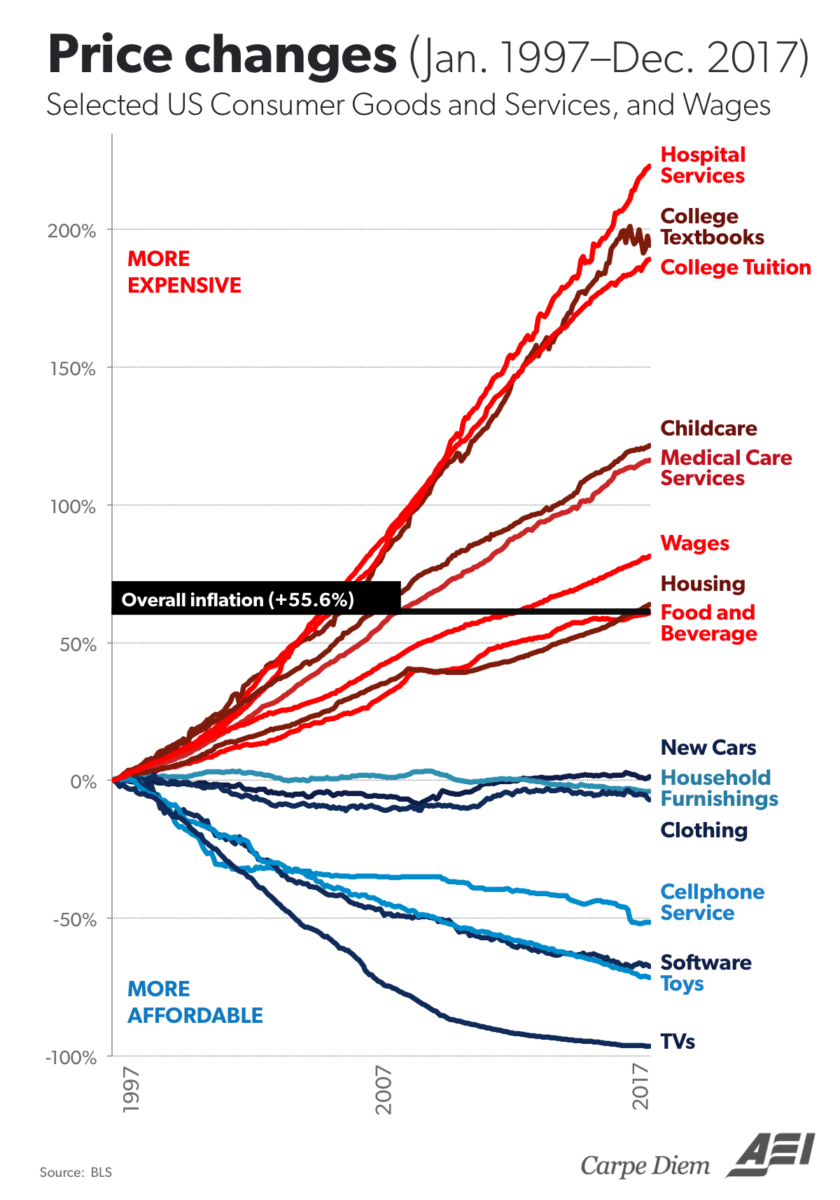
As it stands, mortgage rates being below the rate of inflation make housing a very attractive investment.
The sources of mortgage subsidy that I am aware of are secondary market purchases:
A big portion of quantitative easing by the Federal Reserve is buying billions of mortgages every month. The Fed is trying to start unwinding this now, but they have had trillions of mortgages on their books since the GFC.